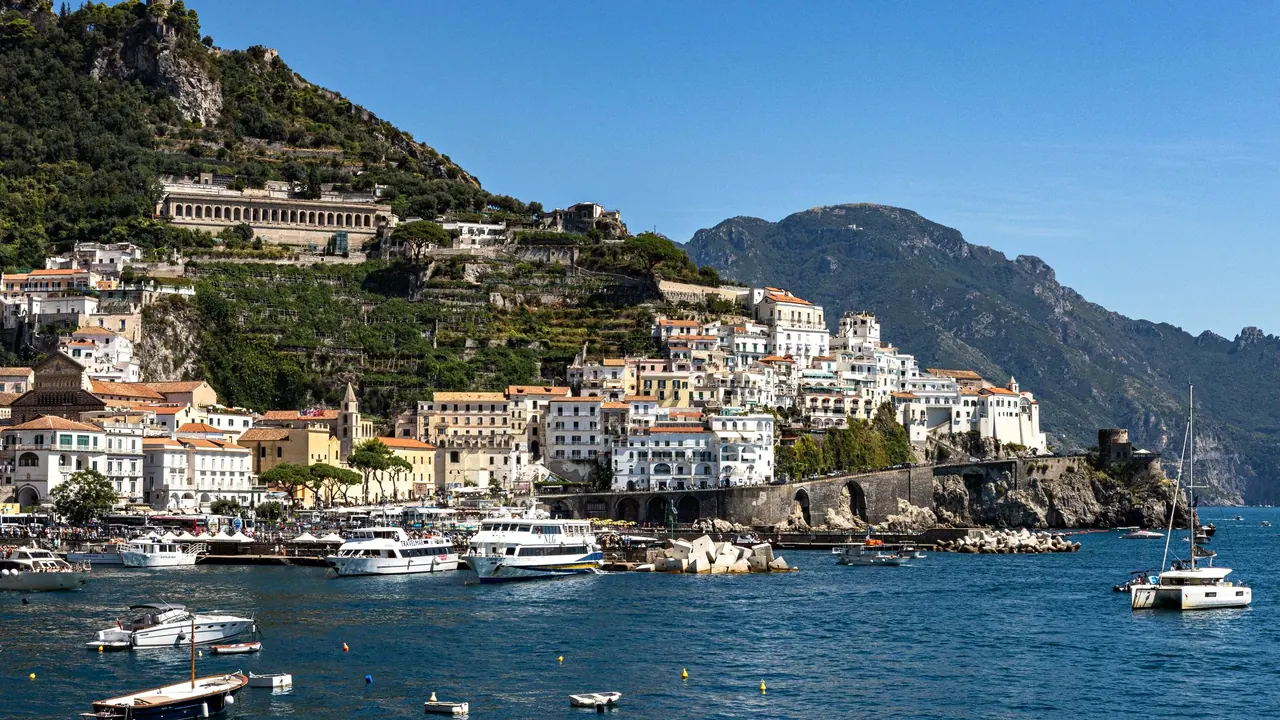
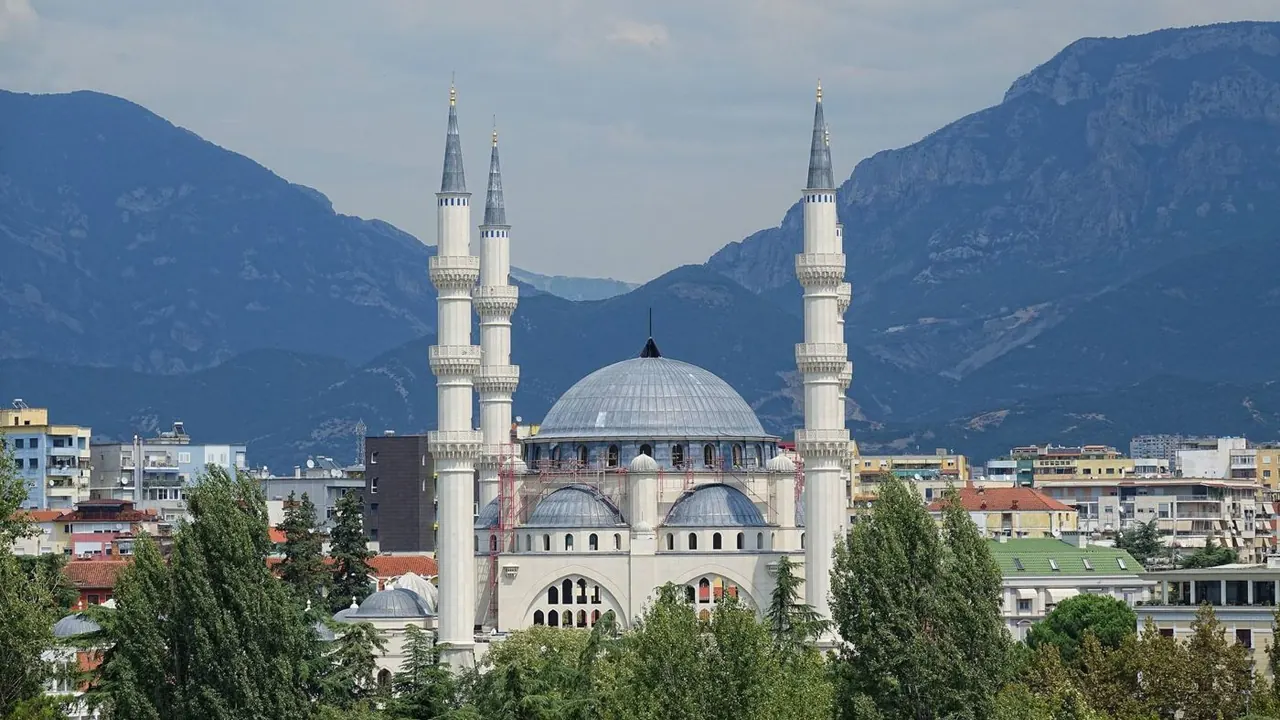
Photos: Amalfi by Oleksandra Zelena, Pexels License; Tirana by Bjørn Christian Tørrissen, CC BY-SA 4.0, cropped.
Amalfi or Tirana?
Our verdict in twelve categories, each scored against the same fixed benchmark cities, and the climate month by month, so you can choose for your trip.
Choose Amalfi for
- day trips
- nature and the outdoors
- beaches
Amalfi suits a traveller who wants the sea and the mountains in the same view and is prepared to pay for it. Mornings on the Path of the Gods, afternoons swimming from the pebbles or a hired boat, and ferries to Positano, Ravello and Capri fill a week easily, as long as you are happy with quiet evenings.
Choose Tirana for
- prices
- nightlife
- families
Pick Tirana for a cheaper and livelier stay with more going on after dark. Blloku's bars, the communist-era history of Bunk'Art and the House of Leaves, and hearty Albanian cooking make a good city break. Kruja and Berat add older heritage on day trips, but the sea is only an outing.
Scoreboard
Twelve categories on one fixed scale from 0 to 100. The shaded stretch is the gap between the two.
Your match
Pick a travel style or drag the sliders, and both match scores follow your weighting.
Wins on day trips and nature and the outdoors with your weighting.
Wins on prices and nightlife with your weighting.
What matters to you?
Category by category
What the scores mean for a trip.
Beaches & swimming
In Amalfi the sea is at the foot of the town. Marina Grande lies under the Duomo steps, Atrani's beach is a short walk away and coves such as Santa Croce are reached by boat, so a swim fits between other plans. It is all pebble and crowded with beach-club loungers in summer, but the water is clear.
From Tirana the sea is a day out, under an hour to Durrës. The beach there is long, sandy and shallow, which young children may find easier than Amalfi's pebbles, but the water near the port is less clear. The southern coves that make Albania's coast famous are too far for a day trip.
Food & drink
Both cuisines are regional and built on local produce, but Tirana gives a hungry visitor more choice. Tavë kosi, fërgesë, morning byrek and the farm restaurants in the hills around the city make for honest, varied eating, and Blloku and the streets around Pazari i Ri have plenty of places to try.
Amalfi has the more famous ingredients: sfusato lemons, colatura from Cetara and scialatielli with seafood. The town is small, though, and the places on the piazza and seafront cook for passing crowds. You have to look for the good trattorias in the alleys and up the valley.
Culture & sights
Tirana has a little more to see, though neither suits a long museum itinerary, and their history comes from very different periods. Tirana's is the twentieth century: Skanderbeg Square, the mosaic on the History Museum and, above all, the communist era told through Bunk'Art and the House of Leaves. That is about two full days of memorable visits.
Amalfi's heritage is medieval and compact: the Duomo with its bronze doors, the Chiostro del Paradiso, the Arsenale of the old maritime republic and the paper museum. Half a day covers it, and the covered passages and stairways of the old town are as much of the appeal as the monuments.
Nightlife
The two kinds of evening could hardly be further apart. In Amalfi the night is the dinner itself, stretched out on a terrace as the sea goes dark below, then a short stroll around the harbour before bed. That suits couples, and walkers who want an early start on the trails. Anyone hoping to dance will find the town emptied once the day visitors have gone, and the nearest real alternative is Salerno or Naples.
Tirana's evening gets going at about the time Amalfi's winds down. Dinner runs late, and then the city's young crowd moves on to Blloku, a walk from Skanderbeg Square, where terrace bars and small clubs keep going into the early hours. Friends on a weekend away, or anyone in their twenties and thirties, will get far more out of their nights here, as long as they enjoy a polished, dressed-up scene rather than anything underground.
Nature & outdoors
Amalfi has the more dramatic landscape. The Lattari mountains fall almost straight into the sea, the Path of the Gods runs high above Positano with Capri on the horizon, and the Valle delle Ferriere gorge, with its waterfalls and ferns, starts at the back of town. Old mule stairways climb to the hill hamlets, and kayaks slip into sea caves under the cliffs.
Tirana has a mountain on its doorstep too. Mount Dajti rises from the city's eastern edge, and the cable car lifts you to beech and pine forest at about 1,000m in a quarter of an hour, with views across the plain to the sea. The Grand Park lake gives shaded paths in town and the Bovilla reservoir lies within an hour, but the scenery is greener and gentler, with no sea below the trails, and the high Albanian Alps need more than a day.
Day trips
Amalfi sits in the middle of a string of famous places, most of them short hops away. Ravello is up the hill, Positano is a ferry ride away and Capri can be reached in season, while Paestum, Pompeii and Herculaneum fit into a long day. The catch is that ferries are seasonal and the coast road is jammed in summer.
Tirana's surroundings hold the heritage the city itself lacks: Kruja's castle under an hour away, Roman Durrës, and UNESCO-listed Berat about two hours south. Distances and slow roads make these full days by car, minibus or tour rather than easy hops.
Good for families
Neither is easy with small children, but Tirana is the better of the two. Children are welcome in cafés late into the evening, the Grand Park has playgrounds by the lake, the Dajti cable car makes an outing in itself and Durrës has sand. Traffic and uneven pavements are the drawback.
Amalfi's stairways make a pushchair useless, the pebble beach is crowded and the winding cliff buses can make children carsick. Older children who swim well get far more from it, with boat trips and sea caves.
Getting around
Both are explored on foot, and Tirana is slightly easier, mainly because of the ground underfoot. Its centre is flat and compact and taxis are cheap for sights on the edge of town, though the buses confuse visitors and wide roads need care to cross.
Amalfi is tiny but built on stairs, which is hard on anyone with limited mobility. Its buses and seasonal ferries connect the whole coast, but in summer the buses fill up and the cliff road crawls.
Shopping & style
Neither is worth the trip for shopping, and what each does well is local. Amalfi's best buys are the handmade cotton paper from the valley, majolica ceramics and sandals made to measure, all along one main street where much of the stock repeats.
In Tirana the pleasure is food from the Pazari i Ri stalls, such as cheese, honey, raki and herbs, along with felt hats and filigree silver. Beyond that it offers malls full of chain stores rather than craft.
Affordability
The gap is wide. Amalfi is among the most expensive places to stay in Italy. Sea-view rooms, seafront meals, beach loungers and boat hire all cost a lot, and staying in the hill villages in spring or autumn only softens the bill.
Tirana is one of the cheapest capitals in Europe. Meals, coffee, taxis and museum entry cost little, and central mid-range hotels are good value. Only the smarter places in Blloku charge noticeably more.
Live music & performing arts
Tirana has a stage with a full season, the National Theatre of Opera and Ballet on Skanderbeg Square, and tickets are easy to get. It also has a few jazz bars and open-air concerts in summer, though plays are performed in Albanian.
Amalfi has no theatre of its own. Its standout evening is a summer concert at the Ravello Festival on the Villa Rufolo terrace above the sea. The setting is unforgettable, but outside summer there is little beyond church music and the feast of Sant'Andrea.
Wellness & relaxation
Neither has a spa culture, and in both the rest comes from the pace of the day. In Amalfi that means swims from the rocks and long lunches on a terrace. Spa treatments are mostly for guests of the cliff hotels, and the centre gets noisy in July and August.
Tirana offers slow hours over coffee and the evening xhiro along the boulevards, with Dajti's forest as an escape from the traffic. For thermal water, the simple spa hotels of Llixha are about an hour away.
When should you go?
Pick your month. The climate figures are measured averages, not a forecast.
Amalfi in July
Tirana in July
Daytime high, °C
Rainfall in the month, mm
Where the figures come from
Amalfi's temperatures are measured 65 km from the centre, at Grazzanise.
Amalfi has no rain gauge within 25 km of the centre, so its rainfall comes from a gridded climate dataset read at the city rather than from a gauge further away.
Temperature and rainfall are climate normals, averaged over the years shown. Amalfi: 1991-2020 normals, Grazzanise (64.7 km from centre). Tirana: 1961-1990 normals, Tirana (3 km from centre).
Both have hot, dry summers with highs of about 31°C in July and August, but Amalfi stays drier, with only about 22mm of rain in August. Its sea reaches 26°C, so swimming is comfortable from June into October, and in May for anyone who doesn't mind cooler water. In high summer the exposed coastal trails are hard work in the heat, so May and late September to early October are the best months for walking and swimming on the same trip.
Tirana's temperatures follow almost the same curve, but more rain falls through more of the year. Rainfall peaks at about 172mm in November, so late spring and early autumn suit walking the city and the slopes of Dajti best. Winters are cool and wet in both, and the beach season at Durrës is shorter than on the Amalfi coast.
Which traveller are you?
For a food and nightlife trip, Tirana is the clear choice. Blloku keeps cocktail bars and clubs busy past midnight, and taverns and farm restaurants serve generous Albanian cooking. In Amalfi the evening ends with dinner and a limoncello on the piazza.
On an outdoors trip, Amalfi wins. The Path of the Gods, the Valle delle Ferriere and kayaking to sea caves all start close to town. Tirana's Dajti cable car and Bovilla reservoir make good outings but lack the drama of the cliffs.
On a tight budget, your money goes much further in Tirana. Rooms, meals, taxis and museum tickets cost little there. In Amalfi, sea-view rooms, beach loungers and boat hire are among the most expensive in Italy, and only the buses are cheap.
Before you go
| Measure | Amalfi | Tirana |
|---|---|---|
| Official language | Italian | Albanian |
| Currency | Euro (EUR) | Lek (ALL) |
| Sockets | CFL230 V, 50 Hz | CF220 V, 50 Hz |
| Driving side | Right | Right |
| Time zone | UTC+1, UTC+2 in summer | UTC+1, UTC+2 in summer |
| Emergency number | 112 | 112 |
| Elevation | 6 m | 110 m |
| Main airport | Naples International Airport (NAP)38 km from centre131 non-stop destinations | Tirana International Airport Mother Teresa (TIA)13 km from centre121 non-stop destinations |
| Public holidays this year | 13 days | 14 days |
By the numbers
| Measure | Amalfi | Tirana |
|---|---|---|
| City population | 4,729 | 389,323 |
| People per km² | 830 | 9,314 |
| Museums within 10 km | 8 | 11 |
| UNESCO World Heritage sites within 50 km | 5 | 0 |
| Swim season, months above 21 °C | 5 months | 5 months |
Where else could you go?
Every comparison below shares a destination with this one, so you can follow Amalfi or Tirana somewhere new.