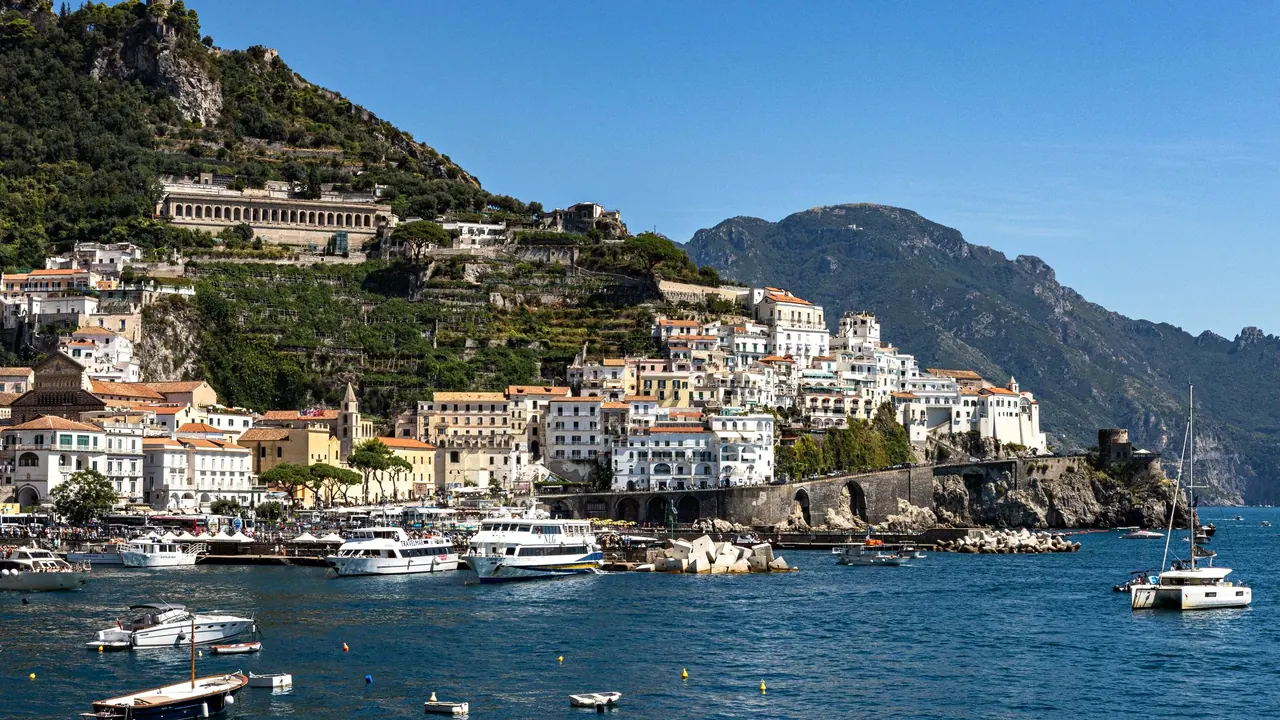
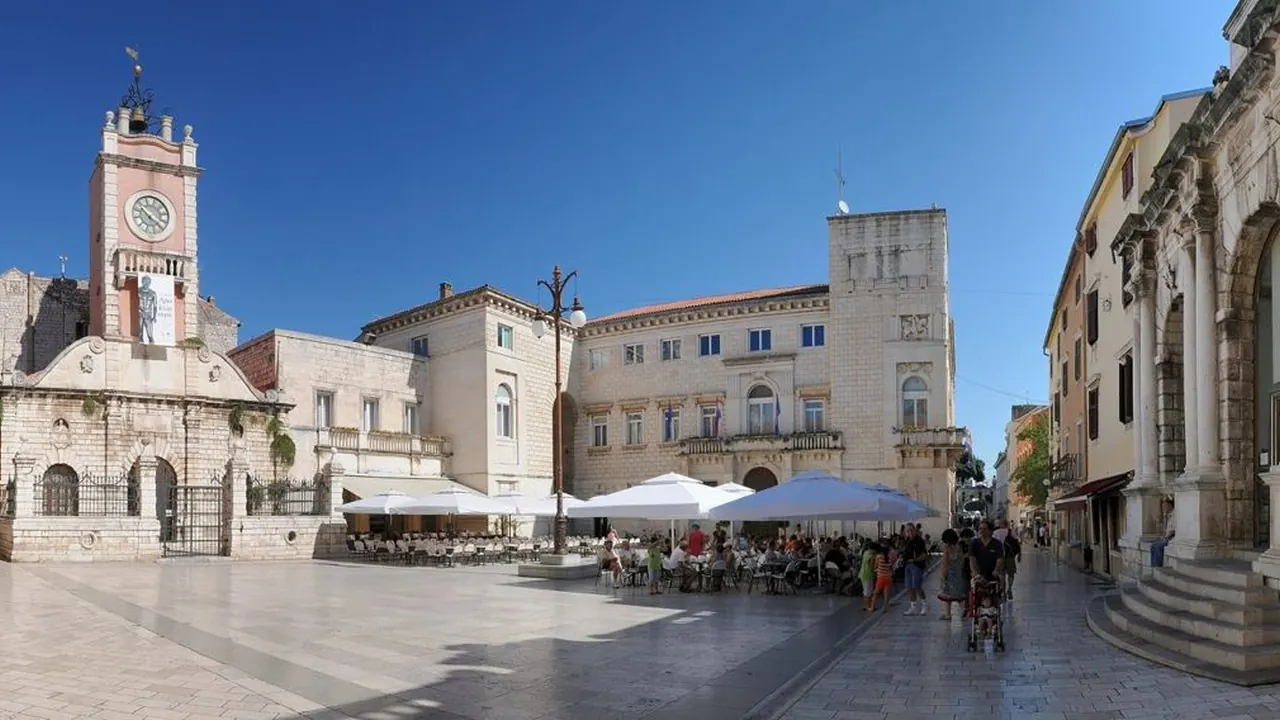
Photos: Amalfi by Oleksandra Zelena, Pexels License; Zadar by Böhringer Friedrich, CC BY-SA 2.5, cropped.
Amalfi or Zadar?
Our verdict in twelve categories, each scored against the same fixed benchmark cities, and the climate month by month, so you can choose for your trip.
Choose Amalfi for
- day trips
- shopping
- food and drink
Amalfi suits travellers who come for one of Europe's most dramatic coastlines and are happy to pay for it. Mountains drop straight into the sea, the Path of the Gods and the Ravello gardens are close by, and Positano, Capri and Pompeii are all within a day. It works best for couples and adults who want walks, boat trips and long lunches, and who don't mind steep stairs or quiet evenings.
Choose Zadar for
- prices
- families
- nightlife
Zadar is the easier and cheaper choice, and it offers more once the boat trips are over. The flat, car-free old town has Roman and medieval sights worth two days, there are bars on the waterfront at sunset, and Nin's sandy shallows are close for children. It suits families, travellers watching their budget and anyone who wants a town to come back to in the evening, with islands and national parks within reach.
Scoreboard
Twelve categories on one fixed scale from 0 to 100. The shaded stretch is the gap between the two.
Your match
Pick a travel style or drag the sliders, and both match scores follow your weighting.
Wins on day trips and shopping with your weighting.
Wins on prices and families with your weighting.
What matters to you?
Category by category
What the scores mean for a trip.
Beaches & swimming
Neither town has a sandy shore at its centre. Amalfi's Marina Grande is a pebble strip under the Duomo, mostly covered by beach-club loungers in summer. Its better swimming is in coves such as Santa Croce, reached by stairs or small boat, or at the rocks you can reach on a hired boat.
Zadar has more variety close by, which puts it ahead. You can swim off the stone promenade or at Borik's pine-shaded shore, and the long sandy shallows at Nin are about 20 minutes away. Ferries reach the quiet island coves, and Sakarun's pale sand on Dugi Otok makes a full day out.
Food & drink
Both towns serve good regional seafood in a fairly small choice of restaurants. Amalfi's cooking centres on the coast's lemons, anchovies and colatura from Cetara, with scialatielli and clams, limoncello after dinner and wines from Furore and Tramonti.
Zadar cooks Dalmatian food: octopus or lamb slow-cooked under the peka bell, black risotto, and Pag cheese with pršut, followed by a glass of Maraschino. In both towns the touristy restaurants on the main squares are average, so it pays to walk a street or two away from them.
Culture & sights
Zadar has much more to see. The Roman forum, the round church of St Donatus, the UNESCO-listed Venetian walls and good museums of ancient glass and archaeology take about two days. The Sea Organ adds something modern on the waterfront.
Amalfi's heritage comes from its time as a maritime republic: the Duomo with its bronze doors, the Chiostro del Paradiso, the old Arsenale and the paper museum. They are fine, but you will see them in a morning.
Nightlife
Zadar has a modest nightlife, while Amalfi has very little. In summer, Zadar's evenings start at sunset by the Sea Organ and continue in café-bars along Kalelarga and on terraces on the old walls. Young visitors take the hour-long trip to the party beach at Zrće on Pag for clubbing.
Amalfi offers dinner, a gelato on Piazza Duomo and perhaps a late drink in summer. After the last ferries and buses leave, the town goes quiet.
Nature & outdoors
Both have outstanding landscapes, but you reach them in different ways. In Amalfi you walk from your door: the Valle delle Ferriere gorge starts behind the town, mule stairways climb to Pontone and Ravello, and the Path of the Gods is a short bus ride away. Small boats and kayaks explore the sea caves along the cliffs.
Zadar's nature is further away and covers more ground. Paklenica's gorges offer serious climbing, the Kornati and Telašćica are reached by boat, and the waterfalls at Krka and Plitvice are an hour or two by car. Expect to drive or join excursions.
Day trips
Amalfi wins here because famous places are so close and easy to reach without a car. Ravello is a short bus ride up the hill and Positano is a short ferry ride away. Capri, Pompeii, Herculaneum and the temples at Paestum all fit into a day.
Zadar's best outings are Šibenik's cathedral town and medieval Nin. Split and Trogir make long days by motorway, and the ferries reach quiet islands such as car-free Silba. Most of these trips are easier with a car.
Good for families
Zadar is far easier with children. Its old town is flat and car-free, the waterfront promenade is wide enough for scooters, and the Sea Organ and the lit-up Greeting to the Sun keep children entertained. Taking children out in the evening is normal there, and Nin's sandy shallows suit toddlers.
Amalfi is built on stairs, where pushchairs are useless, and the cliff-road buses can make children carsick. It suits only older children who swim well and enjoy boat trips.
Getting around
Amalfi is tiny and you can walk it all, but almost everywhere off the seafront involves climbing steps. It is the hub for the blue buses and the spring-to-autumn ferries along its coast, so you won't need a car. In summer, though, the buses fill up and pass people waiting at the stops, and traffic on the single cliff road moves slowly.
Zadar is the easier of the two to get around. Its old town is a flat, car-free peninsula you can cross on foot in a quarter of an hour, and the island ferries leave from its edge. Only the national parks and the wider coast call for a hire car or an organised excursion. For the town and the islands, walking and the ferries are all you need.
Shopping & style
Amalfi has the more distinctive things to take home. Look for the cotton paper still made by hand in the valley and sold as notebooks, hand-painted majolica and sandals made to measure, though you have to look past the rows of limoncello and lemon soap on its one main street.
Zadar's marble-paved Kalelarga has jewellers, chain stores and a few galleries, and there are malls on the edge of town. Its best buys are food and lace: Maraschino, Pag cheese, olive oil and Pag lace. The market by the walls is the nicest place to find them.
Affordability
Zadar costs much less. Private apartments there are fairly priced outside July and August, and meals at konobas and bakeries are reasonable. National park tickets and boat trips are the main extra costs.
A sea-view room in Amalfi can cost as much as one in Europe's most expensive capitals, and loungers, boat hire and seafront meals are just as expensive. Staying in the hill villages or coming in spring or autumn helps, but it is still a costly trip.
Live music & performing arts
Amalfi has no theatre or concert hall of its own, which leaves Zadar slightly ahead. Amalfi's big draw is up the hill at the summer Ravello Festival, where orchestras and chamber groups play on a terrace in Villa Rufolo's gardens above the sea. In town, the feast of Sant'Andrea brings processions and band music.
Zadar has its own summer series, the Musical Evenings in St Donatus, with early and chamber music inside the ninth-century church. In July and August you may hear klapa singing in churches and squares, and a small national theatre stages drama in Croatian. Outside summer there is little on in either place.
Wellness & relaxation
Neither town is a spa destination, and for unwinding they come out about even. In Amalfi, the pools and treatment rooms belong to the grand hotels set into the cliffs, so unless you are staying in one, rest comes from the setting: a lunch that runs well into the afternoon, a swim off the rocks, and the town early in the day before the coaches and ferries arrive. In July and August the centre gets loud, and you will find real quiet in the hill hamlets or in May and October.
Zadar's hotel spas are grouped in the Borik resort area rather than the old town. Nin, close by, has something Amalfi can't match: a shallow lagoon whose mineral mud people have spread on their skin for generations. Beyond that, Zadar's slow pace does the work. Coffee stretches through the morning, everything stops in the hottest hours, and the weeks before and after high summer are the most peaceful.
When should you go?
Pick your month. The climate figures are measured averages, not a forecast.
Amalfi in July
Zadar in July
Daytime high, °C
Rainfall in the month, mm
Where the figures come from
Amalfi's temperatures are measured 65 km from the centre, at Grazzanise.
Amalfi has no rain gauge within 25 km of the centre, so its rainfall comes from a gridded climate dataset read at the city rather than from a gauge further away.
Zadar has no rain gauge within 25 km of the centre, so its rainfall comes from a gridded climate dataset read at the city rather than from a gauge further away.
Temperature and rainfall are climate normals, averaged over the years shown. Amalfi: 1991-2020 normals, Grazzanise (64.7 km from centre). Zadar: 1999-2020 (rainfall 1991-2020) normals, Zadar / Zemunik (9.9 km from centre).
Both towns reach about 31°C in July and August, which is good for swimming but tiring on the stairs of Amalfi and on exposed trails around either town. Amalfi's sea warms earlier and stays warm longer, at about 26°C by August, so you can swim from May into October there. Zadar's swimming season is closer to June to September. Amalfi also has long, sunny summer days, and May and October are the best months for walking and sightseeing in comfort.
The wet season starts at about the same time. Zadar turns rainy in September, at about 100mm, while Amalfi gets wetter from September and is wettest in November, at about 143mm. Amalfi's winters are milder for a walk along the coast. Zadar is cooler from December to February, but it gets less rain than Amalfi in those months.
Which traveller are you?
On a family trip with young children, Zadar is much easier. Its old town is flat and car-free and suits pushchairs, the Sea Organ and the light display entertain children, and Nin's shallow sand is close by. Amalfi's stairways and winding buses are hard work with small children.
For a trip on a tight budget, choose Zadar. Private apartments are good value outside high summer, and ferries and buses are cheap. Amalfi is one of Italy's most expensive places to stay, and only its local buses are cheap.
On an outdoors trip, both are excellent in different ways. Amalfi suits walkers, with the Valle delle Ferriere and the mule paths starting in town. Zadar suits climbers, sailors and kayakers, with Paklenica and the Kornati islands within reach.
Before you go
| Measure | Amalfi | Zadar |
|---|---|---|
| Official language | Italian | Croatian |
| Currency | Euro (EUR) | Euro (EUR) |
| Sockets | CFL230 V, 50 Hz | CF230 V, 50 Hz |
| Driving side | Right | Right |
| Time zone | UTC+1, UTC+2 in summer | UTC+1, UTC+2 in summer |
| Emergency number | 112 | 112 |
| Elevation | 6 m | 5 m |
| Main airport | Naples International Airport (NAP)38 km from centre131 non-stop destinations | Zadar Airport (ZAD)10 km from centre66 non-stop destinations |
| Public holidays this year | 13 days | 14 days |
By the numbers
| Measure | Amalfi | Zadar |
|---|---|---|
| City population | 4,729 | 70,779 |
| People per km² | 830 | - |
| Museums within 10 km | 8 | 1 |
| UNESCO World Heritage sites within 50 km | 5 | 2 |
| Swim season, months above 21 °C | 5 months | 4 months |
Where else could you go?
Every comparison below shares a destination with this one, so you can follow Amalfi or Zadar somewhere new.