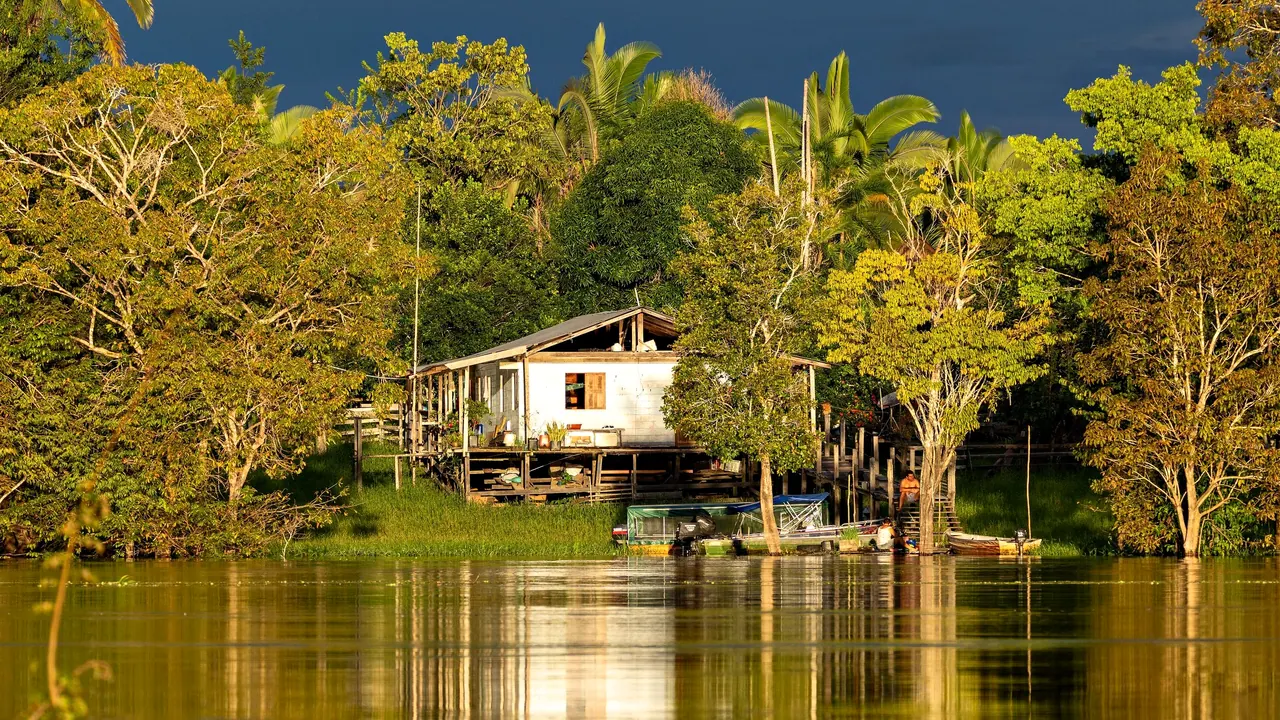
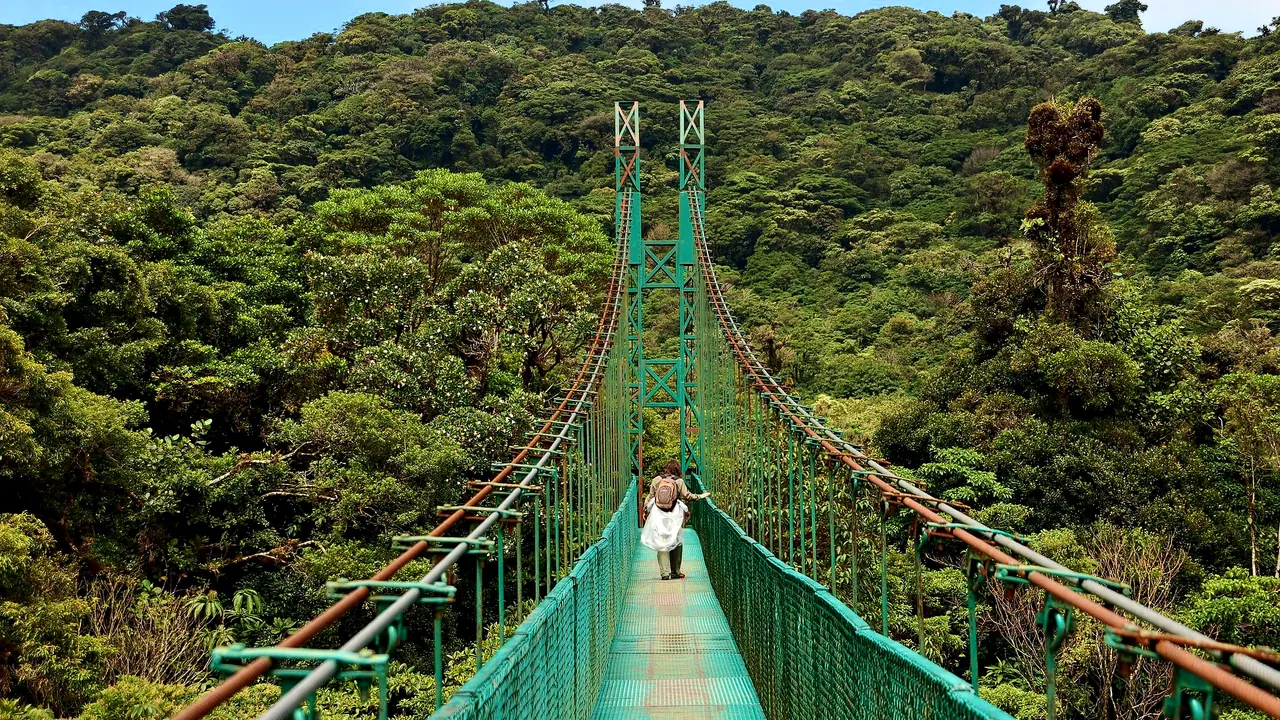
Photos: Amazon by flowcomm, CC BY 4.0, cropped; Monteverde by Matthias Bethke, CC BY-SA 4.0, cropped.
Amazon or Monteverde?
Our verdict in twelve categories, each scored against the same fixed benchmark cities, and the climate month by month, so you can choose for your trip.
Choose Amazon for
- beaches
- culture and sights
- food and drink
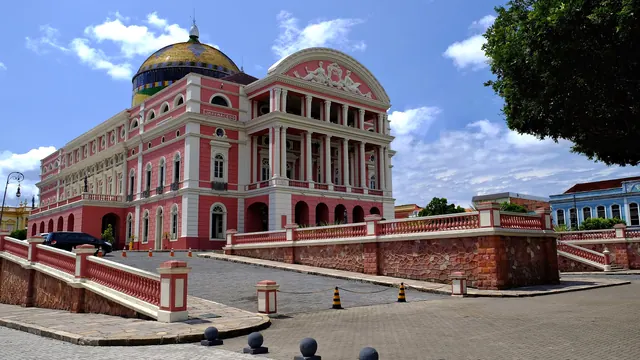
Choose the Amazon if you want the rainforest at its full scale: rivers kilometres wide, flooded forest to paddle through, pink dolphins and nights in a lodge far from any road. It also has much more going on around the forest, with the cooking of Belém, the rubber-boom opera house in Manaus and the white river sandbanks of Alter do Chão. In return you accept long transfers, heavy heat, mosquitoes and real planning.
Choose Monteverde for
- families
- getting around
- wellness
Monteverde is the easier, smaller trip. It is one mountain base with a cooler climate, misty cloud forest crossed by marked trails and hanging bridges, and enough to keep school-age children busy. It works best as a few nights on a wider Costa Rica route rather than a destination in itself. There is very little to do beyond the forest, but getting out among the trees takes much less effort.
Scoreboard
Twelve categories on one fixed scale from 0 to 100. The shaded stretch is the gap between the two.
Your match
Pick a travel style or drag the sliders, and both match scores follow your weighting.
Wins on beaches and culture and sights with your weighting.
Wins on families and getting around with your weighting.
What matters to you?
Category by category
What the scores mean for a trip.
Beaches & swimming
The Amazon has real beaches, though they are river beaches. In the dry season the Tapajós at Alter do Chão uncovers long white sandbanks around a clear lagoon, and the warm, dark Rio Negro laps Ponta Negra near Manaus. Time your trip from August to December, because the sand is under water at high water.
Monteverde is a misty mountain ridge with nowhere to swim. The nearest shore is the Gulf of Nicoya, about two hours down a winding road, so beach time means separate nights on the coast.
Food & drink
The Amazon has one of Brazil's most distinctive cuisines. Belém is the place to eat it: tacacá with numbing jambu leaves, maniçoba and pato no tucupi, plus the herbs and cassava flours of Ver-o-Peso. Manaus adds grilled tambaqui and pirarucu, and the fruit ices of cupuaçu and bacuri are worth trying everywhere.
Monteverde eats plainly. Santa Elena's sodas serve casados of rice, beans and plantain, and there are a few lodge restaurants. Its real local tastes are coffee from the surrounding slopes and cheese from the Quaker dairy.
Culture & sights
The Amazon's sights are few and lie a flight apart, but they have real character. Manaus has the domed Teatro Amazonas and its iron-framed market. Belém has a colonial fort and cathedral in the Cidade Velha and the long scientific tradition of the Goeldi museum.
Monteverde has almost nothing to see in this sense. Its one cultural thread is the Quaker families who settled in the early 1950s, began dairy farming and helped protect the forest. You can still sense their influence in the community, but it would not fill an afternoon.
Nightlife
Neither place is chosen for going out, but Belém gives the Amazon a night life of its own. There are riverside warehouse bars and, at weekends, aparelhagem parties where tecnobrega booms from huge sound systems. Manaus has waterfront bars at Ponta Negra and forró dance halls.
In Monteverde the only evening outing is a guided night walk looking for tarantulas and tree frogs. After that come a drink in Santa Elena and an early bed before dawn birding.
Nature & outdoors
Both are first-rate forest destinations, but the Amazon is the larger experience. It is lowland rainforest on an enormous river system. You can watch the Meeting of the Waters, thread through the Anavilhanas islands, paddle among treetops at high water and look for pink dolphins and caimans, with Mamirauá for wilder primate watching.
Monteverde is a different kind of forest, a cool cloud forest on the continental divide, heavy with moss, orchids and bromeliads. It is easier to take in, with marked trails, hanging bridges, the zip-lines that began here and resplendent quetzals for birders. It is a smaller world than the Amazon, but a much more accessible one.
Day trips
Belém is the Amazon base with real outings close by. A short boat ride crosses to Combu island, where riverside families grow cocoa, and in Icoaraci potters still work in the old Marajoara style. From Santarém you can reach Belterra, the wooden rubber town Henry Ford built in the 1930s. Anywhere else, a day out means heading into the forest rather than visiting another town.
Monteverde is the excursion itself. Puntarenas on the Gulf of Nicoya is about two hours away and hardly worth the drive. Arenal Volcano takes three hours or more by road or by the jeep-boat-jeep crossing, so it is better as the next stop on your route than as a day out.
Good for families
Monteverde is much the easier choice with children. School-age children love the canopy bridges, frog and insect exhibits and torchlit night walks, older ones can try the zip-lines, and Santa Elena is small and relaxed. Toddlers will struggle with the wet, steep trails.
The Amazon asks more of a family. Yellow fever vaccination is advised and malaria is a risk in parts. On top of that come heavy humidity, mosquitoes, long boat transfers and simple lodges. For animal-keen older children, the Rio Negro near Manaus or the beaches at Alter do Chão in the dry season can still be unforgettable.
Getting around
Getting to Monteverde is slow, a shuttle or drive up a winding mountain road, but once you arrive it is simple. Santa Elena is walkable, taxis and a small bus reach the reserves, and tours include hotel pick-ups.
The Amazon is far harder. Few roads link its cities, so you choose between domestic flights and public riverboats that take days. Every lodge transfer is hours by road and boat. Most people settle on Manaus and let a lodge do the rest.
Shopping & style
The Amazon has more worth buying, almost all of it in markets. Belém's Ver-o-Peso sells scented oils, remedies and cupuaçu chocolate, Icoaraci makes Marajoara pottery, and Manaus has seed jewellery and basketry around its iron market hall.
Monteverde has souvenir and outdoor-gear shops in Santa Elena and bags of local coffee. The one buy worth seeking out is the embroidery from the women's artisan cooperative.
Affordability
The Amazon is the cheaper trip, as long as you watch the forest costs. Hotels, market meals and taxis in Manaus and Belém are inexpensive. The bill climbs with all-inclusive lodges and domestic flights, while riverboats and Alter do Chão guesthouses keep it down.
In Monteverde everything you come for adds to the bill: reserve entry, a guide to find the wildlife, canopy tours, night walks and shuttles. Lodges and restaurants aimed at visitors charge close to North American prices, so there are few cheap days here.
Live music & performing arts
The Amazon has stage events worth planning a trip around. The Teatro Amazonas in Manaus has a resident orchestra and dance company and holds an opera festival, usually in April and May. At the end of June, Parintins stages the Boi-Bumbá, night-long folk operas with giant puppets and thousands of dancers, and Belém keeps carimbó alive.
Monteverde offers little beyond the odd local musician in a restaurant or a small community concert.
Wellness & relaxation
Both offer an unplugged retreat rather than pampering, and neither has a bathing tradition. The difference is the air. An Amazon lodge means hot, humid days in a hammock and often no phone signal. Monteverde gives you cool, misty mornings, birdsong, a few lodge yoga classes and balconies over the trees. The nearest hot springs are around Arenal, a long drive away.
When should you go?
Pick your month. The climate figures are measured averages, not a forecast.
Amazon in July
Monteverde in July
Daytime high, °C
Rainfall in the month, mm
Where the figures come from
Monteverde has no weather station within reach, so its figures come from a gridded climate model rather than a measured record, and read a broad area rather than one spot.
Temperature and rainfall are climate normals, averaged over the years shown. Amazon: 1991-2020 normals, Manaus (3.3 km from centre). Monteverde: 1991-2020 normals, TerraClimate 4 km grid at the town, no weather station within 90 km.
In the Amazon the heat hardly changes. Afternoons are in the low thirties all year and reach 35°C in September, so the real choice is between wet and dry. Around the main base, January to April each bring over 300mm of rain and plenty of cloud. June to October is much drier and sunnier, and those are the months when the river beaches appear and the forest trails open. The wet months are the time to canoe among flooded treetops.
Monteverde stays mild all year at around 24°C on its ridge, cool enough to walk all day. December to April is its dry spell, with March almost rainless, although the forest is often windy and misty then. From May to November the afternoons are very wet, peaking at 459mm in October, so Monteverde's wettest months fall in the Amazon's dry season. The Pacific coast below, if you add beach nights, keeps its sea at about 29°C.
Which traveller are you?
On a family trip with children, Monteverde is the safer bet. It is cool and compact, with hanging bridges, butterfly gardens and torchlit night walks that suit school-age children, and there is no malaria risk or long boat transfer. The Amazon really only works for older, animal-mad children.
For a food and nightlife trip, the Amazon is the clear choice. Belém's tacacá stalls, duck in tucupi broth and Ver-o-Peso market come first, then aparelhagem parties and riverside bars. In Monteverde the casados are simple and evenings end early.
On a culture and arts trip, the Amazon has far more to offer. There is the Teatro Amazonas and its opera season, Belém's colonial Cidade Velha and the Boi-Bumbá spectacle at Parintins. Monteverde has a Quaker settlement story and very little else to see.
Before you go
| Measure | Amazon | Monteverde |
|---|---|---|
| Official language | Portuguese | Spanish |
| Currency | Brazilian Real (BRL) | Costa Rican Colon (CRC) |
| Sockets | CN60 Hz | AB120 V, 60 Hz |
| Driving side | Right | Right |
| Time zone | UTC-4 | UTC-6 |
| Emergency number | Police 190, ambulance 192, fire 193 | 911 |
| Elevation | - | 1,330 m |
| Main airport | Eduardo Gomes International Airport (MAO)21 non-stop destinations | Juan Santamaría International Airport (SJO)76 km from centre49 non-stop destinations |
| Public holidays this year | 14 days | 11 days |
By the numbers
| Measure | Amazon | Monteverde |
|---|---|---|
| Population | 34,000,000 | 5,386 |
| People per km² | - | 101 |
| Museums within 10 km | - | 1 |
| UNESCO World Heritage sites within 50 km | - | 1 |
| Swim season, months above 21 °C | - | 12 months |
Where else could you go?
Every comparison below shares a destination with this one, so you can follow Amazon or Monteverde somewhere new.
- La Fortunavs Monteverde
- Santa Teresa, Costa Ricavs Monteverde
- San Jose, Costa Ricavs Monteverde
- Tamarindovs Monteverde
- Guanacastevs Monteverde
- Granada, Nicaraguavs Monteverde