Brazil
Manaus
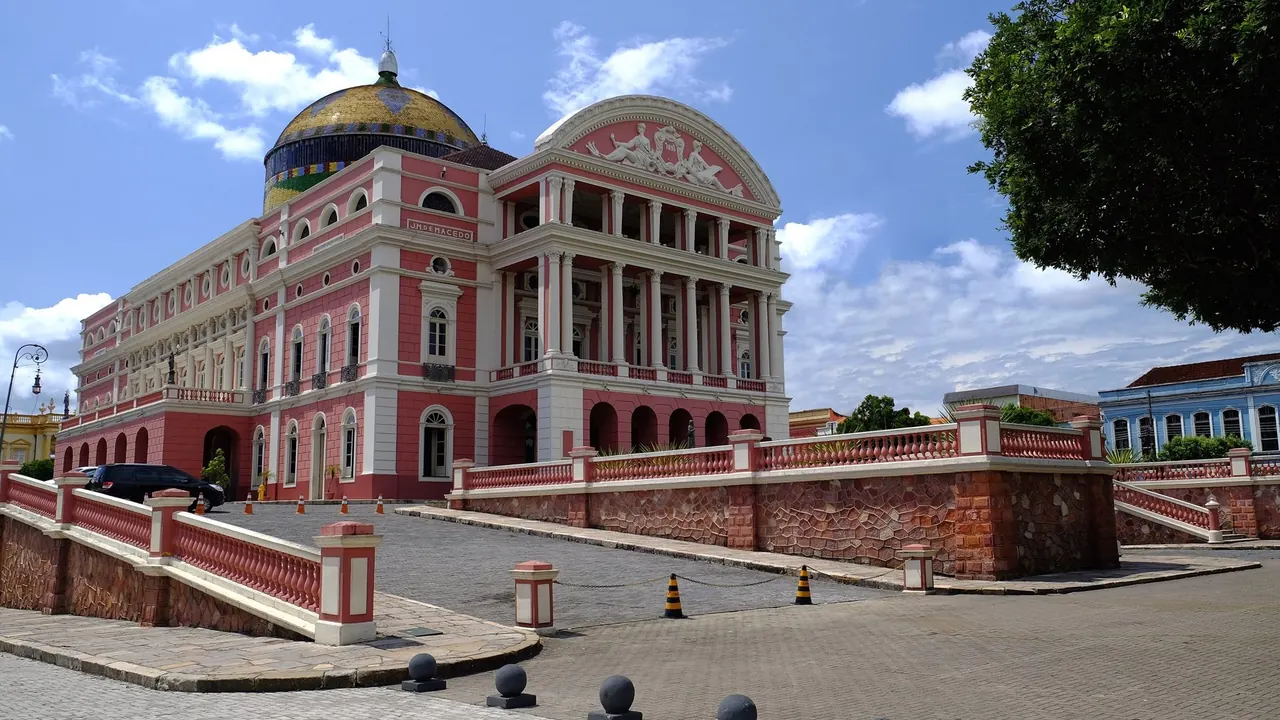
The Teatro Amazonas
- Nature & outdoors86
- Affordable cities63
- Food & drink56
Photo: Jardelsliumba, CC BY-SA 4.0, cropped
Match
43
Every category weighted equally
- Beach & sun43
- Culture & arts42
- Food & nightlife43
- Family trip43
- Outdoors45
- Relax & unwind43
- Shopping & style41
- On a budget45
Manaus in twelve categories
Our verdict on each, scored 0 to 100 against the same fixed benchmark cities, so a score means the same thing on every page.
Beaches & swimming. Scores 38 out of 100.
Food & drink. Scores 56 out of 100.
Culture & sights. Scores 46 out of 100.
Nightlife. Scores 42 out of 100.
Nature & outdoors. Scores 86 out of 100.
Day trips. Scores 12 out of 100.
Good for families. Scores 35 out of 100.
Getting around. Scores 27 out of 100.
Shopping & style. Scores 36 out of 100.
Affordability. Scores 63 out of 100.
Live music & performing arts. Scores 54 out of 100.
Wellness & relaxation. Scores 20 out of 100.
Manaus category by category
Beaches & swimming
38Manaus has beaches, but they are river beaches on the Rio Negro, dark tea-coloured water at around 29°C that feels more like a warm lake than the sea. Ponta Negra, on the western edge of the city, is the main one, with a long promenade and sunset views across the river. Swimming there depends on the season and on water quality, which is not always good.
The river decides everything. From roughly September to December the water drops and wide white sandbanks appear upriver, some reachable only by boat, such as the beaches around Tupé. In the high-water months many beaches disappear completely. This is a pleasant extra for a hot afternoon, not a reason to come.
Food & drink
56The draw is a cuisine built on the river and the forest, very different from the food of coastal Brazil. Big freshwater fish lead every menu: grilled tambaqui ribs, pirarucu cooked like salt cod, tucunaré in broth. At street stalls in the late afternoon people queue for tacacá, a hot, yellow tucupi broth with shrimp and jambu leaves that make the lips tingle. Breakfast is the x-caboquinho, a bread roll with tucumã palm fruit and coalho cheese.
The Adolpho Lisboa market and the Panair fish market are where you see the produce, and the fruit alone is worth the trip: cupuaçu, açaí eaten as a savoury side, buriti, camu-camu in juices and ice cream. Beyond these local specialities the range narrows fast, and fine dining and international cooking are limited.
Culture & sights
46Almost everything worth seeing dates from the rubber boom around 1900, when this was briefly one of the richest cities in the Americas. The Teatro Amazonas, with its pink facade, tiled dome and European-built interior, is the landmark everyone comes for, and the guided tour is worthwhile. Close by are the Palácio da Justiça, the Rio Negro Palace, the Customs House and the iron Adolpho Lisboa market hall, modelled on Parisian designs.
The museums are small: the Palacete Provincial houses several collections under one roof, and the Museu do Seringal, reached by boat, rebuilds a rubber estate. Much of the old centre is shabby and busy, and two days covers the city's sights comfortably.
Nightlife
42Going out here is local and informal: plastic tables outside bars, cold beer, and music loud enough to carry into the street. The waterfront at Ponta Negra fills on warm evenings, and the Adrianópolis and Vieiralves districts have most of the bars that visitors find comfortable. Dance halls play forró, sertanejo and the drum-heavy rhythms of boi-bumbá, the Amazon's own festival music, and nights out on Friday and Saturday run late.
The scene is spread out and needs taxis, the old centre empties after dark, and there is no club culture to speak of. Most travellers here are either about to go into the jungle or just back, and nights tend to be short.
Nature & outdoors
86Manaus is the main gateway to the Amazon, and that is why most people come. Boat trips from the port take you to the Meeting of the Waters, where the black Rio Negro and the sandy-brown Solimões run side by side for kilometres without mixing, then into narrow side channels lined with giant water lilies, sloths, toucans and caimans. Pink river dolphins can be seen near the riverside villages, and the Anavilhanas, a maze of hundreds of forested islands, lie upstream.
The forest changes with the water. In the high season, roughly May to July, boats glide through flooded forest among the treetops. When the water is low, trails open up on dry ground. Within the city, the INPA science grounds and the canopy tower at the Museu da Amazônia show the forest close up. Serious wildlife watching means a few nights at a lodge, and the heat and humidity make long hikes hard going.
Day trips
12Very little. Manaus sits in the middle of the rainforest, and what lies within two hours is forest and river rather than towns or heritage. Boat outings visit small riverside communities, and the road north reaches Presidente Figueiredo, a small town known for waterfalls and caves rather than for itself. The famous Parintins festival town and other Amazon towns are many hours away by boat or need a flight. Time outside the city is best spent on the river, not on touring.
Good for families
35Children who love animals will remember the boat trips, the river dolphins and the manatees, otters and squirrel monkeys at the Bosque da Ciência, the leafy research grounds of INPA. The army jungle training centre runs a small zoo of Amazon animals, and Ponta Negra has space for an evening run around. Brazilian culture is warm towards children, and families are welcome everywhere.
The rest is harder. Heat and humidity are relentless all year, mosquitoes are a real concern, distances need taxis, and the old centre is crowded and not stroller-friendly. Long jungle excursions suit older children better than toddlers, and there is little else built with young visitors in mind.
Getting around
27The few blocks around the Teatro Amazonas and the market can be walked, though heat, broken pavements and traffic make even that tiring. Beyond them Manaus is a large, spread-out city with no metro or tram, only crowded buses that visitors rarely use. Ride-hailing and taxis are cheap and the practical way to reach Ponta Negra or the restaurant districts. Anything on the river means an organised boat trip or a ferry from the port, and the centre is best avoided on foot after dark.
Shopping & style
36The interesting shopping is crafts. Indigenous basketry, seed jewellery, carved wood, feather work and natural oils and essences are sold around the Adolpho Lisboa market and in craft shops near the theatre, along with guaraná powder and Amazon fruit sweets to take home. The city is a free-trade zone, so the streets of the old centre are full of electronics and imported goods, and large air-conditioned malls supply the national brands. There are no fashion or design streets to seek out.
Affordability
63Day-to-day costs in the city are low. Market meals, street tacacá, juices and taxis are cheap, and comfortable business hotels are reasonably priced, because Manaus is an industrial city rather than a resort. The expense lies in what most people come for: river excursions and jungle lodges cost far more than staying in town, especially private boats and the more remote lodges. Opera festival tickets and theatre performances, by contrast, are modest.
Live music & performing arts
54The Teatro Amazonas is a working opera house, not just a monument, and seeing a performance inside is one of the memorable things to do here. The Amazonas Philharmonic and the state's ballet, choir and jazz band perform there, and the annual Amazonas Opera Festival brings full productions to the rubber-boom stage.
The other local tradition is boi-bumbá, the drums, dancers and costumes of the Parintins festival, which you can hear in shows and dance halls in the city. Away from these there is little theatre, and live music otherwise means bar bands playing Brazilian popular styles.
Wellness & relaxation
20Manaus has no spa or bathing tradition of its own. Wellness means a pool at the hotel and the occasional hotel spa. The city is hot, noisy and congested, not a place to slow down. Peace comes from leaving it: a few nights at a lodge on the river, with hammocks, forest sounds and early nights, is the restful part of most visits.
When should you go?
Pick a month to see what it is like. The climate figures are measured averages, not a forecast.
Manaus in July
Daytime high, °C
Rainfall in the month, mm
The whole year
Shaded against this city’s own year: the deepest cell is its best month for that figure and the palest its weakest.
Temperature and rainfall are climate normals, averaged over the years shown. Manaus: 1991-2020 normals, Manaus (1.7 km from centre).
Before you go
| Measure | Manaus |
|---|---|
| Official language | Portuguese |
| Currency | Brazilian Real (BRL) |
| Sockets | CN60 Hz |
| Driving side | Right |
| Time zone | UTC-4 |
| Emergency number | Police 190, ambulance 192, fire 193 |
| Elevation | 92 m |
| Main airport | Eduardo Gomes International Airport (MAO)9 km from centre21 non-stop destinations |
| Public holidays this year | 14 days |
By the numbers
| Measure | Manaus |
|---|---|
| City population | 2,303,732 |
| People per km² | 202 |
| Museums within 10 km | 13 |
| UNESCO World Heritage sites within 50 km | 1 |
Compare Manaus with
Every comparison with a written verdict behind it.