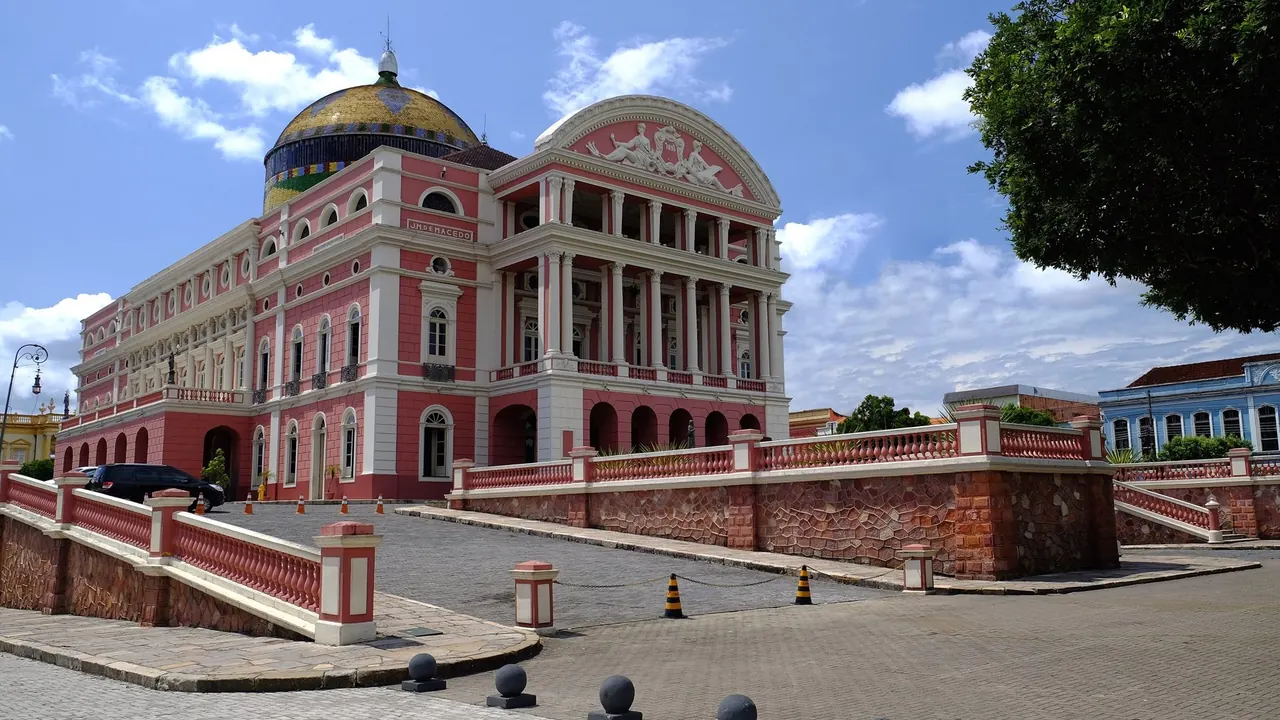
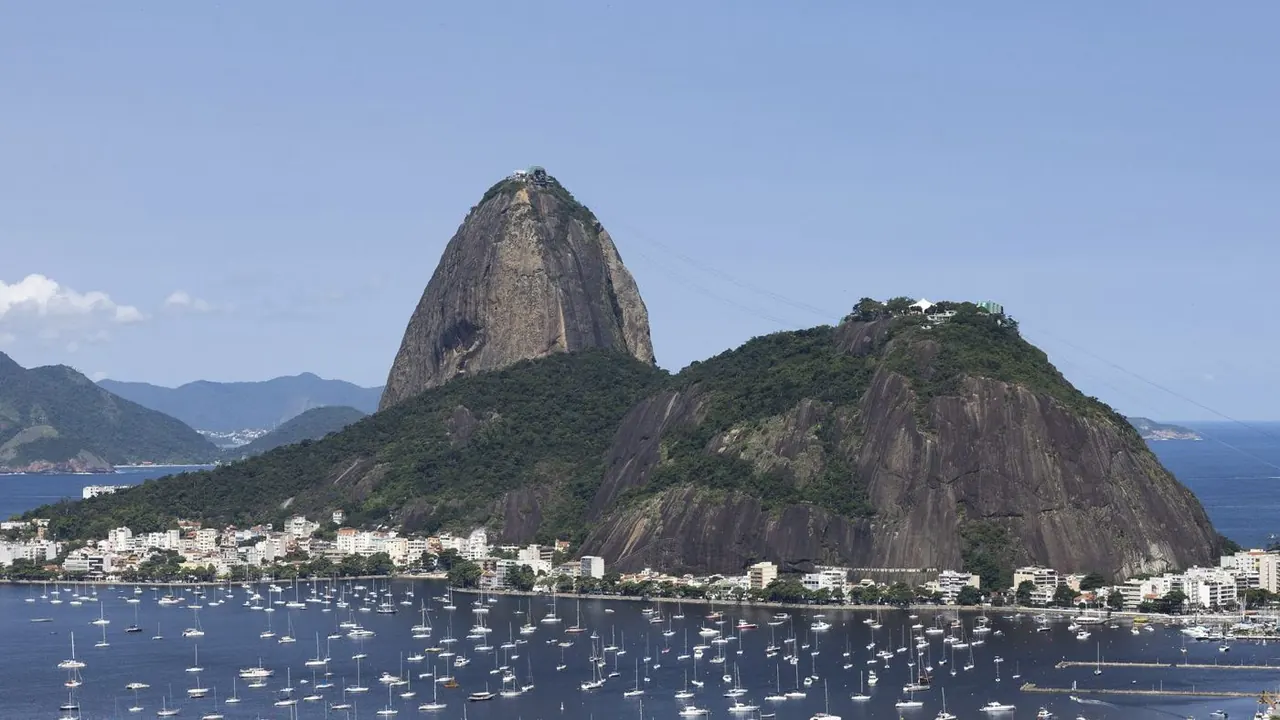
Photos: Manaus by Jardelsliumba, CC BY-SA 4.0, cropped; Rio de Janeiro by Arne Müseler, CC BY-SA 3.0 DE, cropped.
Manaus or Rio de Janeiro?
Our verdict in twelve categories, each scored against the same fixed benchmark cities, and the climate month by month, so you can choose for your trip.
Choose Manaus for
- prices
Manaus is for the traveller whose real destination is the Amazon. The city is the starting point for boat trips to the Meeting of the Waters, flooded forest and lodges upriver. It also has a rubber-boom opera house and food from the river and forest that you won't find on the coast. Come for the jungle and give the city a couple of days at either end.
Choose Rio de Janeiro for
- beaches
- nightlife
- day trips
Rio de Janeiro suits almost any other kind of trip. Ocean beaches, samba nights in Lapa, mountain viewpoints and forest trails inside the city make it a complete destination on its own. A metro runs along the beachfront, and Petrópolis and Niterói are easy days out. Choose it for sun, sea and a city that goes out late.
Scoreboard
Twelve categories on one fixed scale from 0 to 100. The shaded stretch is the gap between the two.
Your match
Pick a travel style or drag the sliders, and both match scores follow your weighting.
Wins on prices with your weighting.
Wins on beaches and nightlife with your weighting.
What matters to you?
Category by category
What the scores mean for a trip.
Beaches & swimming
There is no real contest here. Manaus has freshwater beaches on the Rio Negro. The main one is Ponta Negra on the edge of the city, and the sandbanks around Tupé appear only when the river falls. Water quality is not always reliable.
Rio de Janeiro lives on its sand. Copacabana, Ipanema and Leblon are a short walk from the hotels, with surf and quieter water at Prainha and Grumari further west, and the Atlantic is warm enough to swim in for much of the year. The open beaches have strong currents, so stay near the lifeguard posts.
Food & drink
Manaus has the more distinctive cooking: tambaqui ribs, pirarucu, tacacá with jambu leaves that make the lips tingle, and Amazon fruits such as cupuaçu and camu-camu. The Adolpho Lisboa and Panair markets are the places to see it all. Beyond those specialities, though, the choice is thin.
Rio offers more ways to eat, with fewer surprises. Boteco snacks with cold chopp, feijoada on Saturdays, rodízio grills, juice bars on every corner and modern restaurants in Leblon and Botafogo give you more variety over a week.
Culture & sights
Manaus has one great building and a handful of rubber-boom neighbours. The Teatro Amazonas, the iron market hall and the old palaces fill a day or two, and the museums are small.
Rio de Janeiro has far more to see. Christ the Redeemer and Sugarloaf rise above the bay. Downtown are the gilded São Bento monastery and the Real Gabinete Português de Leitura, the Museu do Amanhã stands on the port, and Santa Teresa's streets lead down to the Selarón steps. Allow several full days rather than two.
Nightlife
Evenings in Manaus mean plastic tables, cold beer, and forró or boi-bumbá in the dance halls of Adrianópolis and Vieiralves, and the Ponta Negra waterfront is busy on warm nights. There are no clubs to speak of, and most visitors have an early boat to catch, so nights tend to end early.
Rio de Janeiro is made for going out. Lapa fills with crowds under the aqueduct arches at weekends, Botafogo's bars spill onto the pavement, Leblon serves cocktails past midnight and clubs run until dawn. In the weeks before Carnival, the street blocos take over whole neighbourhoods.
Nature & outdoors
Both are outstanding, in very different ways. Manaus gives you the Amazon itself: the Meeting of the Waters, flooded forest from May to July, pink river dolphins and the islands of the Anavilhanas. It is best seen from a boat or a lodge rather than on foot.
Rio's nature is mountain and sea in the middle of a city. You can walk in the Tijuca forest, climb granite peaks such as Pedra da Gávea, hang-glide down to São Conrado or surf at Arpoador, each within a morning. The Serra dos Órgãos, about two hours inland, has longer hikes.
Day trips
Manaus has almost nothing beyond the river. There are waterfalls and caves at Presidente Figueiredo up the road, and riverside villages you can visit by boat, but other Amazon towns need a flight or many hours on the water.
Rio de Janeiro has real choices. The imperial summer town of Petrópolis is about an hour and a half up the hills, and Niterói with its Niemeyer museum is a ferry ride across the bay. Paraty, Búzios and Ilha Grande are worth an overnight stay.
Good for families
Children who love animals will enjoy Manaus, with river dolphins, the manatees and monkeys at the Bosque da Ciência, and the small zoo at the army jungle centre. Constant heat, mosquitoes and a crowded centre make it hard going with toddlers, though.
Rio de Janeiro is easier because the beach does most of the work, with calm water at Leme, Praia Vermelha and Barra. The Sugarloaf cable car, the Corcovado railway, AquaRio and the BioParque fill the rest of the time, though summer heat and traffic still tire small children.
Getting around
Manaus is a taxi city. Only the blocks around the Teatro Amazonas are walkable, visitors rarely use the crowded buses, and anything on the river means a boat from the port.
Rio de Janeiro has a clean metro along the route visitors use most, from the centre through Botafogo to Copacabana, Ipanema and Leblon, and flat promenades to stroll. Santa Teresa, the Tijuca forest and the western beaches still need a taxi or ride-hailing.
Shopping & style
Manaus is the place for Amazon crafts. Indigenous basketry, seed jewellery, feather work, natural oils and guaraná powder are sold around the market and the theatre. Its free-trade streets sell electronics rather than anything worth travelling for.
Rio de Janeiro has more to browse, mostly for the beach: swimwear, flip-flops and linen in the boutiques of Ipanema and Leblon, the Sunday hippie fair at Praça General Osório, and Carnival costumes in the Saara market streets.
Affordability
For visitors with foreign money, both cities are cheap day to day. The difference lies in where the costs fall. In Manaus, the town itself costs little, but the jungle lodges and private boats that most people come for add up quickly.
In Rio de Janeiro the beaches and trails are free. The big cost is a hotel near the sand in Copacabana, Ipanema or Leblon, and rates climb steeply around Carnival and New Year.
Live music & performing arts
An evening out in Manaus means dressing up for the opera, while in Rio de Janeiro it means following the samba. The best night in Manaus is a seat inside the Teatro Amazonas, where the Amazonas Philharmonic and the state ballet perform and the annual opera festival stages full productions. Beyond that, there are shows of Parintins drumming and dancing, and bar bands playing Brazilian popular music.
Rio de Janeiro gives you far more live music without planning ahead. Samba and choro bands play in Lapa's old two-storey houses, rodas de samba gather around a table of musicians in neighbourhood squares, and the samba schools open their rehearsals to visitors in the months before Carnival. Bossa nova keeps its small venues in Ipanema and Copacabana, and the gilded Theatro Municipal adds opera and ballet.
Wellness & relaxation
Neither city has a spa or bathing tradition. Manaus is hot, noisy and congested. Rest there means a hotel pool or, better, a few quiet nights in a hammock at a river lodge.
Rio de Janeiro makes it easier to unwind without leaving town. You can spend an hour on the sand, walk round the lagoon in the evening, join a yoga class on the beach or book a good hotel spa along Copacabana and Ipanema. For real calm, head up to the cooler hills of Santa Teresa.
When should you go?
Pick your month. The climate figures are measured averages, not a forecast.
Manaus in July
Rio de Janeiro in July
Daytime high, °C
Rainfall in the month, mm
Where the figures come from
Rio de Janeiro has no weather station within reach, so its figures come from a gridded climate model rather than a measured record, and read a broad area rather than the city itself.
Temperature and rainfall are climate normals, averaged over the years shown. Manaus: 1991-2020 normals, Manaus (1.7 km from centre). Rio de Janeiro: 2001-2020 normals, NASA POWER reanalysis grid, no weather station within 90 km.
Manaus is hot every month. Afternoon highs stay above 30°C all year and reach about 35°C in September. The heavy rain falls from December to May, with more than 300mm a month from January to April. June to October is far drier and sunnier. The river keeps its own calendar: high water from about May to July lets boats glide through flooded forest, and the sandbanks only appear from September as the water drops.
Rio is milder, with highs of about 28°C in summer and the mid-20s in winter, so the streets are comfortable to walk all year. The sea is warmest from January to April, but summer is also the wet season, and the heaviest rain falls from November to March. The drier months from May to September are the easiest for hiking and sightseeing, though the water cools by a few degrees and feels brisker for swimming.
Which traveller are you?
On a beach and sun trip, Rio de Janeiro is the clear choice. Copacabana, Ipanema and the surf beaches further west sit on the warm Atlantic. Manaus has only river beaches on the Rio Negro, and its sandbanks come and go with the water.
For a food and nightlife trip, Rio de Janeiro wins: botecos with cold chopp, crowds under the Lapa arches and clubs open until dawn. Manaus has the more unusual food, with tacacá and river fish, but its evenings end early.
For wildlife watchers who want the rainforest itself, Manaus is the one to pick. Boats leave its port to find pink river dolphins, giant water lilies and the Anavilhanas islands, with nights at lodges upriver. Rio's Tijuca forest has marmosets and toucans, but it is not the Amazon.
Before you go
| Measure | Manaus | Rio de Janeiro |
|---|---|---|
| Official language | Portuguese | Portuguese |
| Currency | Brazilian Real (BRL) | Brazilian Real (BRL) |
| Sockets | CN60 Hz | CN60 Hz |
| Driving side | Right | Right |
| Time zone | UTC-4 | UTC-3 |
| Emergency number | Police 190, ambulance 192, fire 193 | Police 190, ambulance 192, fire 193 |
| Elevation | 92 m | 31 m |
| Main airport | Eduardo Gomes International Airport (MAO)9 km from centre21 non-stop destinations | Rio de Janeiro Galeão – Tom Jobim International Airport (GIG)12 km from centre54 non-stop destinations |
| Public holidays this year | 14 days | 14 days |
By the numbers
| Measure | Manaus | Rio de Janeiro |
|---|---|---|
| City population | 2,303,732 | 6,211,223 |
| People per km² | 202 | 4,930 |
| Museums within 10 km | 13 | 69 |
| UNESCO World Heritage sites within 50 km | 1 | 3 |
| Swim season, months above 21 °C | - | 12 months |
Where else could you go?
Every comparison below shares a destination with this one, so you can follow Manaus or Rio de Janeiro somewhere new.