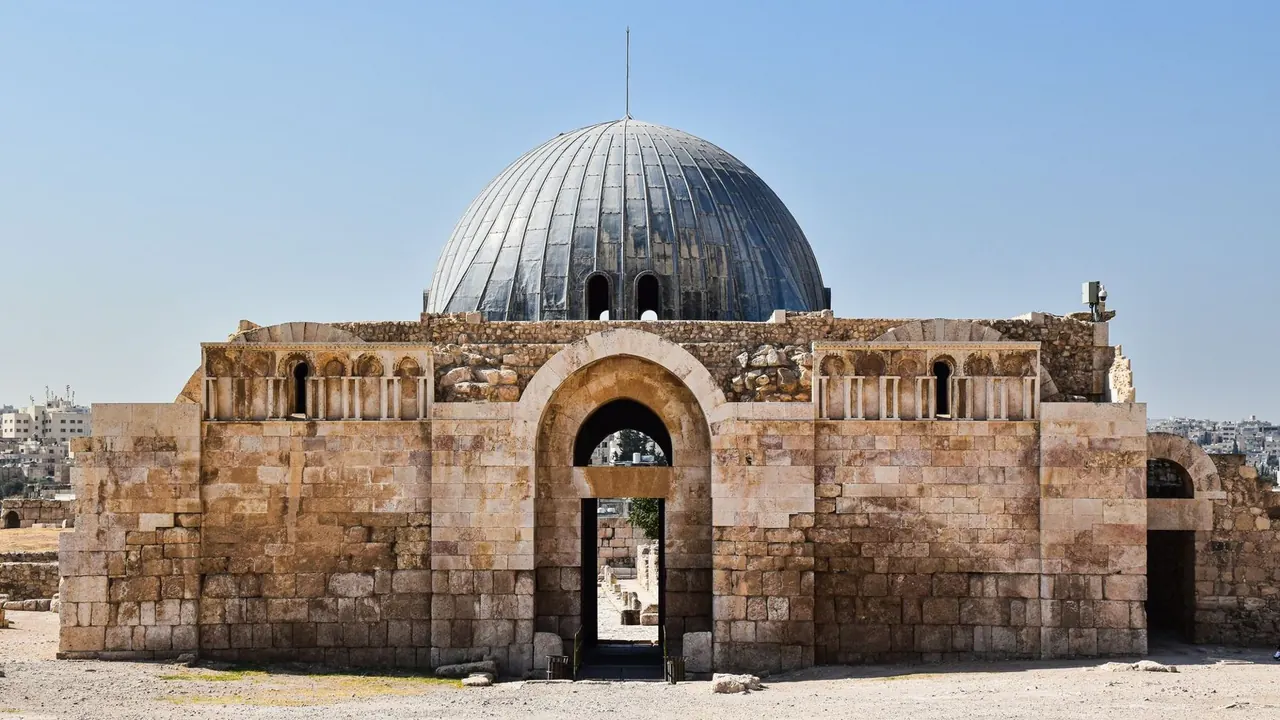
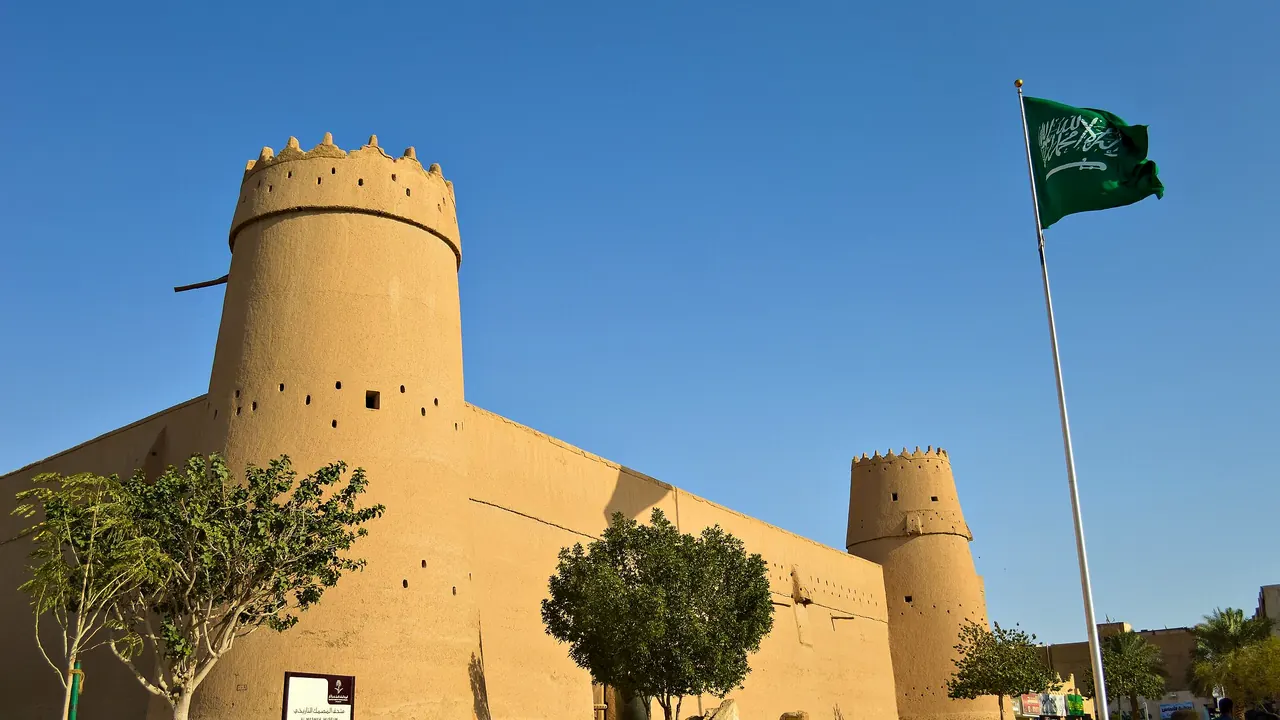
Photos: Amman by AXP Photography, Pexels License; Riyadh by Francisco Anzola, CC BY 2.0, cropped.
Amman or Riyadh?
Our verdict in twelve categories, each scored against the same fixed benchmark cities, and the climate month by month, so you can choose for your trip.
Choose Amman for
- day trips
- wellness
- nightlife
Amman is the better choice if you want history beyond the city limits. It makes a compact base for Jerash, Madaba, Mount Nebo and the Dead Sea, its Levantine food is the more rewarding of the two, and you can have a drink with dinner in Jabal Amman or Weibdeh. Spring and autumn are good for walking its stepped lanes and visiting the ruins.
Choose Riyadh for
- shopping
- getting around
- families
Riyadh suits a different trip: a winter visit built around Diriyah's mud-brick citadel, the National Museum, the desert and long evenings in cafés and malls. It is the stronger pick for shopping, especially for perfume, oud and international brands. It costs more, though, has no alcohol and has few towns worth a day out.
Scoreboard
Twelve categories on one fixed scale from 0 to 100. The shaded stretch is the gap between the two.
Your match
Pick a travel style or drag the sliders, and both match scores follow your weighting.
Wins on day trips and wellness with your weighting.
Wins on shopping and getting around with your weighting.
What matters to you?
Category by category
What the scores mean for a trip.
Beaches & swimming
Neither city is a beach destination. Amman at least has the Dead Sea an hour's drive away, where resort beach clubs give you an afternoon of floating and mud, and Aqaba's coral can be a separate trip south. Riyadh has no sea or lake within reach: swimming means a hotel pool or a water park, and the Gulf coast is about 400km away.
Food & drink
Amman eats better, and well even at street level: fuul and falafel breakfasts downtown, manakish, hot knafeh and late-night shawarma. Uphill, there are rooftop terraces and modern Arab cooking in Weibdeh and Jabal Amman, and Jordanian wine and beer if you want them.
Riyadh's strength is Najdi cooking on shared platters, such as kabsa, mandi and jareesh, alongside plenty of Yemeni, Indian and Pakistani kitchens. Coffee is where it really shines, from cardamom coffee with dates to the specialty coffee shops of Olaya. Street food is thinner, though, and there is no alcohol.
Culture & sights
Amman has the more layered city sights: Roman columns and an Umayyad palace on the Citadel, the theatre cut into the hillside, and the Jordan Museum with its Dead Sea Scrolls and 'Ain Ghazal statues. Riyadh's answer is At-Turaif in Diriyah, the UNESCO-listed mud-brick citadel above the palms of Wadi Hanifah, plus Masmak Fort and the well-presented National Museum. Both cities take two or three days, so the real choice is Roman and Umayyad stone against Najdi mud brick.
Nightlife
Amman is the only one of the two where you can order a drink. It has bars and rooftop lounges in Jabal Amman, Weibdeh and Abdoun, a few weekend DJ nights, and Rainbow Street stays busy after dark. It is still a city for cafés rather than partying.
Riyadh has no bars or conventional clubs at all. Late nights happen in coffee shops, dessert cafés and entertainment zones, which stay full of families past midnight. There are occasional alcohol-free club nights and big festivals in the cooler months.
Nature & outdoors
Amman has more variety close at hand: the steep drop to the Dead Sea, wading up the Wadi Mujib gorge in the warmer months, and the oak and pine trails of Ajloun, which are green in spring. Dana and Wadi Rum need an overnight stay but fit into the same Jordan trip.
Around Riyadh there is only desert. The Edge of the World escarpment, dune driving and winter camping under the stars are memorable, and Wadi Hanifah has a palm-lined walking route. There are no forests or hills, though, and summer heat shuts everything down.
Day trips
This is where Amman pulls furthest ahead. Jerash's colonnaded Roman streets are under an hour north. Ajloun castle, Umm Qais, the Ottoman town of Salt, Madaba's mosaic map, Mount Nebo, the Baptism Site and Kerak all make full days out.
From Riyadh the choice is thin. There is the restored mud-brick village of Ushaiger and the old quarter of Shaqra, both about two hours away, and otherwise trips into the desert. The kingdom's other cities are a flight away.
Good for families
For families the two are close, and both treat children as part of public life, staying out late with their parents. The difference is in kind. Riyadh has more attractions built for children, such as mall amusement parks, ice rinks, a zoo and camel rides at desert camps. Amman has fewer of these but bigger outings, such as floating in the Dead Sea or exploring Jerash. Both are hard with a pushchair: Amman because of its steep, broken pavements, Riyadh because of its distances and summer heat.
Getting around
Neither city is easy on foot, and in both, taxis and ride-hailing apps do most of the work. In Amman the obstacle is the hills. The stone stairways between downtown, Jabal Amman and Weibdeh are pleasant to walk, but there is no metro. In Riyadh it is the size of the city, which a driverless metro along Olaya and out to the airport only partly solves. Sights are far apart, and walking works only around Masmak and Diriyah in the cooler months.
Shopping & style
Riyadh is the stronger shopping city. Its large malls and the luxury floors of the Kingdom Centre and Al Faisaliah carry every international brand, and there are perfume houses for oud and Arabian scents. For something traditional, Souq Al Zal sells carpets, antiques and coffee pots in the evening.
Amman has a smaller range but better crafts: embroidered Palestinian textiles, Hebron glass and Dead Sea cosmetics, often from women's cooperatives. Downtown there are spice and gold souks too. Its malls are well stocked but are no reason to visit.
Affordability
Amman goes further for the money, especially if you eat locally. Falafel breakfasts, shawarma and taxi rides cost little, and mid-range hotels cost about what they would in Southern Europe. Alcohol and private drivers are the expensive parts.
Riyadh's hotels are priced for business travel, and sit-down restaurants and entertainment zones add up. Cheap South Asian eateries, low metro fares and free or low-cost museums help, but overall it is the more expensive stay.
Live music & performing arts
Amman's performances are small and irregular, while Riyadh's arrive in big seasonal bursts, and neither city has a steady programme to plan evenings around. In Amman, small stages in Weibdeh and downtown put on oud recitals, Arab indie bands and experimental theatre, mostly in Arabic. Its one major event is the Jerash Festival each summer, which brings Arab singers and folk troupes to the ancient theatres.
Riyadh has no resident opera, orchestra or theatre district. In the cooler months, though, it fills arenas and outdoor festival grounds with big-name Arab and international concerts. Its traditional side shows in the ardah, the Najdi sword dance with drums and poetry, performed at national celebrations.
Wellness & relaxation
Amman wins clearly because of what lies an hour below it: Dead Sea resort spas with floating, mineral mud and pools, and the waterfalls of the Ma'in hot springs. In the city there are Turkish-style hammams too.
Riyadh has no bathing tradition of its own, so wellness means the spas of international hotels, usually with separate facilities for men and women. For real quiet, you have to leave for a night at a desert camp or spend a winter evening in Diriyah's palm groves.
When should you go?
Pick your month. The climate figures are measured averages, not a forecast.
Amman in July
Riyadh in July
Daytime high, °C
Rainfall in the month, mm
Temperature and rainfall are climate normals, averaged over the years shown. Amman: 1994-2020 (sunshine 1981-2010, rainfall 1981-2010) normals, Amman Airport (6 km from centre). Riyadh: 1991-2020 normals, Riyadh (8.9 km from centre).
Amman is at its best in April, May, September and October, when the days are warm without being heavy and the rain has stopped. Spring also turns the Ajloun woods green. In high summer it reaches about 33°C, dry and sunny. That is fine for the ruins in the morning but tiring by the afternoon. Winter is cool and wet, with most of the rain in January and February and highs around 13°C.
Riyadh runs on the opposite calendar. November to March is the season, with highs of roughly 21°C to 28°C, little rain and steady sunshine, ideal for Diriyah and desert camps. From May to September the heat climbs to 43°C and outdoor sightseeing all but stops. In short, Amman is best in spring and autumn, and Riyadh in winter.
Which traveller are you?
On a culture and arts trip, Amman is the better choice. The Citadel, the Roman Theatre and the Jordan Museum fill the city days, and Jerash, Madaba's mosaic map and the desert castles to the east are all easy day trips. Riyadh's sights run out sooner.
On a shopping trip, Riyadh is the stronger choice. Its big malls carry every international label, its perfume houses sell oud and Arabian scents, and Souq Al Zal deals in carpets, daggers and coffee pots. Amman's craft cooperatives are appealing but much smaller in scale.
For a relaxing and wellness trip, Amman has the clear edge. The Dead Sea, with its floating, mineral mud and resort spas, is an hour downhill, and the Ma'in hot springs are close by. Riyadh offers hotel spas and the stillness of a desert camp, and little else.
Before you go
| Measure | Amman | Riyadh |
|---|---|---|
| Official language | Arabic | Arabic |
| Currency | Jordanian Dinar (JOD) | Saudi Riyal (SAR) |
| Sockets | BCFGJ230 V, 50 Hz | G60 Hz |
| Driving side | Right | Right |
| Time zone | UTC+3 | UTC+3 |
| Emergency number | 911 | 112 or 911 |
| Elevation | 776 m | 612 m |
| Main airport | Queen Alia International Airport (AMM)26 km from centre98 non-stop destinations | King Khalid International Airport (RUH)36 km from centre117 non-stop destinations |
By the numbers
| Measure | Amman | Riyadh |
|---|---|---|
| City population | 4,007,526 | 7,009,100 |
| People per km² | 2,385 | 3,898 |
| Museums within 10 km | 8 | 5 |
| UNESCO World Heritage sites within 50 km | 3 | 1 |
Where else could you go?
Every comparison below shares a destination with this one, so you can follow Amman or Riyadh somewhere new.