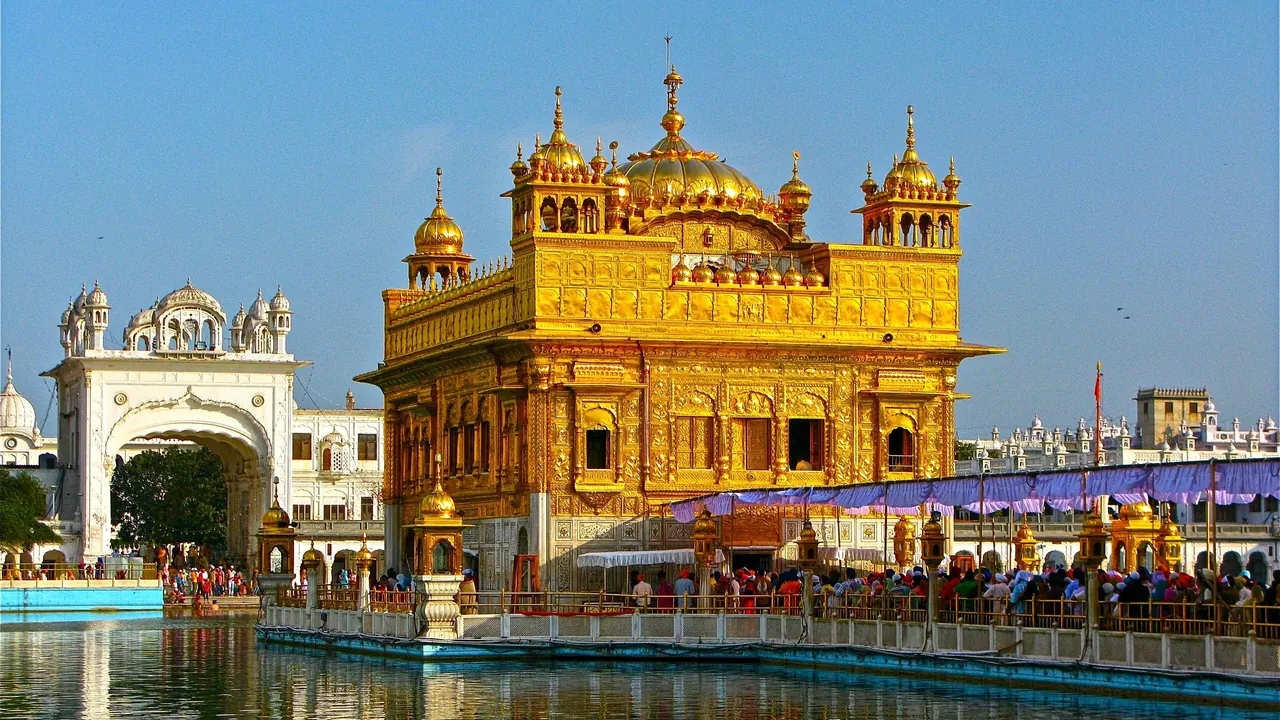
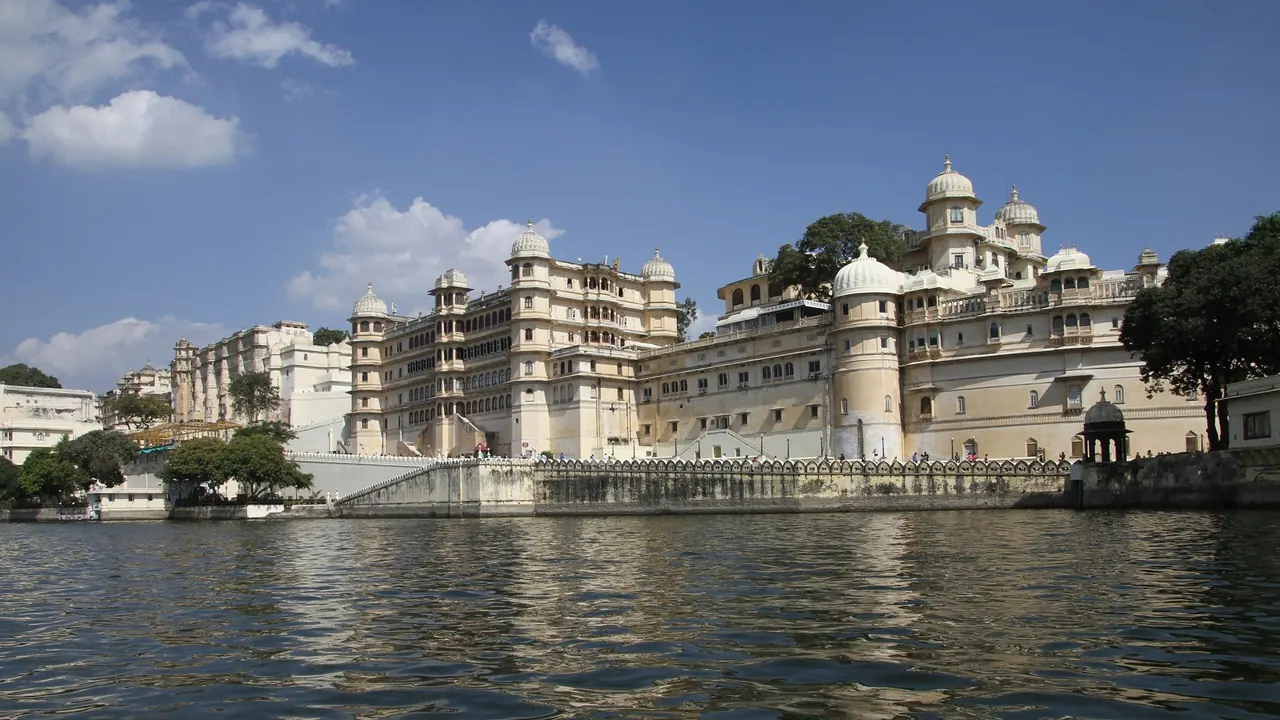
Photos: Amritsar by Ken Wieland, CC BY-SA 2.0, cropped; Udaipur by Gerd Eichmann, CC BY-SA 4.0, cropped.
Amritsar or Udaipur?
Our verdict in twelve categories, each scored against the same fixed benchmark cities, and the climate month by month, so you can choose for your trip.
Choose Amritsar for
- food and drink
- getting around
- prices
Amritsar suits a traveller who wants one overwhelming experience and the food to go with it. The Golden Temple seen at dawn and again after dark, the history of Jallianwala Bagh and Partition, and kulcha and lassi in the old city fill a short stay. Everything central is close together and costs very little.
Choose Udaipur for
- day trips
- nature and the outdoors
- wellness
For a slower, more scenic trip, Udaipur is the better fit. Its palaces on Lake Pichola, spa hotels and sunset terraces set an easier pace. The forts and temples of Mewar, from Kumbhalgarh and Ranakpur to Chittorgarh, give it days out that Amritsar cannot match.
Scoreboard
Twelve categories on one fixed scale from 0 to 100. The shaded stretch is the gap between the two.
Your match
Pick a travel style or drag the sliders, and both match scores follow your weighting.
Wins on food and drink and getting around with your weighting.
Wins on day trips and nature and the outdoors with your weighting.
What matters to you?
Category by category
What the scores mean for a trip.
Beaches & swimming
Neither city is anywhere near a coast, so the choice comes down to pools. In Amritsar the only open water is the Golden Temple's sacred pool, where pilgrims bathe as an act of devotion and visitors do not swim, so a hotel pool is all there is.
Udaipur's lakes are also for boats rather than swimming. However, many heritage hotels around Lake Pichola have pools that look out over the water, so a hot afternoon by the pool there still feels like part of the trip.
Food & drink
Amritsar is the one to travel to for food. Its Punjabi cooking is very much its own. Long-established dhabas in the old walled city serve tandoor kulcha with chole and butter, fried river fish and lassi in steel tumblers, and at the Golden Temple's langar you eat dal and roti on the floor beside pilgrims.
Udaipur is good for a few days of eating, with Mewari dishes such as dal baati churma and laal maas and thalis with refills. The best of it is at the kachori stalls in the bazaars, not on the lakefront, where rooftop restaurants sell the view more than the cooking. Udaipur does have the palace-hotel fine dining that Amritsar lacks.
Culture & sights
Each city is built around one great set piece, and they are equally rewarding in different ways. Amritsar's is a living shrine: the Golden Temple, open to all and worth seeing at dawn and again at night. The weight of modern history is a short walk away, at Jallianwala Bagh and the Partition Museum.
Udaipur's set piece is royal and scenic. The City Palace rises from Lake Pichola, the Lake Palace and Jag Mandir sit on the water, and havelis and ghats fill the old city behind them. Choose Amritsar for faith and history, Udaipur for palaces and the view they make together.
Nightlife
Neither city offers a real night out, but Udaipur gives an evening a little more to do. In Amritsar alcohol is unwelcome near the temple and the few bars are in hotels in the newer districts. The best way to spend the night is a walk round the lit pool after dinner.
Udaipur adds sunset drinks on rooftops above Lake Pichola and a handful of lounge bars, some with music at weekends. The old city still goes quiet early, though, and there are no clubs.
Nature & outdoors
Udaipur has a natural setting that Amritsar cannot match. Its chain of lakes is ringed by the Aravalli hills, with boat rides, the Sajjangarh forest below the Monsoon Palace, and short hikes and bike rides through the hill villages. The Kumbhalgarh sanctuary is further out.
Around Amritsar the land is flat Punjab farmland, and the city parks are good only for a shaded stroll. The one real outing is the Harike wetland, worth the drive in winter for its migratory waterbirds.
Day trips
Udaipur is far the better base for getting out of town. Within about two hours you can reach the temple ruins of Nagda, the pilgrimage town of Nathdwara, the walls of Kumbhalgarh, the marble Jain temple at Ranakpur and the fortress of Chittorgarh. That is enough for several full days out with a driver.
From Amritsar, the trip everyone makes is to the evening flag ceremony at the Wagah border, about 30km away, which is loud, crowded and memorable. Beyond that the choices are mostly Sikh shrines such as Tarn Taran Sahib, plus the French-style palace at Kapurthala.
Good for families
Amritsar's best moments for children are spectacles: the langar kitchens cooking for thousands and the stamping guards at Wagah. Very little else is made for them, and parents have to cope with crowded lanes, fierce summer heat and dense fog on winter mornings.
Udaipur gives younger visitors more to do between sights, with boat rides, puppet shows and the cable car, and lakeside hotels with pools make a calmer base. Its narrow lanes are shared with motorbikes and cows, though, so in both cities a winter visit with older children works best.
Getting around
Amritsar is the easier of the two on foot, at least at its centre. The Golden Temple, Jallianwala Bagh and the Partition Museum all sit around a pedestrianised heritage street. Outside that area, you rely on rickshaws or ride-hailing cars through heavy traffic.
Udaipur's old city is compact too, but its lanes are narrow, steep in places and full of motorbikes, so even short walks need care. The hill viewpoints and every day trip need a hired driver, so you spend more of the visit in cars.
Shopping & style
The two are about level for shopping, and the difference is what you bring home. Amritsar's bazaars, such as Hall Bazaar and Katra Jaimal Singh, are all about Punjabi textiles: phulkari embroidery, shawls, suit fabric and stacks of juttis. You can add steel bangles, and dried warian from the food shops.
Udaipur is a crafts town, best for miniature paintings from the workshops near the City Palace, bandhani and block prints, silver jewellery and puppets. You bargain in both places, and the selling near Udaipur's palace is pushier.
Affordability
Both are very cheap, but Amritsar is cheaper still because its main attraction costs nothing. The temple is free, the langar feeds you, and the pilgrim rest houses offer basic beds.
Udaipur is just as inexpensive day to day, with thalis, autorickshaws and guesthouses to suit any budget. The catch is that the kind of stay it is famous for, in a lake palace or a heritage haveli with a view, is priced at international luxury levels.
Live music & performing arts
Amritsar's music is devotional and never stops. Gurbani kirtan is sung to harmonium and tabla in the Golden Temple from before dawn until late at night, and anyone can listen from beside the pool. Beyond that, there is no theatre or concert life to follow.
Udaipur's performances are staged for an audience. You can watch the evening folk dance show at Bagore ki Haveli, the puppet shows kept going by Lok Kala Mandal, and the folk musicians at the December crafts fair at Shilpgram. That makes for a lighter, more varied evening, though Udaipur has no regular classical or theatre circuit either.
Wellness & relaxation
Udaipur is the place to slow down. Ayurvedic massage and yoga classes are easy to find in the old city, the lake hotels run full spas, and a terrace over the water at sunset is restful in itself.
Amritsar has only a few hotel spas, in a loud and crowded city. Its calm is spiritual rather than pampering: the cool marble beside the temple pool at dawn or late at night, with hymns in the air.
When should you go?
Pick your month. The climate figures are measured averages, not a forecast.
Amritsar in July
Udaipur in July
Daytime high, °C
Rainfall in the month, mm
Where the figures come from
Udaipur has no rain gauge within 25 km of the centre, so its rainfall comes from a gridded climate dataset read at the city rather than from a gauge further away.
Temperature and rainfall are climate normals, averaged over the years shown. Amritsar: 1991-2020 normals, Amritsar (1.2 km from centre). Udaipur: 1978-2025, 10 years observed (rainfall 1991-2020) normals, Udaipur Dabok (20.6 km from centre).
Neither city has a beach, so the real question is when it is comfortable to walk. Both are at their best from October to March. In winter Amritsar is the cooler of the two, with January highs near 17°C, fairly sunny afternoons and foggy mornings. Udaipur stays warm and almost dry, at about 24°C. Spring heats up fast in both, and by May both are close to 40°C, too hot for sightseeing.
The monsoon runs from late June into September. Udaipur takes the heavier rain, around 257mm in July, and afterwards its lakes are full and the hills are green, which makes October especially good there. Amritsar is nearly as wet in July and August, and it gets less sun then than in its bright spring months.
Which traveller are you?
For a food and nightlife trip, Amritsar is the better pick, as long as you plan to eat big at breakfast and lunch, because its Punjabi cooking is reason enough to come. Evenings end early in both cities, and Udaipur's lakeside ones only slightly later.
On a relaxing and wellness trip, Amritsar gives you calm only in short spells, at the temple pool early or late. In Udaipur you can build whole days around rest: a morning treatment, a yoga class and a slow evening on a lake terrace.
For an outdoors trip, choose Udaipur and go between October and March, when it is cool enough to spend long days outside. Amritsar has one worthwhile winter outing in flat country, while Udaipur's hills and lakes can fill several days.
Before you go
| Measure | Amritsar | Udaipur |
|---|---|---|
| Official language | Hindi, English | Hindi, English |
| Currency | Indian Rupee (INR) | Indian Rupee (INR) |
| Sockets | CM230 V, 50 Hz | CM230 V, 50 Hz |
| Driving side | Left | Left |
| Time zone | UTC+5:30 | UTC+5:30 |
| Emergency number | 108 or 112 | 108 or 112 |
| Elevation | 234 m | 578 m |
| Main airport | Sri Guru Ram Das Ji International Airport (ATQ)12 km from centre17 non-stop destinations | Maharana Pratap Airport (UDR)22 km from centre11 non-stop destinations |
By the numbers
| Measure | Amritsar | Udaipur |
|---|---|---|
| City population | 1,159,227 | 451,100 |
| People per km² | 6,819 | 12,192 |
| Museums within 10 km | 3 | 3 |
| UNESCO World Heritage sites within 50 km | 1 | 0 |
Where else could you go?
Every comparison below shares a destination with this one, so you can follow Amritsar or Udaipur somewhere new.
- Jodhpurvs Udaipur
- Jaipurvs Udaipur
- Rishikeshvs Amritsar
- Delhivs Amritsar
- Agravs Udaipur
- Jaipurvs Amritsar