Photos: Amritsar by Ken Wieland, CC BY-SA 2.0, cropped; Varanasi by Dennis G. Jarvis, CC BY-SA 2.0, cropped.
Amritsar or Varanasi?
Our verdict in twelve categories, each scored against the same fixed benchmark cities, and the climate month by month, so you can choose for your trip.
Choose Amritsar for
- families
- food and drink
- getting around
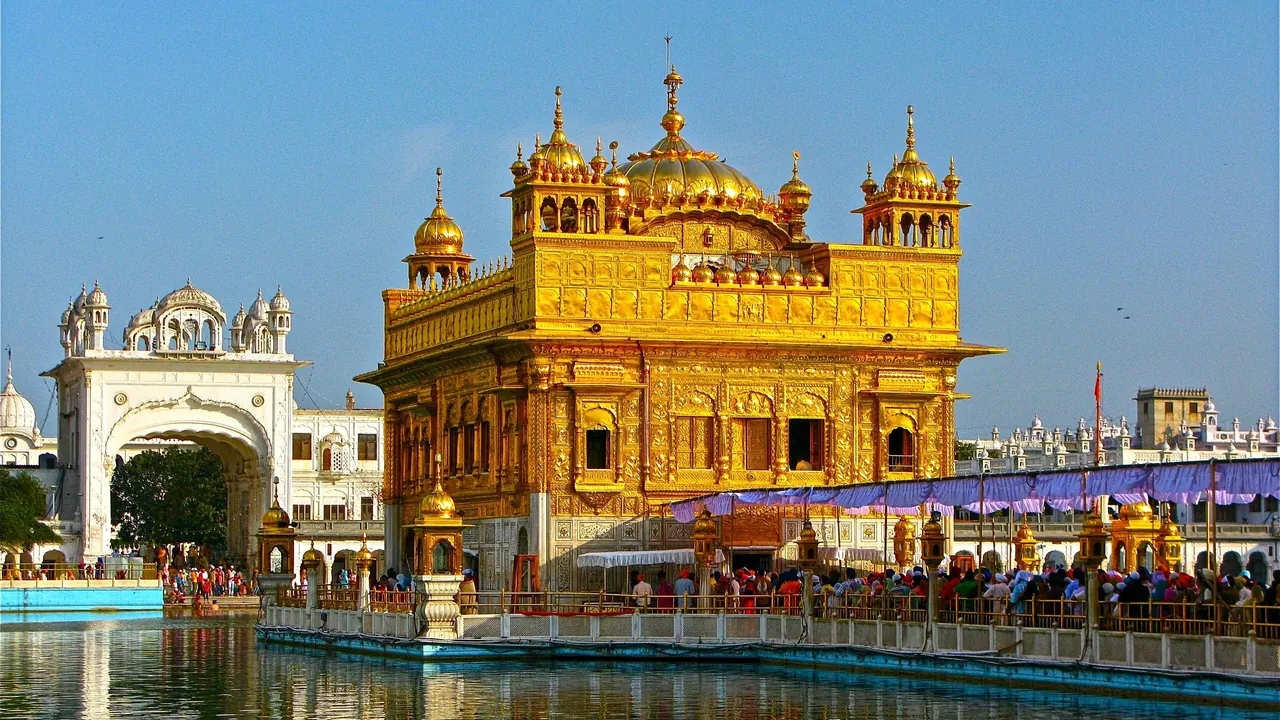
Amritsar suits a traveller who wants one overwhelming sight and good food around it. The Golden Temple, with its langar, its dawn and night-time walks by the pool and the hymns carried across the marble, gives a short stay real depth. Amritsar also eats better, keeps its main sights within a compact walkable core, and is a little easier with older children.
Choose Varanasi for
- live music and the arts
- culture and sights
- wellness
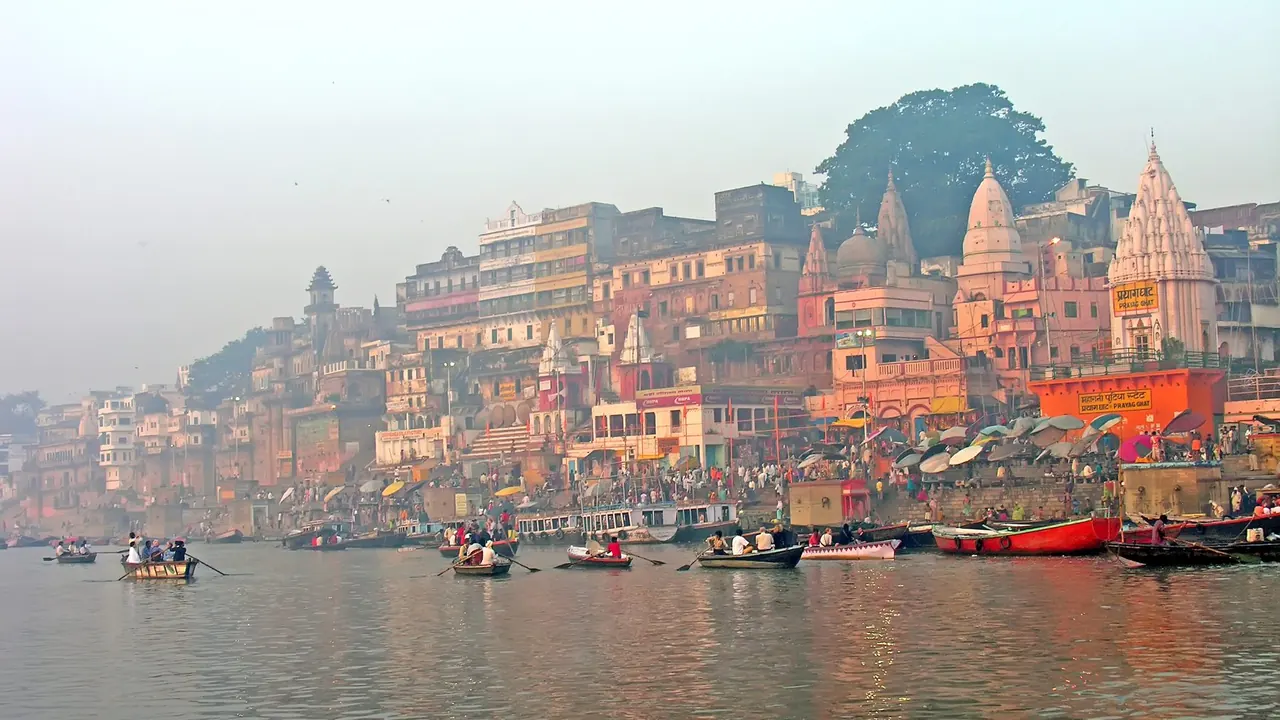
Varanasi rewards the visitor who wants to spend days absorbing a whole living religious city. The ghats along the Ganges, the cremation grounds, the lanes around Kashi Vishwanath and the nightly aarti add up to more to see than Amritsar offers, and the city's classical music tradition and Sarnath next door give it greater range. It is harder going, though, and best left to adults ready for intensity.
Scoreboard
Twelve categories on one fixed scale from 0 to 100. The shaded stretch is the gap between the two.
Your match
Pick a travel style or drag the sliders, and both match scores follow your weighting.
Wins on families and food and drink with your weighting.
Wins on live music and the arts and culture and sights with your weighting.
What matters to you?
Category by category
What the scores mean for a trip.
Beaches & swimming
Neither city has anything for a beach or swimming trip, as both lie far inland on the northern plains. The water people do enter is sacred in both: the pool around the Golden Temple, and the Ganges at dawn, which is also badly polluted and fast-flowing. A hotel pool is the only option, and in Varanasi only a few larger hotels outside the old city have one.
Food & drink
Amritsar is the better eating city. Its Punjabi cooking is hearty and confident, from tandoor-baked kulcha drenched in butter to fried fish and slow-cooked dal, and eating at the Golden Temple langar, sitting on the floor beside pilgrims, is a meal you will remember.
Varanasi's strengths are narrower and sweeter: kachori and jalebi for breakfast, tamatar chaat, lassi in clay cups, winter malaiyo and paan rolled to order. Near the ghats it is almost entirely vegetarian, so meat-eaters will find more in Amritsar. In both, the best eating happens before evening, and fine dining is confined to hotels.
Culture & sights
Varanasi offers much more. Its riverfront of more than eighty ghats, with pilgrims bathing, priests at prayer and cremation fires at Manikarnika, is a spectacle that runs all day, backed by the lanes to Kashi Vishwanath, Ramnagar Fort and the museum at Banaras Hindu University.
Amritsar's culture rests on one supreme sight, the Golden Temple, which repays repeat visits at different hours, plus the sobering history of Jallianwala Bagh and the Partition Museum. It is the more compact visit and easier to take in, while Varanasi asks for days of wandering, and some of its inner sanctums are closed to non-Hindus.
Nightlife
Both are holy cities where alcohol is unwelcome near the main shrine, so neither offers a real night out, and drinking means a hotel bar in the newer districts. The difference is in how evenings feel: in Amritsar, a long dinner and a stroll round the lit temple pool; in Varanasi, the aarti on the ghats, then chai and music in the Assi Ghat cafés before an early night.
Nature & outdoors
Both sit in flat farmland, so neither is a trip for the outdoors. Varanasi's open space is the river itself, with sunrise boat rides and walks on the sandbank opposite, and the Vindhya hills and Chandraprabha's waterfalls lie about two hours away. Amritsar has city gardens such as Ram Bagh and, about an hour and a half out, the Harike wetland, which is worth the trip for migratory birds in winter.
Day trips
Varanasi has the better day out in Sarnath, where the Buddha first preached, only half an hour away with its stupa, ruins and the Ashokan lion capital. Chunar Fort and the medieval mosques of Jaunpur add a couple more good half days or full days.
Amritsar's outings are fewer. The flag-lowering ceremony at the Wagah border is loud, crowded and memorable, but beyond it the choices are mostly Sikh shrines such as Tarn Taran Sahib and the palace town of Kapurthala, which will appeal most to visitors already drawn by Sikh history.
Good for families
Amritsar is the more workable city with children, mainly because a visit can centre on the Golden Temple, where families are made welcome and older children can watch the huge langar kitchens at work, then finish with the stamping and cheering at Wagah. It still suits a short cultural trip with older children better than a relaxed one with toddlers. The old-city lanes are crowded, water and street food need care, and the summer heat and winter fog are hard on young ones.
Varanasi is far tougher. Cremations burn openly on the ghats, the narrow lanes are shared with cows, motorbikes and open drains, and there are no parks, zoos or child-friendly museums to break up the day. Families who come usually keep it brief: a dawn boat ride, an outing to Sarnath and a comfortable hotel away from the river.
Getting around
Amritsar is the easier city to get around. Its main sights sit together around a pedestrianised heritage street, so most of a visit is done on foot, and for everything else you take a rickshaw or a ride-hailing car.
Varanasi has a fine walk of its own along the riverside ghats from Assi to Raj Ghat, with boats covering the same stretch from the water. Step away from the river, though, and the old city becomes a disorienting maze, while the newer city's traffic is heavy. Neither has a metro, and both call for a hired car or taxi for trips out of town.
Shopping & style
Varanasi has the stronger draw in Banarasi silk, brocade woven with gold and silver thread, which you can buy straight from workshops in the weavers' quarters. Brass ritual ware, wooden toys and instruments fill out the crafts, though touts steering visitors to particular silk houses are part of the experience.
Amritsar's bazaars, Hall Bazaar and Katra Jaimal Singh, are better for everyday Punjabi textiles: phulkari embroidery, shawls, suits and stacks of embroidered juttis, plus papad and warian to take home. Bargaining is expected in both, and neither has much in the way of luxury shopping.
Affordability
Both are exceptionally cheap, and in both the main sights are free: the Golden Temple and its langar in Amritsar, the ghats and the aarti in Varanasi. Amritsar's pilgrim rest houses and inexpensive mid-range hotels make it easy to stay comfortably for little, while in Varanasi the big temptation for the wallet is silk, along with the riverside palace hotels.
Live music & performing arts
Varanasi is far ahead. It is a historic home of Hindustani classical music, with its own vocal, tabla and dance traditions, intimate recitals in music schools, all-night concerts at the Sankat Mochan festival in spring, and the long Ramlila at Ramnagar. The nightly Ganga aarti is itself a staged performance watched by thousands.
Amritsar's one great musical experience is the gurbani kirtan sung in the Golden Temple from before dawn until late, open to anyone sitting by the pool. Apart from that there are only occasional bhangra and folk shows.
Wellness & relaxation
Neither is a spa destination, but Varanasi gives more to someone who wants to slow down. Yoga, meditation teachers and Ayurvedic massage are easy to find around Assi Ghat, and a quiet dawn on the river can be very calming, though the city's intensity makes rest something you have to plan.
Amritsar's calm comes almost entirely from one place: the cool marble around the temple pool at dawn or late at night, with hymns in the air. Beyond that, the city is noisy and crowded, and it has little beyond a few hotel spas.
When should you go?
Pick your month. The climate figures are measured averages, not a forecast.
Amritsar in July
Varanasi in July
Daytime high, °C
Rainfall in the month, mm
Where the figures come from
Varanasi has no weather station within reach, so its figures come from a gridded climate model rather than a measured record, and read a broad area rather than the city itself.
Temperature and rainfall are climate normals, averaged over the years shown. Amritsar: 1991-2020 normals, Amritsar (1.2 km from centre). Varanasi: 2001-2020 normals, NASA POWER reanalysis grid, no weather station within 90 km.
Both cities are at their best from October to March, and both become punishing from April to June, but the details differ. Amritsar has the colder winter: daytime highs drop to around 17°C in January, pleasant for walking, though the dense morning fog can cloak the temple and the roads. Varanasi stays milder through winter at around 24°C, with almost no rain from November to March, which makes it a comfortable choice for the darkest months.
The hot season peaks harder in Varanasi, reaching about 43°C in May, while Amritsar tops out a few degrees lower. The monsoon then arrives in both, heavier on the Ganges, where July brings around 249mm, than in Punjab at about 190mm. Amritsar's sunniest stretch runs from spring into May, but for sightseeing on foot, aim for October, November, February or March in either city.
Which traveller are you?
On a culture and arts trip, Varanasi is the stronger choice. Its kilometres of ghats, daily rituals and cremations, the Kashi Vishwanath lanes and a deep Hindustani classical music tradition give far more to fill several days than Amritsar's small set of sights.
On a family trip with children, Amritsar is the safer bet. Children are warmly welcomed at the Golden Temple, the langar and the Wagah ceremony thrill older ones, and the city avoids the open cremations and narrow, cattle-filled lanes that make Varanasi so hard with young ones.
For a food-focused trip, Amritsar eats better: buttery Amritsari kulcha, fried river fish, dal and lassi from long-established dhabas. Varanasi's street snacks and sweets are excellent but narrower, and neither city offers any real nightlife to round off the evening.
Before you go
| Measure | Amritsar | Varanasi |
|---|---|---|
| Official language | Hindi, English | Hindi, English |
| Currency | Indian Rupee (INR) | Indian Rupee (INR) |
| Sockets | CM230 V, 50 Hz | CM230 V, 50 Hz |
| Driving side | Left | Left |
| Time zone | UTC+5:30 | UTC+5:30 |
| Emergency number | 108 or 112 | 108 or 112 |
| Elevation | 234 m | 76 m |
| Main airport | Sri Guru Ram Das Ji International Airport (ATQ)12 km from centre17 non-stop destinations | Lal Bahadur Shastri International Airport (VNS)21 km from centre16 non-stop destinations |
By the numbers
| Measure | Amritsar | Varanasi |
|---|---|---|
| City population | 1,159,227 | 1,198,491 |
| People per km² | 6,819 | 14,598 |
| Museums within 10 km | 3 | 2 |
| UNESCO World Heritage sites within 50 km | 1 | 1 |
Where else could you go?
Every comparison below shares a destination with this one, so you can follow Amritsar or Varanasi somewhere new.
- Pokharavs Varanasi
- Kathmanduvs Varanasi
- Rishikeshvs Amritsar
- Delhivs Amritsar
- Jaipurvs Amritsar
- Agravs Varanasi