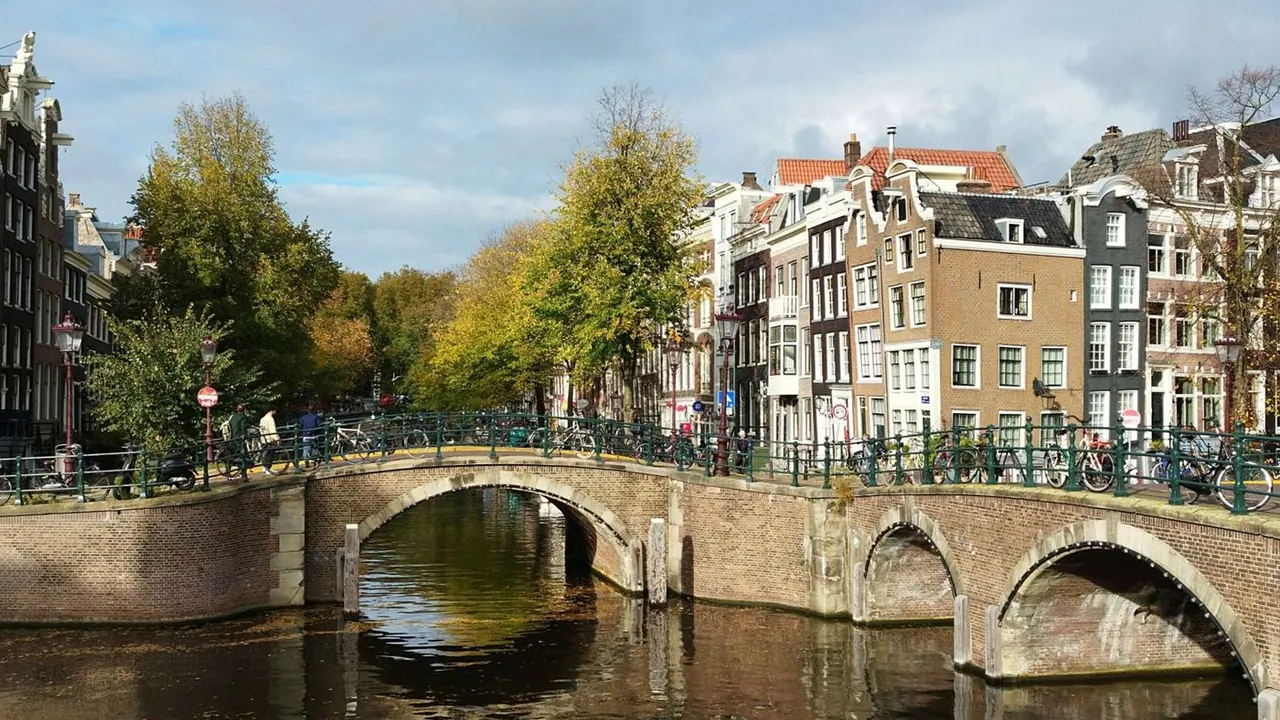
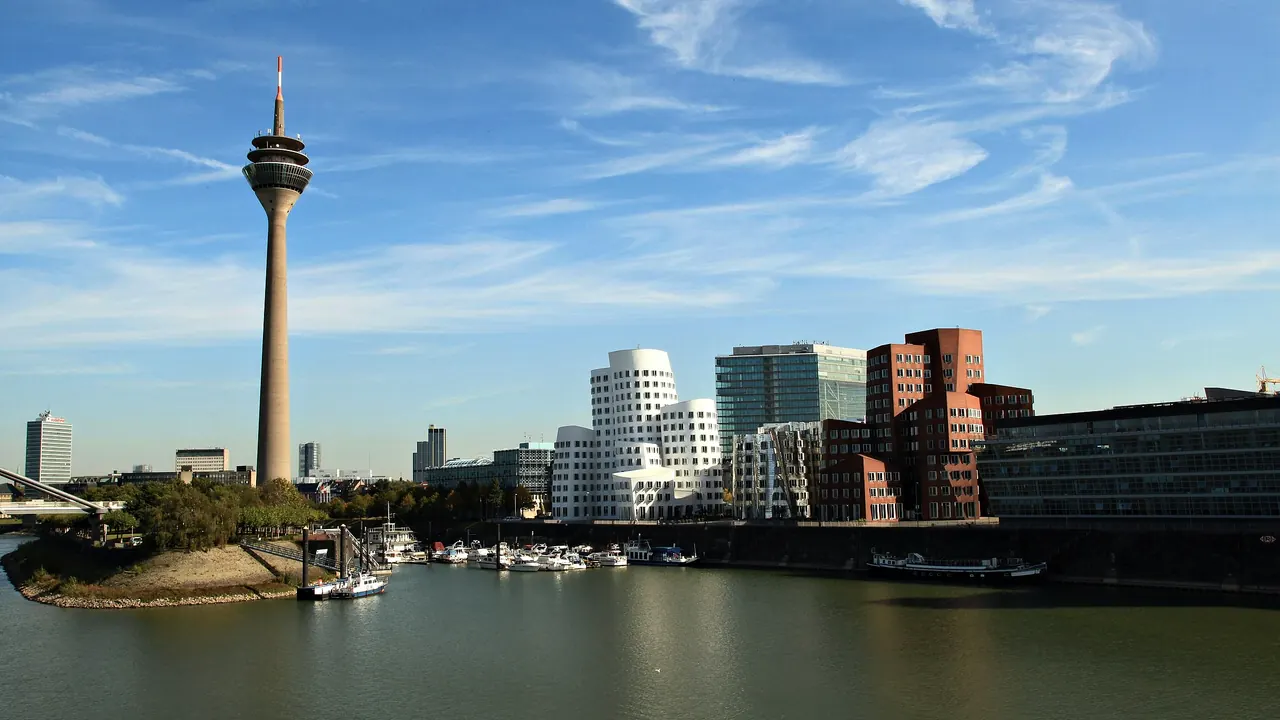
Photos: Amsterdam by Hans, Pexels License; Dusseldorf by Frank Vincentz, CC BY-SA 3.0, cropped.
Amsterdam or Dusseldorf?
Our verdict in twelve categories, each scored against the same fixed benchmark cities, and the climate month by month, so you can choose for your trip.
Choose Amsterdam for
- culture and sights
- live music and the arts
- nightlife
Amsterdam suits the traveller who wants a great deal of first-rate art and history within walking distance. The Rijksmuseum, the Van Gogh Museum and the Anne Frank House sit in or beside a canal ring that is a sight in its own right. Add the Concertgebouw, a serious club scene and quick trains to Haarlem, Delft or Leiden, and it fills a busy few days well, if you can absorb some of the highest room costs in Europe.
Choose Dusseldorf for
- prices
- food and drink
- wellness
Düsseldorf is the better pick for a calmer, cheaper stay with a German feel. Its pleasures are modern art at K20 and K21, Altbier in the Altstadt brewhouses, the ramen counters of the Japanese quarter and the Königsallee, with Cologne and the Ruhr close by train. Expect a largely rebuilt old town rather than historic streets, and plan around the trade fairs, when hotel rooms become scarce and expensive.
Scoreboard
Twelve categories on one fixed scale from 0 to 100. The shaded stretch is the gap between the two.
Your match
Pick a travel style or drag the sliders, and both match scores follow your weighting.
Wins on culture and sights and live music and the arts with your weighting.
Wins on prices and food and drink with your weighting.
What matters to you?
Category by category
What the scores mean for a trip.
Beaches & swimming
Neither city is for a beach vacation, but Amsterdam is much closer to the sea. The dune-backed sand at Zandvoort and Bloemendaal is about half an hour by train, and on hot days the city's own IJburg beaches and lakes such as the Sloterplas are good for a dip, even if the North Sea is mostly for walking beside.
Düsseldorf is inland. Its Rhine is unsafe for swimming despite the sandy banks, and the coast is a long day's travel away, so a swim there means Unterbacher See or an outdoor pool.
Food & drink
Both cities eat well, but in quite different ways. Amsterdam's best food came in through its trading past: Indonesian rijsttafel and Surinamese roti, plus herring stalls, stroopwafels at the Albert Cuyp and the brown-café borrel of beer and bitterballen. De Pijp, the Jordaan and Oost are the places to eat.
Düsseldorf has the stronger local cooking. Its Altbier brewhouses serve sauerbraten and Halve Hahn with the city's own mustard, and around Immermannstrasse one of Europe's largest Japanese communities supports ramen counters, izakaya and Japanese bakeries. The choice there is deep in those two directions rather than wide.
Culture & sights
Amsterdam is well ahead here. The Rijksmuseum, the Van Gogh Museum and the Stedelijk stand together on the Museumplein, and the Anne Frank House stays with every visitor. The Golden Age canal ring with its merchant houses makes the streets themselves the sight.
Düsseldorf is an art city with a narrower range. Klee at K20, the net slung under the glass dome of the Kunstsammlung's second house and the Kunstpalast are excellent, but wartime bombing left little old fabric. Benrath Palace, the Gehry buildings in the Medienhafen and the ruins at Kaiserswerth round out a visit.
Nightlife
Amsterdam has more to offer after dark. Its electronic music scene, with all-night clubs in old industrial buildings and across the IJ in Noord, draws visitors in its own right, and canal-side terraces in the Jordaan and De Pijp suit a slower evening.
Düsseldorf's night centres on one place: the Altstadt, a few streets of brewhouses where crowds drink Altbier standing outside, more street party than club night. Its clubs are modest, but Carnival, when the whole city goes out in costume for days, has no Amsterdam equivalent.
Nature & outdoors
Both cities sit in flat country, and the outdoors is gentle rather than scenic. Around Amsterdam it means polders, dykes and windmills, best seen by bike in Waterland across the IJ, with the Amsterdamse Bos and the coastal dunes of Zuid-Kennemerland for walks.
Düsseldorf has the Rhine meadows and long riverside cycle paths. It also has something Amsterdam lacks: low wooded hills in the Bergisches Land and the Neandertal close by, with the Siebengebirge and the Eifel further out.
Day trips
Both make excellent bases, and Amsterdam edges ahead because so much is so close. Haarlem is a quarter of an hour away. Leiden, Delft, Utrecht and The Hague with the Mauritshuis are all within an hour, and the windmills at Zaanse Schans or the Keukenhof in spring make easy outings.
From Düsseldorf, Cologne cathedral is under half an hour away, with Bonn, the Brühl palaces and Essen's Zollverein not much further. Its trips lean more towards single landmarks and industrial heritage, and Aachen or the Middle Rhine castles take a fuller day.
Good for families
Amsterdam gives children more to do within the city: Artis, one of Europe's oldest zoos, the NEMO science museum built for play, city farms, pancake houses and canal boats. The catch is the fast bikes and unfenced canal edges.
Düsseldorf is calm and easy with a buggy. It has Aquazoo Löbbecke, the tilted windows of the Rheinturm and the free game park in Grafenberg. For bigger outings, Phantasialand and Movie Park are about an hour away, closer than Efteling is to Amsterdam.
Getting around
Both centres are compact, flat and easy to walk, but Amsterdam is simpler still. Most sights are within half an hour on foot, trams and a metro cover the rest, free ferries cross the IJ and Schiphol is a short direct train ride away. Cycling is how locals get around, if you have the confidence for busy lanes.
In Düsseldorf, the riverside walk links the Altstadt, the Königsallee and the Japanese quarter neatly. Its light rail is part of a regional network that reaches Cologne and the Ruhr, though the fare zones take some working out, and cycling is pleasant mainly along the river.
Shopping & style
Shopping is equally good in both, but in opposite styles. Amsterdam's strength is independent shops: boutiques and vintage stores in the Nine Streets, galleries in the Jordaan and markets such as Waterlooplein and the floating Bloemenmarkt, with Delft blue and cheese to take home.
Düsseldorf is the place for luxury. The flagships and arcades of the Königsallee and the big department stores are the main draw. Flingern's design shops and the stationery of the Japanese quarter are its smaller independent side.
Affordability
Düsseldorf is the cheaper of the two, mostly because of hotels. Amsterdam's rooms around the canal ring are among the most expensive in Europe and come with a tourist tax on top, and meals and museum tickets add up. Many visitors sleep in Haarlem or Utrecht to save.
Düsseldorf's rooms are still pricey and climb steeply during the big trade fairs, but in other weeks a stay costs noticeably less. Brewhouse meals and Japanese noodle lunches help a budget go further.
Live music & performing arts
Amsterdam has the bigger programme. The Concertgebouw and its orchestra are among the finest in the world, the Dutch National Opera and Ballet perform on the Amstel, the Muziekgebouw and the Bimhuis cover contemporary music and jazz, and Paradiso and the Melkweg bring in touring bands.
Düsseldorf has the Deutsche Oper am Rhein and the domed Tonhalle, a tradition of political cabaret and a place in music history as Kraftwerk's home town. In both cities, spoken theatre is mostly in the local language.
Wellness & relaxation
Neither city is a place to come and unwind, and both offer the northern sauna habit, mixed and nude, rather than thermal baths. Amsterdam's version is large day spas on the edge of the city. Quiet time means early mornings on the canals or the Vondelpark, because the centre stays crowded.
Düsseldorf's pace is easier day to day, with walks on the Rhine meadows and the Japanese garden in Nordpark. Large thermal complexes and the hot springs of Aachen are close enough for a spa day.
When should you go?
Pick your month. The climate figures are measured averages, not a forecast.
Amsterdam in July
Dusseldorf in July
Daytime high, °C
Rainfall in the month, mm
Where the figures come from
Amsterdam has no rain gauge within 25 km of the centre, so its rainfall comes from a gridded climate dataset read at the city rather than from a gauge further away.
Amsterdam's sunshine is measured 35 km from the centre, at De Bilt.
Temperature and rainfall are climate normals, averaged over the years shown. Amsterdam: 1991-2020 normals, Amsterdam Airport Schiphol (12 km from centre). Dusseldorf: 1991-2020 normals, Düsseldorf (8.3 km from centre).
Both cities follow the same northern pattern: cold, dark winters, a mild spring and their best weather from May to September. Düsseldorf is a little warmer in summer, with July highs around 25°C against Amsterdam's 22°C, so evenings on the Rhine meadows are more reliable. Neither gets too hot for a full day on foot or by bike. The North Sea off Zandvoort reaches only about 19°C in August, so most swims there are short.
Autumn is where they differ. Amsterdam gets wetter as the year goes on, with October its rainiest month at around 102mm. Düsseldorf's rain stays fairly even and is noticeably lighter from September onwards. April is the driest month in both. The sunshine peaks at different times: Amsterdam is sunniest in May, while Düsseldorf's brightest stretch runs from May to July. Late spring and early summer therefore suit either city. From November to February both are grey and cold, better for museums and brewhouses than for time outdoors.
Which traveller are you?
For a culture and arts trip, Amsterdam has far more depth. Its collections run from the Golden Age to modern design at the Stedelijk, and the Oude Kerk, the Royal Palace and the Portuguese Synagogue fill in the history. Düsseldorf mainly suits travellers who come for modern art.
On a tight budget, Düsseldorf goes further. Outside the trade-fair weeks its rooms cost less than Amsterdam's, brewhouse meals and noodle-bar lunches are fair value, and some museums have free or reduced days. It is still a prosperous Western European city, though, not a cheap one.
On a family trip with children, Amsterdam keeps more within easy reach, so a day can mix outings and rests without long journeys. It works best with school-age children who can cope with busy streets. With toddlers in buggies, Düsseldorf's orderly streets ask less of parents.
Before you go
| Measure | Amsterdam | Dusseldorf |
|---|---|---|
| Official language | Dutch | German |
| Currency | Euro (EUR) | Euro (EUR) |
| Sockets | CF230 V, 50 Hz | CF230 V, 50 Hz |
| Driving side | Right | Right |
| Time zone | UTC+1, UTC+2 in summer | UTC+1, UTC+2 in summer |
| Emergency number | 112 | 112 |
| Elevation | -2 m | 38 m |
| Main airport | Amsterdam Airport Schiphol (AMS)12 km from centre287 non-stop destinations | Düsseldorf Airport (DUS)7 km from centre182 non-stop destinations |
| Public holidays this year | 11 days | 11 days |
By the numbers
| Measure | Amsterdam | Dusseldorf |
|---|---|---|
| City population | 921,468 | 619,444 |
| People per km² | 4,208 | 2,849 |
| Museums within 10 km | 101 | 25 |
| UNESCO World Heritage sites within 50 km | 5 | 4 |
| Swim season, months above 21 °C | None | - |
Where else could you go?
Every comparison below shares a destination with this one, so you can follow Amsterdam or Dusseldorf somewhere new.