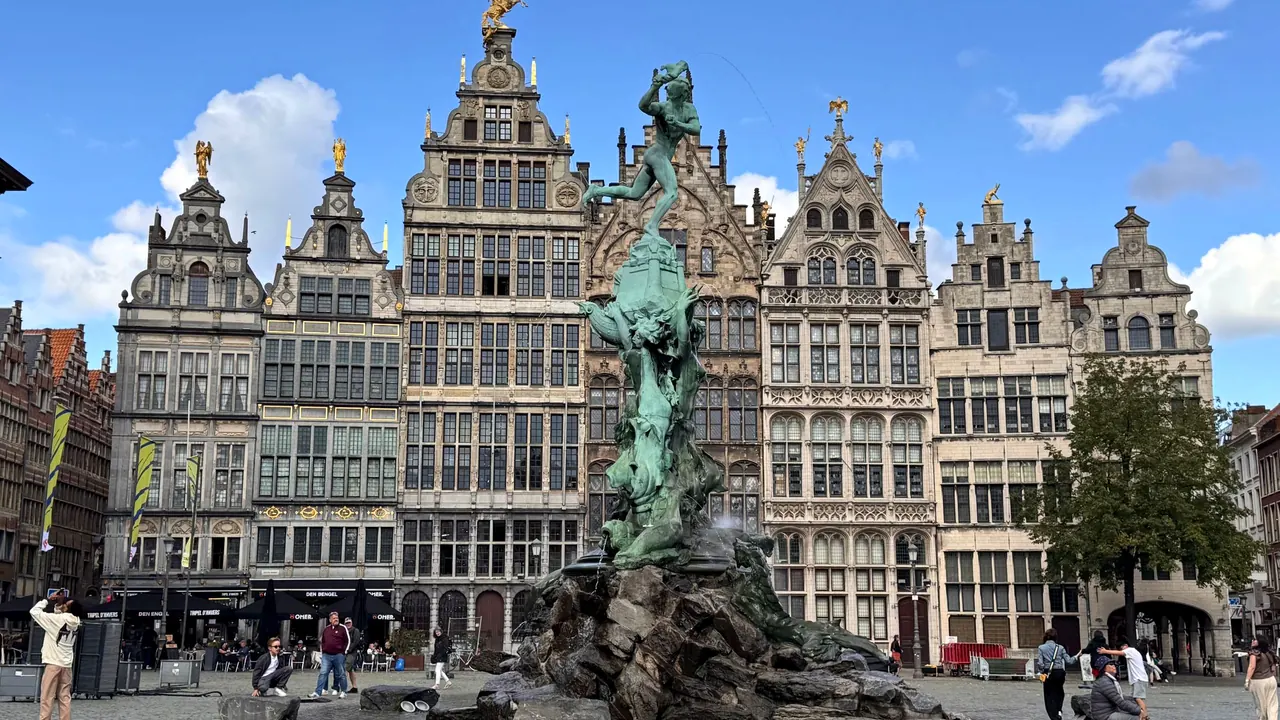
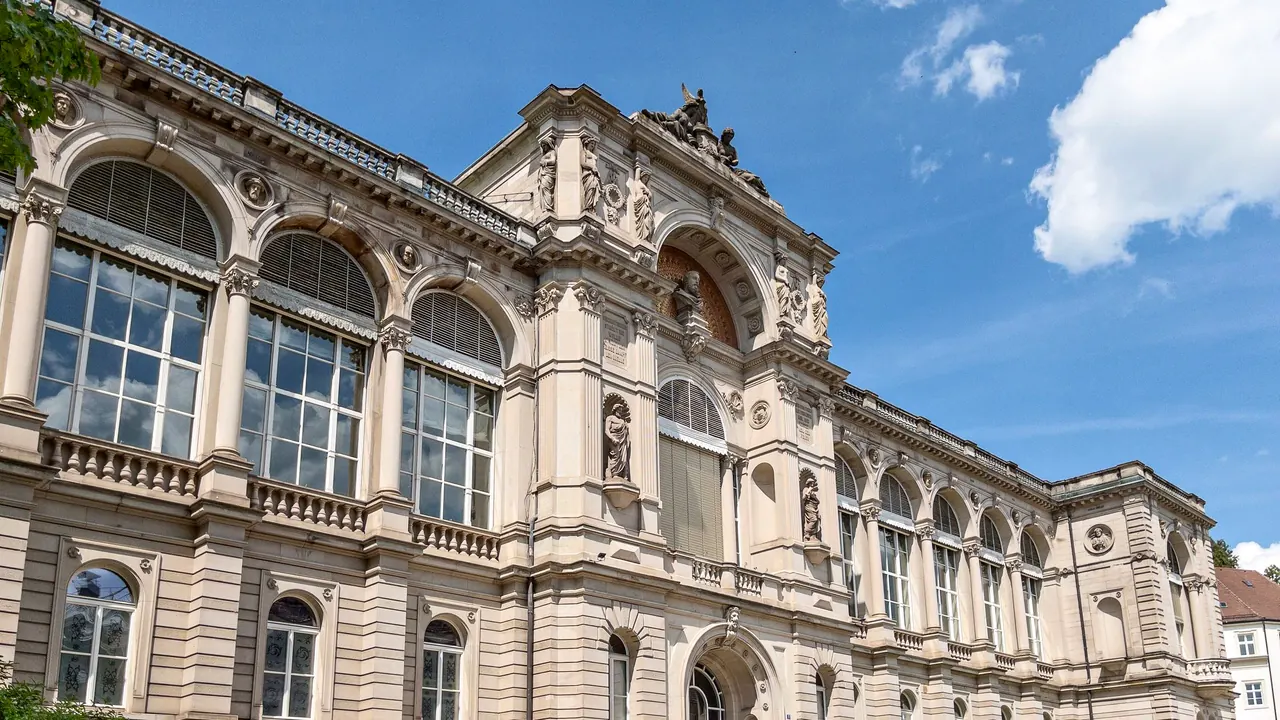
Photos: Antwerp by Norbert Jakab, Pexels License; Baden-Baden by Kent Wang, CC BY-SA 2.0, cropped.
Antwerp or Baden-Baden?
Our verdict in twelve categories, each scored against the same fixed benchmark cities, and the climate month by month, so you can choose for your trip.
Choose Antwerp for
- nightlife
- shopping
- culture and sights
Antwerp is the better pick for a city trip with substance. It has Rubens and the Flemish Baroque, a fashion-led shopping scene, Belgian beer in old brown cafés and nights that run late at the weekend. It is also the stronger base for train trips to Ghent, Bruges, Brussels and the Dutch cities, and you never need a car.
Choose Baden-Baden for
- wellness
- nature and the outdoors
If the aim is to slow down, choose Baden-Baden. A stay there is built around rest in the Friedrichsbad and Caracalla baths, and the Black Forest begins at the edge of town for walking. Evenings are quiet: a concert at the Festspielhaus, a glass of Riesling in a Rebland tavern, an early night. Anyone after clubs or a wide choice of restaurants will find it too sleepy.
Scoreboard
Twelve categories on one fixed scale from 0 to 100. The shaded stretch is the gap between the two.
Your match
Pick a travel style or drag the sliders, and both match scores follow your weighting.
Wins on nightlife and shopping with your weighting.
Wins on wellness and nature and the outdoors with your weighting.
What matters to you?
Category by category
What the scores mean for a trip.
Beaches & swimming
Neither is a place for the beach, though Antwerp is a little better placed. The North Sea at Blankenberge or Knokke is a train ride of under two hours away. In town, the sand of Sint-Annastrand on the Scheldt is for a stroll, not a swim.
Baden-Baden is far from any coast. In summer people swim in gravel-pit lakes on the Rhine plain or in outdoor pools, and the water the town is known for is the warm water of its baths.
Food & drink
Antwerp has more to eat and drink. There is stoofvlees, mussels with frites, chocolate and, above all, beer, from the local bolleke to long Trappist lists in the cafés around the cathedral. For a bigger dinner, Het Zuid and Het Eilandje have a modern restaurant scene.
Baden-Baden's strength is its wine rather than its range. Riesling and Pinot Noir from Neuweier and Varnhalt, Flammkuchen and Black Forest gateau are real pleasures. But the town is small, and the most ambitious cooking means driving up into the hills.
Culture & sights
Antwerp has the deeper sightseeing. Rubens's altarpieces hang in the cathedral, the Plantin-Moretus printing house is on the UNESCO list and the Royal Museum of Fine Arts has a major collection. Central Station and the Art Nouveau streets of Zurenborg add a second layer, and two or three days are easily filled.
In Baden-Baden the main sight is the town itself, a Belle Époque spa resort with the Kurhaus, the Trinkhalle and villas on the hillsides. The Frieder Burda museum adds modern art. It is handsome and all of a piece, but a day or two covers it.
Nightlife
This is one of the widest gaps between the two. Antwerp's bars have no fixed closing time, house and techno clubs fill old warehouses near the docks, and its gay scene is one of the best known in the Low Countries.
Baden-Baden's big night out is the Kurhaus casino, where a dress code applies, followed by a hotel bar or wine bar. The streets are quiet by late evening, and anyone who wants to dance has to go to Karlsruhe or Strasbourg.
Nature & outdoors
Baden-Baden is far better for the outdoors. The Merkur funicular and the Battert cliffs lead straight onto trails through fir forest. Further in, the Black Forest High Road runs past the Mummelsee to the Hornisgrinde moorland at over 1,100m, with mountain biking in summer and some skiing in winter.
Antwerp's surroundings are flat and heavily built up. The Kalmthoutse Heide heathland and the dykes along the Scheldt make good bike rides, but they fill a pleasant afternoon rather than give a reason to come.
Day trips
Both are well placed for day trips, but Antwerp has more choice and easier travel. Ghent, Bruges, Brussels, Leuven and Mechelen, then Rotterdam and Delft across the Dutch border, are all simple trips on frequent trains with no car needed.
Baden-Baden's list is strong too, with Strasbourg, Heidelberg and Freiburg each about an hour away. The Alsace wine villages and the Black Forest towns, though, are much easier with a car.
Good for families
Antwerp is the easier city with children. The zoo sits right next to Central Station, and the free foot tunnel under the Scheldt and the MAS rooftop are cheap treats. Cafés welcome families, though the grey weather means keeping indoor plans ready.
Baden-Baden is calm and safe, and children enjoy the funicular and the forest walks. Still, the town is made for adults, and the Friedrichsbad does not admit young children. Most families drive out to Europa-Park for their big day out.
Getting around
Antwerp is the simpler place to manage without a car. The sights lie within a half-hour walk, trams and the premetro cover the rest, and shared bikes run on marked cycle lanes. Central Station connects straight to the national rail network.
Baden-Baden's centre is compact but some streets are steep. Its station is a few kilometres out in the Oos district, linked to the centre by bus. Trips into the forest and wine country beyond town are much easier with a hire car.
Shopping & style
Antwerp is a serious shopping city, shaped by its avant-garde fashion academy. Conceptual Belgian labels fill the Nationalestraat and Kammenstraat, the Meir has the high-street chains, the Kloosterstraat has antiques, and the diamond quarter sits by the station.
Baden-Baden is polished but small. Jewellers, watchmakers and delicatessens on Sophienstraße and Lange Straße make for slow browsing. Beyond cuckoo clocks and local wine there is little else, and keen shoppers go to Strasbourg.
Affordability
Neither is cheap, but Antwerp goes a little further on a budget. Rooms cost less than in the nearby capitals, lunch menus, frites and a café beer stay reasonable, and you can walk to most of what you want to see.
Baden-Baden was built for the wealthy, and its grand hotels still set the tone. Guesthouses and wine taverns are fairly priced by German standards, but you pay for every visit to the baths, so a stay built around the spas soon adds up.
Live music & performing arts
The two are evenly matched on stage but offer different things. Antwerp has range: Opera Ballet Vlaanderen, the symphony orchestra at the Queen Elisabeth Hall, contemporary dance at deSingel and early music at AMUZ, along with jazz cafés and a rock club. Much of its theatre is in Dutch, though.
Baden-Baden focuses on classical music of the highest level. The Festspielhaus, one of Germany's largest opera and concert houses, brings leading international orchestras and opera, and the town's links with Brahms run deep. Outside classical music there is little.
Wellness & relaxation
For rest and recovery, the gap between these two could hardly be wider. Antwerp has no hot springs or old bathhouses, and a stay there goes on galleries, boutiques and long dinners rather than on slowing down. Flanders takes its saunas seriously, but the big wellness complexes are out in the suburbs and the countryside, mostly reached by car, so in town unwinding means a hotel spa, a bench in a park or a slow beer in a brown café.
Baden-Baden is built on thermal water, rising from springs the Romans already used. In the Friedrichsbad you move through a silent, unclothed sequence of hot rooms, scrubs and pools under a nineteenth-century dome. Caracalla next door adds indoor and outdoor pools and a large sauna area, and the rest of the town keeps to the same slow pace.
When should you go?
Pick your month. The climate figures are measured averages, not a forecast.
Antwerp in July
Baden-Baden in July
Daytime high, °C
Rainfall in the month, mm
Where the figures come from
Antwerp has no rain gauge within 25 km of the centre, so its rainfall comes from a gridded climate dataset read at the destination rather than from a gauge further away.
Antwerp's sunshine is measured 47 km from the centre, at Uccle.
Temperature and rainfall are climate normals, averaged over the years shown. Antwerp: 1991-2020 normals, Antwerpen / Deurne (5.2 km from centre). Baden-Baden: 1991-2020 normals, Baden-Baden-Geroldsau (3.9 km from centre).
The two cities have a similar year. Winters are cold and dark, with highs of only 6 or 7°C. Spring turns pleasant from April, and summer stays mild enough for walking all day. Neither ever gets too hot for the streets, and from May to September both are comfortable for sightseeing and trails. Antwerp peaks at 23°C in July and August. Its driest weather comes in spring, especially April, and its sunniest months are June and July.
Baden-Baden is a little warmer in summer, at around 25°C, and gets more sunshine. It is also much wetter, with over 100mm of rain in most months, so expect showers whenever you go. Its longest sunny spells still come from May to August. Autumn brings colour to the forest but turns damp in both places. From November it is a season for indoor plans, and Baden-Baden's warm baths make the grey months easier to enjoy than Antwerp's.
Which traveller are you?
For a relaxing and wellness trip, Baden-Baden is the clear choice. The Friedrichsbad and Caracalla baths, grand hotel spas and slow walks along the Lichtentaler Allee shape every day. Antwerp offers little beyond saunas outside town and a quiet café.
For a food and nightlife trip, Antwerp pulls well ahead. Flemish cooking, Trappist beers in brown cafés, modern kitchens in Het Zuid and bars with no fixed closing time beat Baden-Baden's wine taverns and early evenings centred on the casino.
On an outdoors trip, Baden-Baden has the forest on its doorstep, with the Merkur funicular, the Battert cliffs, the Panoramaweg and the Black Forest High Road for hiking and mountain biking. Antwerp's flat heathland and polder cycling are pleasant but modest by comparison.
Before you go
| Measure | Antwerp | Baden-Baden |
|---|---|---|
| Official language | French, German, Dutch | German |
| Currency | Euro (EUR) | Euro (EUR) |
| Sockets | CE230 V, 50 Hz | CF230 V, 50 Hz |
| Driving side | Right | Right |
| Time zone | UTC+1, UTC+2 in summer | UTC+1, UTC+2 in summer |
| Emergency number | 112 | 112 |
| Elevation | 7 m | 181 m |
| Main airport | Brussels Airport (BRU)36 km from centre191 non-stop destinations | Karlsruhe Baden-Baden Airport (FKB)12 km from centre44 non-stop destinations |
| Public holidays this year | 14 days | 12 days |
By the numbers
| Measure | Antwerp | Baden-Baden |
|---|---|---|
| Population | 529,247 | 56,952 |
| People per km² | 2,542 | 406 |
| Museums within 10 km | 37 | 11 |
| UNESCO World Heritage sites within 50 km | 9 | 3 |
Where else could you go?
Every comparison below shares a destination with this one, so you can follow Antwerp or Baden-Baden somewhere new.
- Strasbourgvs Baden-Baden
- Brusselsvs Antwerp
- Ghentvs Antwerp
- Stuttgartvs Baden-Baden
- Rotterdamvs Antwerp
- Heidelbergvs Baden-Baden