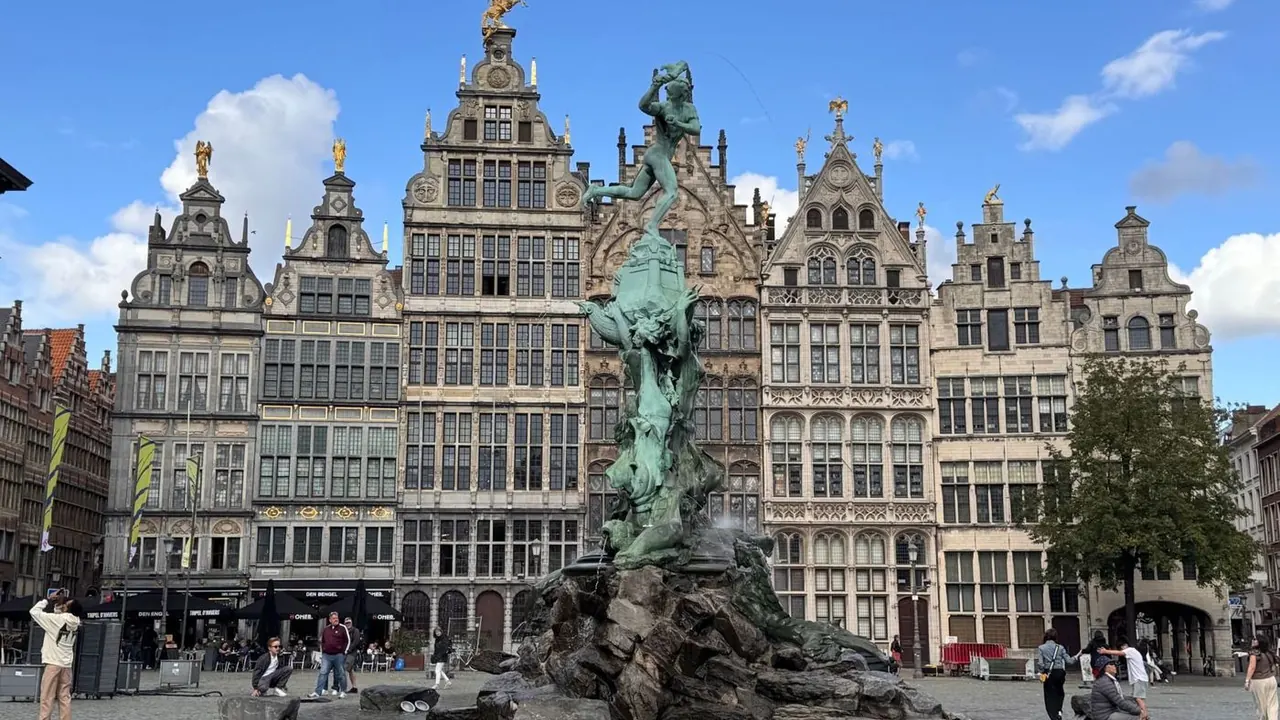
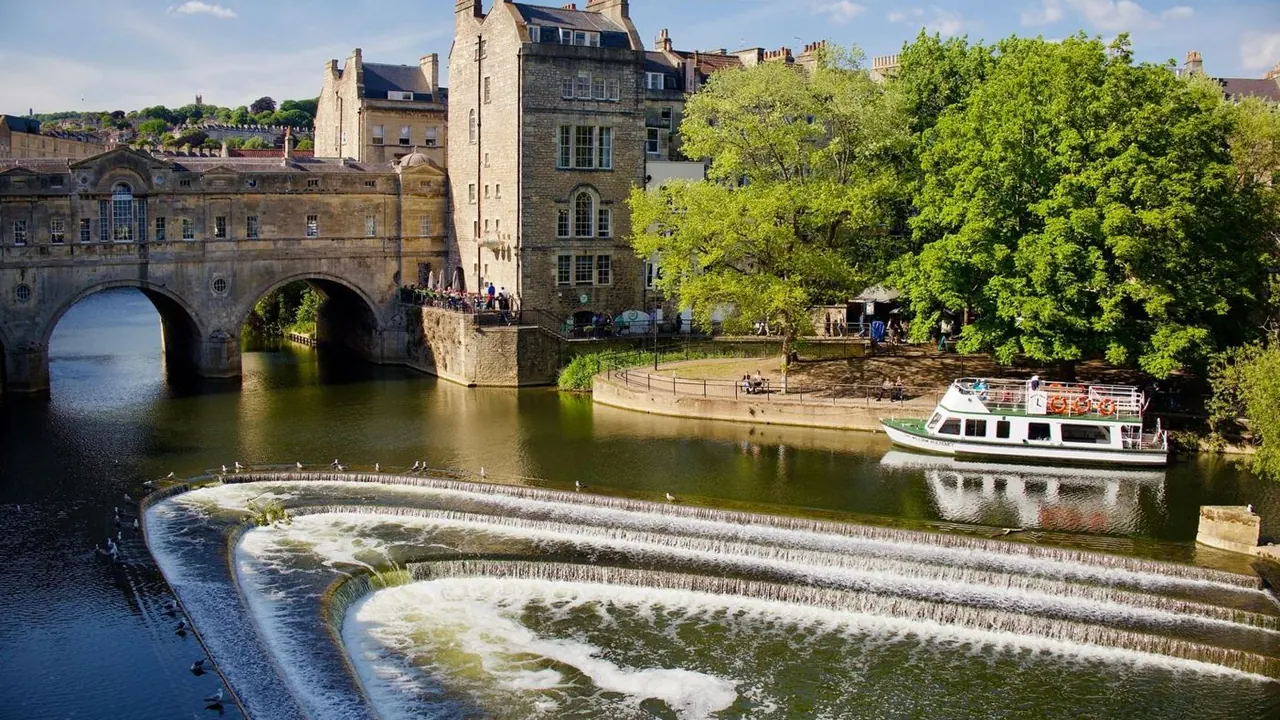
Photos: Antwerp by Norbert Jakab, Pexels License; Bath by Lucas Carlini, Pexels License.
Antwerp or Bath?
Our verdict in twelve categories, each scored against the same fixed benchmark cities, and the climate month by month, so you can choose for your trip.
Choose Antwerp for
- nightlife
- food and drink
- shopping
Antwerp suits travellers who want a fuller city. It has the deeper restaurant and beer culture, nights that run late, a fashion district with genuine designer boutiques, and opera and contemporary dance of real standing. It is also the better base for hopping between historic cities by train, with Ghent, Bruges, Brussels and Rotterdam all within easy reach. It is a little kinder on the budget and easier with small children.
Choose Bath for
- wellness
- nature and the outdoors
Choose Bath for a slower, gentler trip. The big draw is its hot spring water, in the rooftop pool or the small Cross Bath, together with a Georgian townscape that is a pleasure simply to walk through and green hills you can reach on foot from the centre. It suits couples and walkers more than night owls, and travellers happy to take a car or a tour out to Stonehenge, Wells and the Cotswold villages.
Scoreboard
Twelve categories on one fixed scale from 0 to 100. The shaded stretch is the gap between the two.
Your match
Pick a travel style or drag the sliders, and both match scores follow your weighting.
Wins on nightlife and food and drink with your weighting.
Wins on wellness and nature and the outdoors with your weighting.
What matters to you?
Category by category
What the scores mean for a trip.
Beaches & swimming
Neither city is a place for a beach vacation, so the only difference is how you cool off. Antwerp has the sandy river strand at Sint-Annastrand, but the river there is not for swimming. The Belgian coast at Blankenberge or Knokke is a long but easy train ride, and otherwise summer swimming happens in pools and lakes on the edge of town.
Bath has something Antwerp's tidal Scheldt can't offer: a swim in the Avon at the weir or at spots further upstream. Weston-super-Mare is nearer than the Belgian coast, but the water is murky and the tide goes far out, and good sand means a long drive to Dorset or Devon.
Food & drink
Antwerp is the stronger place to eat and drink. Beyond stoofvlees, mussels and frites from proper friteries, it has a serious beer culture, from the bolleke of local amber ale to the long Trappist lists in the brown cafés. On top of that there is a modern restaurant scene in Het Zuid and Het Eilandje, with a few starred kitchens.
Bath eats well within narrower limits. Expect West Country cheese, Somerset cider, gastropubs, the Sally Lunn bun, afternoon tea in Georgian tearooms and the farmers' market in the old Green Park station. It has little international variety and no real street food, and dinner ends early.
Culture & sights
The two are close in depth but very different in character. In Antwerp the draw is art and the legacy of a rich merchant port: Rubens in the cathedral and in his own house, the Plantin-Moretus printing house and the Royal Museum of Fine Arts. Later layers add Central Station, the Art Nouveau streets of Zurenborg and the MAS.
In Bath the city itself is the sight. The Royal Crescent, the Circus and Pulteney Bridge form one continuous Georgian townscape, with the Roman Baths and the Abbey at its heart, and its museums are smaller and more domestic in scale. Either city fills two or three days.
Nightlife
Antwerp has a proper night out and Bath mostly does not. Belgian bars have no fixed closing time, so the brown cafés and student streets stay busy late. The city also has a house and techno tradition in old dockside warehouses and one of the best-known gay scenes in the Low Countries.
Bath's evenings are built around coaching inns and the real-ale pubs of Walcot Street, plus a handful of clubs that fill up during university term. Most weeknights are over soon after dinner, and anyone wanting more takes the short train to Bristol.
Nature & outdoors
Bath has much the better outdoors. Its hills start at the edge of town: the Skyline loop follows the ridges, and the Kennet and Avon towpath and the Two Tunnels Greenway lead out into the countryside. The Cotswolds and the Mendips, including Cheddar Gorge, are within an hour.
Antwerp is flat and heavily built up, with the port taking up much of the river. Its outdoor pleasures are parks such as Rivierenhof, bike rides along the polder dykes and the heath and pine woods of the Kalmthoutse Heide to the north.
Day trips
Both are excellent bases, and Antwerp edges ahead because nearly everything can be reached by frequent trains. Ghent, Bruges, Brussels, Leuven and Mechelen are all close, and over the Dutch border you can add Rotterdam, Delft and Kinderdijk. That makes it ideal for a car-free trip that takes in several historic cities.
Bath's range is more varied. Bristol and Cardiff are easy by rail, and beyond them are Stonehenge, Avebury, Wells, Glastonbury, Lacock and the Cotswold villages. Many of those country sights need a car or a small-group tour, so days out take more arranging.
Good for families
Antwerp is the easier city with children. The zoo is right beside Central Station and the flat centre is easy with a pushchair. Trams, the Steen castle and the free foot tunnel under the Scheldt make easy outings. Belgian cafés are relaxed about children, though the weather means having indoor plans ready.
Bath has the Roman Baths, which children love, and the playground in Royal Victoria Park, but little else aimed at them. Its steep streets are hard work with a pushchair, so families tend to go to Bristol or Longleat for the bigger attractions.
Getting around
Both centres are compact and best seen on foot, and a car is a nuisance in either. Antwerp spreads a little wider, so trams, the premetro, shared bikes and cycle lanes carry you out to Het Eilandje and Zurenborg. Central Station has direct links to Brussels, the Netherlands and the airport.
Bath's core takes about twenty minutes to cross and much of it is pedestrianised. But the streets climb steeply away from it, and public transport into the countryside beyond is thin.
Shopping & style
Fashion is what makes Antwerp worth a shopping trip. The influence of its fashion academy shows in the conceptual Belgian labels along the Nationalestraat, the Kammenstraat and in Het Zuid, which feel quite unlike the global luxury houses found elsewhere. Add the Meir for chain stores, the diamond quarter by the station, and antiques and interiors on the Kloosterstraat.
Bath is pleasant for browsing rather than a reason to travel on its own. There are British brands on Milsom Street, chains at SouthGate, independent bookshops, antiques on Bartlett Street, and the furniture makers and salvage dealers of Walcot Street. The Guildhall Market and the shops on Pulteney Bridge add charm, but there is no real luxury tier or large department stores.
Affordability
Neither is cheap, but Antwerp is easier on the wallet. Its rooms cost less than in the nearby capitals, and a beer in a local café or a cone of frites stays reasonable, though sit-down dinners are pricey.
In Bath, a small city with many visitors, accommodation is expensive, and especially so on summer weekends and around Christmas. The Roman Baths and the thermal spa are expensive too. Staying midweek, eating pub lunches or sleeping in Bristol makes the biggest difference.
Live music & performing arts
Antwerp has the deeper programme. Opera Ballet Vlaanderen performs in the historic opera house, and the Antwerp Symphony Orchestra is based at the Queen Elisabeth Hall. deSingel stages the contemporary dance Flanders is known for and AMUZ is devoted to early music, though most theatre is in Dutch.
Bath centres on the gilded Georgian Theatre Royal, which has touring drama, plays heading for the West End and pantomime, all in English. There are also concerts in the Abbey and the Assembly Rooms and long-running festivals of music and literature. With no resident orchestra or opera company, though, the choice on most nights is small.
Wellness & relaxation
This is where Bath is far ahead. It is the only place in Britain where you can bathe in natural hot spring water, from the rooftop pool at Thermae Bath Spa looking out over the Abbey to the small Georgian Cross Bath. Tea in the Pump Room and walks in the riverside gardens set a restful pace.
Antwerp has no springs or bathhouses. Flanders has large sauna complexes, but they are mostly outside the city and easiest to reach by car, so unwinding there usually means a park or a brown café.
When should you go?
Pick your month. The climate figures are measured averages, not a forecast.
Antwerp in July
Bath in July
Daytime high, °C
Rainfall in the month, mm
Where the figures come from
Antwerp has no rain gauge within 25 km of the centre, so its rainfall comes from a gridded climate dataset read at the city rather than from a gauge further away.
Antwerp's sunshine is measured 47 km from the centre, at Uccle.
Bath's temperatures are measured 29 km from the centre, at Lyneham.
Bath has no rain gauge within 25 km of the centre, so its rainfall comes from a gridded climate dataset read at the city rather than from a gauge further away.
Temperature and rainfall are climate normals, averaged over the years shown. Antwerp: 1991-2020 normals, Antwerpen / Deurne (5.2 km from centre). Bath: 1991-2020 normals, Lyneham (29.2 km from centre).
Both cities have a mild, damp north-west European climate, and neither ever gets too hot for walking the streets. In July and August Antwerp is a touch warmer, reaching about 23°C against Bath's 21°C. But December is also Antwerp's wettest month at 83mm, while Bath gets its heaviest rain in winter, with December at around 90mm. Late spring is a good bet in both: April is Antwerp's driest month, and May is one of Bath's sunniest.
Winter is grey, cold and short of daylight in both, and Antwerp's December is especially dim. This is when Bath's open-air thermal pool comes into its own, while Antwerp leans on its museums and brown cafés. Neither city makes a beach trip in any month: the sea within reach of Bath warms to only about 18°C, and only at the height of summer.
Which traveller are you?
On a relaxing and wellness trip, Bath is the clear choice. Its natural thermal water, from the rooftop pool to the small Cross Bath, and an unhurried Georgian centre made for strolling give it a restful core. Antwerp, with no springs and only out-of-town saunas, can't offer that.
For a food and nightlife trip, Antwerp wins comfortably. Flemish cooking, a deep beer culture and modern restaurants in Het Zuid lead on to bars with no fixed closing time and clubs in the old dock warehouses. In Bath, most evenings end at the pub soon after dinner.
On an outdoors trip, pick Bath. You can walk straight out onto the Skyline ridges or the canal towpath, cycle the Two Tunnels Greenway, and reach the Cotswolds and Cheddar Gorge within an hour. Flat Antwerp offers parks, rides along the dykes and a single heathland.
Before you go
| Measure | Antwerp | Bath |
|---|---|---|
| Official language | French, German, Dutch | English |
| Currency | Euro (EUR) | Pound Sterling (GBP) |
| Sockets | CE230 V, 50 Hz | G230 V, 50 Hz |
| Driving side | Right | Left |
| Time zone | UTC+1, UTC+2 in summer | UTC, UTC+1 in summer |
| Emergency number | 112 | 112 or 999 |
| Elevation | 7 m | 132 m |
| Main airport | Brussels Airport (BRU)36 km from centre191 non-stop destinations | Bristol Airport (BRS)25 km from centre117 non-stop destinations |
| Public holidays this year | 14 days | 8 days |
By the numbers
| Measure | Antwerp | Bath |
|---|---|---|
| City population | 529,247 | 94,092 |
| People per km² | 2,542 | 3,245 |
| Museums within 10 km | 38 | 17 |
| UNESCO World Heritage sites within 50 km | 9 | 2 |
| Swim season, months above 21 °C | - | None |
Where else could you go?
Every comparison below shares a destination with this one, so you can follow Antwerp or Bath somewhere new.