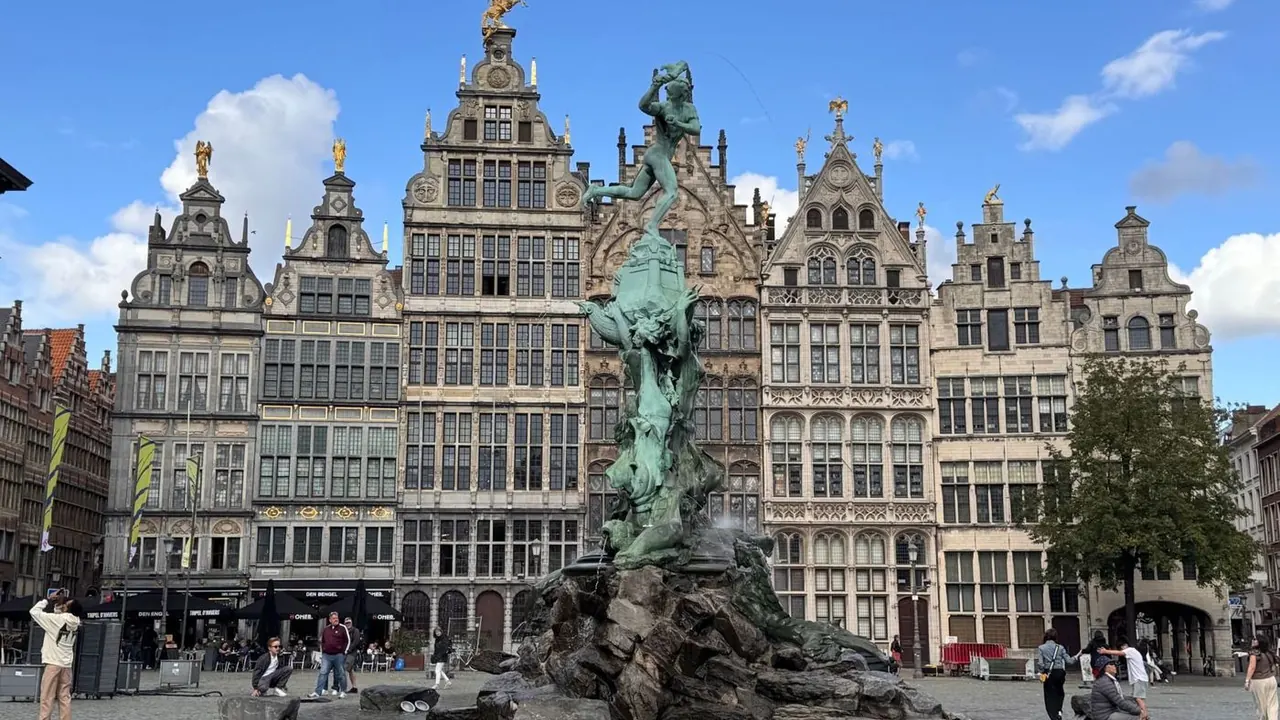
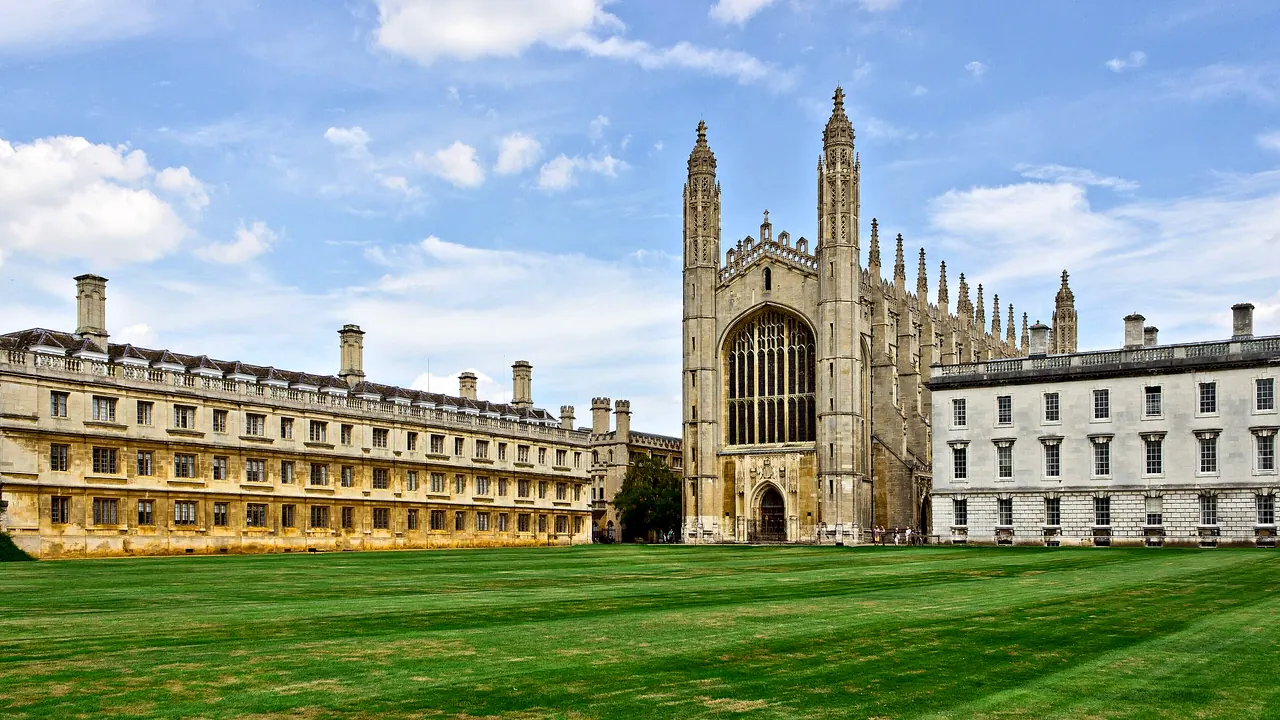
Photos: Antwerp by Norbert Jakab, Pexels License; Cambridge by Dmitry Tonkonog, CC BY-SA 3.0, cropped.
Antwerp or Cambridge?
Our verdict in twelve categories, each scored against the same fixed benchmark cities, and the climate month by month, so you can choose for your trip.
Choose Antwerp for
- shopping
- food and drink
- nightlife
Antwerp suits travellers who want a city to eat, drink and shop in. Its Flemish cooking and deep beer culture, the avant-garde fashion boutiques, and bars with no fixed closing time give the evenings far more substance than a small university town can. Central Station puts Ghent, Bruges, Brussels and the Dutch cities within easy reach by train, so the city also works well as a base for a week of rail day trips.
Choose Cambridge for
- wellness
- nature and the outdoors
Cambridge is the better choice for a slower, quieter stay built around old buildings and the river. The colleges, King's College Chapel and choral evensong are the reason to come, and so are afternoons in a punt or a walk across the meadows to Grantchester. Evenings are mostly spent in the pub. It costs more and has less to do at night, but London is close when you want more.
Scoreboard
Twelve categories on one fixed scale from 0 to 100. The shaded stretch is the gap between the two.
Your match
Pick a travel style or drag the sliders, and both match scores follow your weighting.
Wins on shopping and food and drink with your weighting.
Wins on wellness and nature and the outdoors with your weighting.
What matters to you?
Category by category
What the scores mean for a trip.
Beaches & swimming
Neither city is for a beach vacation, but Antwerp gets you nearer to one. Sint-Annastrand gives a strip of sand on the Scheldt, outdoor pools and lakes on the city's edge help in summer, and direct trains to Blankenberge and Knokke make a day on the sand possible without a car.
Cambridge is further from the sea, and the Norfolk and Suffolk shore really needs a car. Here a swim means fresh water: the long 1920s lido on Jesus Green, or the Cam at Grantchester Meadows on a hot afternoon.
Food & drink
Antwerp is much the better place to eat. It has a real regional cuisine to work through: beer-braised stoofvlees, mussels, shrimp croquettes, frites from a proper friterie and the city's own chocolates. Its beer culture runs from the local amber ale to long Trappist lists in the brown cafés. Het Zuid and Het Eilandje add an ambitious modern restaurant scene, with a few starred tables.
Cambridge has no local dishes to seek out. Its strengths are the old riverside pubs with ales and Sunday roasts, the daily stalls on Market Hill and the Asian and Mediterranean cooking on Mill Road. Away from those, the centre leans heavily on chains.
Culture & sights
The two are about level, and each fills two or three days, but they are different kinds of visit. Antwerp's culture is painting and the wealth of a great trading port. You see Rubens altarpieces in the cathedral and his house and studio, the Renaissance printing house of Plantin-Moretus, and the Flemish masters in the Royal Museum of Fine Arts. Later layers include the domed Central Station, Art Nouveau Zurenborg and fashion at MoMu.
Cambridge is above all an architectural experience: eight centuries of college courts and chapels along the Backs, with King's College Chapel and the Wren Library at their head. Its museums are the university's own, led by the Fitzwilliam. Some colleges charge for entry and shut around exams.
Nightlife
Antwerp is the stronger city after dark. Belgian bars have no fixed closing time, so the old centre and the student streets keep going late. The city also has a long house and techno tradition in warehouse venues near the docks, and one of the best-known gay scenes in the Low Countries.
Cambridge's nights belong to the pub, from historic inns to beer gardens by the river. Its small student club scene goes quiet in the summer break and at Christmas, which is exactly when many visitors come. For a big night out, people take the train to London.
Nature & outdoors
Both sit in flat, low country, and neither is a trip for the outdoors. The difference is where the green space is. In Cambridge it runs through the town itself: commons beside the centre, punting through the Backs and the water meadows to Grantchester, with Wicken Fen's birds and ponies a little further out.
Antwerp's best open country lies beyond the port and the suburbs. The Kalmthoutse Heide has heath, dunes and pine woods, and the dykes along the Scheldt polders make good bike rides. In town you have parks such as Rivierenhof and the Stadspark.
Day trips
Antwerp has the edge because its trains reach two countries. Ghent, Bruges, Brussels, Leuven and Mechelen are all easy by rail, and across the border lie Rotterdam, Delft, The Hague and the windmills of Kinderdijk. You could fill a week with medieval cities and never need a car.
Cambridge's great asset is London, under an hour away for a museum or a show. Ely Cathedral and Norwich are simple train rides too. The Suffolk wool towns and the National Trust estates are easier by car.
Good for families
Antwerp is the slightly easier city with children. The zoo sits right beside Central Station, and the trams, the MAS rooftop, the Steen and the foot tunnel under the Scheldt all keep children interested. Belgian cafés are relaxed about families. The wet weather means having indoor plans ready.
Cambridge is small, safe and green, and punting goes down well at most ages. The free zoology museum and the Sedgwick dinosaurs are good for curious children, and Duxford's aircraft make the best outing. The college sights themselves are hushed, though, and there is no zoo or theme park.
Getting around
Both centres are compact and best on foot or by bike, and a car is a nuisance in either. Antwerp also has trams, some running underground, which carry you out to Het Eilandje and Zurenborg. Its main station is close to the sights and is the hub for rail links across Belgium and into the Netherlands.
In Cambridge almost everything is in a flat, largely pedestrian core, and a hired bike is how you reach Grantchester. The station is on the edge of town, the buses are ordinary, and the country estates are easier with a car.
Shopping & style
Antwerp is a genuine shopping destination, and its speciality is fashion. The designers who came out of its fashion academy shaped the conceptual boutiques of the Nationalestraat, Kammenstraat and Het Zuid. You also have the Meir for high-street names, the diamond quarter by the station and the antique and interiors shops of the Kloosterstraat.
Cambridge shopping is small-scale and bookish. You find academic and second-hand booksellers, the market on Market Hill, independent shops on Trinity Street and vintage finds on Mill Road. It fits round sightseeing rather than shaping a trip.
Affordability
Neither is cheap, but Antwerp is easier on a mid-range budget. Rooms there usually cost less than in nearby capitals, and a café beer or a cone of frites stays reasonable, even if sit-down dinners follow Belgian prices.
Cambridge is the dearer stay, mainly because central hotels are few and in steady demand, especially in summer and around graduations. It does save you money elsewhere: the Fitzwilliam and most university museums are free, evensong costs nothing, and a college room out of term can be good value.
Live music & performing arts
The two are broadly level, but they offer very different kinds of evening. Antwerp has the larger institutions: Flemish opera and ballet in the historic house on the Frankrijklei, a symphony orchestra by Central Station, and contemporary dance at deSingel. Its theatre is mostly in Dutch.
Cambridge's speciality is choral music, with world-famous college choirs singing evensong in candlelit chapels during term. Add the Arts Theatre, student comedy in the Footlights tradition and the summer Folk Festival, but no opera house.
Wellness & relaxation
Cambridge is the more restful place, though neither has a spa culture of its own. Its calm comes from the setting: a punt on the river, a bench in the Botanic Garden or a college garden, and the meadow walk to Grantchester. In summer, keep to early mornings and the edges of town, because the streets around King's Parade fill with tour groups.
Antwerp is a city for museums and shopping rather than rest. Flemish sauna complexes with pools and gardens exist, but most are out of town and mostly reached by car. In the city, unwinding usually means a park or a quiet brown café.
When should you go?
Pick your month. The climate figures are measured averages, not a forecast.
Antwerp in July
Cambridge in July
Daytime high, °C
Rainfall in the month, mm
Where the figures come from
Antwerp has no rain gauge within 25 km of the centre, so its rainfall comes from a gridded climate dataset read at the city rather than from a gauge further away.
Antwerp's sunshine is measured 47 km from the centre, at Uccle.
Cambridge's temperatures are measured 59 km from the centre, at Wattisham.
Cambridge has no rain gauge within 25 km of the centre, so its rainfall comes from a gridded climate dataset read at the city rather than from a gauge further away.
Temperature and rainfall are climate normals, averaged over the years shown. Antwerp: 1991-2020 normals, Antwerpen / Deurne (5.2 km from centre). Cambridge: 1991-2020 normals, Wattisham (58.5 km from centre).
The two cities have much the same calendar. Winters are grey and chilly, with daytime highs around 7°C in both, and summers are mild. Antwerp's highs reach about 23°C in July and August, and Cambridge's a degree lower. Neither ever gets hot enough for a beach trip, and neither is ever too hot for walking the streets. Late spring and early autumn are comfortable for sightseeing in both, and both get their most sunshine from May to August.
Rain is where they differ. Antwerp is the wetter city all year. Its summer months bring close to 80mm, and it is wettest in December, so pack for showers in any season. Cambridge is noticeably drier, with spring often under 40mm, which makes April and May especially good for punting and cycling out to Grantchester.
Which traveller are you?
On a food and nightlife trip, Antwerp is the clear pick. You get stoofvlees and frites by day, a bolleke or a Trappist beer in a brown café, and late nights in warehouse clubs and bars with no fixed closing time. Cambridge's evenings mostly end in the pub.
For a shopping trip, Antwerp wins easily. Its designer boutiques on the Nationalestraat and Kammenstraat, the diamond quarter and the antique shops of the Kloosterstraat make shopping a reason to go. In Cambridge, bookshops and a market fit around the sightseeing.
On a relaxing and wellness trip, Cambridge suits better. Neither city has spa traditions, but Cambridge has gentle pleasures close to hand: drifting along the Backs in a punt, the Botanic Garden, college gardens and tea in an orchard at Grantchester.
Before you go
| Measure | Antwerp | Cambridge |
|---|---|---|
| Official language | French, German, Dutch | English |
| Currency | Euro (EUR) | Pound Sterling (GBP) |
| Sockets | CE230 V, 50 Hz | G230 V, 50 Hz |
| Driving side | Right | Left |
| Time zone | UTC+1, UTC+2 in summer | UTC, UTC+1 in summer |
| Emergency number | 112 | 112 or 999 |
| Elevation | 7 m | 6 m |
| Main airport | Brussels Airport (BRU)36 km from centre191 non-stop destinations | London Stansted Airport (STN)37 km from centre197 non-stop destinations |
| Public holidays this year | 14 days | 8 days |
By the numbers
| Measure | Antwerp | Cambridge |
|---|---|---|
| City population | 529,247 | 123,867 |
| People per km² | 2,542 | 3,043 |
| Museums within 10 km | 37 | 17 |
| UNESCO World Heritage sites within 50 km | 9 | 0 |
Where else could you go?
Every comparison below shares a destination with this one, so you can follow Antwerp or Cambridge somewhere new.
- Brusselsvs Antwerp
- Ghentvs Antwerp
- Rotterdamvs Antwerp
- Londonvs Cambridge
- Brugesvs Antwerp
- The Haguevs Antwerp