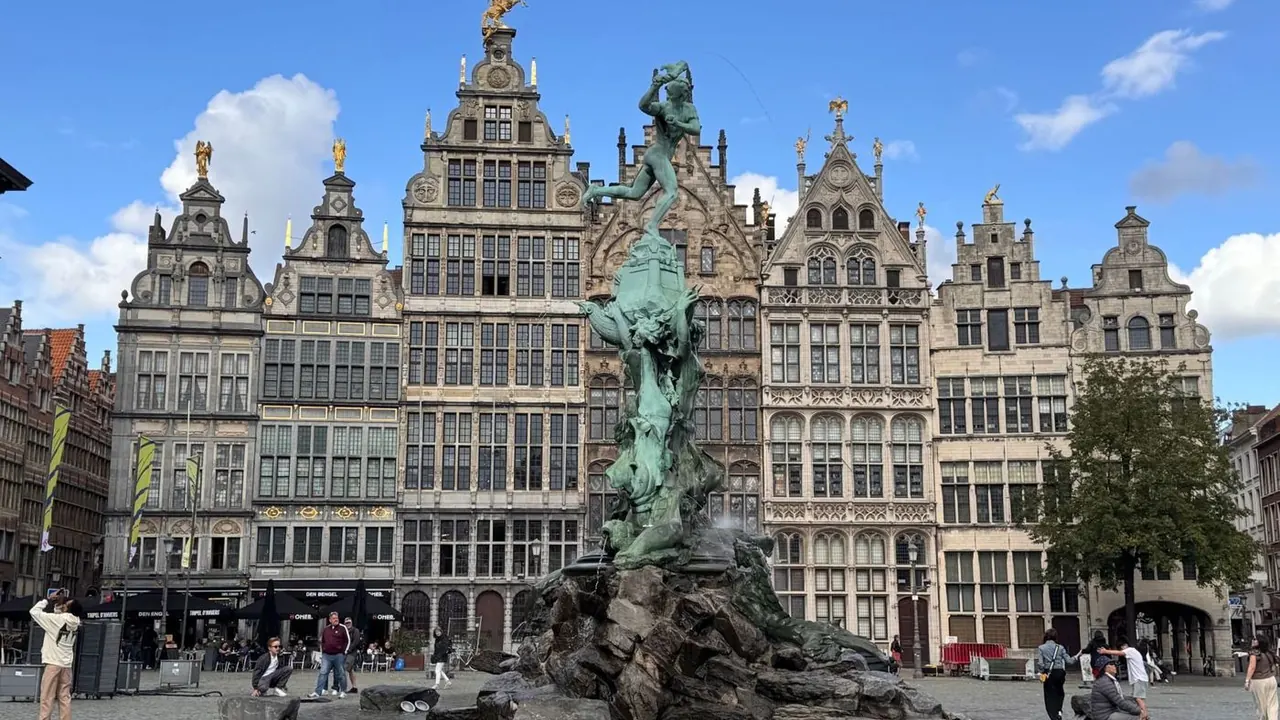
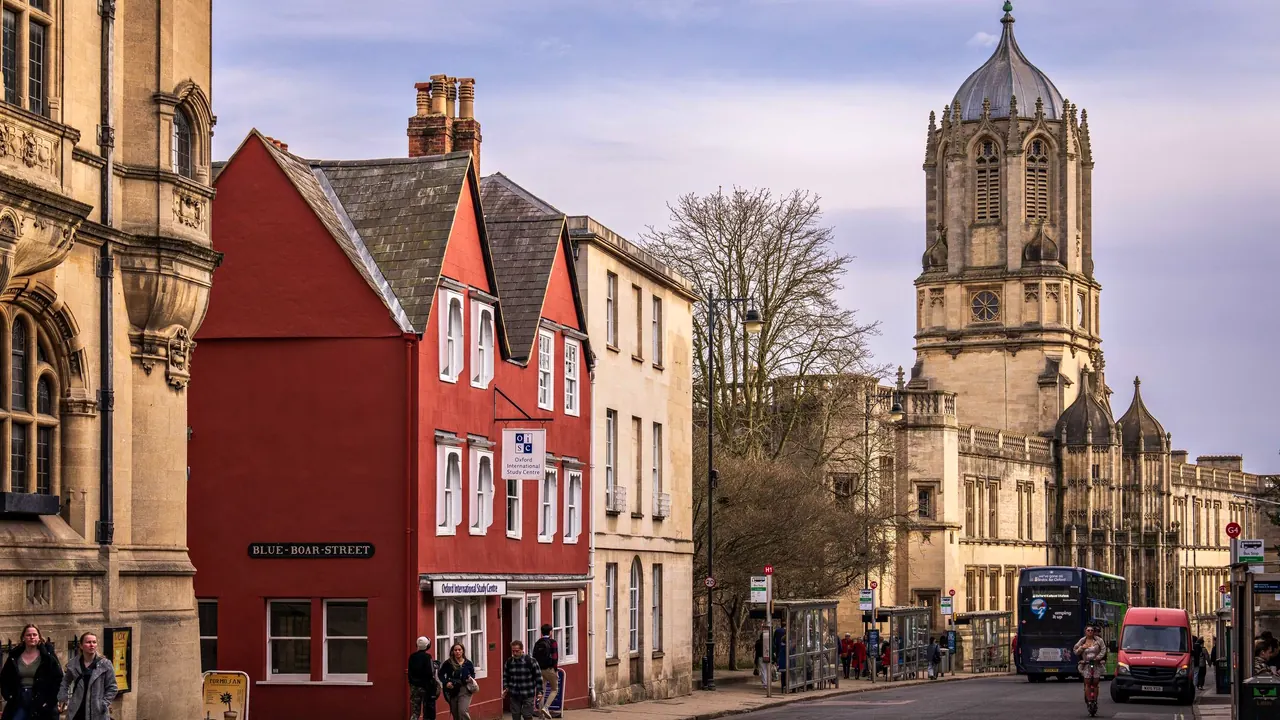
Photos: Antwerp by Norbert Jakab, Pexels License; Oxford by Mark Stebnicki, Pexels License.
Antwerp or Oxford?
Our verdict in twelve categories, each scored against the same fixed benchmark cities, and the climate month by month, so you can choose for your trip.
Choose Antwerp for
- food and drink
- nightlife
- shopping
Antwerp is the better choice for a trip built around eating, drinking and going out. Stoofvlees, frites and long Belgian beer lists in brown cafés, bars without a fixed closing time and a serious club scene give the evenings far more to them. Add the fashion boutiques of the Nationalestraat and Het Zuid and an easy train to Ghent, Bruges or Rotterdam, and it suits travellers who want a city with an appetite.
Choose Oxford for
- nature and the outdoors
- wellness
Oxford rewards a slower, quieter visit. The pleasure lies in walking between college quads and libraries, sitting in on Evensong, punting on the Cherwell and heading out to Port Meadow, the Cotswolds or the Ridgeway for a long walk. If gentle countryside and an early, peaceful evening in a riverside pub appeal more than a late night, Oxford fits better.
Scoreboard
Twelve categories on one fixed scale from 0 to 100. The shaded stretch is the gap between the two.
Your match
Pick a travel style or drag the sliders, and both match scores follow your weighting.
Wins on food and drink and nightlife with your weighting.
Wins on nature and the outdoors and wellness with your weighting.
What matters to you?
Category by category
What the scores mean for a trip.
Beaches & swimming
Neither city is a place for a beach, and the difference is in how you get wet. Antwerp has a sandy riverside strip at Sint-Annastrand that is for looking at the Scheldt rather than swimming in it, though the North Sea at Blankenberge or Knokke is reachable by train as a long day out.
Oxford is further from the sea, but it has proper freshwater swimming: grassy banks along the Thames at Port Meadow and the Cherwell, plus the big open-air pool at Hinksey. For a dip on a hot day Oxford is more natural. For actual sand and waves, Antwerp at least has a train to the coast.
Food & drink
Antwerp is the stronger place to eat. It has a cuisine of its own in beer-braised stoofvlees, mussels, shrimp croquettes and friterie frites, its own chocolate, and one of Europe's great beer cultures, from the bolleke of local ale to long Trappist lists. Above that, Het Zuid and Het Eilandje have ambitious modern kitchens, a few with stars.
Oxford eats well but rarely memorably. Its best moments are a Sunday roast in a riverside pub and lunch at the Covered Market, with Cowley Road offering cheap Middle Eastern and South Asian food and Jericho a few bistros. Much of the centre is chains, so a food-minded traveller will get more from Antwerp.
Culture & sights
The two are evenly matched, but they offer different things. Antwerp's heritage is painting and trade: Rubens altarpieces in the cathedral, his house and studio, the Renaissance printing house of Plantin-Moretus and a fine-arts museum running from the Flemish primitives to Ensor, with the domed Central Station, Zurenborg's Art Nouveau and the MAS adding later layers.
Oxford's appeal is the whole working ensemble of colleges in honey-coloured stone, where the Radcliffe Camera, Bodleian, Sheldonian and Christ Church sit minutes apart and are still in daily use. The Ashmolean, Pitt Rivers and Natural History Museum add strong collections. Choose Antwerp for art galleries, Oxford for architecture you walk through.
Nightlife
Antwerp gives a much fuller night out. With no fixed closing time, brown cafés and student bars run well past midnight, and the city has a long house and techno tradition in old warehouses and railway arches, as well as one of the best-known gay scenes in the Low Countries.
Oxford's evenings centre on historic pubs and summer drinks by the Thames, with Cowley Road holding the few late bars and small clubs. The pace rises and falls with the university terms and the centre is usually quiet by midnight, so it suits a drink after dinner rather than dancing.
Nature & outdoors
Oxford has the better outdoors. Green space reaches right into the centre through Christ Church Meadow, the University Parks and Port Meadow with its grazing horses, and punting or towpath walks lead straight into fields. Within an hour the Cotswolds, the Chiltern beech woods and the Ridgeway offer proper rolling walking country.
Antwerp's surroundings are flat and dominated by the port. Its parks, such as Rivierenhof, are pleasant, and the Kalmthoutse Heide heathland and the Scheldt polders are good by bike, but there are no hills and the landscape is rarely a reason to visit.
Day trips
Antwerp's day trips are mostly to other historic cities, and nearly all of them are a straight train ride. Mechelen and Lier suit a half day, Brussels, Leuven and Ghent with its Van Eyck altarpiece are all within about an hour, and Bruges is a little further. Across the Dutch border, Rotterdam, Delft and The Hague are just as easy, and the Kinderdijk windmills make a longer day out.
From Oxford, the outings lead to palaces, castles and villages rather than cities: Blenheim at Woodstock, the Cotswold market towns, Stratford-upon-Avon, Warwick, Windsor and Bath, with London about an hour away by train. Many of the Cotswold trips are far easier with a car or a tour. So the choice is between Flemish and Dutch cities by rail and English country houses and villages by road.
Good for families
Antwerp works better with children. Its historic zoo sits right beside Central Station, and the MAS rooftop, the trams, the Steen castle and the free foot tunnel under the Scheldt make easy outings, while Belgian cafés and restaurants welcome children readily. Rainy days do call for indoor plans.
Oxford is small, safe and walkable, and its free Natural History and Pitt Rivers museums, a punt on the Cherwell and the Harry Potter links at Christ Church will please many children. Beyond those, the city is aimed at adults, and the bigger draws such as the Cotswold Wildlife Park need a trip out.
Getting around
Both are easy without a car, and both have compact, largely flat centres. Antwerp is the bigger city and leans on trams and an underground premetro to reach Het Eilandje and Zurenborg, with shared bikes and marked cycle lanes, and its Central Station is a national hub with direct links to the airport and the Netherlands.
Oxford is smaller still and best seen on foot, with traffic kept out of several central streets and buses only needed for outlying districts like Headington or Summertown. Drivers in Oxford use the park-and-ride; in Antwerp, watch for cobbles and tram tracks on a bike.
Shopping & style
Antwerp is the more rewarding place to shop. Its fashion academy's avant-garde legacy fills the boutiques of the Nationalestraat, Kammenstraat and Het Zuid with conceptual Belgian labels, and the Kloosterstraat antiques, the diamond quarter and Vrijdagmarkt auctions add real variety.
Oxford's centre is largely high-street chains and a modern mall, with its charm in the details: the Covered Market, Jericho's independents, antique map sellers and Blackwell's vast bookshop. For luxury labels at a discount, the Bicester outlet village is a short drive away.
Affordability
Neither is cheap, but Antwerp is somewhat kinder to the budget. Its rooms usually cost less than in nearby capitals and transport is good value, though sit-down dinners follow high Belgian price levels, so lunch menus, café beers and frites are where to save.
Oxford's main problem is accommodation. Central rooms are scarce and university events push prices up, which sends many visitors to the ring road or to London. Once there, free museums, pub meals and a walkable centre help, but college entry fees and library tours add up.
Live music & performing arts
The two are close, with different strengths. Antwerp has institutional depth: Opera Ballet Vlaanderen in the historic opera house, the Antwerp Symphony Orchestra beside Central Station, adventurous contemporary dance at deSingel and early music at AMUZ, though most theatre is in Dutch.
Oxford's highlight is free to attend: Evensong sung by the world-famous choirs of Christ Church, Magdalen and New College. The Sheldonian and the historic Holywell Music Room host concerts, and its English-language theatre and summer college productions are accessible to every visitor.
Wellness & relaxation
Neither city is a spa destination, and both leave you to find calm in your own way. Antwerp's best option is the Flemish sauna culture, with large wellness complexes in the suburbs and countryside, mostly reached by car.
Oxford has few spas but more quiet to offer within the city: the Botanic Garden, walled college gardens, Magdalen's deer park and Addison's Walk early in the morning, or a slow drift on a punt.
When should you go?
Pick your month. The climate figures are measured averages, not a forecast.
Antwerp in July
Oxford in July
Daytime high, °C
Rainfall in the month, mm
Where the figures come from
Antwerp has no rain gauge within 25 km of the centre, so its rainfall comes from a gridded climate dataset read at the city rather than from a gauge further away.
Antwerp's sunshine is measured 47 km from the centre, at Uccle.
Oxford's temperatures are measured 37 km from the centre, at Fairford Royal Air Force Base.
Oxford has no rain gauge within 25 km of the centre, so its rainfall comes from a gridded climate dataset read at the city rather than from a gauge further away.
Oxford's sunshine is measured 57 km from the centre, at Lyneham.
Temperature and rainfall are climate normals, averaged over the years shown. Antwerp: 1991-2020 normals, Antwerpen / Deurne (5.2 km from centre). Oxford: 1961-1990 (sunshine 1991-2020, rainfall 1991-2020) normals, Fairford Royal Air Force Base (37 km from centre).
The two share a mild, damp northern climate, so the comfortable season for walking the streets runs from May to September in both. Antwerp is a touch warmer in high summer, reaching about 23°C in July and August against Oxford's 22°C in July, and both get a similar amount of sunshine through the warm months. Neither is warm enough for a beach trip in any month, though a hot afternoon in July can be good for a river dip in Oxford or a recreation lake outside Antwerp.
The bigger difference is the rain. Antwerp is wetter for much of the year, with rainfall climbing through summer and peaking at around 83mm in December, so autumn and early winter there are often grey and drizzly. Oxford is drier and evener, though its winter is colder, with January highs of about 5°C. Both are short on daylight from November to February, which suits museums and pubs rather than walks.
Which traveller are you?
On a food and nightlife trip, Antwerp is the clear pick. Flemish cooking, Trappist beer in old cafés and modern restaurants in Het Zuid lead into bars that stay open late and warehouse clubs, while Oxford mostly winds down in the pub by midnight.
For a shopping trip, Antwerp wins on character. Its avant-garde Belgian designers, Kloosterstraat antiques and the diamond quarter offer things found nowhere else, whereas Oxford's centre is mainly chains, with Blackwell's, the Covered Market and the Bicester outlet as its highlights.
On an outdoors trip, Oxford has the edge. Port Meadow and the Thames Path start a short walk from the centre, punting fills an afternoon, and the Cotswolds, Chilterns and Ridgeway lie within an hour, while Antwerp's flat, built-up surroundings offer mainly heathland and dyke cycling.
Before you go
| Measure | Antwerp | Oxford |
|---|---|---|
| Official language | French, German, Dutch | English |
| Currency | Euro (EUR) | Pound Sterling (GBP) |
| Sockets | CE230 V, 50 Hz | G230 V, 50 Hz |
| Driving side | Right | Left |
| Time zone | UTC+1, UTC+2 in summer | UTC, UTC+1 in summer |
| Emergency number | 112 | 112 or 999 |
| Elevation | 7 m | 73 m |
| Main airport | Brussels Airport (BRU)36 km from centre191 non-stop destinations | London Heathrow Airport (LHR)63 km from centre224 non-stop destinations |
| Public holidays this year | 14 days | 8 days |
By the numbers
| Measure | Antwerp | Oxford |
|---|---|---|
| City population | 529,247 | 147,500 |
| People per km² | 2,542 | 3,235 |
| Museums within 10 km | 37 | 11 |
| UNESCO World Heritage sites within 50 km | 9 | 1 |
Where else could you go?
Every comparison below shares a destination with this one, so you can follow Antwerp or Oxford somewhere new.