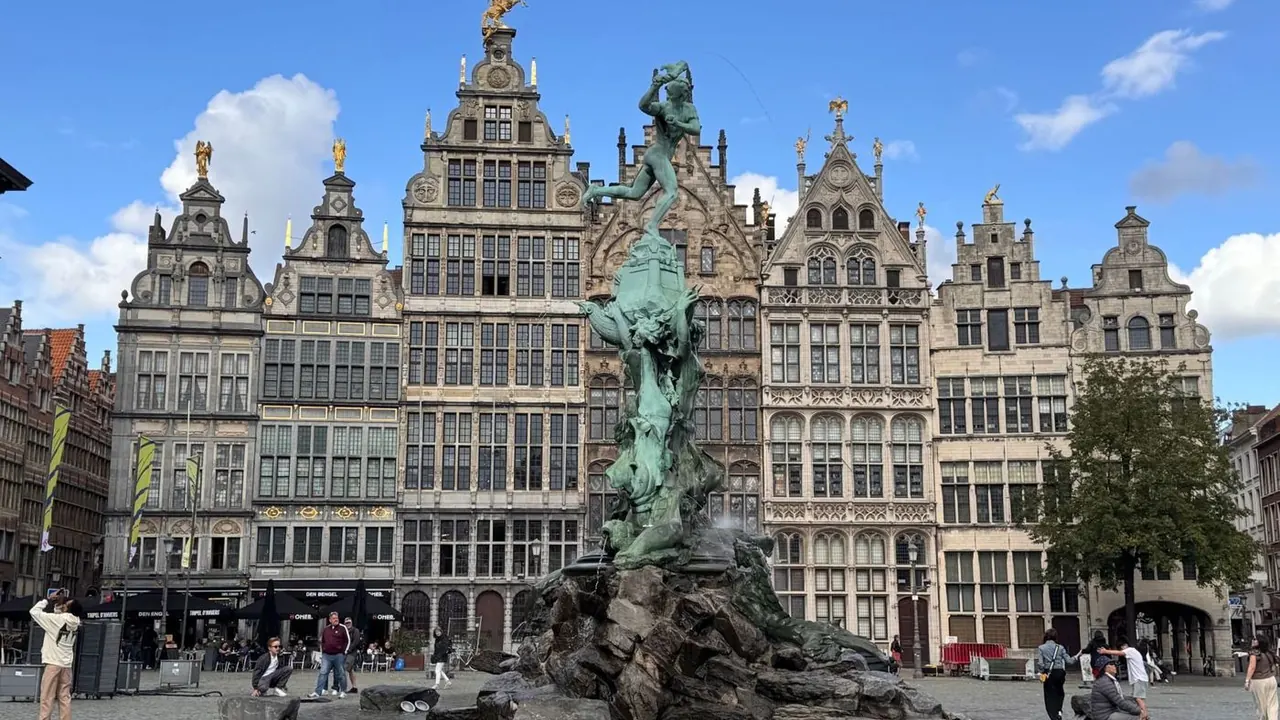
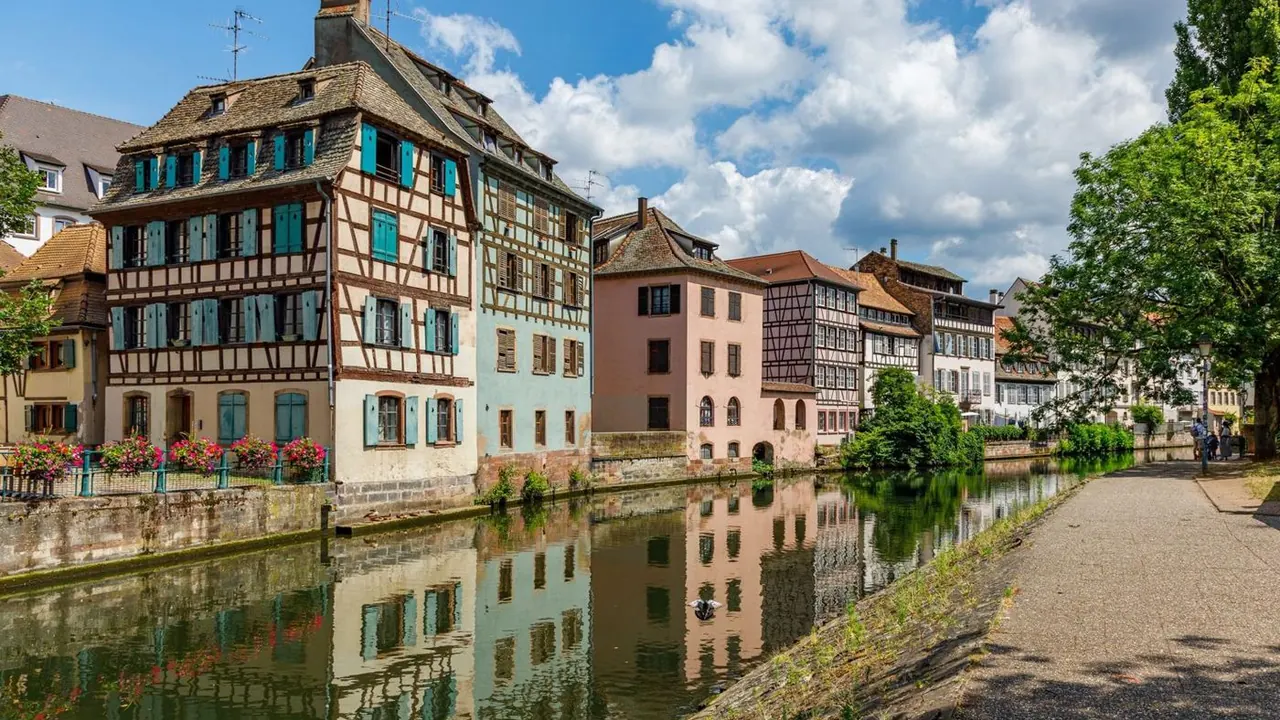
Photos: Antwerp by Norbert Jakab, Pexels License; Strasbourg by Edoardo Colombo, Pexels License.
Antwerp or Strasbourg?
Our verdict in twelve categories, each scored against the same fixed benchmark cities, and the climate month by month, so you can choose for your trip.
Choose Antwerp for
- shopping
- nightlife
- day trips
Antwerp suits a traveller who wants a city with an edge: Rubens altarpieces and a Renaissance printing house by day, designer boutiques in between, and bars and warehouse clubs that keep going long after Strasbourg has gone quiet. It also makes the stronger base for hopping by train between historic cities, with Ghent, Bruges, Brussels and Rotterdam all close enough for a day.
Choose Strasbourg for
- nature and the outdoors
- wellness
- prices
Strasbourg is the better pick for a slower, greener trip. Its half-timbered old town island is a pleasure simply to wander, the winstub table and Alsace wine are the heart of the eating, and the Vosges, the wine villages and the Black Forest are all within about an hour. Add the thermal baths of Baden-Baden across the Rhine and it rewards walkers, cyclists and anyone who wants to unwind more than to go out late.
Scoreboard
Twelve categories on one fixed scale from 0 to 100. The shaded stretch is the gap between the two.
Your match
Pick a travel style or drag the sliders, and both match scores follow your weighting.
Too close to call, 2 points apart
Wins on shopping and nightlife with your weighting.
Wins on nature and the outdoors and wellness with your weighting.
What matters to you?
Category by category
What the scores mean for a trip.
Beaches & swimming
Neither city is a place to swim, so the only question is how you cool off. From Antwerp, the North Sea at Blankenberge or Knokke means a long train ride to chilly water, and Sint-Annastrand on the tidal Scheldt is for strolling rather than swimming. Strasbourg has no sea at all, but it has lifeguarded gravel-pit lakes such as the Baggersee, which you can reach by tram, so a calm freshwater swim on a hot summer afternoon is closer to hand.
Food & drink
The two eat equally well, but around different drinks. Antwerp's table is Flemish and built around beer: stoofvlees braised in dark ale, mussels and frites, and old cafés near the cathedral pouring Trappist and abbey beers. Its ambitious cooking is in Het Zuid and on the docks of Het Eilandje.
Strasbourg cooks the Franco-German food of Alsace, with choucroute, baeckeoffe and tarte flambée served in wood-panelled winstubs alongside a pichet of Riesling from vineyards just to the south. The markets are excellent for Munster and charcuterie, though the range of other cuisines is narrow. In both cities, the streets right around the cathedral are where the tourist menus cluster.
Culture & sights
Both repay two or three days, but the pleasures differ. Antwerp is a city for art inside buildings: Rubens in the cathedral and in his own house, the intact Renaissance printing works of Plantin-Moretus, and a collection running from the Flemish primitives to Ensor. Later layers add the domed Central Station, Art Nouveau Zurenborg and fashion at MoMu.
In Strasbourg, the city itself is the main sight. The Grande Ile, Petite France's leaning half-timbered houses and the imperial Neustadt form one UNESCO ensemble around the pink sandstone cathedral and its astronomical clock. The Palais Rohan museums and the European institutions round it out.
Nightlife
Antwerp is clearly the livelier place after dark. With no fixed closing time, its brown cafés and student streets often stay busy well past midnight, and it has a long house and techno tradition in warehouses and railway arches, as well as one of the best-known gay scenes in the Low Countries.
Strasbourg's evenings are pleasant but early. They centre on student bars in the Krutenau and summer terraces on the quays, there are only a handful of clubs, and much of the city is asleep by midnight on weeknights.
Nature & outdoors
Here Strasbourg has the clear advantage. The riverside forests of the Rhine plain have storks, herons and beavers, and within about an hour the land rises into the Vosges, with forest trails, castle ruins and the Mont Sainte-Odile ridge walk, or the higher fir-covered ridges of the Black Forest across the border.
Antwerp's surroundings are flat and dominated by the port. The best of it is the Kalmthoutse Heide heathland to the north and quiet bike rides along the Scheldt polder dykes, which make for a pleasant afternoon but not a reason to come.
Day trips
Both make superb bases, and Antwerp has the edge for sheer density by train. Mechelen, Brussels, Leuven, Ghent and Bruges are all within easy reach, and across the Dutch border so are Rotterdam, Delft and the Kinderdijk windmills, so it is possible to see a different historic city every day without a car.
Strasbourg mixes towns with countryside. Colmar is about half an hour away, Freiburg and Baden-Baden lie across the Rhine, and Heidelberg and Basel are within range. Its finest trip, the wine route through Riquewihr and Eguisheim, is much easier with a car or a bike.
Good for families
Antwerp keeps its best things for children right in the centre. The old zoo is next to Central Station, and the MAS rooftop, the Steen castle and the free foot tunnel under the Scheldt are all within easy reach. The damp weather means you will need indoor backup plans.
Strasbourg's biggest draw lies out of town. Europa-Park is about an hour away across the border. In the city there are boat trips through Petite France, storks and rowing boats in the Orangerie, and the hands-on Le Vaisseau science centre.
Getting around
Both are easy without a car: compact, flat and well served by trams and cycle lanes. Antwerp's sights spread a little wider, from Central Station to Het Zuid, with a partly underground premetro and a national rail hub for onward trips. Strasbourg's island centre is largely pedestrianised and can be crossed in twenty minutes, and one tram line runs over the Rhine to Kehl.
Shopping & style
Antwerp is the more rewarding place to shop, chiefly for fashion. The avant-garde designers who came out of its academy shaped the boutiques of the Nationalestraat, Kammenstraat and Het Zuid. Add to that the diamond quarter, antique and interiors shops on the Kloosterstraat and the grand arcade on the Meir.
Strasbourg's shopping is mostly chain stores around Place Kléber. What it does well is regional goods: Soufflenheim pottery, printed linens, kougelhopf moulds and Alsace wine. Of fashion there is little.
Affordability
Neither is a budget destination, but Strasbourg runs a little easier on the wallet. Winstub meals, tarte flambée and wine by the pichet are fair value, and the cathedral and old town cost nothing. Rooms are the expense to watch, as they climb sharply when the Christmas market is on and when the Parliament is sitting.
In Antwerp, sit-down dinners follow Belgian prices, which are high. Café beers, frites and lunch menus keep daily costs down, and the compact centre means you can walk most places.
Live music & performing arts
Antwerp's strengths are contemporary dance, in which Flanders has an international name and which is staged at the deSingel campus, and early music at AMUZ, set in a Baroque church. Opera Ballet Vlaanderen and the symphony orchestra fill out the season, though most spoken theatre is in Dutch.
Strasbourg leans towards drama. The Théâtre National de Strasbourg is among France's leading stages, and the autumn Musica festival is devoted to new music. It also has its own opera company and a philharmonic, and its theatre is almost all in French.
Wellness & relaxation
Strasbourg is clearly the better place to unwind. Its own tiled Bains municipaux has a hammam and saunas, and the Friedrichsbad and Caracalla thermal baths of Baden-Baden are under an hour away, with more Black Forest spa towns beyond.
Antwerp has no bathing tradition of its own. Flanders' large sauna complexes are mostly out of town and reached by car, so relaxing here usually means a hotel spa, a park or a slow afternoon in a brown café.
When should you go?
Pick your month. The climate figures are measured averages, not a forecast.
Antwerp in July
Strasbourg in July
Daytime high, °C
Rainfall in the month, mm
Where the figures come from
Antwerp has no rain gauge within 25 km of the centre, so its rainfall comes from a gridded climate dataset read at the city rather than from a gauge further away.
Antwerp's sunshine is measured 47 km from the centre, at Uccle.
Temperature and rainfall are climate normals, averaged over the years shown. Antwerp: 1991-2020 normals, Antwerpen / Deurne (5.2 km from centre). Strasbourg: 1991-2020 normals, Strasbourg (9.1 km from centre).
Both cities are at their best from late May to September. Antwerp's summer is mild, with afternoons around 23°C that suit walking all day, but it is also one of the wetter parts of the year, with August bringing about 78mm of rain. Strasbourg is warmer and a little sunnier at the height of summer, reaching around 26°C in July and August. That is warm enough for a swim in the gravel-pit lakes and long evenings on the river terraces.
In both cities, winter is grey with little sunshine. Antwerp stays a touch milder but damp, and rainfall stays high from November to January, so in that season the trip moves indoors to museums and cafés. Strasbourg is colder, with January highs near 5°C, but much drier, at about 35mm a month, so a cold day in the old town is less often a wet one. In both, April and September are good months for sightseeing on foot.
Which traveller are you?
For a food and nightlife trip, Antwerp is the stronger choice. Beer lists in the brown cafés and modern cooking in Het Zuid match Strasbourg's winstubs, and the bars here have no fixed closing time, with a serious club scene in old dock warehouses as well.
On an outdoors trip, Strasbourg wins easily. Level cycle routes follow the Rhine into Germany, and within an hour you can be on forest trails and castle ruins in the Vosges or on higher ridges in the Black Forest. Around Antwerp the land is flat and built up.
On a shopping trip, Antwerp is the place to go. Its fashion academy's legacy fills the Nationalestraat and Het Zuid with conceptual Belgian labels, and there are antiques on the Kloosterstraat and the diamond quarter too. Strasbourg's shopping is mostly high-street chains and regional crafts.
Before you go
| Measure | Antwerp | Strasbourg |
|---|---|---|
| Official language | French, German, Dutch | French |
| Currency | Euro (EUR) | Euro (EUR) |
| Sockets | CE230 V, 50 Hz | CE230 V, 50 Hz |
| Driving side | Right | Right |
| Time zone | UTC+1, UTC+2 in summer | UTC+1, UTC+2 in summer |
| Emergency number | 112 | 112 |
| Elevation | 7 m | 132 m |
| Main airport | Brussels Airport (BRU)36 km from centre191 non-stop destinations | Strasbourg Airport (SXB)10 km from centre43 non-stop destinations |
| Public holidays this year | 14 days | 11 days |
By the numbers
| Measure | Antwerp | Strasbourg |
|---|---|---|
| City population | 529,247 | 293,771 |
| People per km² | 2,542 | 3,752 |
| Museums within 10 km | 38 | 21 |
| UNESCO World Heritage sites within 50 km | 9 | 1 |
Where else could you go?
Every comparison below shares a destination with this one, so you can follow Antwerp or Strasbourg somewhere new.