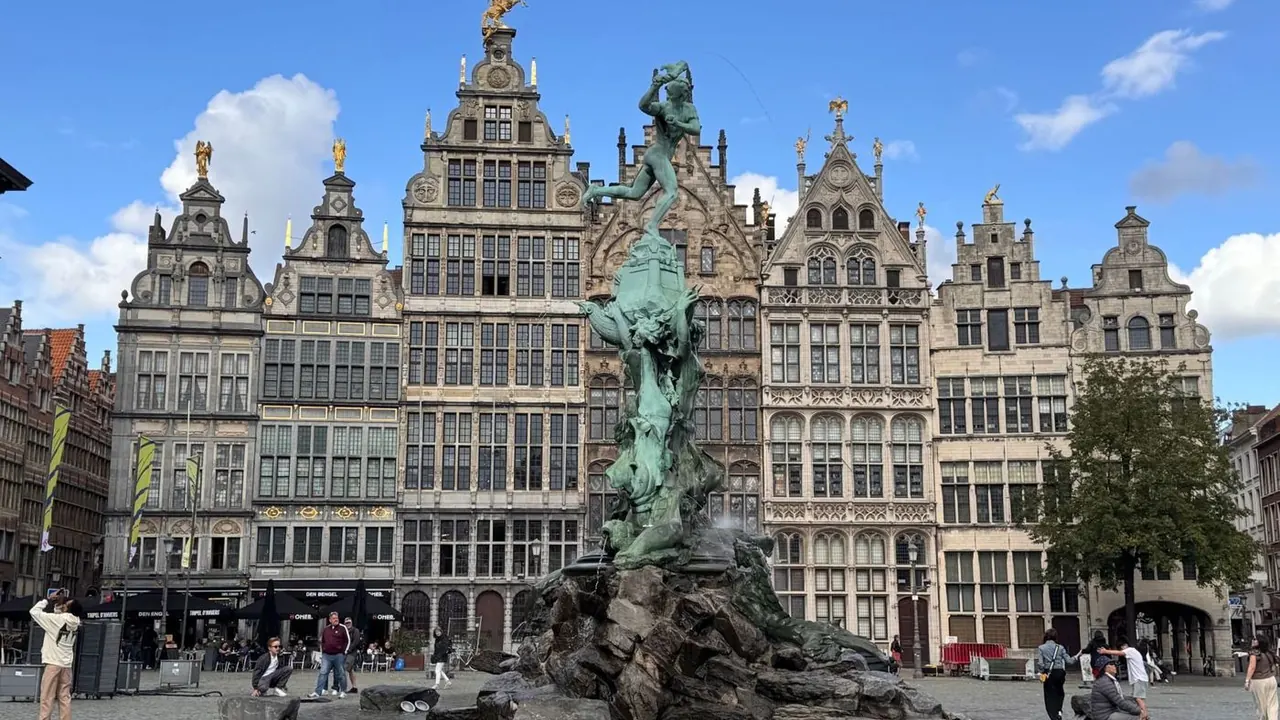
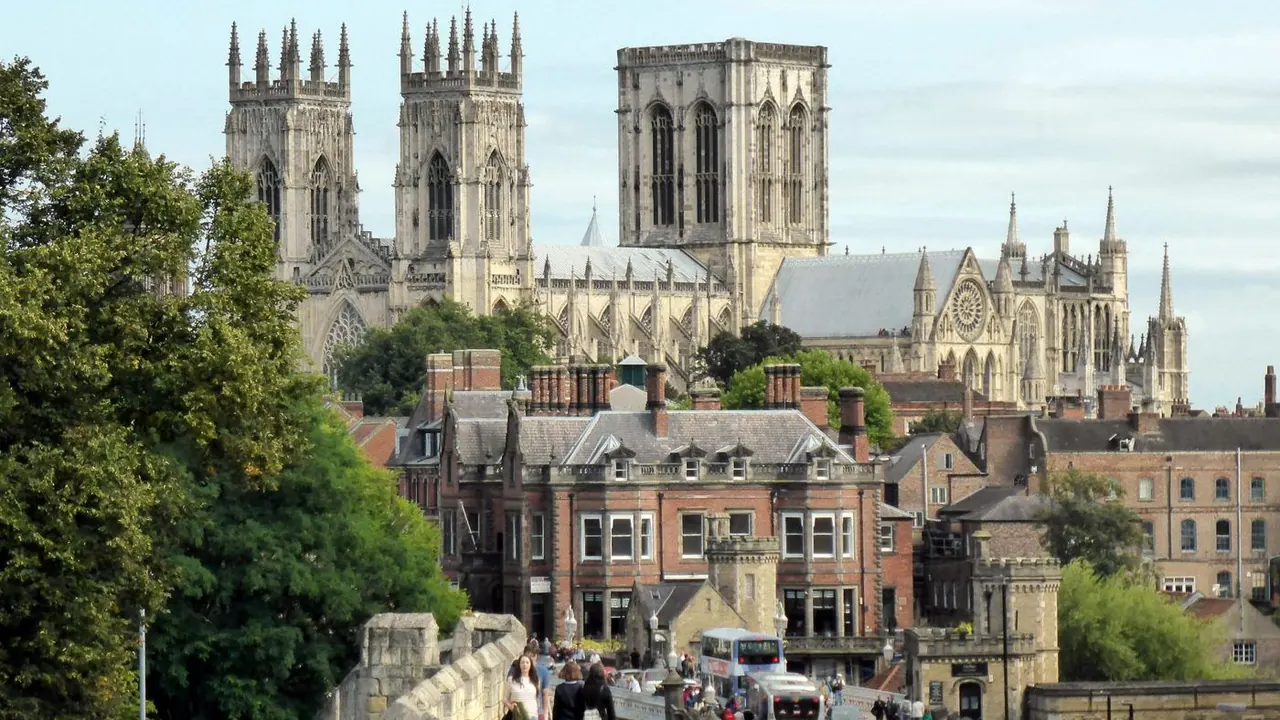
Photos: Antwerp by Norbert Jakab, Pexels License; York by PAUL FARMER, CC BY-SA 2.0, cropped.
Antwerp or York?
Our verdict in twelve categories, each scored against the same fixed benchmark cities, and the climate month by month, so you can choose for your trip.
Choose Antwerp for
- shopping
- food and drink
- nightlife
Antwerp suits the traveller who wants a city with some urban energy behind the old buildings. Rubens and the Flemish Baroque are the headline, but the bigger difference from York is everything around them: a stronger restaurant and beer culture, designer fashion boutiques, a real club scene, an opera and ballet company, and fast trains to Ghent, Bruges, Brussels and Rotterdam. It works best for a lively long weekend or as a base for touring the Low Countries by rail.
Choose York for
- nature and the outdoors
- wellness
York is the better choice for a gentler, more traditional English trip. Its walled medieval centre, the Minster and the Viking and Roman layers make a strong heritage visit, and evenings in centuries-old inns and afternoon teas set a slower pace. The real advantage over Antwerp lies outside the walls. The North York Moors, the Dales and the coast make York the place for walkers, country houses and ruined abbeys, as long as you are happy to hire a car or join a tour.
Scoreboard
Twelve categories on one fixed scale from 0 to 100. The shaded stretch is the gap between the two.
Your match
Pick a travel style or drag the sliders, and both match scores follow your weighting.
Wins on shopping and food and drink with your weighting.
Wins on nature and the outdoors and wellness with your weighting.
What matters to you?
Category by category
What the scores mean for a trip.
Beaches & swimming
Neither city is any good for a beach trip. Antwerp has the tidal Scheldt and a sandy promenade at Sint-Annastrand, but no swimming, and York has nothing to swim in at all. The difference lies in the day out. From York, the traditional resorts of Scarborough, Filey and Whitby are about an hour by train. From Antwerp, the Belgian coast at Blankenberge or Knokke takes closer to two hours, and the North Sea is cold off either shore.
Food & drink
Antwerp is much the better place to eat. Beyond stoofvlees, mussels and frites from proper friteries, it has a serious modern restaurant scene around Het Zuid and the docks, with some starred cooking, and a beer culture built on the bolleke and long Trappist lists.
York's strengths are narrower and more traditional: afternoon tea with fat rascals, Sunday roasts, Yorkshire real ale and pies from the Shambles Market. It is pleasant rather than exciting, with little international cooking. In both cities, the streets around the main sights serve tourist fare.
Culture & sights
Both reward two or three days of sightseeing, but the history they show is different. Antwerp's high point is its sixteenth-century golden age. You can see Rubens's altarpieces in the cathedral and his house, the Plantin-Moretus printing house, and a fine-arts collection reaching Ensor, with Central Station and Art Nouveau Zurenborg as a later layer.
York goes back further and is more about the medieval city itself. The Minster's stained glass, the walkable walls, the Shambles, Jorvik's Viking street and the National Railway Museum make it the stronger pick for history, while Antwerp leans more towards painting and design.
Nightlife
Antwerp goes out properly. Bars without a fixed closing time keep the brown cafés and student streets busy late. There is a long-standing house and techno scene in warehouses by the docks and one of the Low Countries' best-known gay scenes, as well as cocktail bars in Het Zuid.
York's evenings revolve around its historic inns on Micklegate and Stonegate, which is a fine way to spend a night. Weekends bring stag and hen parties, weeknights end early, and anyone wanting clubs takes the train to Leeds.
Nature & outdoors
York has far more to offer outdoors. The city itself is flat, with riverside paths and the Strays. Within about an hour, though, you reach the heather of the North York Moors, the limestone and waterfalls of the Dales and the cliff-top Cleveland Way, although a car makes most of it easier.
Antwerp's surroundings are low, built up and dominated by the port. The Kalmthoutse Heide heathland and the polder dykes along the Scheldt are good for an easy bike ride, but there are no hills and nothing to match Yorkshire's scenery.
Day trips
Both make excellent bases, and Antwerp has the edge because so much is reachable by fast, frequent trains. Mechelen, Brussels, Leuven and Ghent are all under an hour and Bruges is not much further, while Rotterdam, Delft and Kinderdijk bring a second country into range.
York's rail trips are strong too: Harrogate, Leeds, Durham, Beverley and Scarborough. Many of its best excursions, though, such as Castle Howard, Fountains Abbey, Rievaulx and the moors railway, are country houses and ruins that work best by car or coach tour.
Good for families
The two are about equal for families, with a different main draw in each. In Antwerp it is the historic zoo beside Central Station, along with trams, the Steen and the foot tunnel under the Scheldt, in a city relaxed about children in restaurants. York's trump card is the National Railway Museum, with Jorvik, the Victorian street in the Castle Museum, the walls and ghost walks for older children. Both put theme parks and the seaside about an hour or more away.
Getting around
Both are compact and easy without a car, but they work differently. York is a walking city. Nearly everything sits inside or just outside its walls, much of the centre is pedestrianised and the Minster is fifteen minutes from the station. Antwerp is larger, so you will use its trams and premetro as well as your feet to reach Het Eilandje and Zurenborg, and its shared bikes and cycle lanes make cycling more natural. Antwerp's station also links you abroad, while York's rural buses are sparse.
Shopping & style
Antwerp is the place for shopping, thanks to fashion. The legacy of its academy's avant-garde designers fills the boutiques of the Nationalestraat, Kammenstraat and Het Zuid. Add the Meir high street, the diamond quarter, Kloosterstraat antiques, and chocolate and beer to take home.
York's appeal is the setting more than the goods. You get independent bookshops, jewellers and antiques in Stonegate and Petergate, high-street chains and a market. The Shambles, though, is heavy on souvenirs and wizard shops, and the December Christmas markets are its real high point.
Affordability
Costs are much the same in both, and both suit a mid-range budget better than a tight one. In Antwerp the expense is sit-down dinners at Belgian prices, though rooms undercut nearby capitals. In York it is accommodation, which climbs steeply at weekends, on race days and at Christmas. York has more free sights, including the National Railway Museum, the walls and the Museum Gardens, while Antwerp's cheap pleasures are frites and a café beer.
Live music & performing arts
Antwerp has the much richer stage. Opera Ballet Vlaanderen performs in the historic house on the Frankrijklei, the Antwerp Symphony Orchestra plays at the Queen Elisabeth Hall, and deSingel brings in the contemporary dance Flanders is known for. Theatre is mostly in Dutch.
York has no opera or orchestra of note. What it does offer is English-language drama at the old Theatre Royal, touring shows at the Grand Opera House, free choral evensong in the Minster and the occasional street Mystery Plays. Both cities share a taste for early music, at AMUZ and the National Centre for Early Music, each housed in an old church.
Wellness & relaxation
Neither city is a place for a spa break, and relaxing in either mostly means parks and slow afternoons. The difference is what lies nearby. From York, a half-hour train ride takes you to Harrogate's Royal Baths and their Victorian Turkish bath. Antwerp's alternative is the Flemish sauna culture, with large wellness complexes in the countryside that are mostly reached by car.
When should you go?
Pick your month. The climate figures are measured averages, not a forecast.
Antwerp in July
York in July
Daytime high, °C
Rainfall in the month, mm
Where the figures come from
Antwerp has no rain gauge within 25 km of the centre, so its rainfall comes from a gridded climate dataset read at the city rather than from a gauge further away.
Antwerp's sunshine is measured 47 km from the centre, at Uccle.
York has no rain gauge within 25 km of the centre, so its rainfall comes from a gridded climate dataset read at the city rather than from a gauge further away.
York's sunshine is measured 48 km from the centre, at Leeming.
Temperature and rainfall are climate normals, averaged over the years shown. Antwerp: 1991-2020 normals, Antwerpen / Deurne (5.2 km from centre). York: 1991-2020 normals, Linton-On-Ouse (14.9 km from centre).
Both cities have a mild northern climate, and neither ever gets too hot for walking the streets. Summer is the obvious season for both, with July and August the warmest months. Antwerp reaches about 23°C then and is clearly sunnier from April to August. York peaks around 21°C and feels cooler and more changeable, so a jacket is useful even in midsummer. Neither gets warm enough to make a beach trip the point of the visit.
Rain is the bigger difference. Antwerp is wetter in almost every month, April being the only exception, and its wettest spells come in high summer and December, with August at around 78mm. York is drier for most of the year, especially from February to May. Late spring and early autumn are good for sightseeing in either city. From November to February both are grey, with short days and highs of about 7°C. Those months are best spent in museums and pubs, and in York's case at the Christmas markets.
Which traveller are you?
For a food and nightlife trip, Antwerp is the clear pick. It has Flemish cooking and starred tables in Het Zuid and Het Eilandje, Trappist beers in brown cafés with no fixed closing time, and warehouse techno clubs, where York offers pub crawls and quiet weeknights.
On an outdoors trip, York wins easily. The North York Moors, the Yorkshire Dales and the sea cliffs at Robin Hood's Bay are all within reach for walking and cycling, while flat, built-up Antwerp offers little beyond heathland and dyke rides.
On a shopping trip, choose Antwerp. Avant-garde Belgian designers fill the Nationalestraat and Het Zuid, and the city adds a diamond quarter and antiques on the Kloosterstraat. York's medieval lanes are charming, but its independent shops lean towards souvenirs and luxury fashion is scarce.
Before you go
| Measure | Antwerp | York |
|---|---|---|
| Official language | French, German, Dutch | English |
| Currency | Euro (EUR) | Pound Sterling (GBP) |
| Sockets | CE230 V, 50 Hz | G230 V, 50 Hz |
| Driving side | Right | Left |
| Time zone | UTC+1, UTC+2 in summer | UTC, UTC+1 in summer |
| Emergency number | 112 | 112 or 999 |
| Elevation | 7 m | 25 m |
| Main airport | Brussels Airport (BRU)36 km from centre191 non-stop destinations | Leeds Bradford Airport (LBA)39 km from centre69 non-stop destinations |
| Public holidays this year | 14 days | 8 days |
By the numbers
| Measure | Antwerp | York |
|---|---|---|
| City population | 529,247 | 208,400 |
| People per km² | 2,542 | 766 |
| Museums within 10 km | 38 | 24 |
| UNESCO World Heritage sites within 50 km | 9 | 2 |
Where else could you go?
Every comparison below shares a destination with this one, so you can follow Antwerp or York somewhere new.