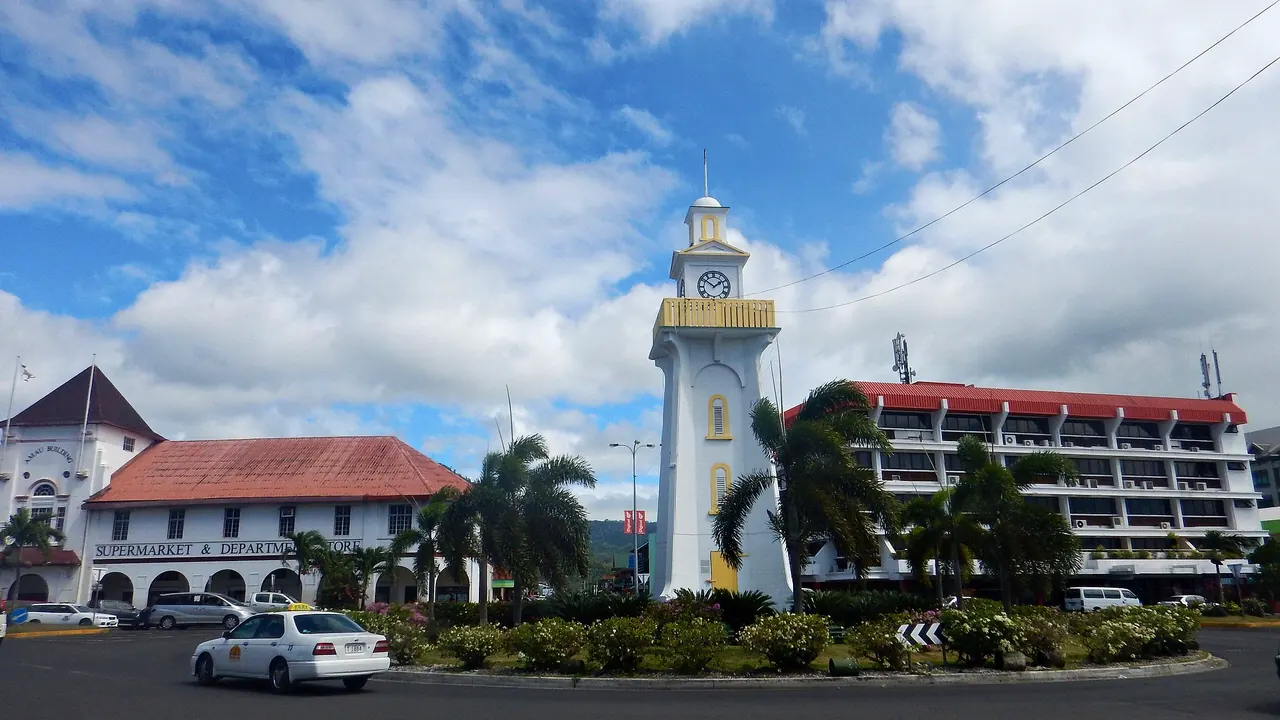
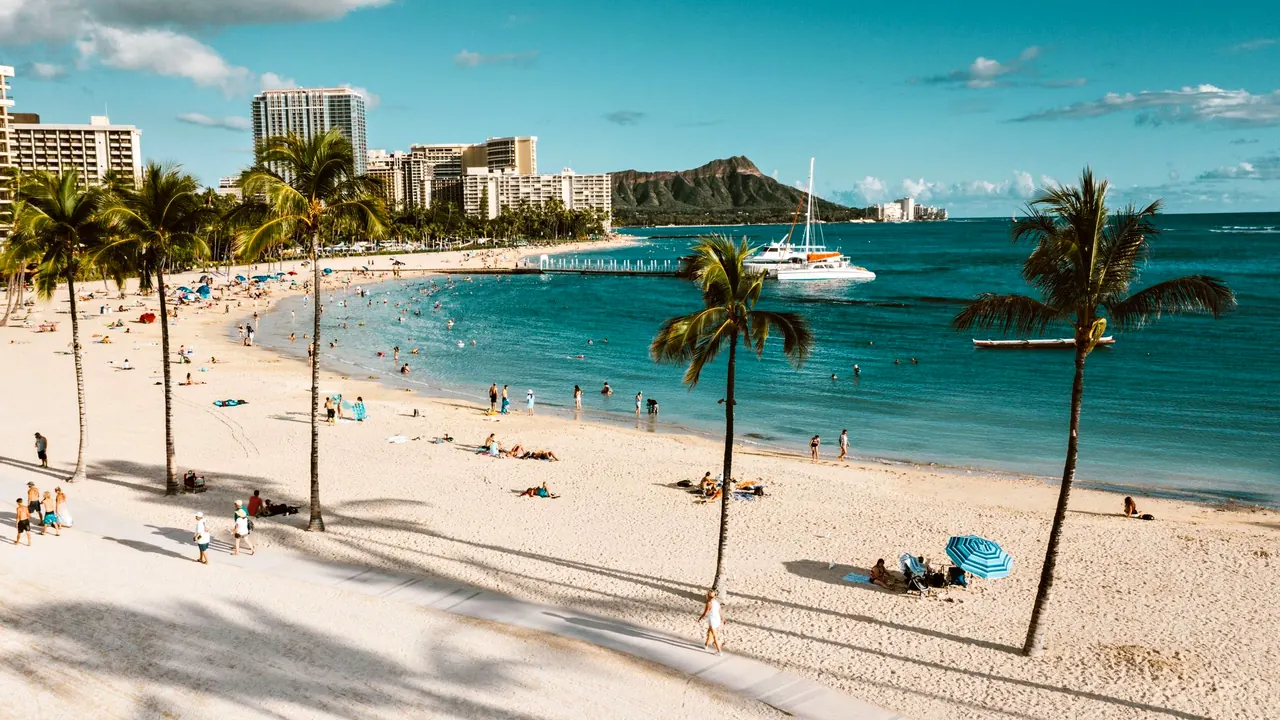
Photos: Apia by Rickard Törnblad, CC BY-SA 4.0, cropped; Honolulu by Jess Loiterton, Pexels License.
Apia or Honolulu?
Our verdict in twelve categories, each scored against the same fixed benchmark cities, and the climate month by month, so you can choose for your trip.
Choose Apia for
- prices
Apia suits travellers who want the South Pacific as it is lived rather than packaged: village life, Sunday hymns, rainforest straight above the town and simple beach fales on Upolu's south coast. It asks for some patience, since the good beaches are a long drive away and evenings are quiet. In return, money goes much further for anyone happy to live as locals do.
Choose Honolulu for
- beaches
- families
- food and drink
Choose Honolulu for an easy beach vacation with plenty of everything. Waikiki's sand, reef snorkelling, crater hikes and a deep local food culture are all a short ride from the hotel. Families, first-time visitors to the Pacific and anyone who wants full days will find it far more rewarding, as long as the budget can stretch to its prices.
Scoreboard
Twelve categories on one fixed scale from 0 to 100. The shaded stretch is the gap between the two.
Your match
Pick a travel style or drag the sliders, and both match scores follow your weighting.
Wins on prices with your weighting.
Wins on beaches and families with your weighting.
What matters to you?
Category by category
What the scores mean for a trip.
Beaches & swimming
Apia has no swimming beach in town at all. The waterfront is reef flat and harbour, and the nearest water worth getting into is the snorkelling hole at Palolo Deep. The postcard lagoons at Lalomanu and Matareva are on the far side of Upolu, either a long day out or a reason to move to a beach fale.
Honolulu has its sand on the doorstep. Waikiki is crowded but calm and good for learning to surf, Ala Moana and Kaimana are a stroll away, and Lanikai, Kailua and Hanauma Bay are all within an hour's drive. Apia's sea is a degree or two warmer, but Honolulu makes swimming effortless.
Food & drink
Apia's cooking is a short, honest list: oka in coconut cream, palusami, a cup of koko Samoa and a Sunday umu if a guesthouse invites you to share it. The markets do the rest, and beyond them there is little choice. It is worth tasting but not worth travelling for.
Honolulu eats far better and far more widely, with poke by weight, plate lunch, kalua pig, malasadas and shave ice, plus strong Japanese ramen counters and izakaya. Kaimuki, Kapahulu and Chinatown can fill a week of meals without repeats.
Culture & sights
Apia's formal sights take a morning: Robert Louis Stevenson's house at Vailima with his tomb on the hill above, the white waterfront cathedral and the chiefs' tombs at Mulinu'u. The deeper interest is fa'a Samoa, which you see in village fales and Sunday church rather than in museums.
Honolulu has more to see and a bigger story to tell. Iolani Palace covers the Hawaiian monarchy, Pearl Harbor covers the Pacific war, and the Bishop Museum's Polynesian collection is the highlight. Even so, the city's sights fit into two or three days.
Nightlife
Neither is a place for a big night out, but Honolulu gives you far more to choose from: sunset mai tais on Waikiki's beachfront, cocktail and dive bars around Chinatown and Nuuanu Avenue, and breweries in Kakaako. Apia has a handful of waterfront and hotel bars with Vailima beer and a couple of clubs at the weekend, and on Sundays the town goes almost silent.
Nature & outdoors
Both are volcanic islands where rainforest starts right behind town, and both reward walkers and snorkellers. Apia's outdoors is wilder and emptier: the trail up Mount Vaea, the crater lake at Lanoto'o, the black lava cliffs of O Le Pupu-Pu'e and the To Sua Ocean Trench. The wet season turns its trails to mud.
Honolulu packs more in and makes it easier to reach. There is the Diamond Head rim, the Manoa Falls trail twenty minutes from the beach, the Koolau ridge walks, and reef snorkelling alongside green turtles. Humpbacks pass both islands, off Apia in the southern winter and off Honolulu in the northern one.
Day trips
Day trips are limited from both, since each is the only real city on its island. Honolulu has more places to stop on a round-island drive: Haleiwa's surf town, Kailua, the Polynesian Cultural Center and the Byodo-In temple, with Maui or the Big Island a short flight away.
From Apia the trips are to villages, waterfalls and car-free Manono. Savai'i is a ferry ride across and much better with a night or two than as a day out.
Good for families
Honolulu is set up for children in a way Apia is not. The zoo and aquarium sit at the quiet end of Waikiki, Sea Life Park has dolphins, Hanauma Bay makes a gentle first snorkel, and for older children there are surf lessons and the Pearl Harbor ships.
Apia's appeal to families is warmth rather than facilities. Samoans dote on children, and the Piula cave pools and Palolo Deep make good outdoor days. Dengue mosquitoes make repellent essential, though, and families who need organised entertainment will run out of things to do quickly.
Getting around
Apia is the harder of the two to get around. Its centre is a short but hot walk along Beach Road, and cheap taxis cover hops to Vailima. Beyond town, the painted wooden buses leave only when full and almost stop on Sundays. A hire car needs a temporary local licence and careful driving on narrow left-hand roads shared with dogs and pigs.
Honolulu is much simpler. Waikiki is flat and walkable along Kalakaua Avenue, TheBus runs to Pearl Harbor, Chinatown and the North Shore, and ride-hailing fills the gaps, so many visitors spend several days without a car. The main drawback is heavy highway traffic at rush hour.
Shopping & style
Shopping in Apia means craft stalls. The flea market has siapo bark cloth, woven mats, kava bowls and lavalava, the produce market has coconut oil and cocoa, and the shops close on Sunday.
Honolulu is a proper shopping destination, with luxury fashion houses along Kalakaua Avenue and the huge Ala Moana Center. For local things there are aloha shirts, koa bowls, ukuleles and surf labels in Kakaako, Kaimuki and Haleiwa.
Affordability
Apia is much the cheaper of the two, as long as you live as Samoans do. Market food, buses, taxis and beach fales with meals included cost little, though resorts and anything imported are priced like anywhere remote.
Honolulu is expensive from the room upwards, with resort fees, restaurants, drinks and car hire all well above mainland levels. Plate lunches, the bus, free hikes and free beaches soften the cost but do not close the gap.
Live music & performing arts
Apia has no theatre or concert hall. Its hotels stage weekly fiafia nights with the fire knife dance, and the unaccompanied harmony of Sunday church singing is free and unforgettable. September's Teuila Festival is the one time its programme fills out.
Honolulu offers more, both informal and formal. There is free hula at Kuhio Beach and slack-key guitar in hotel courtyards. The restored Hawaii Theatre puts on concerts and shows, and the Hawaii Symphony and Hawaii Opera Theatre each perform short seasons. Even so, neither city has a nightly programme of theatre or classical music.
Wellness & relaxation
Neither has bathing traditions, and both rely on a traditional massage: lomilomi in Honolulu and fofō with coconut oil in Apia. Honolulu has the edge for a pampering stay, with good resort spas, open-air treatment rooms, dawn yoga on the sand and quiet bases at Kahala or Ko Olina.
Apia's spas are fewer and simpler. What it offers is stillness, with silent Sundays and a beach fale on the coast for anyone who really wants to unplug.
When should you go?
Pick your month. The climate figures are measured averages, not a forecast.
Apia in July
Honolulu in July
Daytime high, °C
Rainfall in the month, mm
Temperature and rainfall are climate normals, averaged over the years shown. Apia: 1998-2025 (sunshine 1981-2010, rainfall 1991-2020) normals, Faleolo Intl / Apia (18.1 km from centre). Honolulu: 1991-2020 (sunshine 1981-2010) normals, Honolulu International Airport (10.1 km from centre).
Apia is hot in every month, with daytime highs around 31°C all year, so the real choice is about rain. The wet season from November to April is heavy, with more than 400mm in each of January and February, muddy trails and less sunshine. June to October is the drier, sunnier stretch and the best time to drive round Upolu, hike and stay at the south-coast beaches. The sea is warm enough to swim in all year.
Honolulu is drier and sunnier than Apia in every month, and even its wettest months bring only passing showers. Winter is the most comfortable time for walking the city, with highs in the high twenties, while late summer is the hottest stretch. The sea is swimmable all year but warmest from June to October at around 27°C, cooling to 24°C in winter, a little fresher than Apia's at 28°C or more.
Which traveller are you?
On a beach and sun trip, Honolulu is the better base. From Apia, the sand means moving out to a fale at Return to Paradise and timing swims to the tide. Honolulu has sunnier skies, outrigger canoe rides off Waikiki and lifeguarded beaches.
On a family trip with young children, Honolulu is far easier. Apia is welcoming, but medical care is basic and a drive round the island is long and winding. Honolulu has calm Ko Olina lagoons, resort pools with kids' clubs and a water park.
For a trip on a tight budget, Apia wins. Waterfalls and cave pools cost only a small fee to the village that owns the land, and guesthouses often share their Sunday umu. In Honolulu, tours and Waikiki rooms add up fast, and a self-catering apartment is the main way to save.
Before you go
| Measure | Apia | Honolulu |
|---|---|---|
| Official language | English, Samoan | - |
| Currency | Tala (WST) | US Dollar (USD) |
| Sockets | I230 V, 50 Hz | AB120 V, 60 Hz |
| Driving side | Left | Right |
| Time zone | UTC+13 | UTC-10 |
| Emergency number | 999 | 911 |
| Elevation | 2 m | 12 m |
| Main airport | Faleolo International Airport (APW)19 km from centre6 non-stop destinations | Daniel K. Inouye International Airport (HNL)7 km from centre56 non-stop destinations |
| Public holidays this year | 11 days | 13 days |
By the numbers
| Measure | Apia | Honolulu |
|---|---|---|
| Population | 37,708 | 350,964 |
| People per km² | 305 | 1,981 |
| Museums within 10 km | 4 | 12 |
| UNESCO World Heritage sites within 50 km | 0 | 0 |
| Swim season, months above 21 °C | 12 months | 12 months |
Where else could you go?
Every comparison below shares a destination with this one, so you can follow Apia or Honolulu somewhere new.
- Mauivs Honolulu
- Kauaivs Honolulu
- Big Islandvs Honolulu
- Nuku'alofavs Apia
- Funafutivs Apia
- Rarotongavs Apia