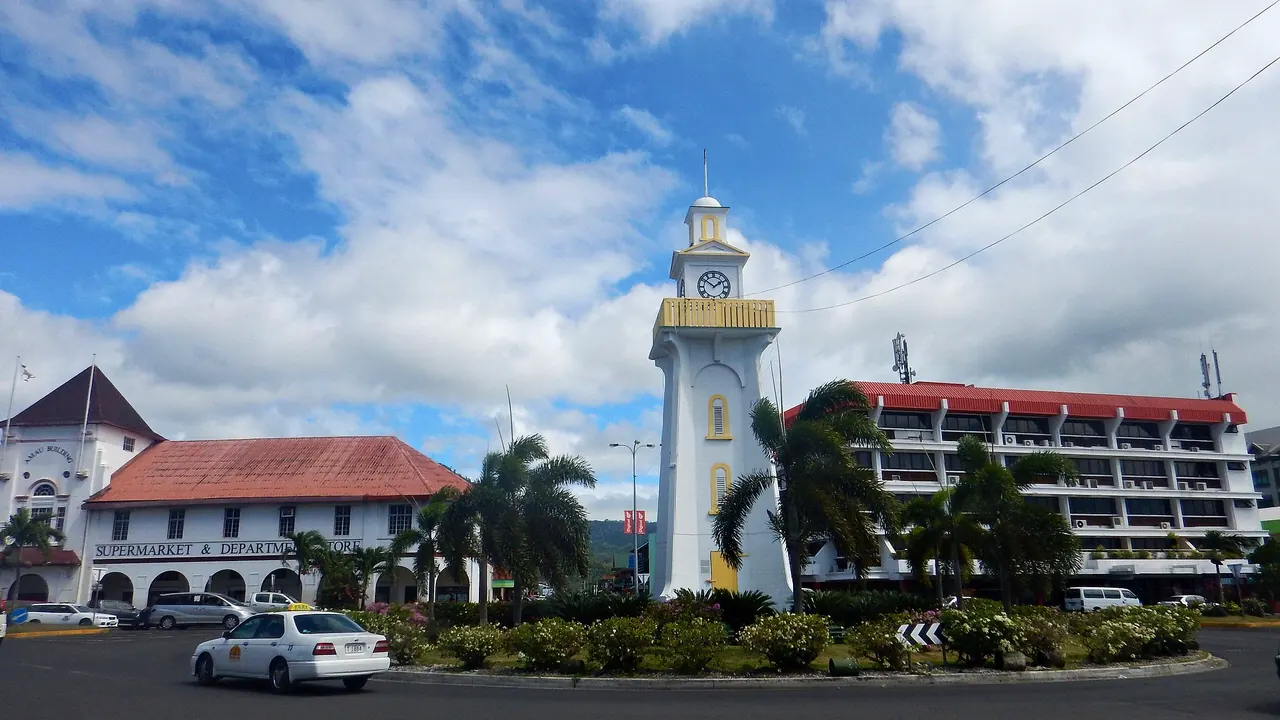
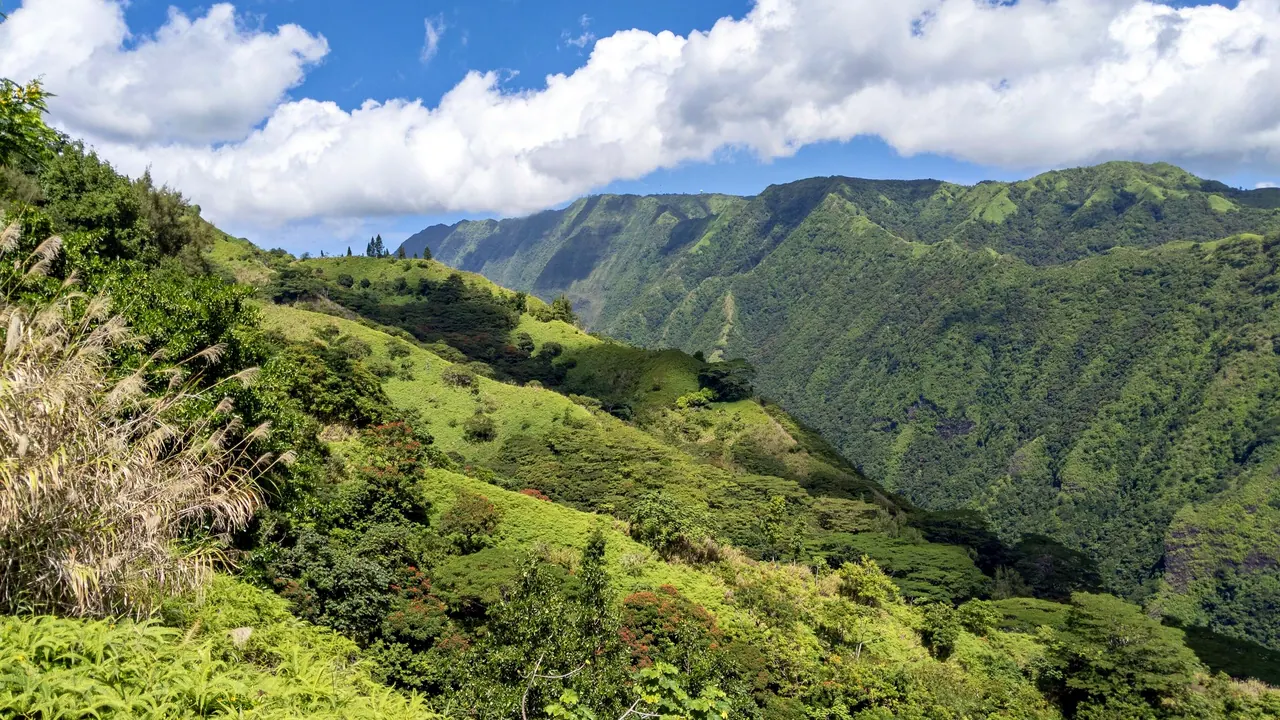
Photos: Apia by Rickard Törnblad, CC BY-SA 4.0, cropped; Tahiti by Matthew Dillon from Hollywood, CA, USA, CC BY 2.0, cropped.
Apia or Tahiti?
Our verdict in twelve categories, each scored against the same fixed benchmark cities, and the climate month by month, so you can choose for your trip.
Choose Apia for
- prices
- getting around
Apia suits travellers who want the Pacific at its most unpolished and affordable. It works as a base for Upolu's crater lakes, cave pools and south-coast beach fales, where a simple hut on the sand with meals included costs little. Samoan village life, church singing and the umu on Sundays are part of every day, so the place gives more than its short list of formal sights suggests.
Choose Tahiti for
- day trips
- food and drink
- beaches
Tahiti is the better pick for anyone who wants grander scenery and an easier route to lagoon beaches, and who can afford the bill. Its interior of knife-edge ridges and deep valleys is wilder, Moorea's white sand is a short ferry ride away, and the roulottes and French bakeries make eating more varied. The price of all that is high costs at every turn.
Scoreboard
Twelve categories on one fixed scale from 0 to 100. The shaded stretch is the gap between the two.
Your match
Pick a travel style or drag the sliders, and both match scores follow your weighting.
Wins on prices and getting around with your weighting.
Wins on day trips and food and drink with your weighting.
What matters to you?
Category by category
What the scores mean for a trip.
Beaches & swimming
Neither main town is a place to swim, but Tahiti puts good lagoon water closer at hand. Apia faces a reef flat and a working harbour, and apart from snorkelling at Palolo Deep, the white sand at Lalomanu and Matareva lies an hour or more away on winding roads. Most beach lovers leave town for a fale on the south coast.
On Tahiti the calm lagoon inside the reef near Punaauia is good for swimming and snorkelling, and Moorea, with wider, whiter beaches, is close enough for a day trip. Tahiti's own sand is modest, though, and black on the north and east coasts around Matavai Bay.
Food & drink
Both islands make a national dish of raw fish in coconut, oka in Apia and poisson cru on Tahiti. Beyond that, Tahiti offers far more. French bakeries, Chinese dishes and the evening roulottes at Place Vaiete, with steak frites, chow mein and crêpes at shared tables, give it a range Apia cannot match.
Apia's food is plainer and closer to the land: the produce and fish markets, palusami, a cup of koko Samoa, and a Sunday umu if your guesthouse shares one. The rest of the choice is a few cafés and takeaways.
Culture & sights
There is not much to choose between them, and either needs only a day or two for the set sights. What differs is the kind of culture you find. Apia's best-known sight is literary: Robert Louis Stevenson's house at Villa Vailima and his tomb on Mount Vaea. Its greater interest is fa'a Samoa, still lived openly in fale houses, village councils and Sunday church.
Tahiti's heritage is more about archaeology and the museum. The Musée de Tahiti et des Îles explains navigation and tattoo, restored marae stand at Arahurahu, and Pointe Venus recalls Cook's visit in 1769.
Nightlife
Neither island is a place for late nights, though Papeete has a little more going on. On Friday and Saturday, its waterfront bars and clubs fill with locals and sailors from the harbour. Apia's equivalent is a few Beach Road bars, Vailima beer and a couple of dance clubs. Because Samoa keeps Sunday strictly for church and family, the town is almost silent for a full day of the week.
Nature & outdoors
Both are lush volcanic islands with reefs, but Tahiti's landscape is on a bigger scale. Ridges rise above 2,000m, the Papenoo and Fautaua valleys cut deep into the interior, the Mount Aorai climb is a serious hike, and Teahupo'o and the shark dives give the water real drama.
Upolu is gentler and easier to get into. You can walk up Mount Vaea from town, drive to the crater lake at Lanoto'o, swim in To Sua Ocean Trench and the Piula cave pools, and stop at waterfalls as you go round the island. Both islands see humpback whales in the southern winter.
Day trips
Tahiti has the more rewarding day out. Moorea, half an hour away by ferry, has bays, plantations and a lagoon you can tour by car in a day, and there is also the drive round Tahiti Iti to the road's end beyond Teahupo'o, or a boat to Tetiaroa.
From Apia, the outings are to villages rather than places: a drive round Upolu, the car-free island of Manono, or a long day on Savai'i, which really deserves an overnight stay.
Good for families
Families will find these two much alike: warm, safe and welcoming, with no zoo, aquarium or theme park on either. Apia's family days are cheap and natural, with sheltered snorkelling at Palolo Deep and the Piula pools, but medical care is basic and dengue means repellent matters.
Tahiti adds outrigger canoe outings and whale-watching boats for older children. It works best as a slow stay at a resort with a pool, which the costs make hard on a family budget.
Getting around
Getting around is about equally easy on both, though in different ways. Central Apia is compact enough to walk along the harbour, taxis are cheap, and the painted buses from the market reach the villages, although they leave only when full and almost stop on Sundays.
Tahiti is spread around a single coast road where the buses are of little use to visitors. Most people hire a car and sit in Papeete's rush-hour traffic, but frequent ferries to Moorea make island-hopping easy.
Shopping & style
Tahiti has the one thing worth a proper shopping trip: black pearls, which you can compare at jewellers across Papeete. The upper floor of the Marché adds pareos, carvings and monoi oil.
Apia's shopping is crafts and little else. The waterfront flea market has siapo bark cloth, woven mats and kava bowls among imported trinkets, and every shop closes on Sunday.
Affordability
This is where the two differ most. Living locally around Apia costs little: market food, buses and seaside beach fales with meals included. Only resorts, imported goods and car hire push the bill up.
Tahiti is very expensive almost everywhere, from groceries and car hire to the west-coast resorts. Pensions and the roulottes help, but even a careful trip there costs far more than a comfortable one in Samoa.
Live music & performing arts
Polynesian dance leads on both islands, and Tahiti has the slightly fuller calendar. The Heiva i Tahiti fills Papeete with competing dance troupes and choirs over several weeks each July, and the Maison de la Culture hosts the occasional concert.
Apia has fiafia nights with fire knife dancing at hotels, the Teuila Festival in September and, free every Sunday, unaccompanied church harmonies that you can hear from the street.
Wellness & relaxation
Neither island has a bathing or thermal tradition, and both offer their own massage. In Apia it is fofō with coconut oil, given by local practitioners. On Tahiti it is taurumi with tiare-scented monoi, mostly in lagoon-facing resort spas around Punaauia.
The real difference is pace. Apia is slow throughout and almost silent on Sundays, while on Tahiti you need to stay away from the busy west-coast road, in the villages of Tahiti Iti or the east coast, to find the same quiet.
When should you go?
Pick your month. The climate figures are measured averages, not a forecast.
Apia in July
Tahiti in July
Daytime high, °C
Rainfall in the month, mm
Temperature and rainfall are climate normals, averaged over the years shown. Apia: 1998-2025 (sunshine 1981-2010, rainfall 1991-2020) normals, Faleolo Intl / Apia (18.1 km from centre). Tahiti: 1991-2020 normals, Tahiti-Faaa (5.3 km from centre).
Apia is hot all year, with daytime highs of about 31°C in every month and a sea that stays warm enough to swim in any season. What changes is the rain. December to February are drenching, with up to 427mm in February, and even the driest stretch from June to September brings regular showers. Those months are also the sunniest, so the southern winter is the best time for hiking and beach days on Upolu.
Tahiti, measured where most visitors stay, is drier and sunnier than Apia in every month and has a much clearer dry season. From May to October highs drop a couple of degrees, which makes walking more comfortable. July and August bring only about 43mm of rain each, with June and September not much wetter. This is the best time for the mountain trails and the lagoon, though the sea cools a little, to about 26°C in August and September. December to February are the wettest months on Tahiti too, but even then it gets less rain than Apia.
Which traveller are you?
On a trip on a tight budget, Apia wins easily. Eating where Samoans eat, riding the local buses and sleeping in a simple fale on the coast keep daily spending low. Tahiti stays costly however careful you are, because almost everything there is shipped in.
For an outdoors trip, Tahiti is the stronger choice for experienced hikers and divers. Apia's trails start from town and need no guide, but they turn muddy from November to April. Tahiti's harder routes often need a guide, and its dry season from May to October is more reliable.
On a beach and sun trip, Tahiti lets you stay in one place near the water. From Apia the swimming beaches are a long drive away, so most people split their stay and move to a fale on the south coast. On Tahiti, staying on the west coast puts calm lagoon water right outside the door.
Before you go
| Measure | Apia | Tahiti |
|---|---|---|
| Official language | English, Samoan | French |
| Currency | Tala (WST) | CFP Franc (XPF) |
| Sockets | I230 V, 50 Hz | - |
| Driving side | Left | Right |
| Time zone | UTC+13 | UTC-10 |
| Emergency number | 999 | 112 |
| Elevation | 2 m | - |
| Main airport | Faleolo International Airport (APW)19 km from centre6 non-stop destinations | Fa'a'ā International Airport (PPT)30 non-stop destinations |
| Public holidays this year | 11 days | 16 days |
By the numbers
| Measure | Apia | Tahiti |
|---|---|---|
| Population | 37,708 | 178,133 |
| People per km² | 305 | 171 |
| Museums within 10 km | 4 | - |
| UNESCO World Heritage sites within 50 km | 0 | - |
| Swim season, months above 21 °C | 12 months | 12 months |
Where else could you go?
Every comparison below shares a destination with this one, so you can follow Apia or Tahiti somewhere new.
- Mooreavs Tahiti
- Bora Boravs Tahiti
- Nuku'alofavs Apia
- Rarotongavs Tahiti
- Funafutivs Apia
- Cook Islandsvs Tahiti