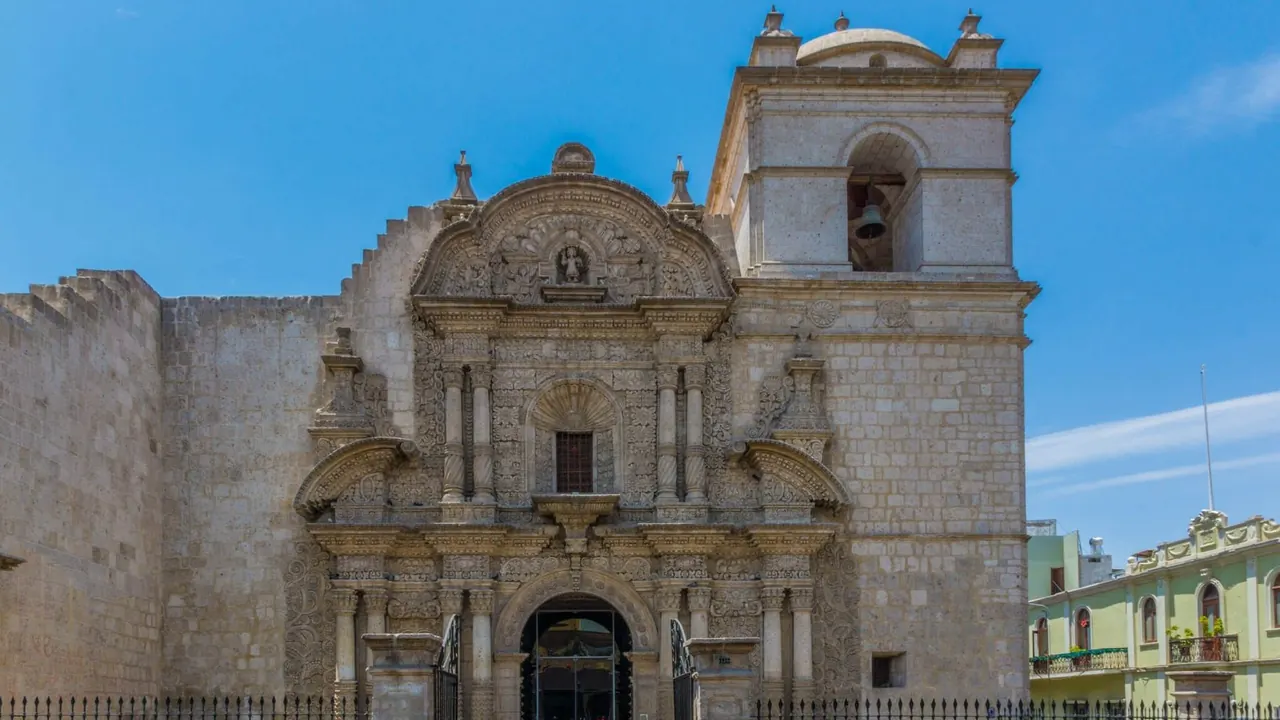
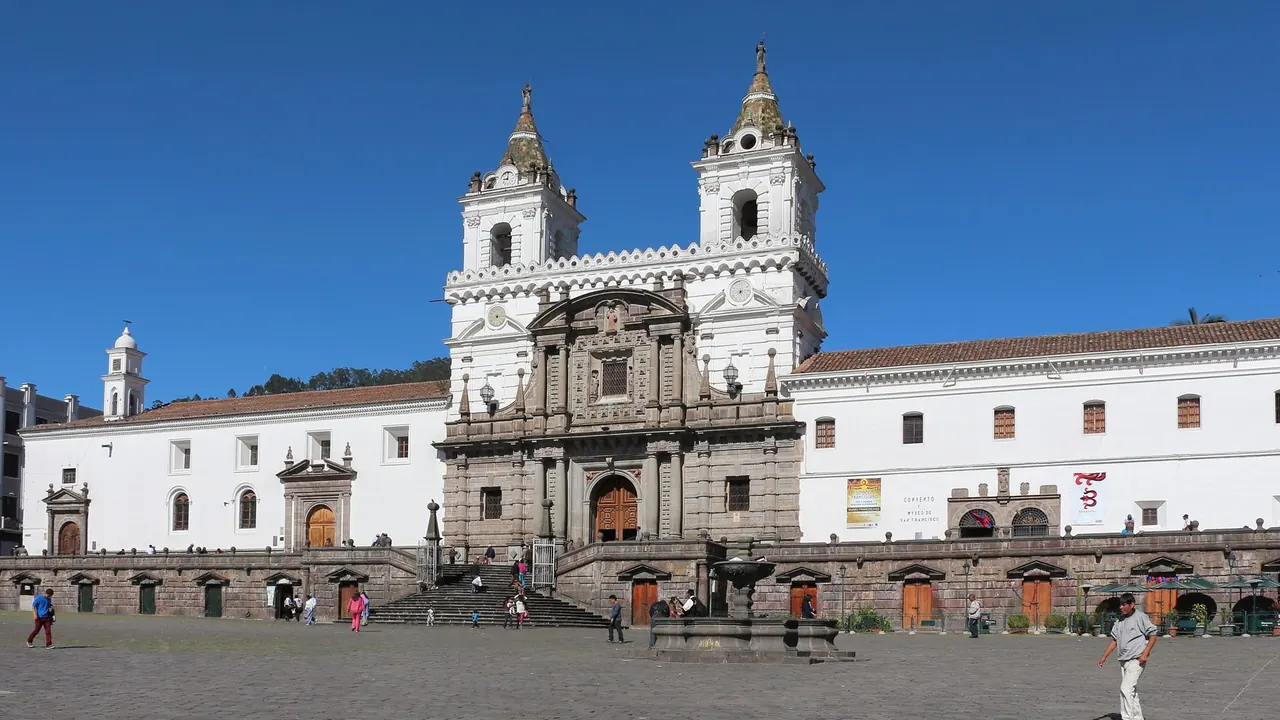
Photos: Arequipa by DocSlyper, CC BY-SA 2.0, cropped; Quito by Bernard Gagnon, CC BY-SA 3.0, cropped.
Arequipa or Quito?
Our verdict in twelve categories, each scored against the same fixed benchmark cities, and the climate month by month, so you can choose for your trip.
Choose Arequipa for
- food and drink
- getting around
- shopping
Arequipa suits a traveller who wants an easy, sunny base and long lunches. Its white-stone centre is flat and compact, the picanterias serve some of the best regional cooking in Peru, and the dry weather lasts most of the year. It works best as a few unhurried days before heading out to Colca Canyon or up the volcanoes, and the lower altitude makes the first days gentler.
Choose Quito for
- day trips
- culture and sights
- nature and the outdoors
Quito is the better pick if you want more to see and more to do outside the city. The colonial core is larger and richer, with gilded churches and good museums, and from Quito you can reach Otavalo's market, the equator, Cotopaxi and the cloud forest at Mindo in a day. In return you get steeper streets, thinner air, a long, sprawling city and a good deal more rain.
Scoreboard
Twelve categories on one fixed scale from 0 to 100. The shaded stretch is the gap between the two.
Your match
Pick a travel style or drag the sliders, and both match scores follow your weighting.
Wins on food and drink and getting around with your weighting.
Wins on day trips and culture and sights with your weighting.
What matters to you?
Category by category
What the scores mean for a trip.
Beaches & swimming
Neither is a beach city, but they differ a little. From Arequipa a long day out reaches the wide sands at Mollendo or Mejía, about two hours away, though the Humboldt Current keeps the sea cold and the surf rough. From Quito the coast is too far for a day, so swimming means the warm valley pools, and sand means adding the coast or the Galápagos as a separate leg of the trip.
Food & drink
Arequipa is the better place to eat. Its picanterias are a culinary tradition of their own: loud family dining rooms where rocoto relleno, shrimp chowder and the Sunday adobo come with dark chicha de guinapo. San Camilo market shows off the region's potatoes and cheeses.
Quito's highland cooking is filling and good, from locro de papa to hornado, and the set almuerzo and the Mercado Central food courts are cheap ways to try it. Its strengths are Ecuadorian cacao and coffee more than a whole cuisine, and once you leave those behind the range is narrower than in Arequipa.
Culture & sights
Quito has more to see. Its colonial core is one of the largest in the Americas, and the gold-covered La Compañía, the San Francisco monastery and the Quito-school altarpieces could fill several days on their own. Casa del Alabado and Guayasamín's Capilla del Hombre add good museums.
Arequipa is smaller and different in mood. Its churches and mansions are built of pale sillar and carved in mestizo baroque, and Santa Catalina's coloured lanes and the frozen Inca girl Juanita are the memorable sights. It fills two or three days well, but not the longer stay Quito can.
Nightlife
Neither city offers much of a night out, and the difference is in layout. In Arequipa it all happens along Calle San Francisco, a few steps from the plaza, with pisco bars, craft beer and a few student dance clubs at weekends. Quito's nightlife is more spread out. La Mariscal's salsa clubs and backpacker bars fill up at weekends, La Floresta has quieter cocktail bars, and you take taxis from one area to the next.
Nature & outdoors
Quito gives you more variety without travelling far. The TelefériQo lifts you from the edge of the city to páramo at 4,000m, Cotopaxi's snow cone is about two hours south, and to the west the road drops into the Mindo cloud forest, known for its hummingbirds.
Arequipa's landscapes are dramatic but drier and further away. El Misti and Chachani are serious guided climbs, and Colca Canyon, where condors ride the thermals, is three to four hours across the vicuña country of the puna. Closer to town there are gentler walks and cycling in the green campiña.
Day trips
Quito has much more within a day's reach. Otavalo's Indigenous market and the weaving villages lie two hours north, the equator line at Mitad del Mundo is closer, and Papallacta's hot springs and the cloud forest at Mindo each make a full day.
Arequipa's easy outings stay in the countryside around the city, such as the Sabandía mill, the farming districts with their Sunday restaurants and the thermal village of Yura. Colca and the Toro Muerto petroglyphs are really overnight trips.
Good for families
For children the two cities trade off different things. Arequipa is lower, flatter and calmer, and older children enjoy Santa Catalina's maze and the mummy museum, but there is little else to fill the days, and the Colca roads climb high above 4,800m. Quito has more for children, with the cable car, the Yaku water museum, the equator line and the pedal boats in Parque La Carolina, but its greater altitude and steep, busy streets tire small children quickly.
Getting around
Arequipa is simpler to get around. The plaza, Santa Catalina, the museums and most hotels sit within a few flat blocks of each other, and a short taxi ride covers Yanahuara or the campiña.
Quito stretches for some 40km along its valley. The metro and bus corridors are cheap but crowded, and pickpockets work them at rush hour. The old town is walkable, but it is steep and leaves newcomers short of breath. Most visitors end up using taxis between neighbourhoods and at night.
Shopping & style
Both are craft cities more than fashion cities, and each specialises in something different. Arequipa is the centre of Peru's alpaca industry, so the mill outlets sell dependable baby alpaca and vicuña knitwear, and Fundo El Fierro gathers local artisans. Quito's souvenirs are more varied: toquilla-straw Panama hats, bean-to-bar chocolate, tagua carvings and silver, sold at the La Mariscal market, though serious buyers wait for Otavalo.
Affordability
Both are cheap, and set lunches, taxis and colonial guesthouses cost little in either. Where costs rise is different. In Arequipa the big expenses are Colca tours and guided volcano climbs. In Quito they are the international hotels in the north, imported drinks and above all a Galápagos trip, if you add one.
Live music & performing arts
Folk music over dinner against a real theatre programme is the gap between the two. In Arequipa the best bet is a weekend peña, where Andean bands and dancers perform while you eat, and in mid-August the city's founding anniversary fills the streets with parades and dancing.
Quito gives you more choice of evening. The nineteenth-century Teatro Nacional Sucre stages opera and the national symphony, the large folk ballet companies put on colourful Andean dance, and bars in La Floresta host live bands. Even so, it is worth checking for a night out rather than a reason to choose the city.
Wellness & relaxation
Quito has the better place to soak. Papallacta's steaming pools lie among misty páramo hills about an hour and a half away, with a spa culture that Quiteños use at weekends, while the city itself is noisy and the altitude makes the first days tiring.
Arequipa is the calmer city day to day, sunny and slow, with cloister courtyards to sit in. Its thermal options are plainer, though: the old pools at Yura, or the hot springs near Chivay after a day at Colca.
When should you go?
Pick your month. The climate figures are measured averages, not a forecast.
Arequipa in July
Quito in July
Daytime high, °C
Rainfall in the month, mm
Where the figures come from
Arequipa's station stands 203 m above the city centre, so the centre is likely a little warmer than the figures say.
Quito's station stands 208 m above the city centre, so the centre is likely a little warmer than the figures say.
Temperature and rainfall are climate normals, averaged over the years shown. Arequipa: 1991-2020 normals, Arequipa (9.2 km from centre). Quito: 1961-1990 normals, Izobamba-Santa Catalina (16.8 km from centre).
Arequipa has almost the same weather all year. Afternoons reach about 21°C to 22°C, there is a little rain from January to March, and from April to December it hardly rains at all, so any month suits walking the streets and the dry months are best for the canyon and the volcanoes. Neither city is beach weather at any time of year.
Quito is a little cooler, around 18°C by day all year, and much wetter. Rain falls on most of the calendar and peaks in April at about 195mm. June to August is the dry spell, with July down to about 32mm and the most sunshine, which makes those months the best for hiking and clear volcano views. For a trip early in the year, Arequipa is the much drier choice.
Which traveller are you?
For a culture and arts trip, Quito is the stronger choice. Its colonial centre is larger and more intact, La Compañía and San Francisco are outstanding, and Casa del Alabado, Guayasamín's paintings and the Teatro Nacional Sucre fill the evenings as well as the days.
On an outdoors trip, Quito also comes out ahead. You can hike from the TelefériQo into the páramo on your first morning, and Cotopaxi's glacier slopes and the birdwatching in Mindo's cloud forest are both within a day. Arequipa's Colca and its volcano climbs take longer to reach.
For a short city break, Arequipa is easier. The cathedral, Santa Catalina and the best picanteria lunches are all a flat walk apart in a dry, sunny centre, and the lower altitude means fewer breathless first days than in Quito's steep old town.
Before you go
| Measure | Arequipa | Quito |
|---|---|---|
| Official language | Spanish, Aymara, Quechua | Spanish, Shuar, Northern Quichua |
| Currency | Sol (PEN) | US Dollar (USD) |
| Sockets | ABC220 V, 60 Hz | AB120 V, 60 Hz |
| Driving side | Right | Right |
| Time zone | UTC-5 | UTC-5 |
| Emergency number | 111 or 911 | 911 |
| Elevation | 2,335 m | 2,850 m |
| Main airport | Rodríguez Ballón International Airport (AQP)7 km from centre2 non-stop destinations | Mariscal Sucre International Airport (UIO)20 km from centre22 non-stop destinations |
| Public holidays this year | 17 days | 11 days |
By the numbers
| Measure | Arequipa | Quito |
|---|---|---|
| City population | 1,008,290 | 1,763,275 |
| People per km² | 1,551 | 4,735 |
| Museums within 10 km | 3 | 16 |
| UNESCO World Heritage sites within 50 km | 1 | 2 |
Where else could you go?
Every comparison below shares a destination with this one, so you can follow Arequipa or Quito somewhere new.