Argentina
Salta
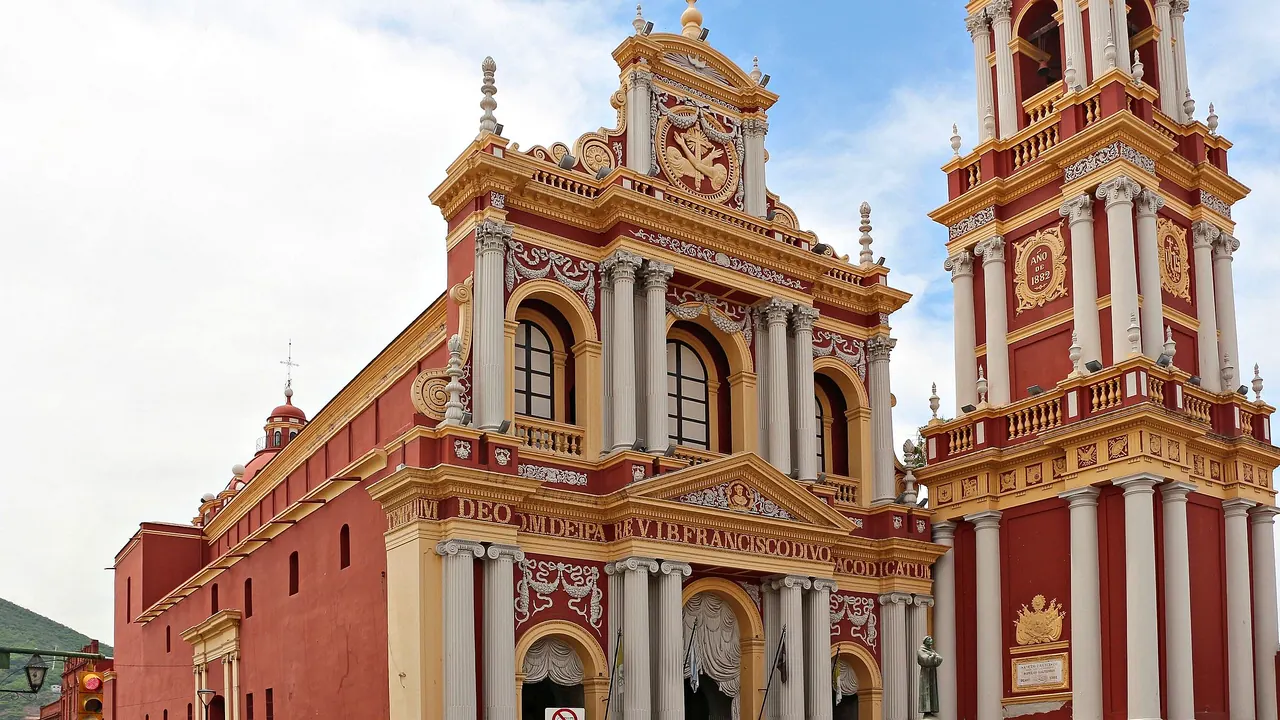
The church of San Francisco
- Nature & outdoors70
- Affordable cities65
- Food & drink58
Photo: Bernard Gagnon, CC BY-SA 4.0, cropped
Match
47
Every category weighted equally
- Beach & sun42
- Culture & arts51
- Food & nightlife49
- Family trip46
- Outdoors50
- Relax & unwind44
- Shopping & style48
- On a budget49
Salta in twelve categories
Our verdict on each, scored 0 to 100 against the same fixed benchmark cities, so a score means the same thing on every page.
Beaches & swimming. Scores 5 out of 100.
Food & drink. Scores 58 out of 100.
Culture & sights. Scores 56 out of 100.
Nightlife. Scores 44 out of 100.
Nature & outdoors. Scores 70 out of 100.
Day trips. Scores 52 out of 100.
Good for families. Scores 40 out of 100.
Getting around. Scores 50 out of 100.
Shopping & style. Scores 38 out of 100.
Affordability. Scores 65 out of 100.
Live music & performing arts. Scores 55 out of 100.
Wellness & relaxation. Scores 30 out of 100.
Salta category by category
Beaches & swimming
5Salta lies deep inland in the Andean northwest, many hours from the sea, so there is no beach life here. Swimming means a hotel pool or a summer dip at the large reservoir of Cabra Corral, about an hour south, which locals use for boating more than bathing.
Food & drink
58Eating in Salta is about the cooking of the Andean northwest, which differs clearly from the steak-led food of the rest of Argentina. The small, juicy baked empanada salteña is the city's pride, and every family and corner bakery argues over the best. Humitas and tamales made from fresh corn, slow-cooked locro stew, goat and llama dishes come from a tradition shared with the highlands further north.
To drink, there is crisp, aromatic Torrontés white wine from the high valleys to the south, plus the usual Argentine Malbec and mate. The central market and the simple eateries around it give the most local experience. Beyond regional cooking the range is narrow, and fine dining is limited to a few hotel and wine-focused kitchens.
Culture & sights
56Salta keeps more of its colonial look than almost any Argentine city. Around the Plaza 9 de Julio stand the pink-and-cream Cathedral, the arcaded Cabildo and grand balconied houses, and a few blocks away the bell tower of the San Francisco church in deep red and gold is the city's emblem. The quiet Convent of San Bernardo, with its carved wooden door, is the oldest building.
The standout sight is the Museum of High Mountain Archaeology, which holds the remarkably preserved Inca children found near the summit of Llullaillaco volcano, displayed in rotation with their offerings. Add a couple of smaller history museums and the cable car up Cerro San Bernardo for the view, and the city is well covered in a day or two.
Nightlife
44Evenings follow the Argentine clock: dinner rarely starts before ten and weekends run late. Most going out concentrates on Calle Balcarce near the old railway station, a strip of bars and a few dance clubs that fills with students and local groups on Friday and Saturday nights. Midweek the city is much quieter, and outside that strip and the plaza cafés there is little to seek out. It suits a relaxed late drink rather than a night of serious clubbing.
Nature & outdoors
70Salta sits in a green valley at about 1,150m, ringed by hills that rise towards the high Andes, and the landscapes around it are among the most dramatic in the country. Cerro San Bernardo, reached on foot or by cable car, gives an easy first walk, and the humid cloud forest at San Lorenzo on the city's edge has trails and birdlife.
Further out, the Quebrada de las Conchas south of the city is a canyon of red rock formations, Cabra Corral reservoir offers rafting and kayaking, and the road west over the Cuesta del Obispo climbs through cactus country towards Los Cardones National Park. The high-altitude salt flats and the puna need long days on the road. Spring and autumn are the best seasons; summer brings rain.
Day trips
52Salta is the classic base for the northwest, but most of its best-known outings are long days rather than easy hops. Within two hours there is the leafy hill village of San Lorenzo and the provincial capital of San Salvador de Jujuy. The places most visitors come for lie further out: the wine town of Cafayate with its Torrontés bodegas, about three hours south, the adobe villages of Purmamarca and Humahuaca in the UNESCO-listed Quebrada de Humahuaca, and the whitewashed colonial village of Cachi.
These are done as full-day tours or self-drive loops leaving at dawn, and many travellers prefer to stay a night or two in Cafayate or Purmamarca. The famous Tren a las Nubes high-altitude rail excursion also starts here.
Good for families
40Salta is an easy, relaxed city with children in the sense that the centre is compact, the plazas are full of local families in the evening and Argentine culture welcomes children at restaurant tables late at night. The cable car up Cerro San Bernardo, with its gardens and waterfalls at the top, is the obvious treat, and the archaeology museum can fascinate older children.
Beyond that there is little designed for young visitors, and the region's highlights involve long, winding drives and, in the high country, real altitude. Families tend to do better with shorter outings and a hotel with a pool.
Getting around
50Within the city, Salta is simple. The colonial centre is a flat grid where the main churches, museums, the market and the cable car are all within walking distance, and taxis and city buses cover the rest cheaply. Pavements are narrow and the midday heat in summer slows things down.
The difficulty begins outside town. Public transport to the valleys and gorges is limited to long-distance buses, so most visitors join organised tours or hire a car, and the mountain roads, some of them gravel, take longer than distances suggest.
Shopping & style
38Shopping in Salta is about regional crafts. The red-and-black poncho salteño, llama and alpaca weaving, carved wood, silver and leatherwork are sold at the artisan market in an old colonial house on the western edge of town and in craft stalls around the plaza. Regional wines, especially Torrontés, and local sweets make good things to carry home. For fashion and design the city offers only pedestrian shopping streets and a mall of mainstream Argentine brands.
Affordability
65Salta is one of the cheaper bases in Argentina for daily life. Simple guesthouses and mid-range hotels in the centre cost less than in the capital, empanadas and market meals are cheap, and city taxis and buses are inexpensive. The real costs come from exploring the region: full-day tours, car hire for the mountain loops and the high-altitude train excursion make up a large part of most budgets. Prices in Argentina can move quickly against foreign currencies, so it pays to check before travelling.
Live music & performing arts
55Salta is one of the heartlands of Argentine folk music, and that is the main reason to seek out a performance here. In the peñas along Calle Balcarce and around the old centre, guitar, bombo drum and voices carry zambas and chacareras late into the night, couples dance between the tables, and local musicians often drop in to play a few songs. Some peñas are polished dinner shows, others feel closer to an informal gathering among friends.
The formal scene is modest. The provincial theatre, just off the main square, hosts the Salta Symphony Orchestra, touring productions and dance. Folk music reaches its high points in the city's own calendar: the night-long vigil at the Güemes monument in mid-June, when gaucho riders gather and singers perform under the stars, and the carnival season, when comparsas and music fill the streets.
Wellness & relaxation
30Salta has no bathing tradition of its own, and spa options are mostly limited to hotel spas. What it does offer is pace: the city still closes for a long siesta, evenings are spent slowly in plaza cafés, and the green hill village of San Lorenzo and rural estancias outside town make calm places to stay. Visitors who want hot springs need to travel south-east to the old thermal resort of Rosario de la Frontera, a long drive away.
When should you go?
Pick a month to see what it is like. The climate figures are measured averages, not a forecast.
Salta in July
Daytime high, °C
Rainfall in the month, mm
The whole year
Shaded against this city’s own year: the deepest cell is its best month for that figure and the palest its weakest.
Temperature and rainfall are climate normals, averaged over the years shown. Salta: 1991-2020 normals, Salta Aerodrome (10 km from centre).
Before you go
| Measure | Salta |
|---|---|
| Official language | Spanish |
| Currency | Argentine Peso (ARS) |
| Sockets | CI220 V, 50 Hz |
| Driving side | Left |
| Time zone | UTC-3 |
| Emergency number | 117 or 911 |
| Elevation | 1,152 m |
| Main airport | Martín Miguel de Güemes International Airport (SLA)11 km from centre15 non-stop destinations |
| Public holidays this year | 16 days |
By the numbers
| Measure | Salta |
|---|---|
| City population | 594,772 |
| Museums within 10 km | 7 |
| UNESCO World Heritage sites within 50 km | 0 |
Compare Salta with
Every comparison with a written verdict behind it.