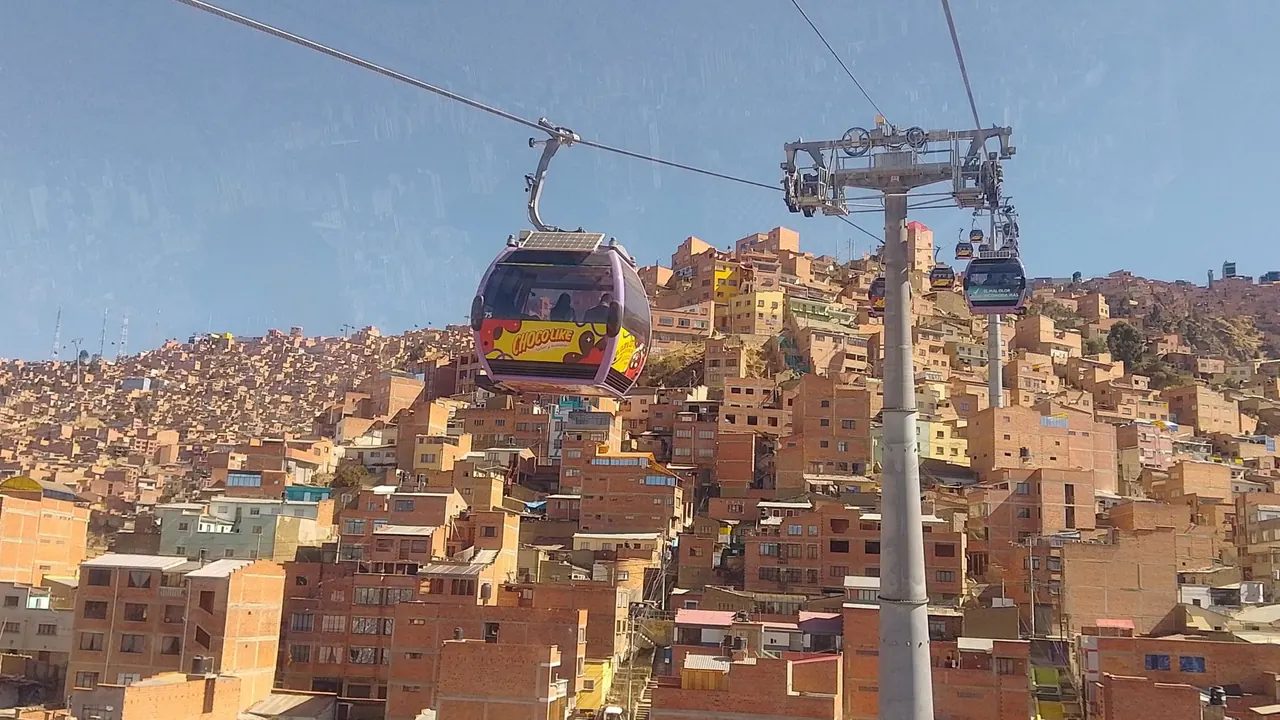
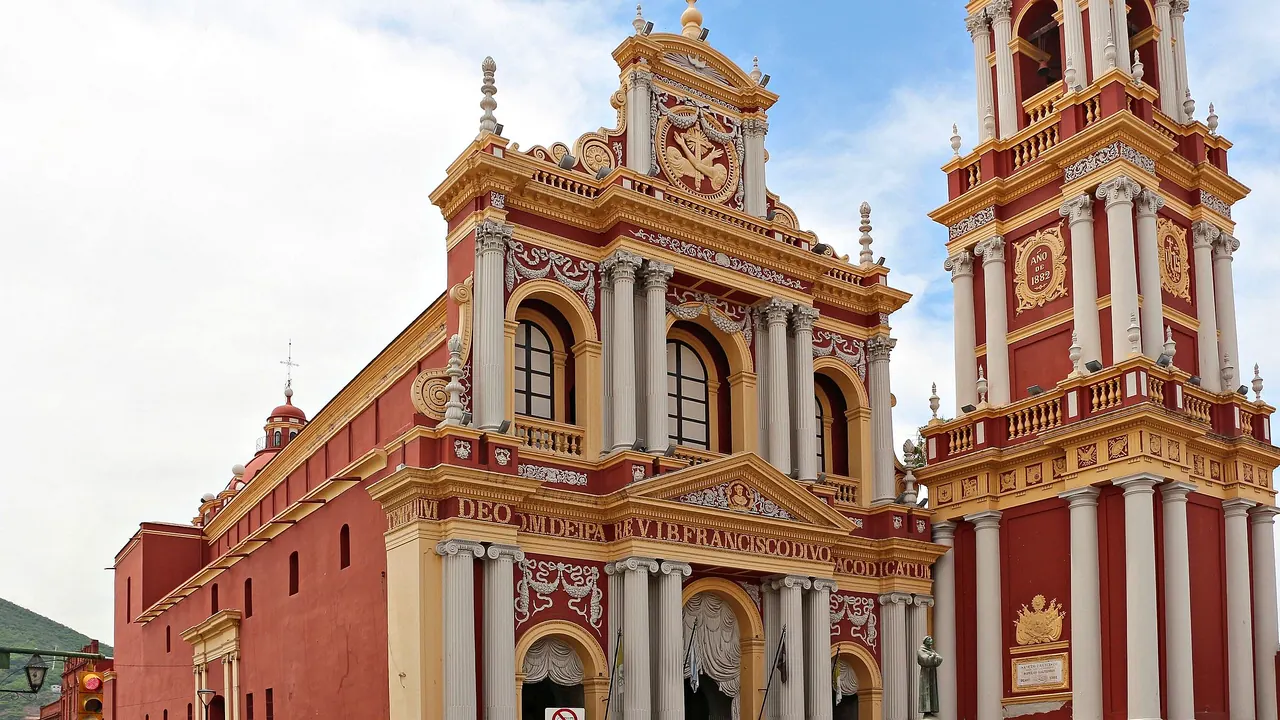
Photos: La Paz by Arabsalam, CC BY 4.0, cropped; Salta by Bernard Gagnon, CC BY-SA 4.0, cropped.
La Paz or Salta?
Our verdict in twelve categories, each scored against the same fixed benchmark cities, and the climate month by month, so you can choose for your trip.
Choose La Paz for
- prices
- nature and the outdoors
- shopping
La Paz is for travellers who want the high Andes at their most dramatic and don't mind working for it. Glaciers, six-thousand-metre peaks and the Death Road ride all start from the city, daily costs are very low, and the streets are full of living Aymara culture. In return you get thin air, steep climbs, cold nights and very little rest. It suits fit adults and older teenagers on an adventurous trip, not anyone after comfort.
Choose Salta for
- families
- live music and the arts
- wellness
Salta asks much less of the body. It sits at a mild altitude in a green valley, its colonial centre is flat and easy to walk, and the evenings belong to empanadas, Torrontés wine and folk music in the peñas. The landscapes are a long drive away rather than right on the doorstep, but it is the better choice for families, couples on a slower trip and anyone who wants their Andean scenery with warm days and a proper night's sleep.
Scoreboard
Twelve categories on one fixed scale from 0 to 100. The shaded stretch is the gap between the two.
Your match
Pick a travel style or drag the sliders, and both match scores follow your weighting.
Wins on prices and nature and the outdoors with your weighting.
Wins on families and live music and the arts with your weighting.
What matters to you?
Category by category
What the scores mean for a trip.
Beaches & swimming
Neither city has a beach, and neither is worth choosing for swimming. Around La Paz the big water is Lake Titicaca, which is far too cold to swim in and best seen from a boat.
Salta's nearest equivalent is the Cabra Corral reservoir, about an hour away. It is warmer and gets some summer swimmers, but it is used mostly for boating. In both cities the realistic way to swim is a hotel pool.
Food & drink
The two cities share a highland cuisine, and both are proud of a juicy baked pastry: the salteña in La Paz and the empanada salteña in Salta. Salta eats a little better overall. Its humitas, tamales and locro are generous regional cooking, and Torrontés from the nearby valleys goes with them well.
La Paz is most interesting in its markets, with endless kinds of potato and fruit from the Yungas, and a few kitchens in Sopocachi cook ambitious food from Andean ingredients. Day-to-day food runs heavy and fried, though, and many visitors lose their appetite at this altitude for the first day or two.
Culture & sights
The two are roughly level, but the experience is quite different. Salta is the better-preserved colonial city: the pink Cathedral, the arcaded Cabildo and the red-and-gold San Francisco church make the area around Plaza 9 de Julio easy to enjoy. Its Museum of High Mountain Archaeology, with the Inca children from Llullaillaco, is one of a kind.
La Paz has less colonial polish and much more going on in the streets. The carved façade of San Francisco and the small museums on Calle Jaén are worth seeing, but the real draw is daily life: the Witches' Market, the cholitas, and El Alto's cholet mansions seen from the cable cars.
Nightlife
Neither city is for serious clubbing, but Salta has a little more life after dark. Its Argentine timetable means dinner around ten, and at weekends Calle Balcarce fills with students and local groups until late.
In La Paz evenings end earlier. The cold, the altitude and the advice to take taxis after dark all keep nights short. Sopocachi's small cocktail and craft beer bars are the best of it, along with the traveller bars near Sagárnaga.
Nature & outdoors
La Paz has the stronger landscapes, and they start right at the city's edge. Illimani rises above the southern suburbs, and the glaciers of the Cordillera Real and Huayna Potosí are within a day or two. The ride down the old Yungas road drops from snow to cloud forest in a single day. The price is altitude, since everything starts above 3,500m.
Salta's scenery is gentler and more spread out. Its highlights are the red rock of the Quebrada de las Conchas, the cactus slopes of Los Cardones and the cloud forest at San Lorenzo, but the best of it means long days on the road rather than a short trip from town.
Day trips
Salta is the better base for touring. San Lorenzo and Jujuy are within two hours, and it is the starting point for Cafayate's wineries, the Quebrada de Humahuaca, Cachi and the Tren a las Nubes. Many of these are long days that start at dawn, though.
From La Paz there is one essential day trip, the pre-Inca ruins of Tiwanaku. After that, Copacabana, Isla del Sol, Coroico and Sorata are all far enough away to need an overnight stay.
Good for families
Families will find Salta much easier. Its plazas fill with local families in the evening, children are welcome at late dinners, and the cable car up Cerro San Bernardo makes a simple outing. The long drives and high country are the parts to keep short.
La Paz is hard with young children. Arriving at about 4,000m carries real risk, and the streets are steep and the traffic heavy. The cable cars and the zoo at Mallasa are about all that is aimed at children, so it works mainly for hardy teenagers.
Getting around
The two cities are about equally easy to get around, in very different ways. La Paz has Mi Teleférico, a network of cable cars over the rooftops that is a sight in itself. Away from the cable cars you are left with cheap taxis, shared minibuses, traffic jams and steep, breathless walks.
Salta's centre is a flat grid that is easy to cover on foot. The trouble starts when you leave town, because the valleys and gorges are poorly served by public transport, so most visitors join tours or hire a car for slow mountain roads.
Shopping & style
For crafts, La Paz has more choice. The lanes around Sagárnaga and Linares are full of alpaca knitwear, weaving, silver and instruments, and El Alto's 16 de Julio fair stretches across dozens of streets. Quality varies a lot, so it pays to look closely.
Salta's offer is smaller and more focused. The red-and-black poncho salteño and leatherwork are the local specialities, and they are sold at the artisan market in an old colonial house. Bottles of Torrontés make easy souvenirs. Neither city is a place for fashion shopping.
Affordability
La Paz is clearly cheaper. Meals, taxis, cable-car rides and comfortable hotels in Sopocachi cost very little. The main spending is on guided climbs or the Death Road ride, and that is no place to cut corners on the operator.
Salta is reasonable for daily life, but exploring the northwest is what costs money there. Tours, car hire and the high-altitude train take up a large share of most budgets.
Live music & performing arts
Salta has the better live music, because it is one of the homes of Argentine folk. In its peñas, zambas and chacareras go on late, couples dance between the tables and musicians often join in. The mid-June Güemes vigil, with gaucho riders and singing under the stars, adds to it.
La Paz has its own folkloric peñas with panpipes, charangos and diablada dancers, and it puts on a huge street spectacle once a year at the Gran Poder festival. Otherwise its stages are fairly quiet.
Wellness & relaxation
Salta is the more restful city. It still stops for a long siesta, evenings are slow and spent in plaza cafés, and you can stay quietly at San Lorenzo or on a rural estancia, though its hot springs at Rosario de la Frontera are a long drive away.
La Paz works against relaxation. It is noisy, the air is full of fumes, and sleep is poor for the first few nights at altitude. Coca tea and an early bed are the usual cure, and the nearest thermal pools are at Urmiri, about two hours out.
When should you go?
Pick your month. The climate figures are measured averages, not a forecast.
La Paz in July
Salta in July
Daytime high, °C
Rainfall in the month, mm
Where the figures come from
La Paz has no weather station within reach, so its figures come from a gridded climate model rather than a measured record, and read a broad area rather than the city itself.
Temperature and rainfall are climate normals, averaged over the years shown. La Paz: 2001-2020 normals, NASA POWER reanalysis grid, no weather station within 90 km. Salta: 1991-2020 normals, Salta Aerodrome (10 km from centre).
Both cities have the same rhythm, with a wet season from December to March and a dry one from May to September, but they feel very different. La Paz stays cool all year, with daytime highs of about 14°C in every month, and nights at this altitude are cold. The dry months bring clear skies and the best mountain views. January is the wettest month, often with daily showers.
Salta is much warmer. The dry winter months have pleasant highs of around 20°C, almost no rain and plenty of sunshine, which makes them ideal for long drives through the gorges. Summer is hot and stormy, with January the wettest month at around 194mm, so roads and outings can be disrupted. For a trip combining both cities, May to September is the time to go.
Which traveller are you?
On a family trip with young children, Salta is the clear choice. The centre is compact and flat, the cable car leads to gardens and waterfalls, and late family dinners are normal there. In La Paz the airport alone sits at about 4,000m, which is a real risk for small children.
For a trip on a tight budget, La Paz goes further. Market lunches, taxis, cable cars and good central hotels all cost very little. In Salta the city itself is cheap, but most of the region's highlights need tours or a hire car, and that adds up quickly.
On an outdoors trip, La Paz offers more. Glaciers, the Death Road descent and climbable peaks such as Huayna Potosí are all close to the city. Salta has red-rock canyons, cactus country and rafting, but it is gentler, and its best scenery is a long drive away.
Before you go
| Measure | La Paz | Salta |
|---|---|---|
| Official language | Spanish, Aymara, Quechua, Guarani | Spanish |
| Currency | Boliviano (BOB) | Argentine Peso (ARS) |
| Sockets | AC50 Hz | CI220 V, 50 Hz |
| Driving side | Right | Left |
| Time zone | UTC-4 | UTC-3 |
| Emergency number | 911 | 117 or 911 |
| Elevation | 3,640 m | 1,152 m |
| Main airport | El Alto International Airport (LPB)6 km from centre12 non-stop destinations | Martín Miguel de Güemes International Airport (SLA)11 km from centre15 non-stop destinations |
| Public holidays this year | 12 days | 16 days |
By the numbers
| Measure | La Paz | Salta |
|---|---|---|
| City population | 755,732 | 594,772 |
| People per km² | 1,601 | - |
| Museums within 10 km | 21 | 7 |
| UNESCO World Heritage sites within 50 km | 1 | 0 |
Where else could you go?
Every comparison below shares a destination with this one, so you can follow La Paz or Salta somewhere new.