Photos: Salta by Bernard Gagnon, CC BY-SA 4.0, cropped; Sucre by Dan Lundberg, CC BY-SA 2.0, cropped.
Salta or Sucre?
Our verdict in twelve categories, each scored against the same fixed benchmark cities, and the climate month by month, so you can choose for your trip.
Choose Salta for
- live music and the arts
- day trips
- food and drink
Salta suits travellers who want the landscapes of the Andean northwest within reach and a livelier evening at the end of the day. Red-rock gorges, cactus country and the wine valleys around Cafayate are the reason to come. Its peñas keep folk music going late, and its table of empanadas, humitas and Torrontés is richer than Sucre's. Expect long days on mountain roads, and a budget that grows with every tour.
Choose Sucre for
- prices
- getting around
- culture and sights
Pick Sucre for a slower, cheaper stay in one of South America's finest colonial centres. The whitewashed UNESCO-listed core, the Casa de la Libertad and the indigenous weaving museum make the stronger set of sights. Everything is a short walk from the main square, and daily costs are among the lowest on the continent. It rewards travellers happy to stay put, perhaps for weeks, and to head out mainly for treks in the Cordillera de los Frailes or the Sunday market at Tarabuco.
Scoreboard
Twelve categories on one fixed scale from 0 to 100. The shaded stretch is the gap between the two.
Your match
Pick a travel style or drag the sliders, and both match scores follow your weighting.
Wins on live music and the arts and day trips with your weighting.
Wins on prices and getting around with your weighting.
What matters to you?
Category by category
What the scores mean for a trip.
Beaches & swimming
Neither city is a place for the water, since both lie far inland in the Andes. Salta at least has the Cabra Corral reservoir about an hour south, though it is used more for boating than for bathing. In Sucre a hotel or municipal pool is the only option.
Food & drink
Each city has its own salteña, and the two are related but not the same. Salta's empanada salteña is a small, juicy baked pastry that every bakery argues over, and the city builds a fuller table around it. There are fresh-corn humitas and tamales, slow-cooked locro, goat and llama, with aromatic Torrontés from the high valleys to drink. The central market and the eateries around it feel the most local.
Sucre's salteña has a sweeter, soupier filling and is eaten standing up as a mid-morning snack. Beyond it the cooking is plainer and the range narrower: spicy chorizo chuquisaqueño, mondongo, and the set lunches and fresh juices of the Mercado Central. What Sucre adds is chocolate from long-established makers around the main square, and singani brandy takes the place of wine.
Culture & sights
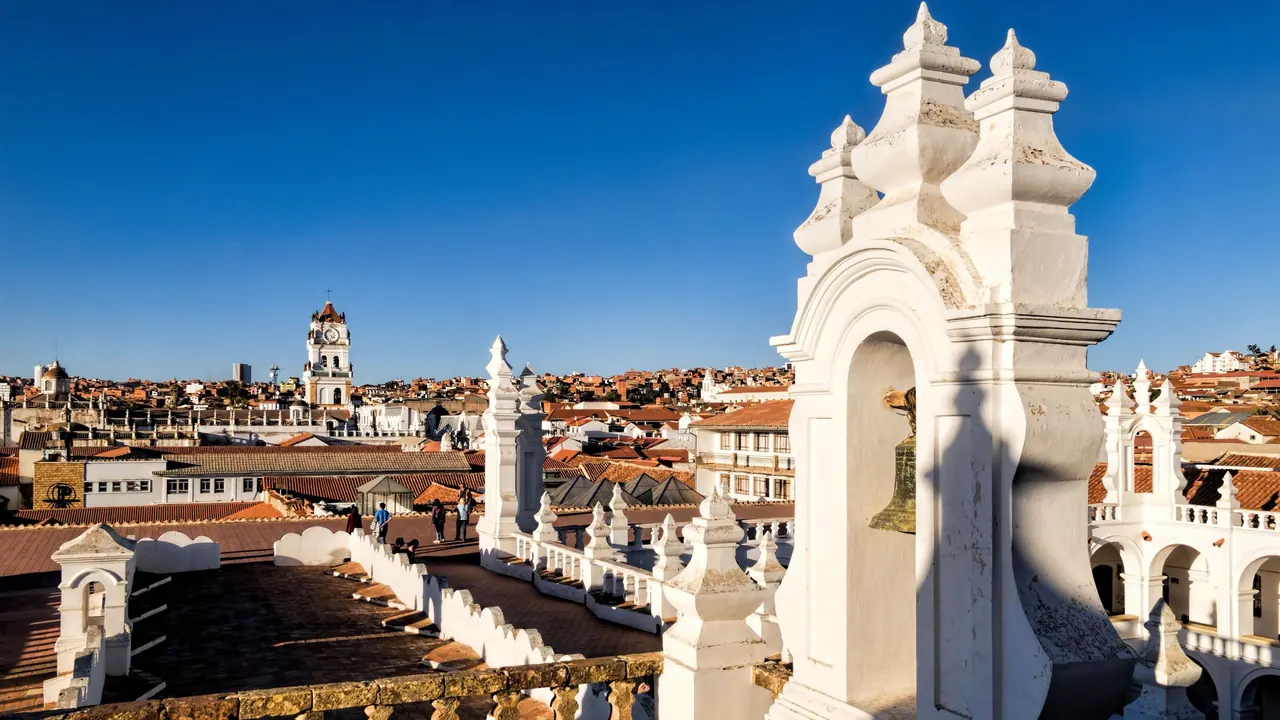
Both are colonial cities on a grid, but Sucre's whitewashed, UNESCO-listed centre is the more complete. The Casa de la Libertad holds the documents of Bolivia's independence, the Recoleta convent looks out over the red rooftops, and a museum shows Jalq'a and Tarabuco weaving. The dinosaur footprints at the Parque Cretácico add a sight of a quite different kind, and the whole set fills two or three unhurried days.
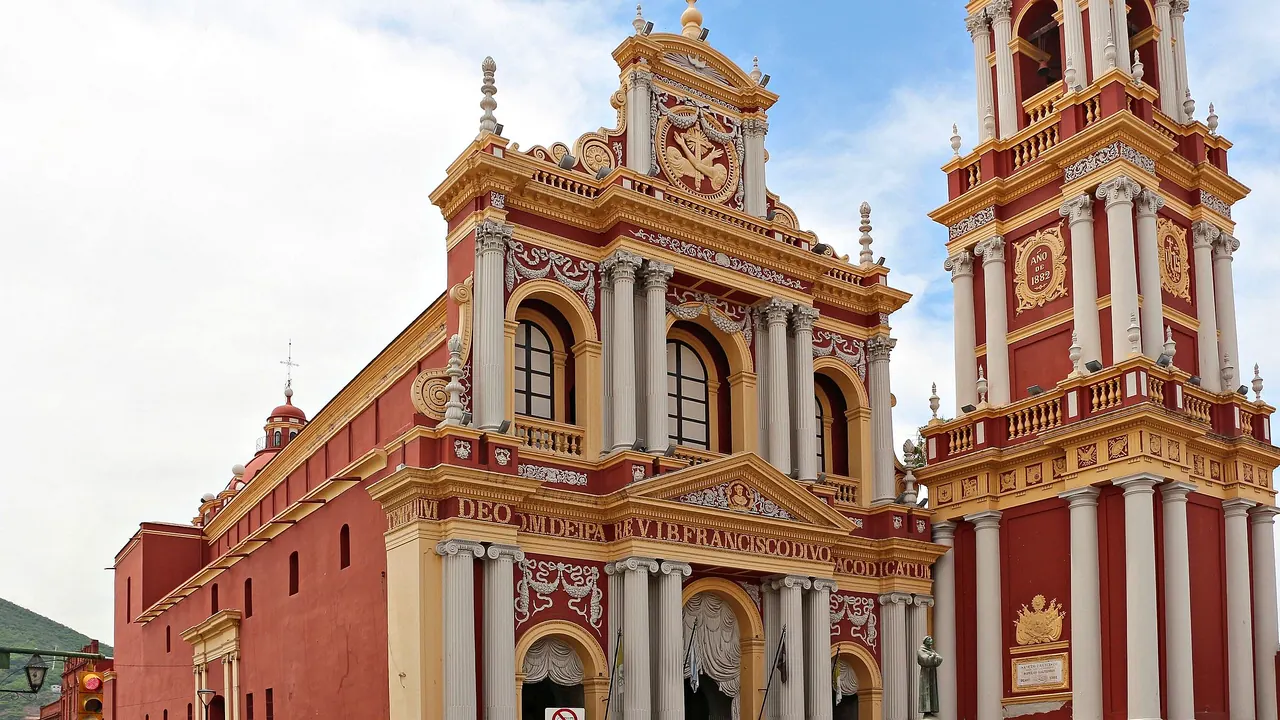
Salta's colonial core is smaller but striking, with the pink-and-cream cathedral, the arcaded Cabildo and the red-and-gold tower of San Francisco. Its one great sight is the archaeology museum holding the Inca children of Llullaillaco, and a day or two covers the city.
Nightlife
Salta has the longer night. Dinner begins around ten, and at weekends the strip of bars and dance clubs on Calle Balcarce near the old station stays full until late. Sucre's student bars and pubs near the main square give a modest Friday and Saturday night out, but midweek the town goes quiet early, and many evenings end with a singani after dinner.
Nature & outdoors
Salta has the more varied and dramatic surroundings. There is cloud forest at San Lorenzo on the edge of town and the red rock canyon of the Quebrada de las Conchas. The road climbs over the Cuesta del Obispo to Los Cardones, there is rafting at Cabra Corral, and the salt flats of the puna lie further off.
Sucre's countryside is drier, a fold of red and ochre hills, and its main draw is the Cordillera de los Frailes. There, guided treks of a few days pass the Maragua crater, Jalq'a villages and open-air dinosaur tracks. The Siete Cascadas waterfalls make an easier half day.
Day trips
Salta is the base for a whole region. Cafayate's bodegas, the adobe villages of the UNESCO-listed Quebrada de Humahuaca, colonial Cachi and the Tren a las Nubes all start from here. Most of them are dawn-to-dusk outings, though, and are often better with a night away.
From Sucre the choice is short. The Sunday market at Tarabuco is the classic trip, and La Glorieta palace and Yotala fill half days. Potosí, about three hours away, works better as the next stop on the route than as a return trip.
Good for families
Neither city has much designed for children, and both are calm, compact and welcoming to families. Salta's treat is the cable car to the gardens and waterfalls on Cerro San Bernardo, and Sucre's is the life-size dinosaurs at the Parque Cretácico. In Sucre the altitude of about 2,800m tires small children for the first days, while in Salta the strain comes from the long mountain drives.
Getting around
Sucre is the easier city to get about. Almost everything lies within a few blocks of the Plaza 25 de Mayo, taxis are cheap, and a tourist bus runs out to the dinosaur park. Only the steep climb to the Recoleta and the thin air slow you down.
Salta's flat centre is just as walkable, but the main reasons to come lie outside it. Only long-distance buses serve the valleys, so most visitors need a tour or a hire car on slow mountain roads, some of them gravel.
Shopping & style
In both cities you shop for crafts rather than fashion. Salta's artisan market has the red-and-black poncho salteño, alpaca weaving, silver and leather, and bottles of Torrontés make easy gifts. Sucre's specialities are the dark Jalq'a and bright Tarabuco textiles sold in fair-trade shops, along with chocolate from its old makers.
Affordability
Sucre is by far the cheaper of the two. Market meals, taxis and colonial guesthouses cost very little, and even its boutique hotels are modest by world standards, which is why language students stay for weeks.
Salta is inexpensive by Argentine measure for rooms, empanadas and city transport. The money goes on exploring the northwest: full-day tours, car hire and the high-altitude train take a large share of most budgets, and it is worth checking exchange rates before you go.
Live music & performing arts
Salta is one of the heartlands of Argentine folk music. Its peñas on Calle Balcarce are a reason to visit in their own right, with zambas and chacareras, couples dancing between tables and musicians dropping in to play. The Güemes vigil in mid-June and the carnival season bring the music into the streets, and the provincial theatre hosts the symphony.
In Sucre the offer is mostly staged folklore: dinner shows of Bolivian dances, weekend charango and panpipe bands, and occasional concerts at the nineteenth-century Teatro Gran Mariscal.
Wellness & relaxation
Salta's calm lies mostly outside the city, while Sucre's is found in its centre. In Salta you slow down through the long siesta and the plaza cafés, or by staying out of town in the green hill village of San Lorenzo or on a rural estancia. Hot springs mean a long drive to the old thermal resort of Rosario de la Frontera.
Sucre needs no escape. Its mild sun, shaded colonial courtyards and the sunset view from the Recoleta arcade make the town itself the place to rest, and travellers coming down from the altiplano often stay a week or two. In both cities, spa treatments go little further than hotel facilities.
When should you go?
Pick your month. The climate figures are measured averages, not a forecast.
Salta in July
Sucre in July
Daytime high, °C
Rainfall in the month, mm
Temperature and rainfall are climate normals, averaged over the years shown. Salta: 1991-2020 normals, Salta Aerodrome (10 km from centre). Sucre: 1991-2020 normals, Sucre (5.4 km from centre).
Salta has two clear seasons. From December to March the days reach about 28°C, and the summer rains are heavy, with January bringing 194mm. Mountain roads turn muddy and slow, and late summer is also the least sunny time of year. From May to September it is almost completely dry. Highs sit at 20°C in midwinter and climb to 25°C by September. The sunniest stretch runs from August into December, so the dry months and the shoulder months of April and October are the best time for walking the centre and driving out to the gorges.
Sucre hardly changes in temperature. Daytime highs stay within a degree or two of 21°C all year, so it is comfortable for walking in any month. Its rain falls in the same southern summer, heaviest from December to February, and May to August is nearly dry. Both cities are at their best in the same window, roughly April to October. The real difference is in summer, when Salta turns hot as well as wet and Sucre stays mild.
Which traveller are you?
On a trip on a tight budget, Sucre goes much further. Market lunches, salteñas, taxis and rooms in colonial guesthouses cost very little, and almost everything is walkable. Salta is cheap day to day, but its tours and car hire soon add up.
For an outdoors trip, Salta has the wider and more dramatic range: the Quebrada de las Conchas, the cactus slopes of Los Cardones, cloud-forest trails at San Lorenzo and rafting at Cabra Corral. Sucre's outdoors centres on village treks in the Cordillera de los Frailes.
On a food and nightlife trip, Salta is the better choice. Empanadas, humitas, locro and Torrontés give the table more range, and at weekends Calle Balcarce mixes bars, clubs and folk peñas that run well past midnight. Sucre's evenings are shorter and quieter.
Before you go
| Measure | Salta | Sucre |
|---|---|---|
| Official language | Spanish | Spanish, Aymara, Quechua, Guarani |
| Currency | Argentine Peso (ARS) | Boliviano (BOB) |
| Sockets | CI220 V, 50 Hz | AC50 Hz |
| Driving side | Left | Right |
| Time zone | UTC-3 | UTC-4 |
| Emergency number | 117 or 911 | 911 |
| Elevation | 1,152 m | 2,810 m |
| Main airport | Martín Miguel de Güemes International Airport (SLA)11 km from centre15 non-stop destinations | Alcantarí International Airport (SRE)25 km from centre3 non-stop destinations |
| Public holidays this year | 16 days | 12 days |
By the numbers
| Measure | Salta | Sucre |
|---|---|---|
| City population | 594,772 | 360,544 |
| People per km² | - | 204 |
| Museums within 10 km | 7 | 4 |
| UNESCO World Heritage sites within 50 km | 0 | 1 |
Where else could you go?
Every comparison below shares a destination with this one, so you can follow Salta or Sucre somewhere new.