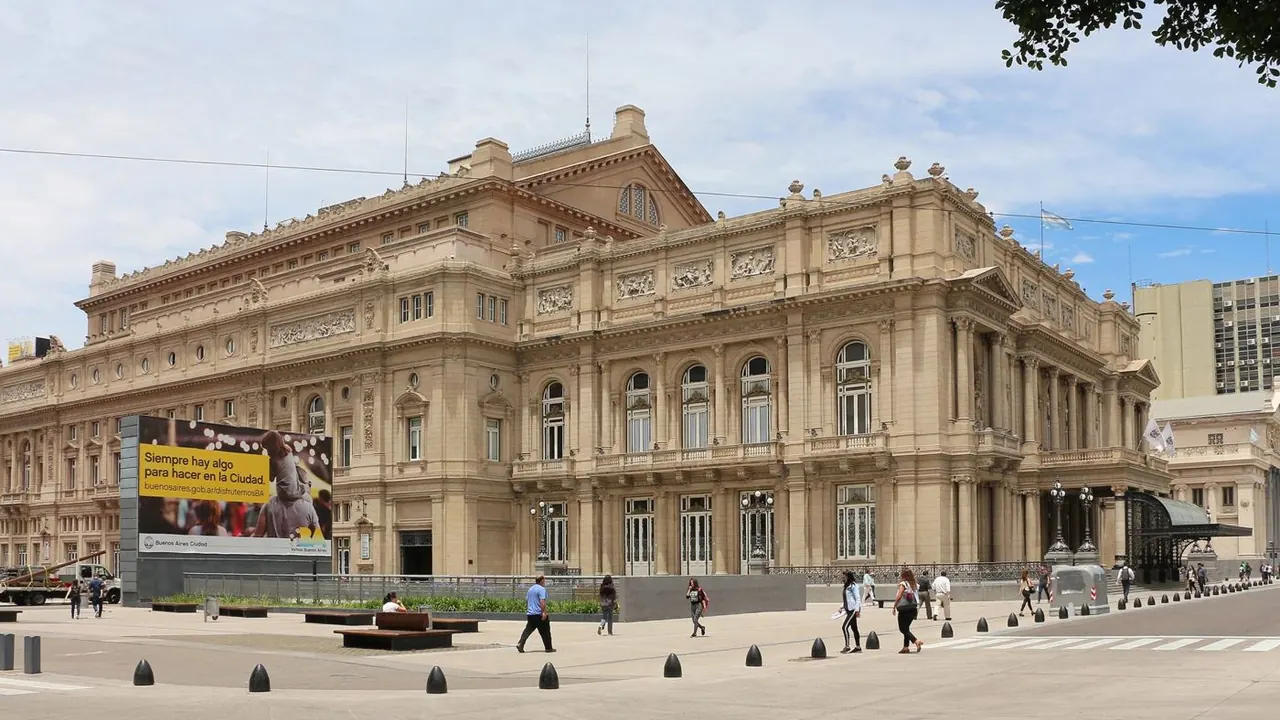
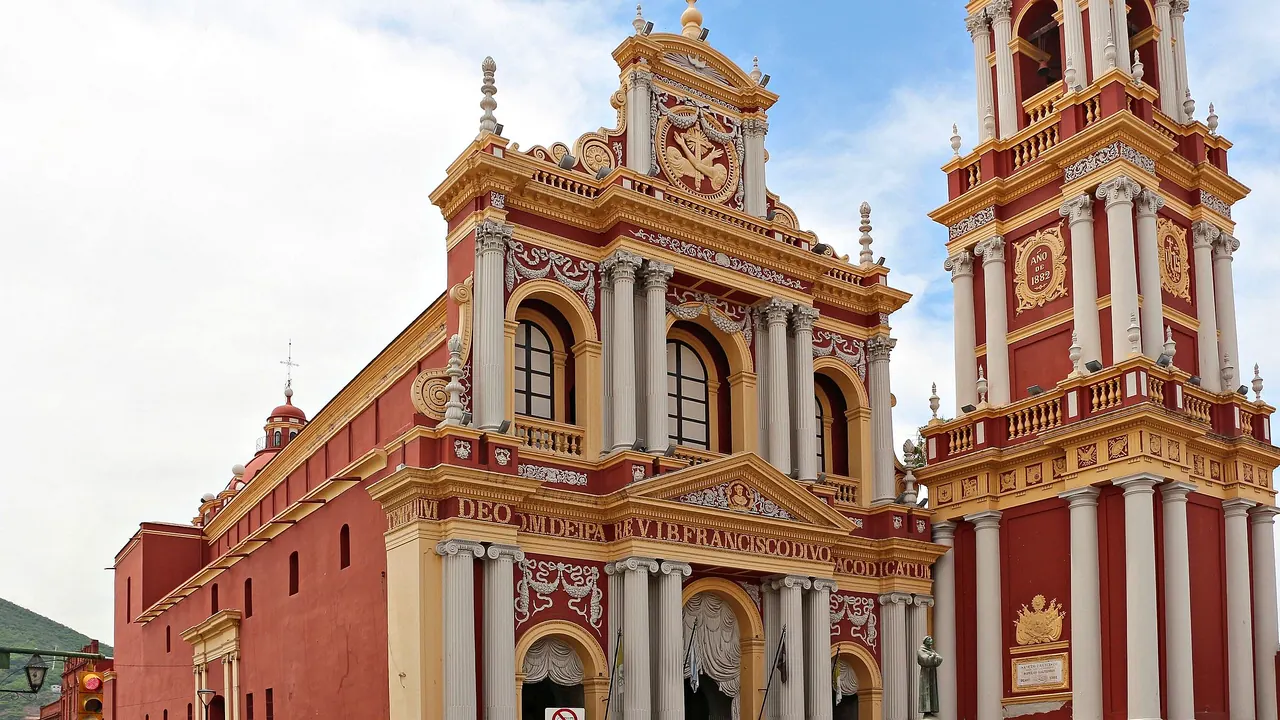
Photos: Buenos Aires by Bernard Gagnon, CC BY-SA 4.0, cropped; Salta by Bernard Gagnon, CC BY-SA 4.0, cropped.
Buenos Aires or Salta?
Our verdict in twelve categories, each scored against the same fixed benchmark cities, and the climate month by month, so you can choose for your trip.
Choose Buenos Aires for
- nightlife
- shopping
- live music and the arts
Buenos Aires suits travellers who want a big city with plenty to do after dark. Its nights are among the longest anywhere, from Palermo cocktail bars to tango in neighbourhood milongas, and the Teatro Colón and the theatres of Avenida Corrientes give it serious depth on stage. Add parrilla dinners, grand café houses and long walks past Parisian-style boulevards, and it rewards anyone who likes to eat, drink, watch and wander.
Choose Salta for
- nature and the outdoors
- prices
- wellness
Salta is the better pick if landscape matters more than nightlife. Red rock canyons, cactus slopes and high Andean valleys start just beyond its colonial centre, and the city is a calm, cheaper base with its own food and folk music. Expect long days on mountain roads and quiet evenings in plaza cafés, not bars that stay open until dawn.
Scoreboard
Twelve categories on one fixed scale from 0 to 100. The shaded stretch is the gap between the two.
Your match
Pick a travel style or drag the sliders, and both match scores follow your weighting.
Wins on nightlife and shopping with your weighting.
Wins on nature and the outdoors and prices with your weighting.
What matters to you?
Category by category
What the scores mean for a trip.
Beaches & swimming
Neither city is a beach destination. In Buenos Aires the Río de la Plata is too silty for swimming, so the Costanera is for strolling and lying on the grass. The Atlantic resorts are several days' trip away. Salta is hundreds of kilometres from any coast, and the nearest open water is the Cabra Corral reservoir an hour south, which is mostly used for boating. In both cities a hotel pool is the realistic way to cool off.
Food & drink
Buenos Aires has more to eat and more ways to eat it. There are wood-fired parrillas, pizza and pasta from the Italian side of the city, gelato, and grand café houses such as Café Tortoni, with ambitious modern kitchens and wine bars in Palermo on top.
Salta's cooking is a different tradition, the corn-based food of the Andes: small baked empanadas salteñas, humitas, tamales, locro and llama, best eaten at the central market with a glass of Torrontés. It is distinctive and satisfying, but the choice narrows quickly and fine dining is rare.
Culture & sights
In Buenos Aires the culture is on a larger scale. Avenida de Mayo runs from the Casa Rosada to Congress, Recoleta has its marble cemetery, and two major art museums, the Bellas Artes and MALBA, are worth hours each. San Telmo and La Boca add older streets and painted houses.
Salta's appeal is that it is easy to take in. It has one of the best-kept colonial centres in Argentina, around the Plaza 9 de Julio and the red-and-gold San Francisco church. Its single remarkable museum holds the preserved Inca children from Llullaillaco. A day or two covers it.
Nightlife
This is where the two cities differ most. Buenos Aires runs a full night out until sunrise: cocktail bars behind unmarked doors in Palermo Soho and Hollywood, electronic clubs in warehouse streets and by the river, scruffy San Telmo bars and milongas full of locals dancing tango.
Salta keeps the same late hours but has far less on offer. Going out mostly happens on Calle Balcarce, which is lively at weekends and quiet midweek. It suits a late drink and some folk music rather than serious clubbing.
Nature & outdoors
Salta has the landscapes. It sits in a green valley ringed by hills, with the cloud forest of San Lorenzo on its edge. Further out are the red rock formations of the Quebrada de las Conchas and the climb over the Cuesta del Obispo into cactus country.
Buenos Aires is flat pampas beside a vast brown river. Its outdoor time means jogging loops in the Bosques de Palermo, birdwatching in the Costanera Sur wetland, or kayaking the channels of the Paraná Delta. For mountains, people fly from the capital to places like Salta.
Day trips
From Buenos Aires, day trips are short and simple. A fast ferry reaches the cobbled old town of Colonia del Sacramento in Uruguay in about an hour. The train takes you to Tigre and the delta, and San Antonio de Areco, Luján and La Plata are all easy outings.
Salta's surroundings are more dramatic, with Cafayate's bodegas, the adobe villages of the Quebrada de Humahuaca, Cachi and the Tren a las Nubes. Most of these mean leaving at dawn or staying overnight, so they suit a longer stay rather than a quick return.
Good for families
Buenos Aires gives children more to do. There are pedal boats and playgrounds in the Palermo parks, the planetarium, the Museo de los Niños for rainy days, and the Temaikèn biopark and Tigre's amusement park within an hour. The downsides are long distances, heavy traffic and broken pavements.
Salta is gentler day to day, because its centre is compact and easy to get around. Once the cable car and the archaeology museum are done, though, there is little aimed at young visitors, and the big sights involve winding drives up to altitude.
Getting around
Buenos Aires has a proper network: the Subte, the oldest metro in the Southern Hemisphere, colectivo buses that run day and night, and plenty of taxis. You need it, because Palermo, Recoleta and San Telmo are far apart.
Salta's colonial centre is a small flat grid you can walk in a morning. The trouble starts once you want to leave it, because the valleys and gorges are served only by long-distance buses. Most visitors join tours or hire a car for slow mountain roads, some of them gravel.
Shopping & style
Buenos Aires is the better place to shop. Leather jackets and bags are the thing to buy, Palermo Soho has independent designers, Avenida Alvear has upmarket boutiques, and there is the long Sunday antiques fair on Calle Defensa in San Telmo.
Salta is for regional crafts: the red-and-black poncho salteño, llama and alpaca weaving, and silver and carved wood from the artisan market. Bottles of Torrontés are good to take home too. Beyond that its shops are mainstream.
Affordability
Buenos Aires sits in the middle on price. Hotels usually cost less than in a European capital of a similar size, the Subte and colectivo buses cost very little, and a good bottle of Malbec is cheap by international standards. Imported goods are expensive, though, and the smartest districts charge as much as the dearer cities of Europe.
Salta is cheaper for the basics, whether that is a room in the centre, a meal or a ride across town. The difference is in where the money goes. In the capital most of what you come for is a metro ride away, but in Salta the canyons, the Cafayate vineyards and the Tren a las Nubes are the reason for the trip, and getting out to them takes a large share of the cost. Argentina's currency has a long history of sharp swings, so check how best to pay before visiting either city.
Live music & performing arts
Buenos Aires is on a different level here. It has the Teatro Colón for opera, ballet and symphony concerts, the playhouses of Avenida Corrientes, a huge independent theatre scene, and tango from polished dinner shows to milongas with live orchestras.
Salta's strength is narrower but very much its own: folk music. In the peñas, guitar and bombo drum carry zambas and chacareras late into the night, and the vigil at the Güemes monument is a high point. Formal concerts and theatre are limited to the provincial theatre.
Wellness & relaxation
Neither city has a spa culture, and both rely on hotel spas. The difference is the pace. Buenos Aires is loud and runs all night, and you slow down mainly in a café or over a long sobremesa after a meal.
Salta slows down on its own. It closes for a long siesta, the plaza cafés are calm in the evening, and you can stay at estancias or in leafy San Lorenzo. Hot springs are a long drive away at Rosario de la Frontera.
When should you go?
Pick your month. The climate figures are measured averages, not a forecast.
Buenos Aires in July
Salta in July
Daytime high, °C
Rainfall in the month, mm
Temperature and rainfall are climate normals, averaged over the years shown. Buenos Aires: 1991-2020 normals, Aeroparque Bs. As. Aerodrome (4.9 km from centre). Salta: 1991-2020 normals, Salta Aerodrome (10 km from centre).
Buenos Aires has a hot, humid summer from December to February, with January highs around 29°C, which makes midday walking hard work. Rain falls in every month, heaviest from January to April. Spring (October and November) and autumn (March and April) are the most comfortable times to explore on foot. Winter is cool, with July highs near 15°C, and June is the dullest month. It rarely spoils a city trip, though.
Salta has two clear seasons. Almost all of its rain falls in summer, peaking at about 194mm in January, which is the wrong time for the hills. From May to September it is nearly dry, with sunny days around 20°C, so this is the season for the canyons and mountain loops. October stays mostly dry, and the rains build again from November. So Buenos Aires is best in spring and autumn, while Salta is best from late autumn through the southern winter into early spring.
Which traveller are you?
For a food and nightlife trip, Buenos Aires is the obvious choice. Parrillas, Malbec and late dinners lead into Palermo's bars, clubs that open after two and tango milongas that last until morning. After dinner, Salta has one street of bars and peñas.
On an outdoors trip, Salta wins clearly. Cloud forest at San Lorenzo, the red canyon of the Quebrada de las Conchas, rafting at Cabra Corral and the road to Los Cardones are all within reach. Buenos Aires has flat parks and the delta.
On a trip with a tight budget, Salta goes further. Its guesthouses, empanadas, market meals and taxis cost less than in the capital. Just set money aside for tours or car hire. In Buenos Aires, Palermo and Recoleta can charge close to European prices.
Before you go
| Measure | Buenos Aires | Salta |
|---|---|---|
| Official language | Spanish | Spanish |
| Currency | Argentine Peso (ARS) | Argentine Peso (ARS) |
| Sockets | CI220 V, 50 Hz | CI220 V, 50 Hz |
| Driving side | Left | Left |
| Time zone | UTC-3 | UTC-3 |
| Emergency number | 117 or 911 | 117 or 911 |
| Elevation | 25 m | 1,152 m |
| Main airport | Ezeiza International Airport - Ministro Pistarini (EZE)28 km from centre53 non-stop destinations | Martín Miguel de Güemes International Airport (SLA)11 km from centre15 non-stop destinations |
| Public holidays this year | 16 days | 16 days |
By the numbers
| Measure | Buenos Aires | Salta |
|---|---|---|
| City population | 3,121,707 | 594,772 |
| People per km² | 15,355 | - |
| Museums within 10 km | 77 | 7 |
| UNESCO World Heritage sites within 50 km | 1 | 0 |
| Swim season, months above 21 °C | 4 months | - |
Where else could you go?
Every comparison below shares a destination with this one, so you can follow Buenos Aires or Salta somewhere new.
- Colonia del Sacramentovs Buenos Aires
- Montevideovs Buenos Aires
- Punta del Estevs Buenos Aires
- San Pedro de Atacamavs Salta
- Sucrevs Salta
- Mendozavs Salta