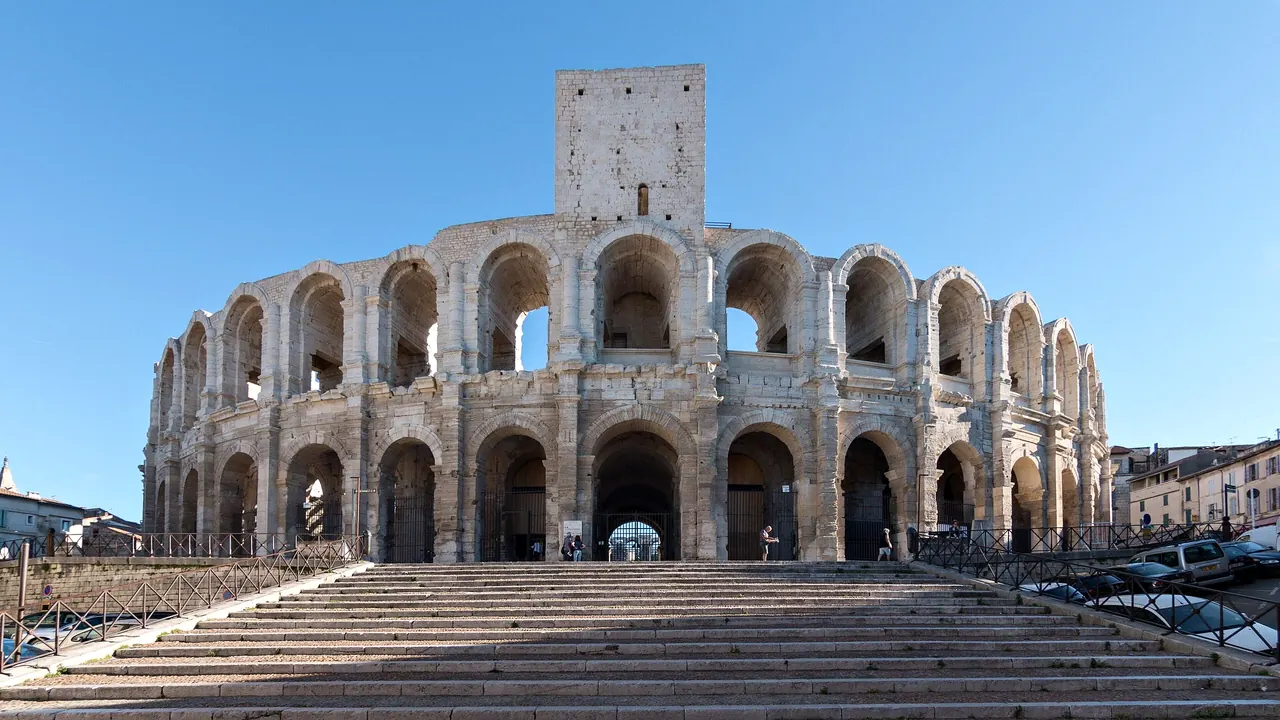
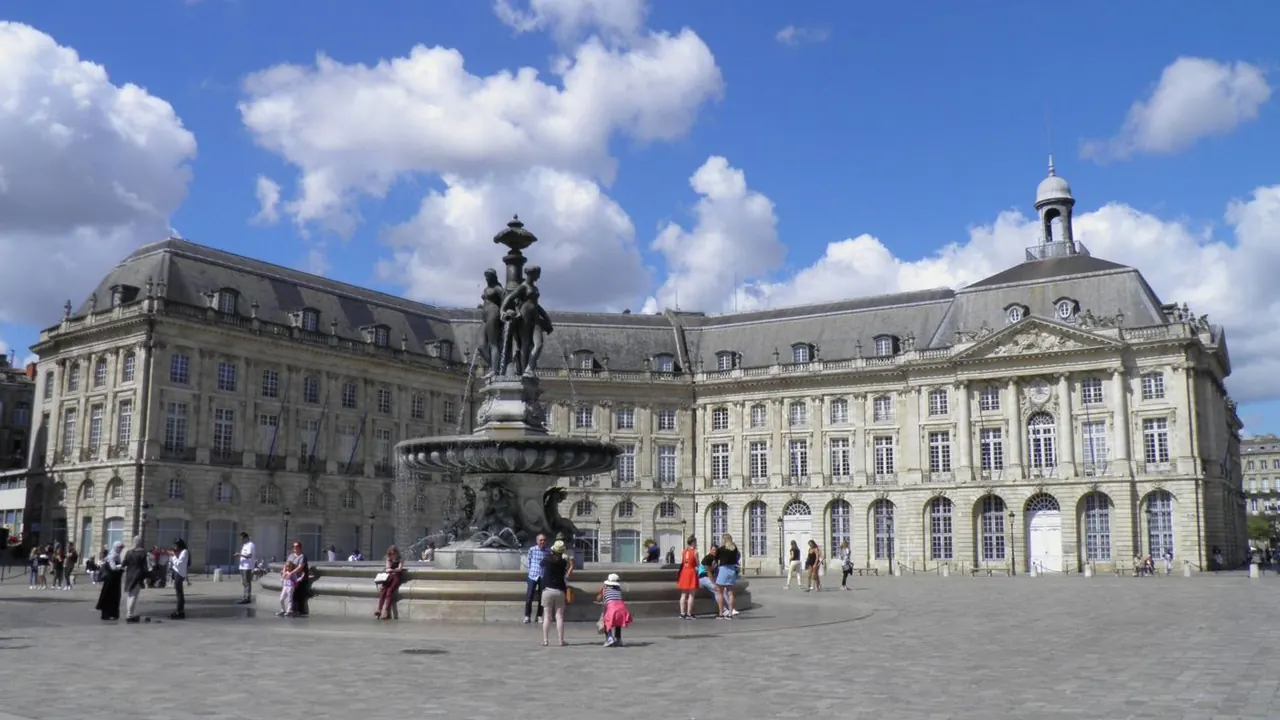
Photos: Arles by Martin Kraft, CC BY-SA 3.0, cropped; Bordeaux by Gzen92, CC BY-SA 4.0, cropped.
Arles or Bordeaux?
Our verdict in twelve categories, each scored against the same fixed benchmark cities, and the climate month by month, so you can choose for your trip.
Choose Arles for
- nature and the outdoors
- day trips
- prices
Arles is for travellers who want Roman stones underfoot and wild country on the doorstep. The arena, the theatre and Saint-Trophime sit within a few minutes of each other, the Camargue's flamingos and white horses start at the edge of town, and Avignon, Nîmes and the Alpilles villages are close enough for a different outing every day. Bring a car, expect quiet evenings, and come for the sights, the landscape and long market lunches.
Choose Bordeaux for
- food and drink
- nightlife
- live music and the arts
Choose Bordeaux if you want a proper city with plenty to do once the sightseeing is over. Wine runs through everything, from the bars and cellars to day trips to Saint-Émilion and the Médoc. The cooking is better and more varied, and after dinner there are bars, clubs and an opera house. Trams and flat, car-free streets mean you can leave the car behind, which also makes it the easier choice with young children.
Scoreboard
Twelve categories on one fixed scale from 0 to 100. The shaded stretch is the gap between the two.
Your match
Pick a travel style or drag the sliders, and both match scores follow your weighting.
Wins on nature and the outdoors and day trips with your weighting.
Wins on food and drink and nightlife with your weighting.
What matters to you?
Category by category
What the scores mean for a trip.
Beaches & swimming
Neither city is on the sea, and both make for a good day at the beach rather than a beach vacation. The difference is in the water. From Arles you drive about 40km across the Camargue to shallow, calm Mediterranean beaches at Saintes-Maries, or out to the vast, empty sands of Piémanson and Beauduc, where you will find little shade and plenty of mosquitoes.
From Bordeaux you choose between two kinds of sea. Lacanau and the Médoc have Atlantic surf and rip currents, so swim inside the lifeguarded zones. The sheltered Arcachon basin is gentle enough for small children and, unlike the Camargue beaches, it is reachable by train.
Food & drink
Bordeaux is the much better place to eat and drink. Wine is the point here: bars by the glass, cellars and long lists covering Médoc, Saint-Émilion and Sauternes. On top of that come entrecôte grilled over vine cuttings, Arcachon oysters at the Capucins market, canelés in every bakery and good bistros across Saint-Pierre and Chartrons.
Arles has its own character, with bull gardiane, Camargue rice, tellines and the Saturday market stretching along the Boulevard des Lices. The choice of restaurants is narrow, though, and many close in winter. The best meals are long lunches on a square rather than a run of memorable dinners.
Culture & sights
Both cities have outstanding sights, but of different ages and on different scales. Arles is Roman and Romanesque, packed into a small UNESCO-listed core: the arena, the antique theatre, the cryptoporticus, the Alyscamps and the carved cloister of Saint-Trophime. The Luma tower and the summer photography festival add a modern side, and two days covers it all.
In Bordeaux, the main sight is the city itself: a whole 18th-century cityscape of pale limestone along the Garonne, from the Place de la Bourse to the Grand Théâtre, with Gothic churches in between. Its museums are solid rather than essential, but the city takes three or four days to enjoy properly.
Nightlife
Bordeaux has a real night out and Arles mostly does not. In Arles, an evening means dinner and a drink on the Place du Forum, and the streets stay up late only during the Easter and September ferias.
Bordeaux offers wine bars and full terraces in Saint-Pierre, cheap student bars around Place de la Victoire and an older crowd at the Bassins à flot. Those who want to dance head to the clubs on the Quai de Paludate, which run until morning.
Nature & outdoors
Arles has the better wild country, right on its doorstep. The Camargue delta starts at the edge of town, with flamingos in the lagoons, white horses and black bulls on the marshes, and bike rides around the Étang de Vaccarès. To the north-east, the limestone Alpilles offer proper hiking among olive groves and pines.
The land around Bordeaux is gentle vineyard and pine forest, and its highlights lie about an hour away. You can climb the Dune du Pilat, watch birds at Arcachon or surf off Lacanau. Cycling on the flat greenways is the easy pleasure, but there is no hiking country nearby.
Day trips
Both make excellent bases, and Arles has a little more to choose from. Avignon is about twenty minutes away by train and Nîmes about half an hour. The Pont du Gard, Les Baux, Saint-Rémy, Montmajour and walled Aigues-Mortes are all close, so you can mix Roman sites, hill villages and papal history on consecutive days.
Day trips from Bordeaux mostly revolve around wine: Saint-Émilion by train, the châteaux of Margaux and Pauillac, and the Sauternes villages. For a change of theme you can visit Arcachon, the citadel at Blaye or the brandy houses of Cognac. In both regions, a car makes the smaller places far easier to reach.
Good for families
With children in tow, Arles suits a particular kind of family: one with older children who like history and animals. They can climb the arena towers for the view, feel their way through the dark galleries of the cryptoporticus, ride ponies at a Camargue ranch and see flamingos at the ornithological park near Saintes-Maries.
Beyond that, very little is laid on for children, and younger ones soon run out of things to do.\n\nBordeaux is the easier family base overall, whatever the children's ages. The Jardin Public has a pond, a carousel and a puppet theatre, Cap Sciences on the river runs hands-on science exhibitions, and the calm beaches of the Arcachon basin are a train ride away. The city's main pleasures are wine and long meals, though, so teenagers may find a long stay slow.
Getting around
Arles is easy on foot and hard going beyond. Inside the old town, the arena, Saint-Trophime, the museums and the Rhône quays are all within about fifteen minutes' walk of each other, a free shuttle loops the centre, and the station is close by, with trains to Avignon, Nîmes and Marseille.
Once you leave town, though, buses to the villages are infrequent and the Camargue's ranches and wild beaches are out of reach without wheels, so on a stay of more than a couple of days a hire car becomes close to essential in a way it never does in Bordeaux.\n\nBordeaux covers far more ground, yet you can still leave the car at home. Its flat, largely pedestrian centre runs from Chartrons to Saint-Michel, trams reach the Cité du Vin, the right bank and the station, and bike lanes follow the river. You only need a car or a tour for the vineyards of the Médoc and Sauternes.
Shopping & style
Bordeaux has far more to shop for. Rue Sainte-Catherine has the chains and a department store, the Triangle d'Or has the luxury labels, and Rue Notre-Dame in Chartrons has the antique dealers. Above all, the city's wine cellars sell everything from everyday bottles to rare vintages and will ship them home.
Shopping in Arles is small and local: the Saturday market, Provençal printed cottons, santons, gardian shirts and good bookshops full of photography titles. For fashion, you would go to Aix or Marseille.
Affordability
The two cost about the same overall, but the money goes in different places. Arles is cheaper than the smart villages around it and eats like any provincial French town. The extra costs come from the hire car most visitors need and from scarce, dearer rooms during the ferias and the photography festival.
In Bordeaux, central hotels are pricier, but cheap trams and walkable streets mean you can do without a car. The big expenses are château tastings, wine tours and that good bottle at dinner.
Live music & performing arts
Bordeaux has the stronger stage, centred on the gilded Grand Théâtre of 1780 with its resident opera and ballet. The national orchestra, a jazz and world-music hall and a large arena for touring acts round it out. All of this runs from autumn to spring and goes quiet in high summer.
Arles works the other way round. Its performances are mostly outdoors in summer: concerts in the Roman theatre and arena, the Les Suds world-music festival in July, the ferias and the course camarguaise. It has no opera or orchestra of note.
Wellness & relaxation
Neither city has a bathing tradition, but Bordeaux offers somewhat more for a pampering break. Its speciality is vinotherapy, grape-based treatments at spa hotels among the vineyards just outside town, and there are thermal waters at Dax, about an hour and a half away.
In Arles, relaxation is less about treatments and more about the pace. You get siestas through the summer heat, shaded squares, evenings by the Rhône and converted farmhouses with pools in the Camargue and the Alpilles.
When should you go?
Pick your month. The climate figures are measured averages, not a forecast.
Arles in July
Bordeaux in July
Daytime high, °C
Rainfall in the month, mm
Where the figures come from
Arles's temperatures are measured 28 km from the centre, at Nimes / Courbessac.
Arles has no rain gauge within 25 km of the centre, so its rainfall comes from a gridded climate dataset read at the city rather than from a gauge further away.
Temperature and rainfall are climate normals, averaged over the years shown. Arles: 1991-2020 (sunshine 1981-2010) normals, Nimes / Courbessac (28 km from centre). Bordeaux: 1991-2020 normals, Bordeaux / Merignac (9.5 km from centre).
Arles is the hotter and sunnier of the two. July and August reach about 31°C, with long, dry, bright days, and the Mediterranean off the Camargue is warm enough for swimming from late June to September. That midsummer heat is hard work in the stone streets and the mosquito-ridden marshes, so May, June and September are the best months for sightseeing and walking. Autumn brings the heaviest rain, peaking at about 105mm in October, and winter is mild but grey and quiet.
Bordeaux stays cooler and greener, with summer highs around 27°C. That makes July and August comfortable for walking the city, though they are also when its concert and opera seasons pause. It has fewer sunny hours than Arles in every month, and rain is spread through the year, worst in November and December at around 110mm. Late spring and September suit both cities, but if you want Atlantic beach days near Bordeaux, keep to high summer.
Which traveller are you?
On a food and nightlife trip, Bordeaux is the clear choice. You get wine bars pouring the surrounding appellations, oysters at the Capucins market and serious bistros in Chartrons, then clubs on the Quai de Paludate. Arles has fine market lunches, but the town goes to bed early.
On an outdoors trip, choose Arles. The Camargue starts at the edge of town, with flamingos, horseback rides from the ranches and bike paths along the dykes, and the Alpilles add real hiking. The countryside around Bordeaux is flat, and its best scenery lies an hour away on the coast.
On a family trip with young children, Bordeaux is easier. Its flat, largely car-free centre and trams suit pushchairs, the Miroir d'eau doubles as a paddling pool, and the Dune du Pilat makes a great day out. In Arles, families face cobbles, summer heat and a car for every outing.
Before you go
| Measure | Arles | Bordeaux |
|---|---|---|
| Official language | French | French |
| Currency | Euro (EUR) | Euro (EUR) |
| Sockets | CE230 V, 50 Hz | CE230 V, 50 Hz |
| Driving side | Right | Right |
| Time zone | UTC+1, UTC+2 in summer | UTC+1, UTC+2 in summer |
| Emergency number | 112 | 112 |
| Elevation | 0 m | 1 m |
| Main airport | Marseille Provence Airport (MRS)54 km from centre126 non-stop destinations | Bordeaux–Mérignac Airport (BOD)11 km from centre95 non-stop destinations |
| Public holidays this year | 11 days | 11 days |
By the numbers
| Measure | Arles | Bordeaux |
|---|---|---|
| City population | 51,811 | 267,991 |
| People per km² | 68 | 5,425 |
| Museums within 10 km | 3 | 18 |
| UNESCO World Heritage sites within 50 km | 5 | 4 |
| Swim season, months above 21 °C | 2 months | - |
Where else could you go?
Every comparison below shares a destination with this one, so you can follow Arles or Bordeaux somewhere new.
- Avignonvs Arles
- Montpelliervs Arles
- Aix-en-Provencevs Arles
- Marseillevs Arles
- Saint-Tropezvs Arles
- Biarritzvs Bordeaux