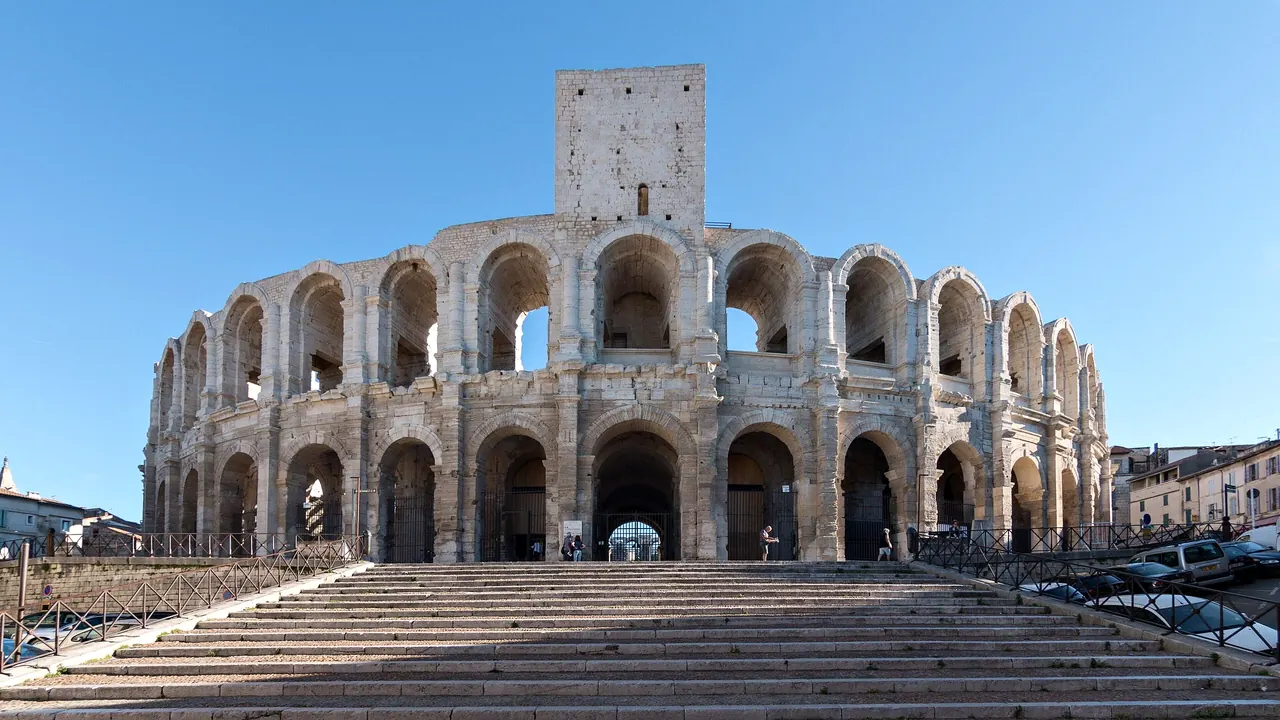
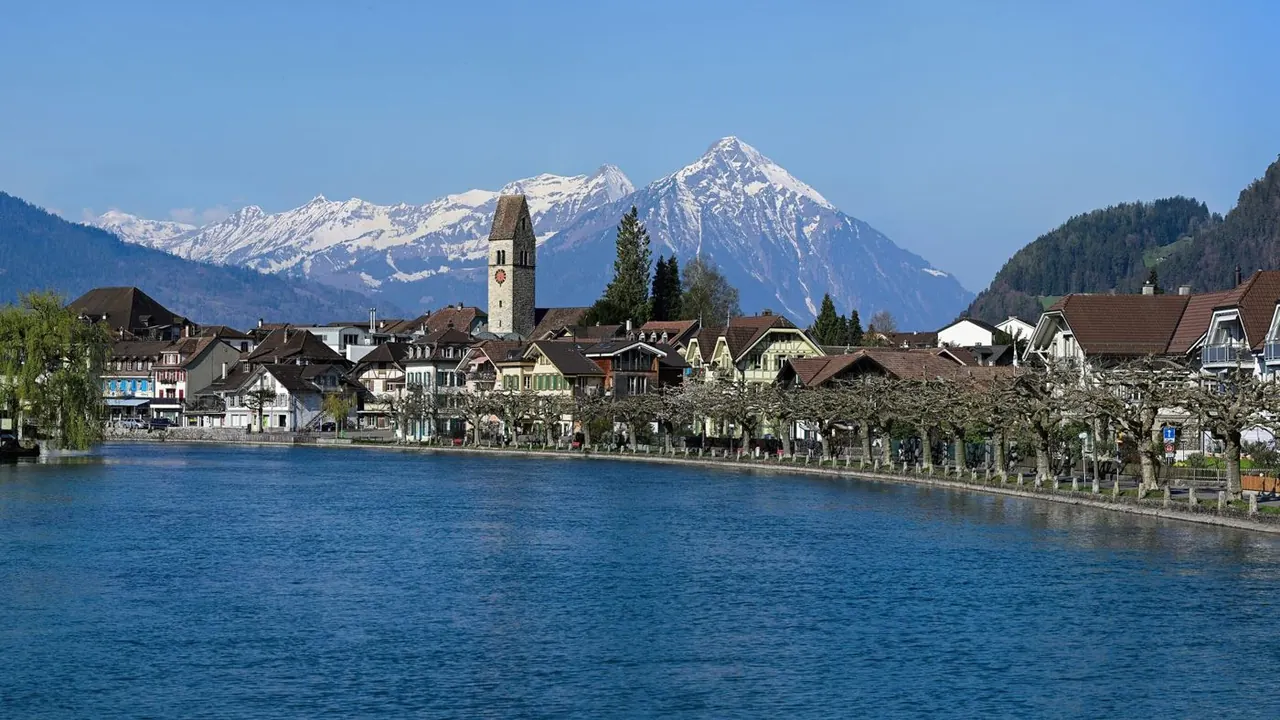
Photos: Arles by Martin Kraft, CC BY-SA 3.0, cropped; Interlaken by Roy Egloff, CC BY-SA 4.0, cropped.
Arles or Interlaken?
Our verdict in twelve categories, each scored against the same fixed benchmark cities, and the climate month by month, so you can choose for your trip.
Choose Arles for
- culture and sights
- prices
- food and drink
Arles is the choice for a traveller who wants history underfoot and Provence on the plate. Its Roman arena, theatre and Romanesque cloister sit within a short walk of each other, the Saturday market and long terrace lunches set the rhythm of the day, and Avignon, Nîmes and the Alpilles villages are all close enough for easy outings. It is also the gentler option on the wallet, and the Camargue adds flamingos, horses and wild beaches.
Choose Interlaken for
- families
- nature and the outdoors
- getting around
Interlaken suits people who come for mountains rather than towns. The town itself has little to look at, but trains, cog railways and cable cars put the Eiger, Lauterbrunnen and the Jungfraujoch within an hour, without a car. Paragliding, canyoning, lake steamers and summit playgrounds make it the stronger pick for active couples and families, provided the budget can take Swiss prices.
Scoreboard
Twelve categories on one fixed scale from 0 to 100. The shaded stretch is the gap between the two.
Your match
Pick a travel style or drag the sliders, and both match scores follow your weighting.
Wins on culture and sights and prices with your weighting.
Wins on families and nature and the outdoors with your weighting.
What matters to you?
Category by category
What the scores mean for a trip.
Beaches & swimming
Arles has the better swimming, though neither is a beach destination. Its sea lies about 40km away across the Camargue, where Saintes-Maries, Piémanson and Beauduc offer long, wild sand and shallow, warm Mediterranean water in summer, at the cost of a drive, little shade and mosquitoes.
Interlaken swaps salt water for lakes. Lake Thun's lidos at Neuhaus and towards Spiez are pleasant for a dip under snowy peaks, and turquoise Lake Brienz is colder still, but the water is cool for most of the year and swimming is an afterthought here.
Food & drink
Food is a real reason to visit Arles and barely one for Interlaken. Arles cooks with its own produce: bull stew, Camargue rice, tellines and Alpilles olive oil, with the long Saturday market on the Boulevard des Lices at the heart of it and rosé on the squares at lunch.
In Interlaken, town restaurants serve dependable fondue, rösti and international dishes for visitors without much character. The memorable meals are up on mountain hut terraces or bought as cheese from Alpine dairies, and many visitors simply picnic.
Culture & sights
This is where the two part company most sharply. Arles packs an arena, a Roman theatre, the cryptoporticus, the Alyscamps and the Romanesque cloister of Saint-Trophime into a walkable centre, then adds the barge in the Museum of Ancient Arles, the Musée Réattu, the Fondation Vincent van Gogh and Gehry's Luma tower.
Interlaken was built as a base for the mountains, and it shows. A row of grand hotels, the Kursaal and a few timber houses in Unterseen are about all there is, so anyone with cultural appetite takes the train to Bern or Thun.
Nightlife
Neither town is made for late nights, but Arles has the edge, mainly because of its ferias at Easter and in September, when bodegas spill into the streets for days. The rest of the year it means dinner on a square and a drink on the Place du Forum. Interlaken has a small backpacker scene of pubs and a couple of basement clubs, plus the casino, though early starts for the mountains empty the streets before midnight.
Nature & outdoors
Arles has fine nature on its doorstep: the lagoons and salt flats of the Camargue, with flamingos, white horses and black bulls, explored on horseback, by bike or on foot, and the Alpilles ridges for hiking among olive groves.
Interlaken, though, sits among some of the grandest scenery in Europe. The Lauterbrunnen valley, the Jungfraujoch over the Aletsch glacier and trails from Grindelwald First or Schynige Platte are all reached easily by rail, and adventure sports and winter skiing are run from the town itself.
Day trips
Both are excellent bases, but Arles has the richer spread of places close at hand. Avignon and Nîmes are a short train ride away, the Pont du Gard, Les Baux, Saint-Rémy and Aigues-Mortes are easy drives, and Marseille and Aix are about an hour off.
Interlaken's outings are mostly about lakes and small towns: Bern's arcaded old town under an hour away, castles at Thun, Spiez and Oberhofen by paddle steamer, and the Ballenberg open-air museum. Lucerne takes about two hours, so it is further than anything in Arles's main circle.
Good for families
Interlaken works better with children. Cog railways, gondolas and steamers are an adventure in themselves, and the summit stations have playgrounds, cliff walks and summer toboggan runs, with the St Beatus caves and Ballenberg's farm animals as easy extras. Wet days and high altitude for toddlers are the drawbacks.
Arles appeals more to older children who like history and animals: clambering round the arena, then pony rides and flamingos in the Camargue. Cobbles, summer heat, mosquitoes and the need for a car make it harder work with little ones.
Getting around
Both towns are easy on foot, but beyond the centre Interlaken is far simpler. Its mainline trains, narrow-gauge mountain lines, cog railways, gondolas and lake steamers are timed to connect, so the whole Jungfrau region needs no car at all, crowded summer trains aside.
Arles has a compact centre with a free shuttle and good trains to Avignon, Nîmes and Marseille. The Camargue ranches, wild beaches and Alpilles villages, though, are poorly served by bus, and most people staying a few days hire a car.
Shopping & style
Arles is the more rewarding place to browse, on a small scale. Its market sells olive oil, Camargue salt and rice, linens and soaps, and the old town has Provençal prints, santons, gardian shirts and good bookshops for photography. Interlaken's Höheweg is mainly watch and jewellery stores for tour groups, cuckoo clocks, army knives and chocolate, with Brienz woodcarving the one craft worth seeking out.
Affordability
Arles is much the cheaper of the two. Rooms, lunch menus and market food cost what they do in a provincial French town, and a combined pass covers the sights, though summer festivals and a hire car add to the bill.
Interlaken runs at full Swiss prices for everything, and the mountain railways, especially to the Jungfraujoch, are the biggest expense of all. Hostels, passes and picnics help, but the region is never cheap.
Live music & performing arts
Arles offers more, nearly all of it in summer and outdoors: concerts in the Roman theatre and arena, the Les Suds world music festival in July, and the ferias with brass bands and the bloodless course camarguaise. Interlaken's signature is a summer production of Schiller's William Tell, staged by local amateurs in the woods, along with folklore evenings of yodelling and alphorns. In both cases the serious year-round venues are elsewhere, in Avignon or Marseille and in Bern.
Wellness & relaxation
Interlaken has slightly more to offer for proper pampering. The grand hotels on the Höheweg have sizeable spas and the town has a public wellness area, while dawn on the lakeshore and the quiet villages of Wengen and Mürren do the rest, away from the activity crowds in town.
Arles offers rest through its pace rather than treatments: shaded squares, long lunches, summer siestas and evenings by the Rhône, with a few farmhouse retreats with pools in the Camargue and Alpilles.
When should you go?
Pick your month. The climate figures are measured averages, not a forecast.
Arles in July
Interlaken in July
Daytime high, °C
Rainfall in the month, mm
Where the figures come from
Arles's temperatures are measured 28 km from the centre, at Nimes / Courbessac.
Arles has no rain gauge within 25 km of the centre, so its rainfall comes from a gridded climate dataset read at the city rather than from a gauge further away.
Interlaken has no rain gauge within 25 km of the centre, so its rainfall comes from a gridded climate dataset read at the city rather than from a gauge further away.
Interlaken's sunshine is measured 66 km from the centre, at Sion.
Temperature and rainfall are climate normals, averaged over the years shown. Arles: 1991-2020 (sunshine 1981-2010) normals, Nimes / Courbessac (28 km from centre). Interlaken: 2005-2020 (sunshine 1961-1990, rainfall 1991-2020) normals, Meiringen / Unterbach (19.3 km from centre).
Arles is at its best from May into June, when the days are warm, rain is light and the Camargue is full of birds. July and August are the sunniest and hottest months, around 31°C. The heat pushes sightseeing into the mornings, but this is the time for the sea, which reaches about 22°C in August. September stays warm but brings the first real rain of autumn, and October is the wettest month at around 105mm. Winters are cool and quiet, though mild enough for walking around the ruins.
Interlaken is much cooler all year. Like Arles, it is warmest in July, but at around 24°C that is good hiking weather rather than heat, and June to September is the season for the high trails. Summer is also when Interlaken gets the most rain, so showers and cloud over the peaks are part of the deal. Winter is cold, with January highs near 3°C. That suits the ski areas above town better than walking in the valley. In short, Arles is best in late spring or at the height of summer for the sea, while Interlaken is a summer destination.
Which traveller are you?
On a culture and arts trip, Arles is the clear pick. Its UNESCO-listed Roman monuments, Saint-Trophime's carved portal and Van Gogh connections fill two full days, while Interlaken itself offers a hotel promenade and little else to see.
For an outdoors trip, Interlaken is in a different league. Mountain railways lift you onto high trails below the Eiger and Jungfrau, and paragliding, canyoning and rafting all start from town. Arles has the Camargue marshes and Alpilles hikes, but nothing alpine.
On a trip on a tight budget, Arles stretches money much further. Market food, lunch menus and provincial hotel rates keep costs ordinary, whereas Interlaken's hotels, meals and mountain railway fares sit at full Swiss levels with no real cheap way round them.
Before you go
| Measure | Arles | Interlaken |
|---|---|---|
| Official language | French | French, German, Italian, Romansh |
| Currency | Euro (EUR) | Swiss Franc (CHF) |
| Sockets | CE230 V, 50 Hz | CJ230 V, 50 Hz |
| Driving side | Right | Right |
| Time zone | UTC+1, UTC+2 in summer | UTC+1, UTC+2 in summer |
| Emergency number | 112 | 112 |
| Elevation | 0 m | 571 m |
| Main airport | Marseille Provence Airport (MRS)54 km from centre126 non-stop destinations | Zürich Airport (ZRH)100 km from centre226 non-stop destinations |
| Public holidays this year | 11 days | 10 days |
By the numbers
| Measure | Arles | Interlaken |
|---|---|---|
| City population | 51,811 | 6,123 |
| People per km² | 68 | 1,424 |
| Museums within 10 km | 3 | 3 |
| UNESCO World Heritage sites within 50 km | 5 | 2 |
| Swim season, months above 21 °C | 2 months | - |
Where else could you go?
Every comparison below shares a destination with this one, so you can follow Arles or Interlaken somewhere new.
- Avignonvs Arles
- Bernvs Interlaken
- Lucernevs Interlaken
- Montpelliervs Arles
- Aix-en-Provencevs Arles
- Marseillevs Arles