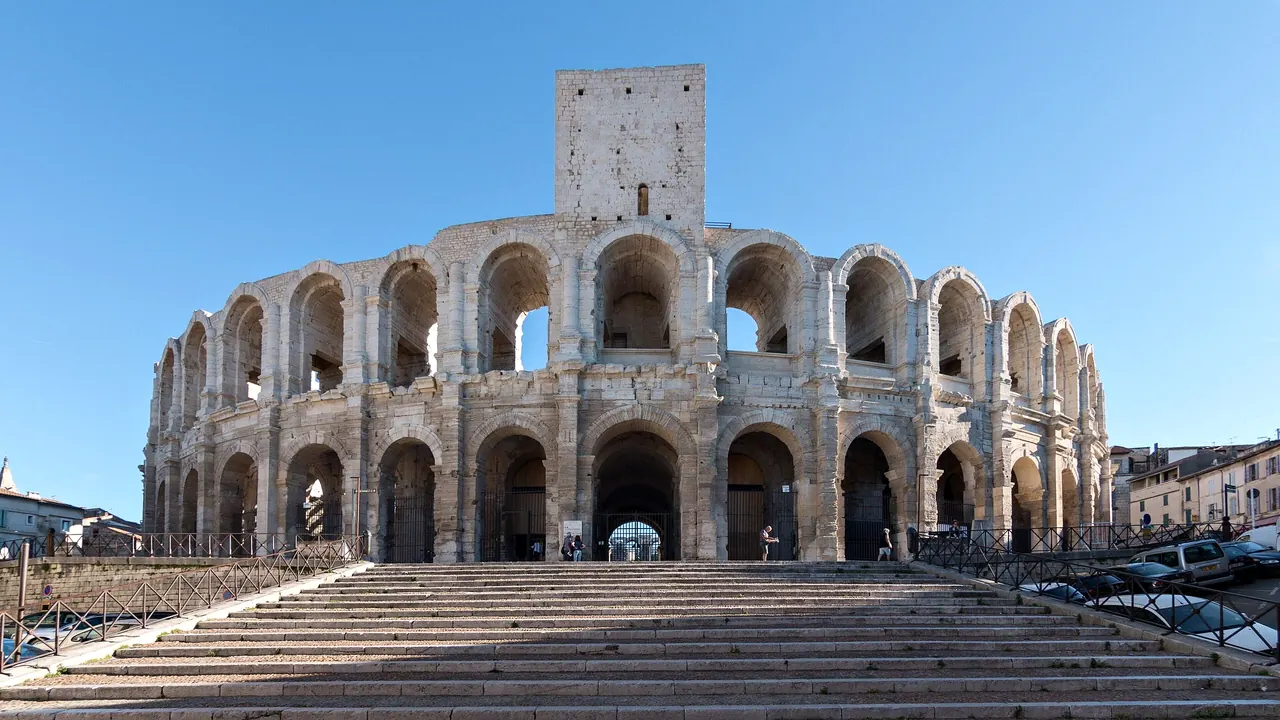
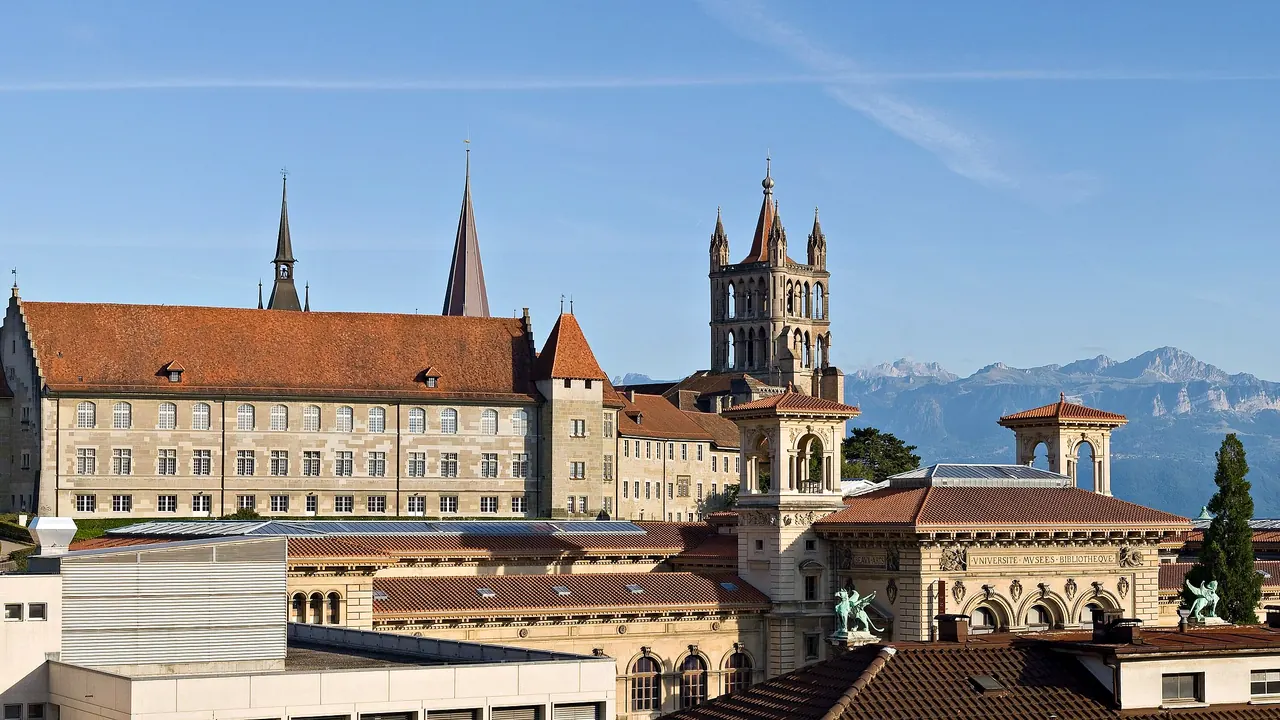
Photos: Arles by Martin Kraft, CC BY-SA 3.0, cropped; Lausanne by Christian Mehlführer, CC BY-SA 3.0, cropped.
Arles or Lausanne?
Our verdict in twelve categories, each scored against the same fixed benchmark cities, and the climate month by month, so you can choose for your trip.
Choose Arles for
- prices
- culture and sights
- beaches
Arles is the pick for a traveller who wants Roman Provence up close: an arena, a theatre and a Romanesque cloister within a short walk, the Camargue's flamingos and white horses at the edge of town, and Avignon or Nîmes a short train ride away. It costs far less than Lausanne, and the wild delta beaches make a proper day at the sea. Expect quiet evenings, and plan on hiring a car.
Choose Lausanne for
- live music and the arts
- families
- getting around
Lausanne suits people who want more going on around the sightseeing and can accept a Swiss bill. A steep metro, punctual trains and lake boats replace the car. Children get the Olympic Museum, the aquarium and the woods at Sauvabelin, and evenings can mean ballet, opera or a night in the Flon. The Lavaux terraces and the Alps across the water make it the stronger choice for walkers.
Scoreboard
Twelve categories on one fixed scale from 0 to 100. The shaded stretch is the gap between the two.
Your match
Pick a travel style or drag the sliders, and both match scores follow your weighting.
Wins on prices and culture and sights with your weighting.
Wins on live music and the arts and families with your weighting.
What matters to you?
Category by category
What the scores mean for a trip.
Beaches & swimming
Neither city has its own shore, but Arles has the real sea about 40km away. There are the long sandy beaches either side of Saintes-Maries and the huge open strands of Piémanson and Beauduc, with shallow, easy water in summer. In return you get a drive, little shade, mosquitoes and the occasional mistral.
Lausanne's swimming is lake bathing from lawns, piers and pebble shores at Vidy, Bellerive and Lutry. It is easy to fit into a city afternoon, but the season ends in early September and there is no sand to speak of.
Food & drink
Both are regional kitchens built around a Saturday market, but the flavours are quite different. Arles cooks Camargue bull in gardiane and serves red rice and tellines. Its best meal is a long terrace lunch near the Place du Forum after the market on the Boulevard des Lices, though many places close in winter.
Lausanne leans on lake perch, papet vaudois and fondue, and its wine is the bigger draw: Lavaux Chasselas tasted straight from the growers in village caveaux. It also has the more celebrated top tables, while its everyday middle is plainer.
Culture & sights
Arles carries far more history for its size. The arena, the antique theatre, the cryptoporticus, the Alyscamps and the Saint-Trophime cloister form one UNESCO-listed group, and the archaeology museum holds a Roman barge raised from the Rhône. Van Gogh's legacy and the Luma tower add a later chapter.
Lausanne's sights are fewer and more recent in date: the Gothic cathedral with its night watchman, the steep old town, and museums led by the Olympic Museum, Plateforme 10 and the Collection de l'Art Brut. Each city takes two or three days, but Arles packs more into them.
Nightlife
Lausanne is the livelier of the two after dark, largely thanks to its students. Old warehouses in the Flon hold clubs and late bars that fill up at weekends, and the waterfront at Ouchy draws crowds on summer evenings, though weeknights are quiet and drinks are dear.
In Arles most nights end with dinner and a glass on a square, and there are no clubs to speak of. The exception is the ferias at Easter and in September, when bodegas in the streets keep the town up for a few days.
Nature & outdoors
Lausanne has the grander outdoors. It has the Lavaux terraces for walking, sailing and paddleboarding on the lake, and the Vaud Alps and the Jura within about an hour for hiking and skiing, up to the glacier at Glacier 3000.
Arles offers flatter, wilder country in the Camargue delta. Flamingos, white horses and bulls live in the marshes, migrating waders bring birdwatchers, and you can ride or cycle along the dykes, with the Alpilles nearby for hill walks. Summer mosquitoes and the mistral make spring and autumn the seasons for it.
Day trips
Both are first-rate bases, and the difference is in what surrounds them. From Arles the outings are Roman and Provençal: Avignon and Nîmes by train, the Pont du Gard, Les Baux, Saint-Rémy and walled Aigues-Mortes. The villages are far easier with a car.
From Lausanne the trains do almost everything. Montreux and the Château de Chillon are along the lake, Geneva, Bern, Fribourg and Gruyères are all within reach, and boats cross to Évian. It is the easier region to explore without driving.
Good for families
Lausanne gives children much more to do. There is the hands-on Olympic Museum, the aquarium-vivarium, the pedal boats and animal park at Sauvabelin, the lakeside pools at Bellerive and paddle steamers on the lake. The steep streets and the cost of eating out are the drawbacks.
Arles appeals mainly to older children who like history and animals. They can climb the arena towers, explore the dark cryptoporticus, ride at the ranches and watch the flamingos. Nothing is built for children, the cobbles are hard on buggies, and the summer heat and mosquitoes tire families out.
Getting around
Both centres are compact, but Lausanne is much better connected beyond its centre. The m2 metro climbs the hill from Ouchy to the upper town, buses and lake boats fill the gaps, and the Swiss rail network means most trips need no car.
Everything in Arles is within about fifteen minutes' walk, a free shuttle loops the centre, and trains run to Avignon, Nîmes and Marseille. The Camargue's ranches, reserves and beaches need a car or a bike, though, and most visitors staying several days hire one.
Shopping & style
Neither city is a shopping destination, but Lausanne has more choice. Rue de Bourg has Swiss watches, jewellery and chocolatiers, the streets around Place Saint-François have the international names, and the Flon has a few design shops.
Shopping in Arles is smaller and more local: Provençal cottons, santons, gardian shirts, and Camargue salt and rice from the Saturday market, plus good bookshops and photography prints. It is better for things that come from the region than for fashion.
Affordability
This is where the two differ most. Arles costs what a French provincial town does: lunch menus, market food and mid-range hotels at ordinary prices, and a combined pass for the sights. Car hire and the festival weeks are the main extra costs.
Lausanne is expensive in the usual Swiss way, from rooms to taxis to a simple lunch. Visitors on a budget rely on supermarket picnics and the free lakeside promenades, and a glass of Chasselas in a Lavaux caveau is one of the few bargains.
Live music & performing arts
Lausanne has a stage life that is rare for a city of its size, and it runs all year. It is home to the Béjart Ballet and the Prix de Lausanne, it has the Théâtre de Vidy, a full opera season and a respected chamber orchestra, and the Montreux Jazz Festival is a short ride along the lake in July.
In Arles, live performance is mostly a summer and festival affair. There are concerts in the Roman theatre and arena, world music at Les Suds, and brass bands and the course camarguaise around the ferias. Out of season, serious programmes mean a trip to Avignon or Nîmes.
Wellness & relaxation
Lausanne is better set up for pampering. The grand lakeside hotels have extensive spas, and there are thermal springs at Yverdon-les-Bains and Lavey-les-Bains, both within an hour by train. The calm is on the lake promenades and the Lavaux paths rather than in the steep centre.
Arles offers a simpler kind of rest: shaded squares, siestas, evenings by the Rhône and a few farmhouse retreats with pools. It has little in the way of spas.
When should you go?
Pick your month. The climate figures are measured averages, not a forecast.
Arles in July
Lausanne in July
Daytime high, °C
Rainfall in the month, mm
Where the figures come from
Arles's temperatures are measured 28 km from the centre, at Nimes / Courbessac.
Arles has no rain gauge within 25 km of the centre, so its rainfall comes from a gridded climate dataset read at the city rather than from a gauge further away.
Lausanne's temperatures are measured 40 km from the centre, at Payerne.
Lausanne has no rain gauge within 25 km of the centre, so its rainfall comes from a gridded climate dataset read at the city rather than from a gauge further away.
Temperature and rainfall are climate normals, averaged over the years shown. Arles: 1991-2020 (sunshine 1981-2010) normals, Nimes / Courbessac (28 km from centre). Lausanne: 1991-2020 (sunshine 1961-1990) normals, Payerne (39.7 km from centre).
Arles is the warmer and sunnier of the two all year. May, June and September are its best months for walking the Roman sites. July and August reach about 31°C, which is hard work in the streets in the afternoon but good for the Camargue beaches, where the sea peaks at around 22°C in August. Autumn brings the rain, heaviest in October at about 105mm. Winters are mild and bright enough for sightseeing, though the mistral can bite.
Lausanne runs cooler. Summer highs of around 26°C make July and August comfortable for walking and swimming in the lake, and late spring and early autumn suit hiking in the hills. Rain is spread fairly evenly through the year rather than coming in one season, so a wet day is possible in any month. From November to February days are grey and cold, around 4°C, with very little sunshine in town, which is when Arles has the clear advantage.
Which traveller are you?
On a trip on a tight budget, Arles goes further. Picnic from the Saturday market, reach Avignon and Nîmes by train rather than hiring a car, and avoid the feria weeks. In Lausanne, eating out every night becomes hard to sustain.
On a family trip with young children, Lausanne is the easier choice. In Arles, buggies jolt on the cobbles, summer afternoons run hot and every ranch or beach means a drive. Lausanne's milder summers, metro and lake boats keep small legs going.
For a culture and arts trip built around historic sights, Arles goes deeper. Its UNESCO-listed Roman and Romanesque centre, the Alyscamps and Van Gogh's landscapes are all close by, with Nîmes and Avignon near. Lausanne answers with its cathedral, its museums and a stronger stage.
Before you go
| Measure | Arles | Lausanne |
|---|---|---|
| Official language | French | French, German, Italian, Romansh |
| Currency | Euro (EUR) | Swiss Franc (CHF) |
| Sockets | CE230 V, 50 Hz | CJ230 V, 50 Hz |
| Driving side | Right | Right |
| Time zone | UTC+1, UTC+2 in summer | UTC+1, UTC+2 in summer |
| Emergency number | 112 | 112 |
| Elevation | 0 m | 495 m |
| Main airport | Marseille Provence Airport (MRS)54 km from centre126 non-stop destinations | Geneva International Airport (GVA)52 km from centre150 non-stop destinations |
| Public holidays this year | 11 days | 9 days |
By the numbers
| Measure | Arles | Lausanne |
|---|---|---|
| City population | 51,811 | 144,873 |
| People per km² | 68 | 3,499 |
| Museums within 10 km | 3 | 31 |
| UNESCO World Heritage sites within 50 km | 5 | 3 |
| Swim season, months above 21 °C | 2 months | - |
Where else could you go?
Every comparison below shares a destination with this one, so you can follow Arles or Lausanne somewhere new.
- Avignonvs Arles
- Genevavs Lausanne
- Montpelliervs Arles
- Aix-en-Provencevs Arles
- Chamonixvs Lausanne
- Marseillevs Arles