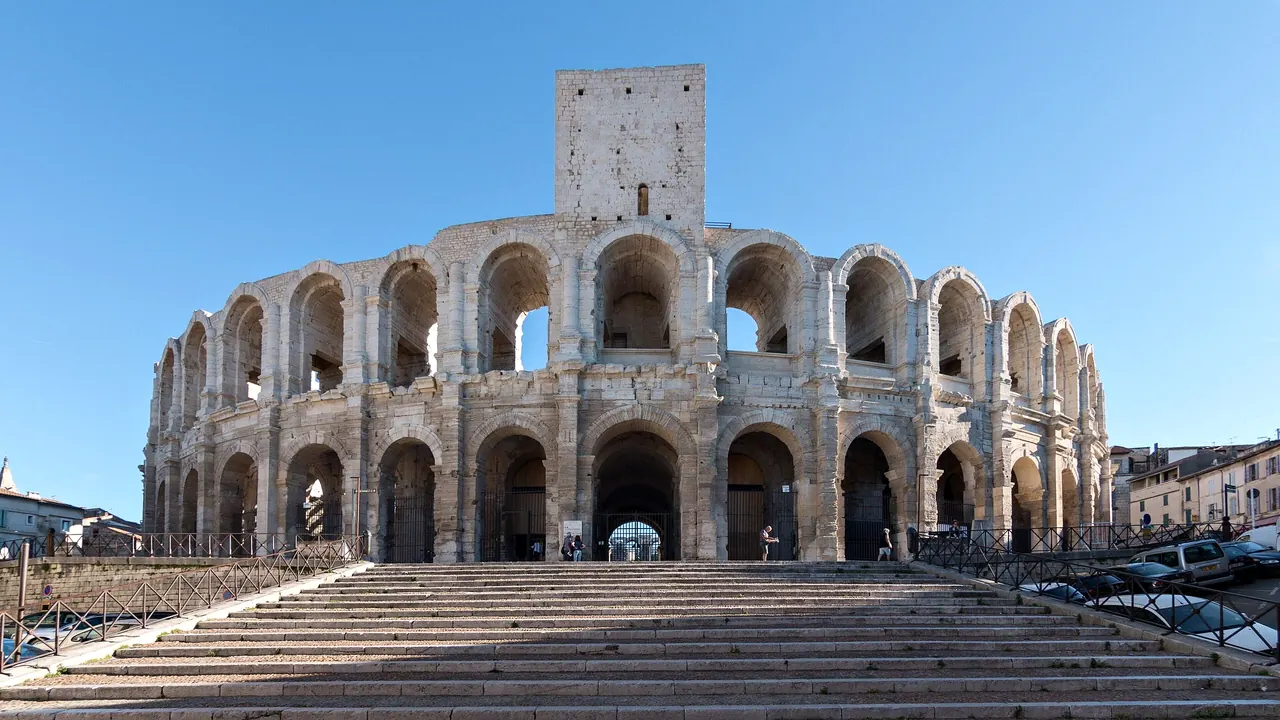
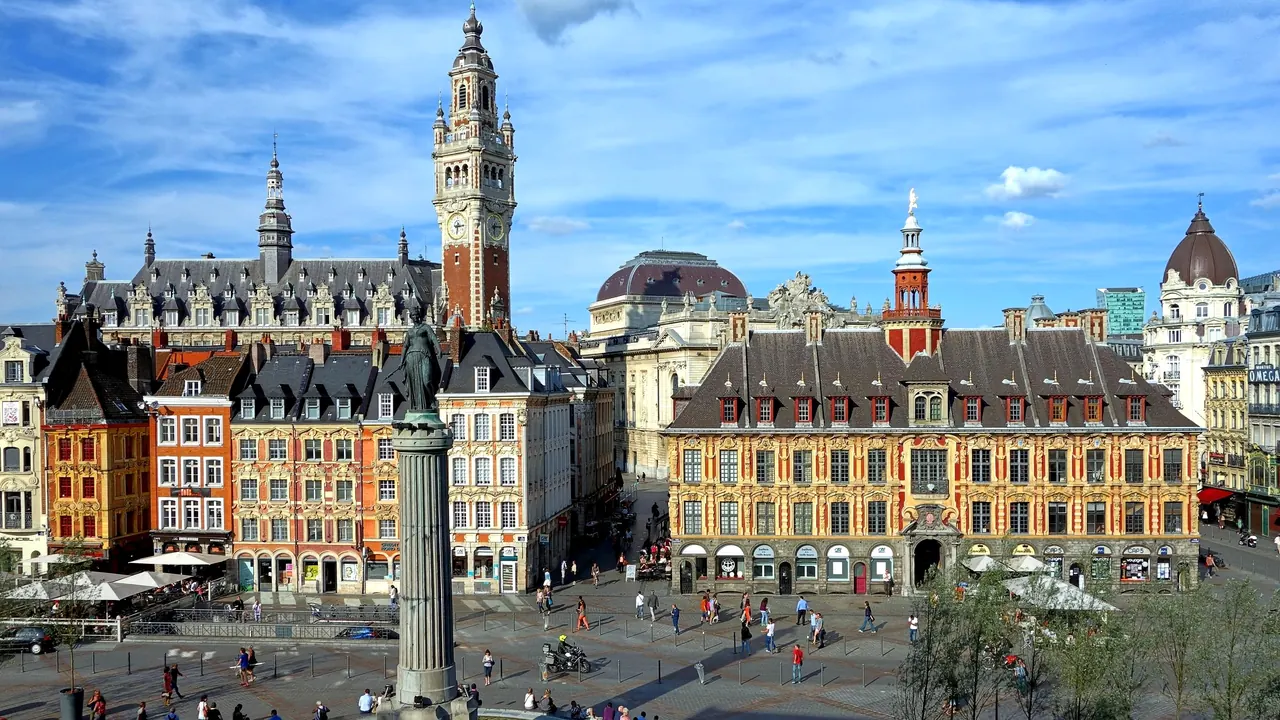
Photos: Arles by Martin Kraft, CC BY-SA 3.0, cropped; Lille by Velvet, CC BY-SA 3.0, cropped.
Arles or Lille?
Our verdict in twelve categories, each scored against the same fixed benchmark cities, and the climate month by month, so you can choose for your trip.
Choose Arles for
- nature and the outdoors
- beaches
- culture and sights
Arles suits a slower trip in the south, where Roman stones, the lagoons and flamingos of the Camargue and long lunches in the sun matter more than evenings out. It works best with a car, as a base for Provençal villages, Avignon and Nîmes, and for travellers who are happy when the town goes quiet after dinner.
Choose Lille for
- nightlife
- getting around
- shopping
Lille is the better choice for a city stay that runs on trains. It is compact and flat, has a metro, and its two stations sit right by the old town, with Brussels, Bruges and Paris within easy reach. It has more going on after dark, better shopping, a real opera house and orchestra, and Flemish taverns. In exchange, the weather is cooler and greyer and there is no beach to speak of.
Scoreboard
Twelve categories on one fixed scale from 0 to 100. The shaded stretch is the gap between the two.
Your match
Pick a travel style or drag the sliders, and both match scores follow your weighting.
Wins on nature and the outdoors and beaches with your weighting.
Wins on nightlife and getting around with your weighting.
What matters to you?
Category by category
What the scores mean for a trip.
Beaches & swimming
Neither is a beach town, but Arles at least has the Mediterranean within a drive. There are sand and dunes at Saintes-Maries-de-la-Mer, about 40km south, and the long, open strands of Piémanson and Beauduc lie beyond Salin-de-Giraud, with shallow, warm water in high summer. You need a car, and there is little shade on the wilder stretches.
Lille's nearest sand is at Malo-les-Bains on the North Sea, an hour away by train. It is wide and windy and the water is cold, so it suits a bracing walk more than a swim.
Food & drink
Lille has more to offer at the table. Its estaminets in Vieux-Lille serve carbonnade, potjevleesch and the welsh, Maroilles cheese turns up in almost everything, and beer bars and brewery taps fill the evening. The Sunday market at Wazemmes adds variety.
Arles eats well within narrower limits: gardiane, Camargue rice, tellines and the long Saturday market on the Boulevard des Lices, with rosé on the Place du Forum. It is good for long lunches, but there is less choice and many kitchens close in winter.
Culture & sights
Arles packs more into less space. The arena, the antique theatre, the cryptoporticus, the Alyscamps and the carved portal of Saint-Trophime form a UNESCO-listed Roman and Romanesque group, all within a short walk. The Luma tower and the summer photography festival give the town a modern side.
Lille's strength is one great museum rather than a whole townscape of antiquity. The Palais des Beaux-Arts with its Flemish masters, the brick baroque of Vieux-Lille and La Piscine in Roubaix reward painting lovers, but the city has fewer sights you could not see somewhere else.
Nightlife
Lille is the one for going out. Students fill the bars of Rue Masséna and Rue Solférino, especially on Thursdays. The brick cellars of Vieux-Lille hold beer cafés and cocktail bars for a calmer drink, and Belgium is close for later nights.
Arles winds down after a late dinner and a glass on the Place du Forum. Only the ferias at Easter and in September keep it up late, when bodegas set up in the streets.
Nature & outdoors
Arles has the Camargue on its doorstep: lagoons, salt flats and reed beds with flamingos, white horses and black bulls. You can explore on horseback, by bike along the dykes or on foot in the bird reserve, and the Alpilles add proper hill walking among olive groves and pines.
Around Lille the land is flat and farmed. The Citadel park, the canal towpaths and the low Monts de Flandre make for gentle outings, and the cliffs of the Opal Coast are a long day away.
Day trips
Both are first-rate bases, but for different trips. From Arles the outings are Provençal and Roman: Avignon and Nîmes by train, and the Pont du Gard, Les Baux, Saint-Rémy and Aigues-Mortes, which are far easier by car.
Lille's day trips cross borders and go by rail. Brussels, Ghent, Bruges and Paris are all close by fast train. On the French side there are Arras, Amiens and the First World War battlefields.
Good for families
Lille is the easier city with children. The Citadel park has a small zoo, playgrounds and flat paths, the natural history museum and the Forum des Sciences cover rainy days, and the metro gets you around. Pairi Daiza and Nausicaá are within reach for bigger outings.
Arles appeals more to older children who like history and animals. They can climb the arena towers, explore the dark cryptoporticus, ride ponies at Camargue ranches and see flamingos near Saintes-Maries. Summer heat, mosquitoes and the need for a car make it harder work.
Getting around
Lille is simpler to get around. The centre is flat and walkable, the automated VAL metro and the tram reach Roubaix and Tourcoing, and both main stations are beside the old town, so you need no car.
Arles is just as easy on foot inside its old centre, and the station is close. But buses to the Camargue, the villages and the wild beaches are infrequent, so you need a bike or a hire car.
Shopping & style
Lille has far more choice. The chains are on Rue Neuve and Rue de Béthune, there is the Euralille mall, and Vieux-Lille has independent fashion and design shops. Each September the Braderie turns the whole city into one huge flea market.
Shopping in Arles is smaller and Provençal: printed cottons, santons, Camargue salt and rice from the Saturday market, and good bookshops for photography. For fashion, people go to Aix or Marseille.
Affordability
Day-to-day costs are much the same, in line with provincial France. What differs is what pushes the bill up. In Arles it is the hire car most visitors need, and dearer rooms in July and during the ferias. In Lille it is the Braderie and the trade fairs, while the inexpensive metro keeps getting around cheap.
Live music & performing arts
Lille has a year-round season that Arles lacks. The Opéra de Lille and the Orchestre National de Lille both have full seasons, the Théâtre du Nord is one of France's national theatres, and touring acts play the Zénith and the Aéronef.
Live performance in Arles happens mostly in summer: concerts in the Roman theatre and the arena, the Les Suds world music festival in July, and the brass bands of the ferias and the course camarguaise in the warm months. Out of season there is little beyond the town theatre.
Wellness & relaxation
Neither is a spa destination, and in both, treatments mostly mean hotel spas. Arles offers a southern pace instead, with siestas, shaded squares and farmhouse retreats with pools in the Camargue and the Alpilles. Lille's calm is found in tea rooms and on café terraces, with a real thermal bath a short train ride away at Saint-Amand-les-Eaux.
When should you go?
Pick your month. The climate figures are measured averages, not a forecast.
Arles in July
Lille in July
Daytime high, °C
Rainfall in the month, mm
Where the figures come from
Arles's temperatures are measured 28 km from the centre, at Nimes / Courbessac.
Arles has no rain gauge within 25 km of the centre, so its rainfall comes from a gridded climate dataset read at the city rather than from a gauge further away.
Temperature and rainfall are climate normals, averaged over the years shown. Arles: 1991-2020 (sunshine 1981-2010) normals, Nimes / Courbessac (28 km from centre). Lille: 1991-2020 normals, Lille (7.8 km from centre).
Arles is warm from May to September. July and August reach about 31°C, which is too hot for walking the streets at midday but right for the sea, which warms to around 22°C in August and is pleasant for swimming from July into September. Summer is also very sunny and dry. The rain arrives in autumn, and October is the wettest month at about 105mm. April to June and September are the best months for walking the old town and the Camargue. Winters are mild but cool and fairly sunny.
Lille never gets hot. Summer highs of about 24°C make July and August comfortable for walking the city, but rain falls steadily all year with no dry season. Winter is cold and dull, with highs of about 7°C and very little sunshine, so late spring to early autumn is the time to go.
Which traveller are you?
For an outdoors trip, Arles is the clear choice. The Camargue begins at the edge of town, with flamingos, white horses and dyke paths for cycling, and the Alpilles add real hiking. Lille's flat Flemish countryside offers mostly canal towpaths and low hills.
On a food and nightlife trip, Lille gives you more. Flemish estaminets, Belgian ales and brewery taps fill the evenings, and the student bars and the cellar bars of Vieux-Lille stay busy late. Arles goes quiet after dinner except during its ferias.
For a short city break, Lille is the easier of the two. Trains arrive next to the old town, the centre is walkable and the metro reaches the outer museums, so you will not need a car. Arles is compact too, but its best outings need a car.
Before you go
| Measure | Arles | Lille |
|---|---|---|
| Official language | French | French |
| Currency | Euro (EUR) | Euro (EUR) |
| Sockets | CE230 V, 50 Hz | CE230 V, 50 Hz |
| Driving side | Right | Right |
| Time zone | UTC+1, UTC+2 in summer | UTC+1, UTC+2 in summer |
| Emergency number | 112 | 112 |
| Elevation | 0 m | 17 m |
| Main airport | Marseille Provence Airport (MRS)54 km from centre126 non-stop destinations | Lille Airport (LIL)8 km from centre61 non-stop destinations |
| Public holidays this year | 11 days | 11 days |
By the numbers
| Measure | Arles | Lille |
|---|---|---|
| City population | 51,811 | 238,246 |
| People per km² | 68 | 6,846 |
| Museums within 10 km | 3 | 23 |
| UNESCO World Heritage sites within 50 km | 5 | 6 |
| Swim season, months above 21 °C | 2 months | - |
Where else could you go?
Every comparison below shares a destination with this one, so you can follow Arles or Lille somewhere new.
- Avignonvs Arles
- Montpelliervs Arles
- Brugesvs Lille
- Ghentvs Lille
- Aix-en-Provencevs Arles
- Marseillevs Arles