Photos: Arles by Martin Kraft, CC BY-SA 3.0, cropped; Lucca by Stefano Sansavini, CC BY-SA 4.0, cropped.
Arles or Lucca?
Our verdict in twelve categories, each scored against the same fixed benchmark cities, and the climate month by month, so you can choose for your trip.
Choose Arles for
- culture and sights
- nature and the outdoors
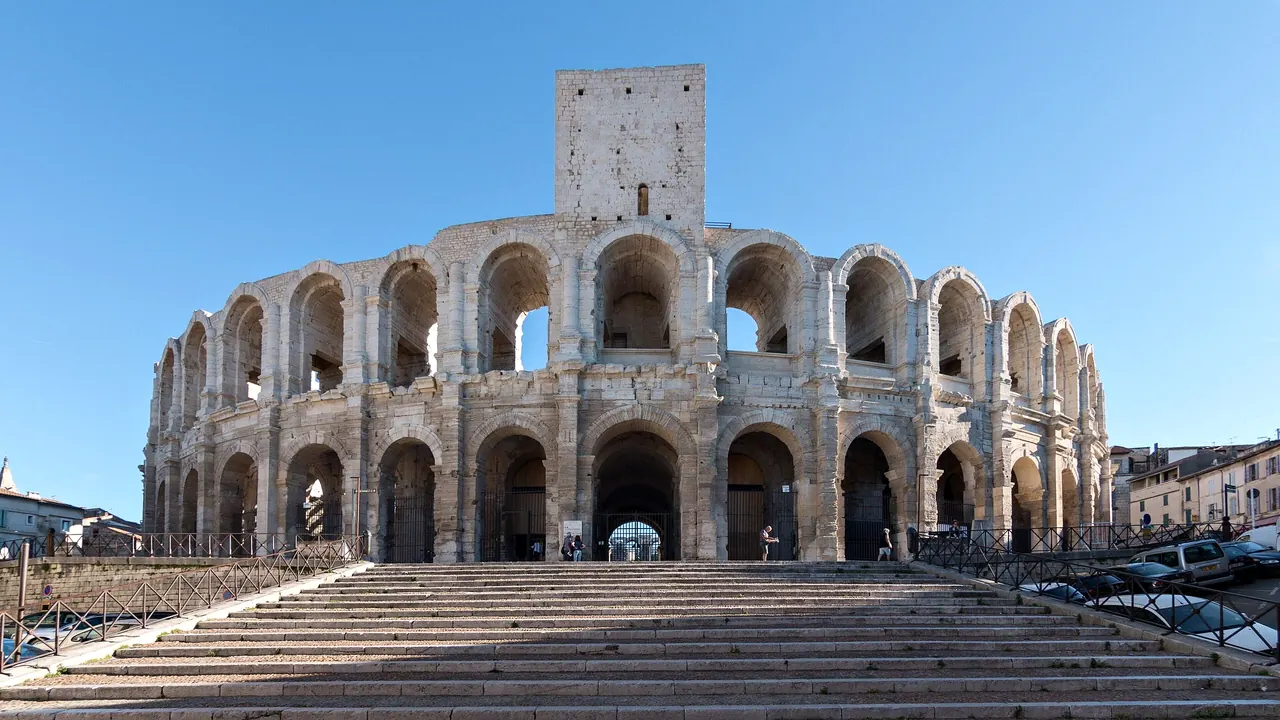
Arles suits travellers who come for Roman stones and wild country. The arena, the antique theatre and the tomb-lined Alyscamps lie a few minutes' walk apart, and beyond the town the Camargue opens out into flamingo lagoons, white horses and long, empty beaches. It works best if you're happy to hire a car and settle into a slow Provençal rhythm, with Avignon and Nîmes close by when you want more.
Choose Lucca for
- wellness
- live music and the arts
- getting around
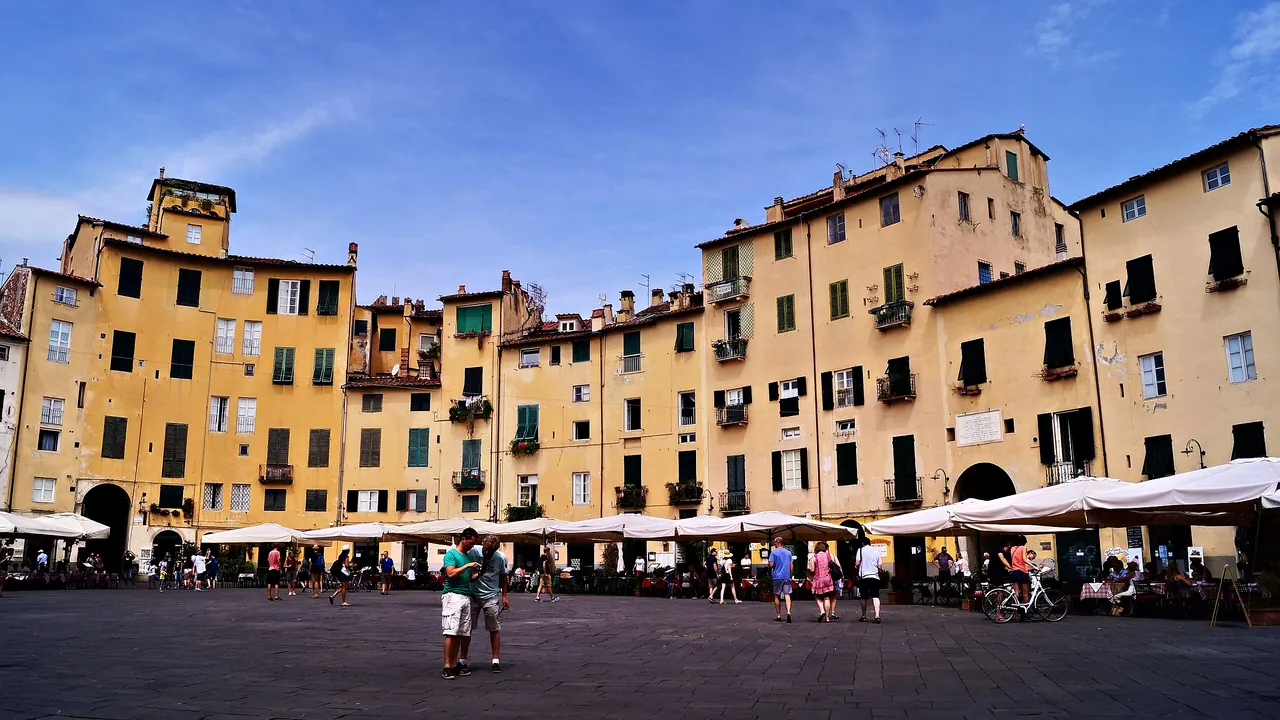
Choose Lucca if you want a trip that runs easily without a car. Inside its walls the centre is flat and traffic-free, Pisa and Florence are an easy train ride from the station just outside, and the Versilia beaches are under half an hour away. It is the better choice for families, for evenings of Puccini and for anyone who would like a spa day along the way.
Scoreboard
Twelve categories on one fixed scale from 0 to 100. The shaded stretch is the gap between the two.
Your match
Pick a travel style or drag the sliders, and both match scores follow your weighting.
Wins on culture and sights and nature and the outdoors with your weighting.
Wins on wellness and live music and the arts with your weighting.
What matters to you?
Category by category
What the scores mean for a trip.
Beaches & swimming
Neither town is on the sea, and the swimming they offer is about equally good but very different in feel. From Arles you drive across the Camargue, about 40km, to the sand and dunes around Saintes-Maries or the huge open strands of Piémanson and Beauduc. These beaches are wild and roomy but have little shade or service, and the mistral and mosquitoes can spoil a day there.
Lucca's coast is closer and tamer. A short train ride takes you to Viareggio's long, gently shelving sand, laid out in rows of umbrellas at beach clubs. The pine-backed dunes of the Lecciona are there if you want something freer, and the water is a little warmer.
Food & drink
Lucca is the better town to eat in, mainly because its trattorias, osterie and wine bars give you more choice through the year. Look for zuppa di farro, meat-filled tordelli, cecina from bakery counters and buccellato, with aperitivo and local salumi on the squares.
Arles has a strong local character in gardiane bull stew, Camargue rice and tellines, and its Saturday market is a real event. But it has fewer good tables, and many of them close in winter.
Culture & sights
Both towns repay two full days, but they show you different pasts. Arles is Roman first: the arena, the antique theatre, the cryptoporticus galleries and the Alyscamps, with Saint-Trophime's carved portal on top. It also has museums worth your time, from the Roman barge at the Museum of Ancient Arles to the Van Gogh foundation and the Luma tower.
In Lucca the town itself is the sight. The complete Renaissance walls ring a medieval grid of towers and Romanesque façades such as San Michele in Foro, and the houses of Piazza dell'Anfiteatro still follow the curve of the old amphitheatre. Its museums are modest by comparison.
Nightlife
Both towns go quiet early. Evenings mean a long dinner and a drink on a square: the Place du Forum in Arles, Piazza San Michele or the oval amphitheatre piazza in Lucca. The exceptions differ. Arles stays up late for a few days at its Easter and September ferias, when bodegas fill the streets. Lucca has a student crowd in a few bars and wine bars, and in summer the discos of the Versilia coast are within reach.
Nature & outdoors
Arles looks out over flat water, and Lucca looks up at mountains. The Camargue delta begins at the edge of Arles, with lagoons, salt flats and reed beds where you can ride from the ranches or cycle the dykes around the Étang de Vaccarès among flamingos and wading birds. For slopes you head north-east to the limestone ridges of the Alpilles.
From Lucca, the outdoors goes upwards. The steep peaks of the Apuan Alps, scarred by marble quarries, rise within about an hour and offer serious hiking, while the chestnut and beech woods of the Garfagnana have quieter trails. Lake Massaciuccoli gives birdwatchers a smaller taste of wetland.
Day trips
Both are excellent bases, and the choice comes down to Provence or Tuscany. From Arles the trips are dense with Roman and medieval sites: Avignon's Papal Palace and Nîmes by quick train, then the Pont du Gard, Les Baux, Saint-Rémy and Aigues-Mortes, though the villages are much easier by car.
From Lucca the big names sit on the railway. Pisa is about half an hour away and Florence a little over an hour, with Pistoia and Montecatini on the same line. Closer to Lucca are the villa gardens at Marlia and Collodi, and the marble towns of Pietrasanta and Carrara.
Good for families
Lucca is the more comfortable choice with children. The flat, traffic-free centre is safe for wandering, cycling round the walls makes a ready-made outing, and Pinocchio Park and the beaches are each under half an hour away.
Arles has its own appeal for older children who like history and animals, such as the towers of the arena, the dark cryptoporticus and pony rides among the Camargue flamingos. But summer heat, mosquitoes, cobbles that are hard work with a buggy and the need for a car make it more effort.
Getting around
Lucca is much easier to get around. Inside the walls it is flat and largely closed to cars, bikes are rented at every gate, and regular trains leave from just outside the walls for Pisa, Viareggio and Florence. Only the villas and the Garfagnana really call for a car.
Arles is just as compact at its heart, with a free shuttle looping the centre, but the Camargue's ranches, reserves and wild beaches are hard to reach without wheels. That is why most people staying several days hire a car.
Shopping & style
Lucca has a bit more to browse. Via Fillungo's fashion and jewellery shops sit behind old Liberty-style fronts, the surrounding lanes have delicatessens, and one of Italy's oldest antiques markets fills the streets around the cathedral one weekend a month.
Arles is about the Saturday market, printed Provençal cottons, santons and gardian shirts, plus good bookshops and photography books. Neither town has fashion or luxury shopping of any depth.
Affordability
Costs are much the same, and each is a cheaper base than the famous places near it: the Luberon villages for Arles, Florence for Lucca. Where the money goes differs. In Arles, hiring a car is the extra most visitors end up paying for. In Lucca you can do without one, but rooms inside the walls are few, so staying just outside often saves money. Both get dearer in summer and during their festivals.
Live music & performing arts
Lucca has far more live performance, and most of it is built around Puccini. Recitals of his arias run in a central church for most of the year, the nineteenth-century Teatro del Giglio has an opera and concert season, and in summer there is open-air opera by the lake at Torre del Lago and big concerts in Piazza Napoleone.
In Arles, performance belongs to the warm months: concerts in the Roman theatre and arena, Les Suds world music in July, and the course camarguaise and feria brass bands. Out of season there is little beyond a modest theatre programme.
Wellness & relaxation
Lucca is clearly the better choice for a spa day. Montecatini's belle époque baths are about half an hour away by train, and the warm cave pools of Monsummano and the steam grottoes of Bagni di Lucca are also close.
Arles has no bathing tradition at all. Relaxing there means siestas, long lunches on shaded squares, evenings by the Rhône and perhaps a stay at a converted mas with a pool.
When should you go?
Pick your month. The climate figures are measured averages, not a forecast.
Arles in July
Lucca in July
Daytime high, °C
Rainfall in the month, mm
Where the figures come from
Arles's temperatures are measured 28 km from the centre, at Nimes / Courbessac.
Arles has no rain gauge within 25 km of the centre, so its rainfall comes from a gridded climate dataset read at the city rather than from a gauge further away.
Temperature and rainfall are climate normals, averaged over the years shown. Arles: 1991-2020 (sunshine 1981-2010) normals, Nimes / Courbessac (28 km from centre). Lucca: 1991-2020 normals, Pisa / S. Giusto (21.4 km from centre).
The two climates run almost in step. Both are mild but not warm from December to February. Spring warms up properly by May, and by July and August afternoons reach about 31°C in Arles and a degree less in Lucca. That is hot for walking the streets, so sightseeing works best in the morning and evening. Arles is the sunnier of the two all year, and it is noticeably brighter in winter. May, June and September are the best months for walking in either town.
For swimming, June to September is the season on both coasts. The sea off Lucca's Versilia is the warmer, at about 25°C in July and August, against about 22°C on the Camargue shore. Autumn brings the rain to both. In Arles it peaks in October, while Lucca stays wet for longer and reaches about 132mm in November, so late autumn favours Arles.
Which traveller are you?
On a family trip with children, Lucca is the easier choice. Arles rewards older children who love animals, but most outings there need a car. In Lucca, families can ride a quadricycle round the walls, and the Versilia beaches are a short train ride away.
For a relaxing and wellness trip, Lucca suits anyone who wants slow days with a proper soak in between. Arles gives you siestas and shaded squares but only a few hotel spas. Lucca pairs car-free calm with historic spa towns close by.
On a culture and arts trip, the choice depends on the kind of art. Arles is the place for Roman history: the arena, theatre and cryptoporticus, the barge in its museum and the traces of Van Gogh. Lucca suits those who want Romanesque churches by day and Puccini by night.
Before you go
| Measure | Arles | Lucca |
|---|---|---|
| Official language | French | Italian |
| Currency | Euro (EUR) | Euro (EUR) |
| Sockets | CE230 V, 50 Hz | CFL230 V, 50 Hz |
| Driving side | Right | Right |
| Time zone | UTC+1, UTC+2 in summer | UTC+1, UTC+2 in summer |
| Emergency number | 112 | 112 |
| Elevation | 0 m | 19 m |
| Main airport | Marseille Provence Airport (MRS)54 km from centre126 non-stop destinations | Pisa International Airport (PSA)21 km from centre82 non-stop destinations |
| Public holidays this year | 11 days | 13 days |
By the numbers
| Measure | Arles | Lucca |
|---|---|---|
| City population | 51,811 | 88,798 |
| People per km² | 68 | 478 |
| Museums within 10 km | 3 | 20 |
| UNESCO World Heritage sites within 50 km | 5 | 4 |
| Swim season, months above 21 °C | 2 months | 4 months |
Where else could you go?
Every comparison below shares a destination with this one, so you can follow Arles or Lucca somewhere new.
- Pisavs Lucca
- Avignonvs Arles
- Florencevs Lucca
- Montpelliervs Arles
- La Speziavs Lucca
- Aix-en-Provencevs Arles