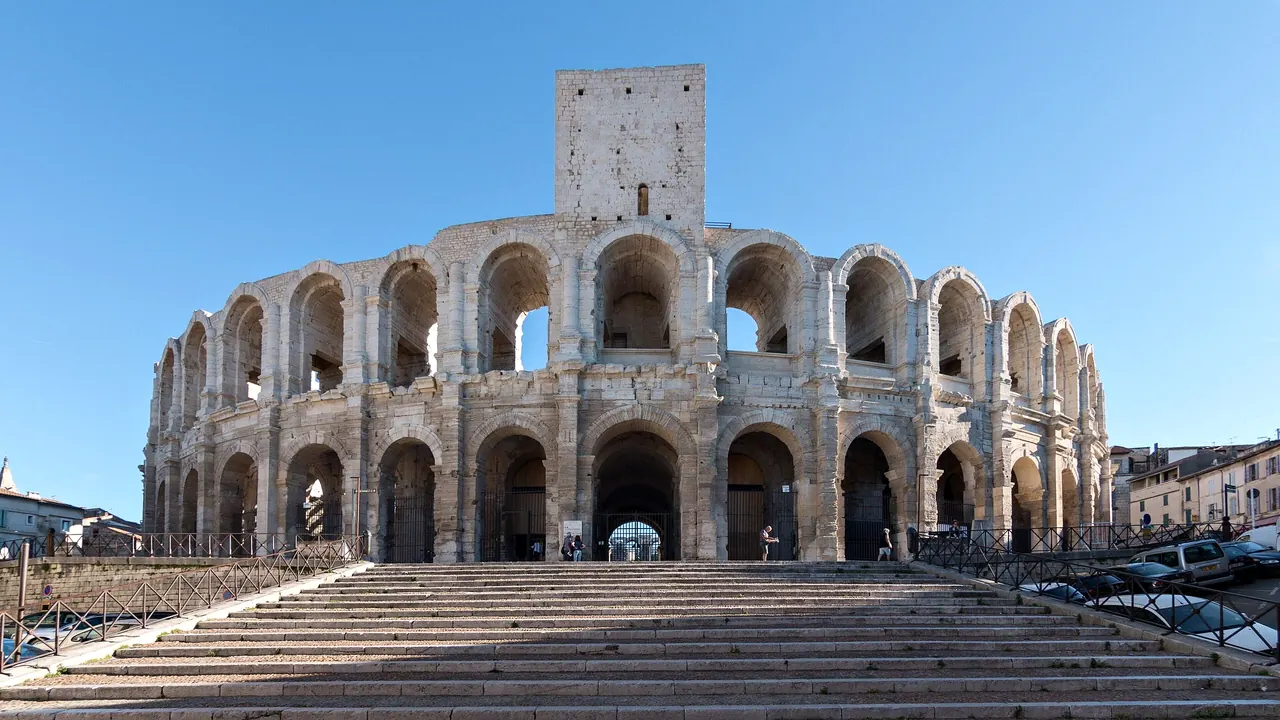
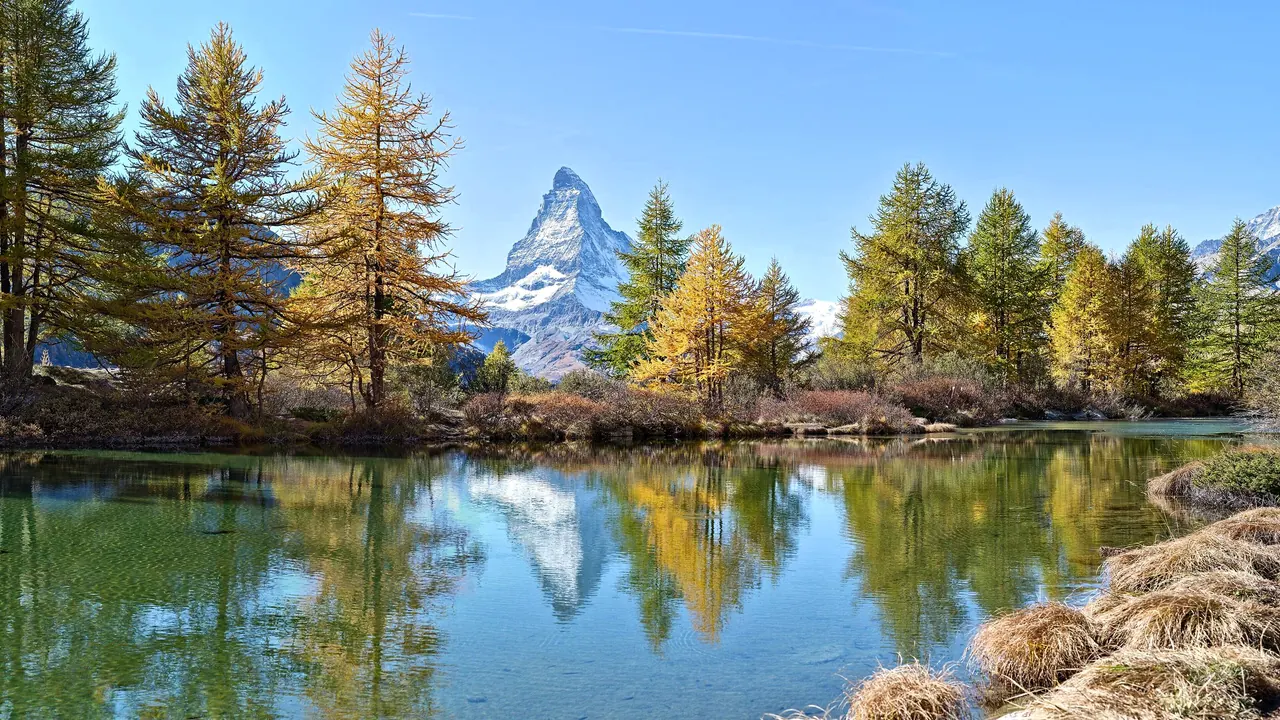
Photos: Arles by Martin Kraft, CC BY-SA 3.0, cropped; Zermatt by Roy Egloff, CC BY-SA 4.0, cropped.
Arles or Zermatt?
Our verdict in twelve categories, each scored against the same fixed benchmark cities, and the climate month by month, so you can choose for your trip.
Choose Arles for
- day trips
- culture and sights
- beaches
Arles is the better choice for a traveller who wants history, markets and a different Provençal town each day. Its Roman monuments and Romanesque cloister sit within a short walk of each other. The Camargue begins at the edge of town, and Avignon, Nîmes and Les Baux are close enough for easy outings. You also get warm sea within a drive and a far kinder bill.
Choose Zermatt for
- nature and the outdoors
- getting around
- wellness
Zermatt suits people whose whole reason for travelling is the mountains. The Matterhorn rises above a car-free village, and lifts climb to glaciers, high trails and pistes that link into Italy. Good hotel spas help tired legs afterwards. In return you pay Alpine prices and get little in the way of sights or excursions. If skiing or hiking fills the days, none of that matters much.
Scoreboard
Twelve categories on one fixed scale from 0 to 100. The shaded stretch is the gap between the two.
Your match
Pick a travel style or drag the sliders, and both match scores follow your weighting.
Wins on day trips and culture and sights with your weighting.
Wins on nature and the outdoors and getting around with your weighting.
What matters to you?
Category by category
What the scores mean for a trip.
Beaches & swimming
Neither town is on the sea, but Arles at least has the Mediterranean within a drive. The Camargue shore at Saintes-Maries-de-la-Mer is about 40km south, and the wide, wild strands of Piémanson and Beauduc beyond Salin-de-Giraud leave plenty of room even in high summer. The water there is shallow and warm, though the mistral and the mosquitoes can spoil a day.
Zermatt has no shore and no bathing lake at all. Its mountain tarns are for photographing the Matterhorn, not for swimming in, so a swim means a hotel pool.
Food & drink
Arles eats better day to day. The Saturday market along the Boulevard des Lices is a proper event, and the cooking draws on its own country: bull stew in red wine, Camargue rice, tiny clams from the delta beaches, all eaten at long lunches on the Place du Forum with local rosé.
Zermatt's best meals are up the mountain, in chalet restaurants around Findeln, Furi and Zum See where you arrive on skis or on foot. The fare is raclette, fondue and air-dried beef with good Valais whites. Cheap eating is hard to find, and both places shut many kitchens out of season.
Culture & sights
This is where the two places are furthest apart. Arles holds a UNESCO-listed group of Roman and Romanesque monuments: an arena still in use, the antique theatre, the Alyscamps that Van Gogh painted and the carved portal of Saint-Trophime. The museums add a Roman barge raised from the Rhône and the Gehry tower at Luma, and photography gives the town a modern side.
Zermatt's history is all about climbing. The Matterhorn Museum tells the story of the 1865 first ascent, the mountaineers' cemetery lies beside the church, and old larch barns stand in the Hinterdorf. It is moving, but a morning covers it.
Nightlife
Zermatt has the livelier evenings, but only in winter. Après-ski fills the slope-side bars from late afternoon, and a few bars and small clubs on the main street stay open past midnight at weekends. In summer the hikers go to bed early.
Arles is the opposite. A late dinner on a square and a drink at the café tables are about as far as most nights go. The exception is the Easter and September ferias, when bodegas take over the streets for a few days.
Nature & outdoors
Zermatt is in a different league. The Matterhorn stands over the village, and around it rise dozens of four-thousand-metre peaks and the Gorner Glacier. Lifts reach the Matterhorn Glacier Paradise, ski runs cross into Italy and summer trails lead past the Five Lakes to marmots and ibex.
Arles offers flatter, softer country. In the Camargue delta you can watch flamingos and white horses from a saddle or a bike, and the Alpilles ridges have good walking among olives and pines, best in spring and autumn.
Day trips
Arles makes an excellent base for day trips. Avignon's Papal Palace is about twenty minutes away by train and Nîmes about half an hour, and the Pont du Gard, Les Baux, Saint-Rémy and walled Aigues-Mortes are all short drives. You could fill a week without repeating yourself.
From Zermatt, every outing starts with more than an hour on the valley train. Sion with its castle hills and Brig with the Stockalper Palace are the best of it, and Saas-Fee is a bus ride away. Most visitors sensibly spend their spare days on the mountain instead.
Good for families
Zermatt is a little easier with children, mainly because the streets are car-free and everything is a short walk away. Ski schools and nursery slopes at Sunnegga fill the winter, and in summer there are marmots, lakeside paths and the fun of riding cog trains. The thin air at the highest viewpoints can be hard on small children, though.
Arles appeals more to older children who like Roman towers, dark underground galleries, pony rides and flamingos. Summer heat, mosquitoes, cobbles and the need for a car make it harder work with toddlers.
Getting around
Zermatt is the simpler place to get around. Ordinary cars are banned, so you arrive by train and then walk, with electric taxis and ski buses for the outer lift stations, and the cog railway, funicular and gondolas all start near the centre. The catch is that leaving the valley takes over an hour.
The old centre of Arles is just as walkable, with a free shuttle and a station close by. The Camargue ranches, reserves and beaches, however, really need a car or a bike, because the regional buses are infrequent.
Shopping & style
Arles is the better place to browse, though neither town is a shopping destination. The Saturday market sells olive oil, Camargue salt and linens, and the old streets have Provençal printed cottons, santons, gardian shirts and good bookshops full of photography titles.
Zermatt's single main street is mostly Swiss watches, jewellery and souvenirs. Its real strength is ski and mountaineering gear, which is worth knowing if you arrive under-equipped.
Affordability
Arles costs what a French provincial town costs. Market food, set lunches and mid-range hotels are all reasonable, and one pass covers most of the sights. Car hire and the festival weeks push the bill up.
Zermatt is expensive even by Alpine standards. Rooms, terrace meals and the lifts every visitor uses all cost far more than in most of Europe. Self-catering, supermarket picnics and sleeping down the valley in Täsch soften the blow, but only partly.
Live music & performing arts
Arles has more to offer, especially in summer. Concerts and shows fill the Roman theatre and the arena, the Les Suds festival brings world music to the squares and courtyards for a week in July, and through the warm months the arena also stages the course camarguaise, where the bull is not killed. The town theatre runs a modest season of drama and dance for the rest of the year. For anything more serious, Avignon, Nîmes and Marseille are within reach by train.
Zermatt has no theatre or concert hall, so its calendar rests on two festivals. Zermatt Unplugged brings acoustic sets to tents and mountain stages in spring, and a chamber music festival fills the village church in late summer. Outside those weeks, an après-ski band is about all there is.
Wellness & relaxation
Zermatt is better for pampering, with many fine hotel spas that have pools, saunas and mountain views, some of them open to day visitors. The quiet, car-free air adds to the rest, though the mood in peak weeks is more energetic than slow.
Arles relaxes you through its pace rather than its treatments: shaded squares, long lunches, siestas and evenings by the Rhône. A few converted farmhouses in the Camargue and the Alpilles are run as retreats with pools.
When should you go?
Pick your month. The climate figures are measured averages, not a forecast.
Arles in July
Zermatt in July
Daytime high, °C
Rainfall in the month, mm
Where the figures come from
Arles's temperatures are measured 28 km from the centre, at Nimes / Courbessac.
Arles has no rain gauge within 25 km of the centre, so its rainfall comes from a gridded climate dataset read at the city rather than from a gauge further away.
Zermatt has no weather station within reach, so its figures come from a gridded climate model rather than a measured record, and read a broad area rather than the city itself.
Temperature and rainfall are climate normals, averaged over the years shown. Arles: 1991-2020 (sunshine 1981-2010) normals, Nimes / Courbessac (28 km from centre). Zermatt: 1991-2020 normals, TerraClimate 4 km grid at the town, no weather station within 90 km.
Arles has a southern summer. From June to September the days are hot and sunny, peaking around 31°C in July and August. That suits the Camargue beaches, where the sea warms to about 22°C, but it makes the afternoons hard going for walking among the ruins. April, May and late September are the most comfortable months for sightseeing. The rain arrives in autumn, with October the wettest month at about 105mm, and winter is mild but grey.
Zermatt runs on almost the opposite calendar. From December to March the daytime highs hover around freezing, and that cold keeps the ski season going. In July and August the village reaches only about 14°C, which is good walking weather for the high trails. Rain and snow fall fairly evenly all year, heaviest in November at about 130mm, and late autumn and spring are the quietest and least rewarding times to go.
Which traveller are you?
On a culture and arts trip, Arles is the obvious pick. Its arena, antique theatre, cryptoporticus and Saint-Trophime are all a short walk apart. Avignon and Nîmes are close by train. Zermatt's heritage, by contrast, fills a single morning.
For an outdoors trip, choose Zermatt. Lifts and cog railways lift you straight onto glaciers, four-thousand-metre peaks and hundreds of kilometres of marked trails, with skiing in winter. The Camargue and the Alpilles are lovely, but they are gentler country.
On a trip on a tight budget, Arles is far easier. Market food, lunch menus and provincial hotel prices keep costs reasonable. In Zermatt, by contrast, even plain rooms, terrace drinks and the lift tickets every visitor needs cost a great deal.
Before you go
| Measure | Arles | Zermatt |
|---|---|---|
| Official language | French | French, German, Italian, Romansh |
| Currency | Euro (EUR) | Swiss Franc (CHF) |
| Sockets | CE230 V, 50 Hz | CJ230 V, 50 Hz |
| Driving side | Right | Right |
| Time zone | UTC+1, UTC+2 in summer | UTC+1, UTC+2 in summer |
| Emergency number | 112 | 112 |
| Elevation | 0 m | 1,624 m |
| Main airport | Marseille Provence Airport (MRS)54 km from centre126 non-stop destinations | Geneva International Airport (GVA)128 km from centre150 non-stop destinations |
| Public holidays this year | 11 days | 9 days |
By the numbers
| Measure | Arles | Zermatt |
|---|---|---|
| City population | 51,811 | 6,023 |
| People per km² | 68 | 25 |
| Museums within 10 km | 3 | 2 |
| UNESCO World Heritage sites within 50 km | 5 | 2 |
| Swim season, months above 21 °C | 2 months | - |
Where else could you go?
Every comparison below shares a destination with this one, so you can follow Arles or Zermatt somewhere new.
- Avignonvs Arles
- Montpelliervs Arles
- Aix-en-Provencevs Arles
- Chamonixvs Zermatt
- Marseillevs Arles
- Interlakenvs Zermatt