Photos: Armenia by Diego Delso, CC BY-SA 4.0, cropped; Azerbaijan by Rufatazizzade, CC BY-SA 4.0, cropped.
Armenia or Azerbaijan?
Our verdict in twelve categories, each scored against the same fixed benchmark cities, and the climate month by month, so you can choose for your trip.
Choose Armenia for
- day trips
- culture and sights
- nature and the outdoors
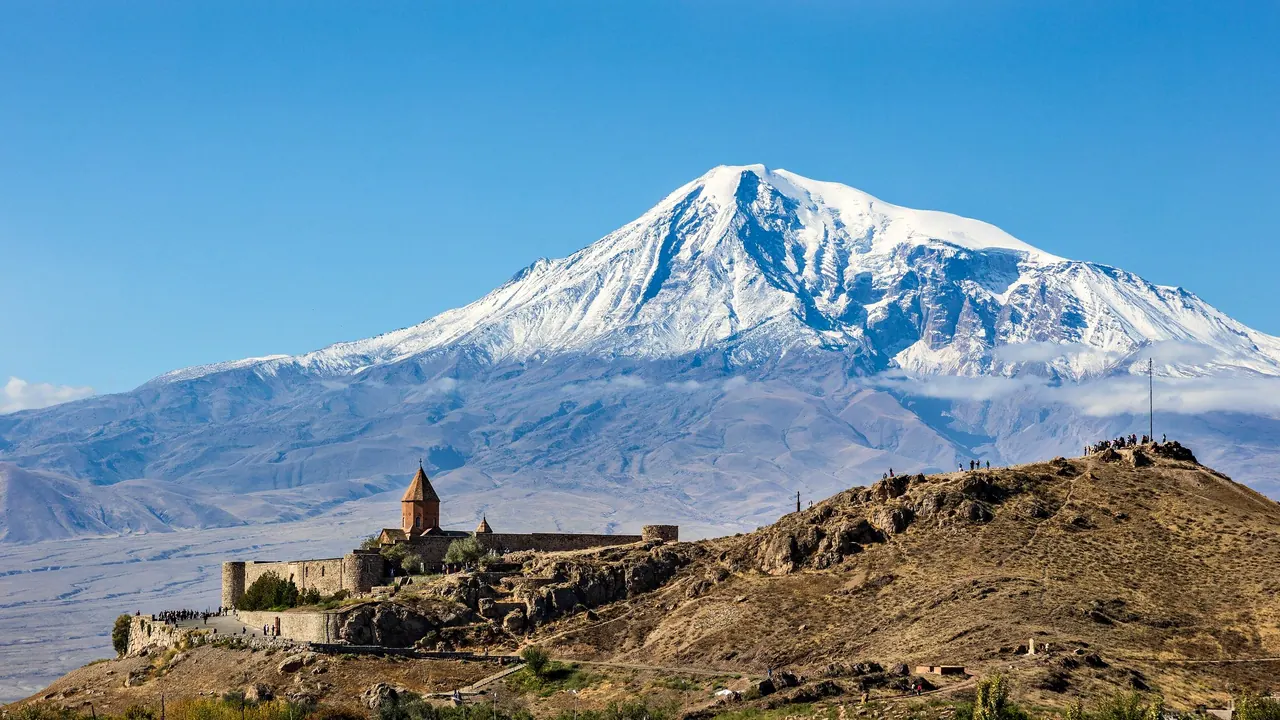
Armenia suits travellers who want a trip built around old stone and high ground. Monasteries sit in nearly every valley, from Geghard in its cliff to Tatev above the Vorotan gorge, and most of them are a short drive from Yerevan, so one base covers a lot. Add the wine cellars around Areni and walks in Dilijan's forests and you have a vacation for curious adults who don't mind hiring a driver and going without a coast.
Choose Azerbaijan for
- beaches
- shopping
- families
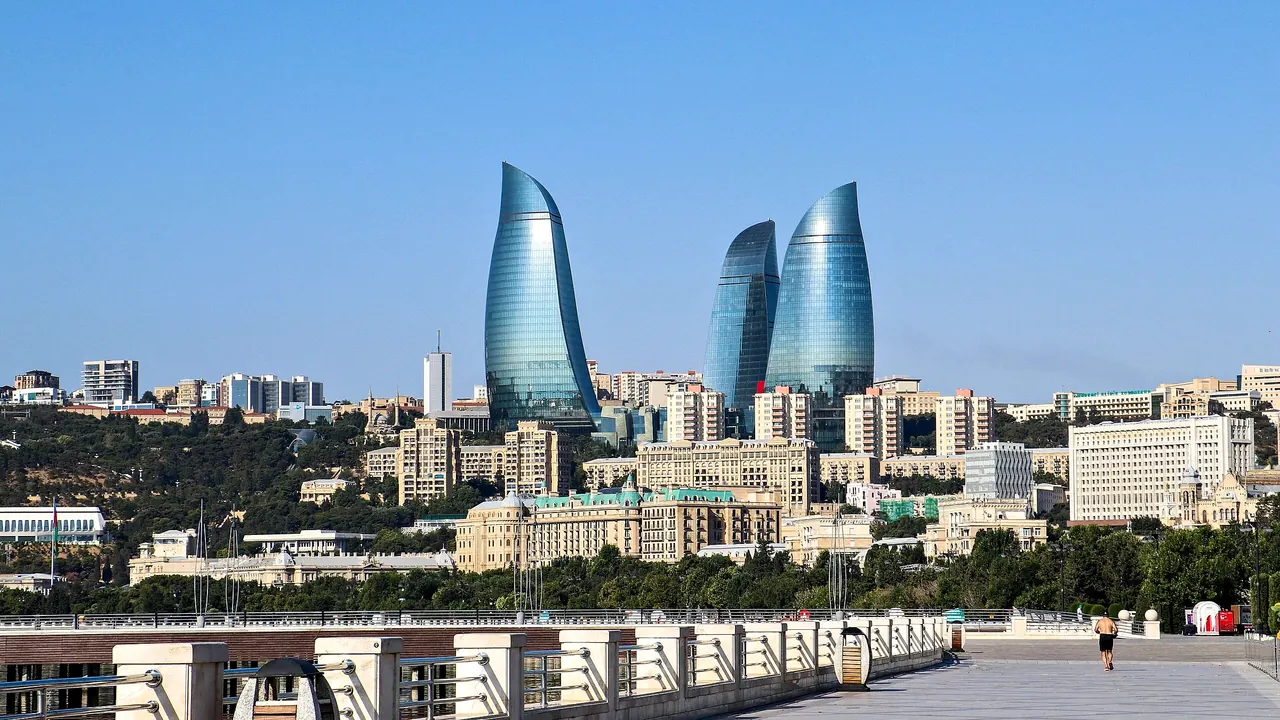
Choose Azerbaijan if you want an easier capital and a broader mix. Baku pairs a walled UNESCO old town with oil-boom facades and the Heydar Aliyev Center, and its metro and good main roads make it simpler to get around. The Caspian gives proper summer swimming, the carpet dealers and craft towns give real shopping, and the seafront boulevard keeps children busy. That makes it the better pick for families and for a summer trip that mixes sights with the beach.
Scoreboard
Twelve categories on one fixed scale from 0 to 100. The shaded stretch is the gap between the two.
Your match
Pick a travel style or drag the sliders, and both match scores follow your weighting.
Wins on day trips and culture and sights with your weighting.
Wins on beaches and shopping with your weighting.
What matters to you?
Category by category
What the scores mean for a trip.
Beaches & swimming
Azerbaijan has a real summer sea. In July and August, Baku heads for the pale sand and shallow water of the Absheron Peninsula around Bilgah and Mardakan. Oil installations and uneven water near the city take some of the shine off, so Nabran in the north, with its long beach backed by forest, is the better place to swim.
Armenia has no coast at all. Swimming means Lake Sevan, high up at 1,900m, with clear but chilly water and simple shores of loungers and grills. It makes a refreshing day out, but for warm water you'll be using a hotel pool in Yerevan.
Where in Armenia: Lake Sevan
Where in Azerbaijan: Absheron Peninsula, Nabran, Lankaran
Food & drink
The two eat equally well, and they even share dolma in vine leaves, but the meals have a different centre. Armenia's revolves around the grill and the clay oven: khorovats over vine cuttings, lavash, and plenty of herbs and cheese. Its wine is worth the journey in itself, poured in the village cellars around Areni in Vayots Dzor.
Azerbaijan leans towards Persia and Turkey, with saffron plov, griddled qutab and tea in pear-shaped glasses on every town square. It also rewards eating your way round the regions, with piti in clay pots in Sheki and walnut-stuffed lavangi in Lankaran. Here the wine is just something to order with dinner.
Where in Armenia: Yerevan, Vayots Dzor
Where in Azerbaijan: Baku, Sheki, Lankaran, Quba
Culture & sights
Armenia has the stronger heritage, and it lies across the whole landscape. Echmiadzin's mother cathedral, Noravank in its red gorge, Tatev on its ledge and the two UNESCO monasteries in the Debed canyon make the country one long run of medieval stone. In Yerevan, the Matenadaran's manuscripts and the Genocide Memorial add weight.
Azerbaijan's culture is concentrated in Baku. There you'll find the walled Old City around the Maiden Tower and the Palace of the Shirvanshahs, the oil barons' facades and the Carpet Museum. Beyond the capital come Sheki's painted palace and the Stone Age carvings at Gobustan. The range is wider, from medieval to futuristic, but there are fewer major sites.
Where in Armenia: Yerevan, Debed Canyon, Syunik (Tatev), Gyumri
Where in Azerbaijan: Baku, Sheki, Gobustan, Shamakhi
Nightlife
Nightlife is about the same in both, and in both it means the capital alone. The difference is in tone. Yerevan's summer evenings are relaxed and outdoors: crowds on Northern Avenue and around the Cascade, late terraces and wine bars. Baku dresses up more, with hookah lounges off Fountain Square and rooftop bars along the seafront, and the boulevard stays busy late.
Where in Armenia: Yerevan
Where in Azerbaijan: Baku
Nature & outdoors
Both are mountain countries with patchy trail marking, and in both you often walk with a guide. Armenia's highlights are a summit you can reach and a variety of landscapes. Mount Aragats can be climbed in summer without technical gear, Dilijan is green beech forest, and Syunik is red cliffs and deep gorges.
Azerbaijan's Greater Caucasus feels more remote, with the stone village of Khinalug above 2,000m and the waterfalls at Laza. Near Baku you'll find mud volcanoes and the burning hillside of Yanar Dag, an odder kind of scenery.
Where in Armenia: Dilijan National Park, Syunik, Mount Aragats, Lake Sevan
Where in Azerbaijan: Greater Caucasus (Quba and Qusar), Sheki and Ilisu, Gobustan mud volcanoes, Talysh Mountains
Day trips
Armenia is the easier country to explore from one base. From Yerevan, Echmiadzin is about half an hour away, Khor Virap looks across to Ararat, and Sevan, Dilijan and the Areni wine villages are all a day out and back. Gyumri's black-stone streets are about two hours away by train.
Azerbaijan has a good loop from Baku through the Absheron towers and fire temple, Gobustan's rock art and Shamakhi's mosque. The north-west needs a second base in Sheki, about five hours away, and many of the outings are single sights rather than places to spend the day.
Where in Armenia: Yerevan, Echmiadzin, Gyumri, Vayots Dzor (Areni)
Where in Azerbaijan: Baku (Absheron, Gobustan, Shamakhi), Sheki (Kish, Ilisu), Lahij, Quba
Good for families
Azerbaijan is the easier choice with children. Baku's seafront boulevard has playgrounds, rides and a small amusement park, and the funicular up to the hilltop park is a hit with younger children. In summer the Caspian beaches are shallow, and in winter there are family ski slopes at Gabala and Shahdag.
Armenia welcomes children just as warmly, and Yerevan's fountains, Cascade steps and parks are easy to visit. Beyond that, the country is built around monasteries and wine. Summer heat in the capital and long mountain drives wear out small children, though older ones tend to love the Tatev cable car.
Where in Armenia: Yerevan, Lake Sevan, Dilijan
Where in Azerbaijan: Baku, Gabala, Shahdag
Getting around
Azerbaijan is a little easier to get around. Baku has a straightforward metro, the main roads out of the capital are good, and trains run to Ganja. Buses and minibuses reach Sheki, though there is little information in English.
Armenia has a walkable centre in Yerevan with a single metro line, and rail goes little further than Gyumri. Minibuses rarely reach the monasteries at the ends of side roads, and the slow mountain roads make the south most of a day's drive. In practice, most visitors take tours or hire a driver.
Where in Armenia: Yerevan, Gyumri
Where in Azerbaijan: Baku, Sheki, Ganja
Shopping & style
Azerbaijan offers more to buy. The carpet dealers in Baku's Old City are the main event, with silk kelaghayi scarves in Sheki and hammered copper in Lahij on top. The capital also has big malls, international fashion along the seafront and the Taza Bazaar for saffron and spices.
Armenia's shopping comes down to Yerevan's weekend Vernissage: carpets, carved wood, obsidian jewellery and Soviet relics. Brandy and dried fruit are the classic things to take home. There is no luxury street to browse.
Where in Armenia: Yerevan
Where in Azerbaijan: Baku, Sheki, Lahij
Affordability
Both are cheap to travel in, and in both the capital is the most expensive part. In Armenia, most monasteries charge nothing to enter, and Vayots Dzor guesthouses include home-cooked dinners with wine from the cellar door, though central Yerevan comes closer to Southern European prices. In Azerbaijan, guesthouses in Sheki and Quba are very good value, but Baku's international hotels and imported alcohol add up quickly.
Where in Armenia: Gyumri, Vayots Dzor, Dilijan
Where in Azerbaijan: Sheki, Quba, Baku
Live music & performing arts
Yerevan's music leans on the classical stage and on folk. Tamanyan's circular Opera and Ballet Theatre builds its repertoire around Khachaturian, and the duduk is easy to hear in restaurants and at festivals.
Baku's signature is mugham, the improvised classical music of voice, tar and kamancha, heard at the International Mugham Centre on the seafront. Each capital also has its own jazz tradition, and away from the capitals, live performance in either country is occasional.
Where in Armenia: Yerevan
Where in Azerbaijan: Baku, Gabala
Wellness & relaxation
Armenia's spa town is Jermuk, in the southern mountains: hot mineral springs, drinking galleries and a waterfall in the gorge. Dilijan's pine forest offers a gentler, greener version of the same old health-resort stay.
Azerbaijan's best-known cure could hardly be more different. At Naftalan near Ganja you bathe in heavy medicinal crude oil, which is more clinical than soothing. Baku does have something Yerevan lacks, a few old bathhouses around the Old City that keep a modest hammam tradition going.
Where in Armenia: Jermuk, Dilijan, Arzni
Where in Azerbaijan: Naftalan, Gabala, Baku, Masalli
When should you go?
Pick your month, and for a country the place in it. The climate figures are measured averages, not a forecast.
Yerevan (Armenia) in July
Baku (Azerbaijan) in July
Daytime high, °C
Rainfall in the month, mm
Temperature and rainfall are climate normals, averaged over the years shown. Yerevan (Armenia): 1991-2020 normals, Yerevan (6.7 km from centre). Baku (Azerbaijan): 1991-2020 (rainfall 1981-2010) normals, Mashtaga (23.2 km from centre).
The two capitals follow a similar year, but Yerevan's swings are harsher. It reaches about 33°C in July and August, which is too hot for long days on foot on the Ararat plain, and winters are cold, with January highs around 1°C. The best months are May and June, then September and October. Spring brings the most rain, but summer is very dry and very sunny. In high summer the cooler hills around Dilijan and Sevan make a welcome break.
Baku's summers are a little milder and its winters softer, thanks to the Caspian. The sea is warm enough for swimming only in July and August, at about 25°C to 26°C, and it stays pleasant into September. Late spring and early autumn are the best times for walking the Old City. Summer is almost rainless, and the wetter months, November in particular at around 37mm, are better spent indoors in museums and teahouses.
Which traveller are you?
For a beach and sun trip, Armenia offers only cool, high Lake Sevan, so Azerbaijan is the clear pick. The Caspian warms enough for proper swimming in July and August, with sandy shores on the Absheron Peninsula and at Nabran.
More comparisons
Each shares a side with Armenia or Azerbaijan.
Where else could you go?
Set Armenia or Azerbaijan against any other country.