Azerbaijan
Baku
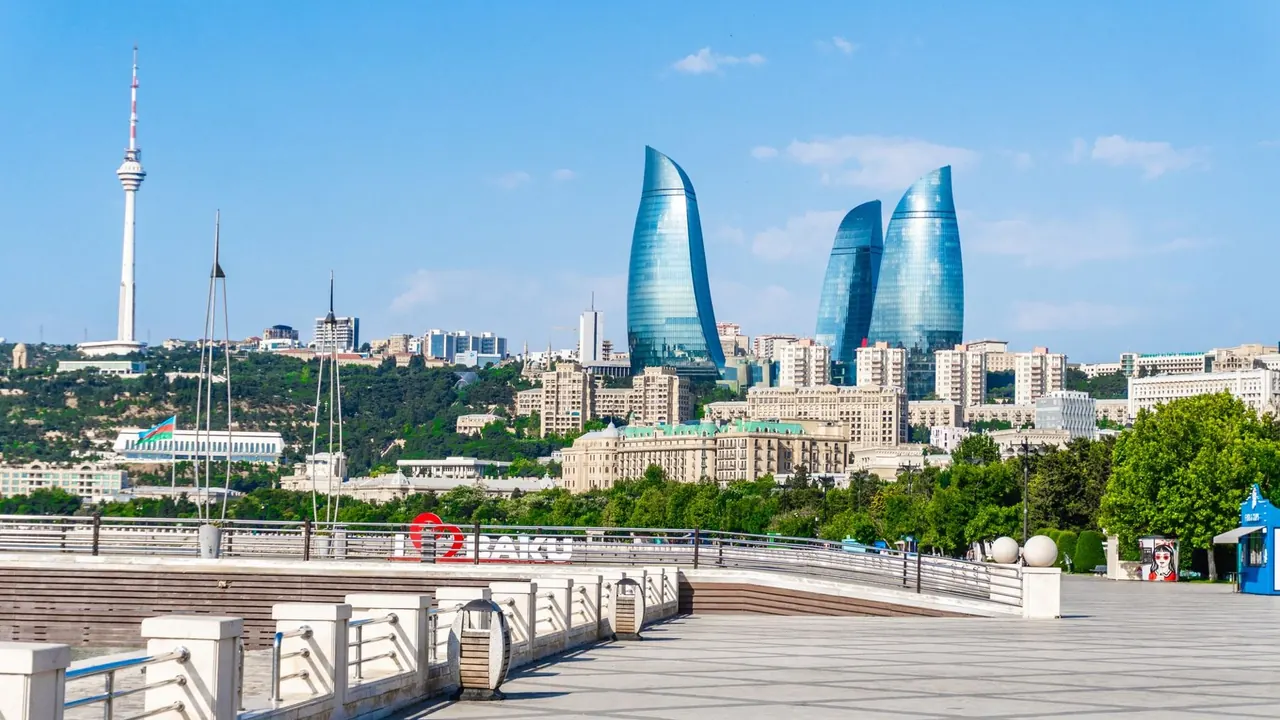
The Flame Towers from the seafront
- Affordable cities64
- Culture & sights62
- Food & drink60
Photo: Zulfugar Karimov, Pexels License
Match
48
Every category weighted equally
- Beach & sun46
- Culture & arts52
- Food & nightlife51
- Family trip48
- Outdoors46
- Relax & unwind45
- Shopping & style50
- On a budget50
Baku in twelve categories
Our verdict on each, scored 0 to 100 against the same fixed benchmark cities, so a score means the same thing on every page.
Beaches & swimming. Scores 40 out of 100.
Food & drink. Scores 60 out of 100.
Culture & sights. Scores 62 out of 100.
Nightlife. Scores 42 out of 100.
Nature & outdoors. Scores 30 out of 100.
Day trips. Scores 45 out of 100.
Good for families. Scores 45 out of 100.
Getting around. Scores 58 out of 100.
Shopping & style. Scores 48 out of 100.
Affordability. Scores 64 out of 100.
Live music & performing arts. Scores 52 out of 100.
Wellness & relaxation. Scores 30 out of 100.
Baku category by category
Beaches & swimming
40Baku is on the Caspian, but its own waterfront is a promenade, not a beach. Swimming happens on the north shore of the Absheron peninsula, at Bilgah, Novkhani, Mardakan and Pirshagi, roughly 30 to 50 minutes away by taxi. There the sea warms to about 24-26°C in July and August, and locals pack the resort strips and beach clubs on summer weekends.
The beaches are long and sandy but flat and plain, and some stretches are spoiled by litter or the old oil industry along the coast. The water is shallow and often cloudy rather than clear. Treat a swim as a pleasant summer half-day out, not the reason to come.
Food & drink
60Azerbaijani cooking is the reason to eat here. Expect saffron plov in many regional versions, lamb and sturgeon kebabs cooked over coals, thin qutab pancakes filled with herbs or meat, dushbara dumplings in broth, and dolma wrapped in vine or cabbage leaves. Tables come loaded with fresh herbs, sour plum sauces and pickles, and meals end with strong black tea from pear-shaped glasses, served with jam and sweets such as pakhlava and shakarbura.
The Taza Bazaar shows the produce at its best: pomegranates, cheeses, caviar and great piles of herbs. Tea houses and courtyard restaurants in and around the Old City carry the tradition. Azerbaijan makes its own wine, mostly sturdy reds from the Madrasa grape grown in the Shamakhi hills, and a brandy that is a fixture of long dinners. Outside the national cuisine and its Caucasian and Persian relatives, the choice gets thin quickly.
Culture & sights
62Baku's past is concentrated in Icherisheher, the walled Old City and a UNESCO site, where stone lanes wind between caravanserais, small mosques and old bathhouses. At its heart are the Maiden Tower, a puzzling cylindrical fortress above the sea, and the 15th-century Palace of the Shirvanshahs with its mausoleum and courtyard. Just outside the walls, the oil barons of the early 1900s left whole streets of honey-coloured sandstone mansions, with carved balconies, ornate cornices and grand facades in a mix of European revival styles that gives the centre a stately, well-dressed look.
Modern Baku is a sight in its own right: the flowing white curves of the Heydar Aliyev Center, the three Flame Towers that light up the skyline at night, and the Carpet Museum, built in the shape of a rolled carpet and holding the best collection of the city's museums. You can see the main sights in two or three days.
Nightlife
42Evenings in Baku start with a long walk along the seafront Boulevard and the streets around Fountain Square and Nizami Street, which stay busy late on summer nights. The bars are mostly pubs, wine bars and hotel rooftops in the centre, with a handful of lounges and clubs that draw a well-dressed local crowd at weekends.
It makes for a pleasant night out, but there is no underground or alternative scene to speak of. Drinks in the smarter venues cost more than you might expect, and nobody plans a trip around going out here.
Nature & outdoors
30The land around Baku is dry, flat and bare, a semi-desert peninsula dotted with oil derricks and salt lakes. What it does offer is strange: the bubbling mud volcanoes south of the city, the Yanar Dag hillside where natural gas has burned for a very long time, and the rocky, windswept plateau of Gobustan. Inside the city, the seafront Boulevard is the main green space, a long promenade for walking and cycling by the water.
For mountains, forests and proper hiking you need the Greater Caucasus around Quba and Shahdag, about three hours north. That is better as an overnight trip than a day out. Summers are hot and the city is known for strong winds all year.
Day trips
45The best day out is Gobustan, about an hour south of the city. It is a UNESCO site with thousands of Stone Age carvings of hunters, boats and animals on scattered boulders, and it is usually combined with the mud volcanoes nearby. On the Absheron peninsula itself, the Ateshgah fire temple at Surakhani, once used by Zoroastrian and Hindu worshippers, and the medieval watchtowers of Mardakan and Ramana make easy half-days.
Shamakhi, about two hours west, has the old Juma Mosque, the Diri Baba mausoleum built into a cliff and vineyards in the hills around it. Beyond that the list ends: Quba and the silk town of Sheki need an overnight stay.
Good for families
45Children are made very welcome in Baku, and families fill the seafront Boulevard on summer evenings. It has playgrounds, a small amusement park, boat rides, fountains and space for scooters. The funicular up to Highland Park and its view over the bay is a hit with children, and the Old City's walls and towers have a fairytale feel.
Beyond that there is little made for children. There are a few indoor play centres in the big malls but no major zoo, aquarium or theme park. Summers are hot, drivers rarely give way to pedestrians and underpasses with stairs make pushchairs awkward, so it works best for a short stay with older children.
Getting around
58Most of what a visitor wants is in a compact area: the Old City, Fountain Square, Nizami Street and the seafront Boulevard are all comfortable to walk between. The Soviet-built metro has deep, ornate stations and is easy to use with one rechargeable card, but its few lines serve residential districts more than tourist sights. City buses use the same card.
For anything further out, such as the Heydar Aliyev Center or the airport, app-based taxis are cheap and are what most visitors use. Gobustan, the fire temple and the beaches really need a taxi, driver or tour. Traffic is heavy at peak hours, and pedestrians often have to cross busy roads through underpasses.
Shopping & style
48Carpets are the main thing to buy. Dealers in the Old City sell handwoven pieces from the Caucasus, Quba and Karabakh in every size and age, along with kelims, silk kelaghayi headscarves, copperware from Lahij and pear-shaped tea glasses. Ask for a certificate if you buy an older carpet, since exporting them is regulated.
For fashion, Nizami Street and the area around Fountain Square have the main high-street chains, and a few luxury boutiques sit along Neftchilar Avenue. Large malls cover the rest. The Taza Bazaar is the place for saffron, dried fruit, sweets and tea. Beyond carpets and crafts, there is little you couldn't find at home.
Affordability
64Baku is cheap in some ways and surprisingly expensive in others. The metro and buses cost very little, app taxis are cheap even across the city, and a meal of plov, kebab and tea in a local canteen or tea house is very good value. Museum and Old City entry fees are modest.
Costs go up in the hotels, restaurants and bars aimed at business travellers and well-off locals. International-standard hotels and smart seafront restaurants can charge close to Western European prices, and imported drinks are expensive. Simple guesthouses in and around the Old City keep a budget trip manageable.
Live music & performing arts
52Baku has a living musical tradition of its own in mugham, a classical style of improvised song and instrumental music played on the tar and kamancha, recognised by UNESCO. The International Mugham Centre on the seafront and some Old City restaurants put it on regularly. The city also takes its classical music seriously: the State Opera and Ballet Theatre stages Azerbaijani operas alongside the European repertoire, and the Philharmonic hall is an ornate building from the oil-boom era.
There is also a long jazz tradition, which blends with mugham, and an annual jazz festival. English-language theatre is almost absent, and performance seasons can be thin in summer.
Wellness & relaxation
30Baku's old bathhouse tradition shows mainly in the restored medieval baths of the Old City, which you visit as monuments. A few traditional bathhouses still work, and the large international hotels have proper spas and pools. Azerbaijan's famous spa resorts, such as the crude-oil baths of Naftalan, are many hours away.
The calmest parts of a stay are slow evenings on the seafront Boulevard and long sessions over tea and jam in an Old City tea house. Otherwise the busy roads and strong winds make Baku a place for sightseeing rather than rest.
When should you go?
Pick a month to see what it is like. The climate figures are measured averages, not a forecast.
Baku in July
Daytime high, °C
Rainfall in the month, mm
The whole year
Shaded against this city’s own year: the deepest cell is its best month for that figure and the palest its weakest.
Temperature and rainfall are climate normals, averaged over the years shown. Baku: 1991-2020 normals, Mashtaga (23.2 km from centre).
Before you go
| Measure | Baku |
|---|---|
| Official language | Azerbaijani, Azerbaijani Sign Language |
| Currency | Azerbaijan Manat (AZN) |
| Sockets | CF220 V, 50 Hz |
| Driving side | Right |
| Time zone | UTC+4 |
| Emergency number | 102 or 112 |
| Elevation | -28 m |
| Main airport | Heydar Aliyev International Airport (GYD)22 km from centre79 non-stop destinations |
By the numbers
| Measure | Baku |
|---|---|
| City population | 2,300,500 |
| People per km² | 1,075 |
| Museums within 10 km | 50 |
| UNESCO World Heritage sites within 50 km | 2 |
| Swim season, months above 21 °C | 4 months |
Compare Baku with
Every comparison with a written verdict behind it.