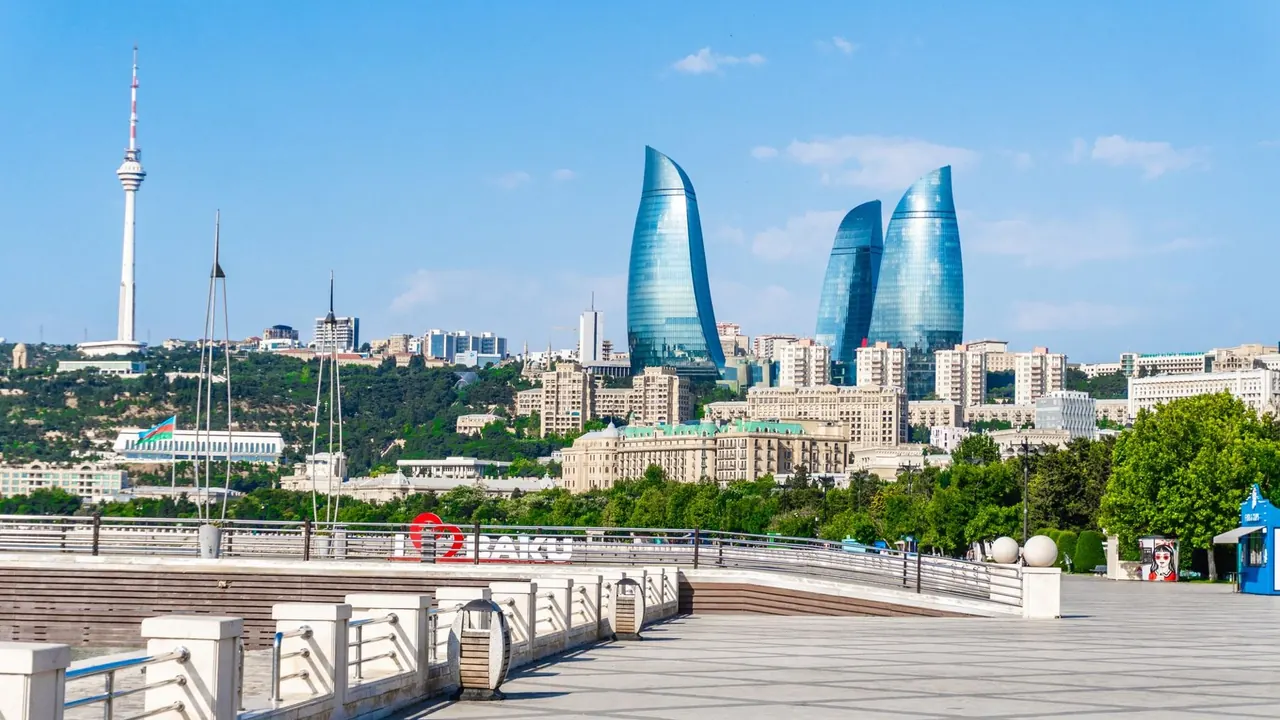
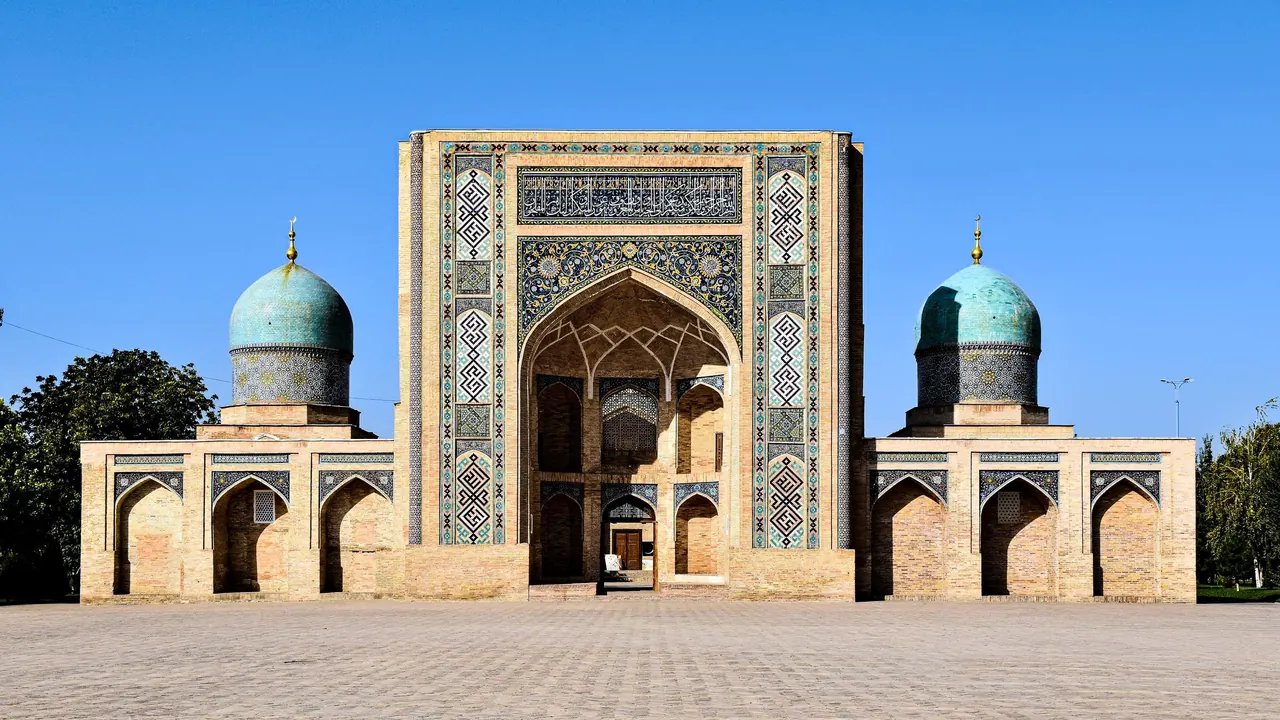
Photos: Baku by Zulfugar Karimov, Pexels License; Tashkent by AXP Photography, Pexels License.
Baku or Tashkent?
Our verdict in twelve categories, each scored against the same fixed benchmark cities, and the climate month by month, so you can choose for your trip.
Choose Baku for
- beaches
- nightlife
- culture and sights
Baku suits travellers who want a city by the water. By day you have the walled Old City and the oil-boom mansions to explore. By night there is a long seafront walk and a wider choice of bars, and in high summer there are sandy Caspian beaches within reach. It is the stronger choice for a short stay built around sightseeing and evenings out.
Choose Tashkent for
- nature and the outdoors
- prices
- day trips
Choose Tashkent if your money needs to go further and you would rather look at mountains than the sea. Daily costs are lower, and the Tian Shan rises close by for hiking in summer or skiing in winter. The fast train also puts Samarkand within a day's reach, which makes the city a natural base for a wider trip through Uzbekistan.
Scoreboard
Twelve categories on one fixed scale from 0 to 100. The shaded stretch is the gap between the two.
Your match
Pick a travel style or drag the sliders, and both match scores follow your weighting.
Too close to call, level with your weighting
Wins on beaches and nightlife with your weighting.
Wins on nature and the outdoors and prices with your weighting.
What matters to you?
Category by category
What the scores mean for a trip.
Beaches & swimming
Baku at least has a sea to swim in. The north shore of the Absheron peninsula, from Bilgah to Pirshagi, has long sandy beaches and summer water warm enough for a comfortable swim. The shore is flat, though, sometimes littered, and the water is rarely clear.
Tashkent has no coast at all. Swimming means hotel pools, water parks or the drive of about 80km to the Charvak reservoir. Its pebbly shores and cool, clear mountain water are a good escape from the heat, but they are a day out rather than a beach vacation.
Food & drink
Both cuisines are built on plov and grilled meat, and both are very good within a narrow range. Baku's table is the more varied, with saffron plov, sturgeon kebabs, herb-filled qutab and sour plum sauces. It also has local Madrasa reds and brandy, and the Taza Bazaar for caviar and pomegranates.
Tashkent's eating is heavier and more of a daily ritual: midday plov from giant cauldrons, tandir samsa, lagman and non bread, with Chorsu Bazaar as the showpiece. Wine drinkers will find more in Baku, and vegetarians will struggle more in Tashkent.
Culture & sights
Baku has more of its history standing in one place. The walled Icherisheher, with the Maiden Tower and the Palace of the Shirvanshahs, sits beside streets of sandstone mansions from the oil boom. The Heydar Aliyev Center and the Flame Towers add a striking modern layer.
Tashkent lost much of its old fabric in the 1966 earthquake, so its heritage survives in pockets among the Soviet avenues, such as the Hazrat Imam complex and the Kukeldash Madrasa. The Museum of Applied Arts and the ornate metro are worth seeing, but the great Silk Road monuments are in Samarkand, not here.
Nightlife
Neither is a party city, but Baku offers more for an evening out. The seafront Boulevard, Fountain Square and Nizami Street stay busy late in summer. There are wine bars, hotel rooftops and a few clubs for a well-dressed weekend crowd.
Tashkent's nights are more about company than staying out late: beer gardens, karaoke and long dinners with friends around Amir Timur Square. Most places close around midnight.
Nature & outdoors
Here Tashkent pulls well ahead. Within about an hour and a half by road, the western Tian Shan rises to Big Chimgan above the Charvak reservoir. Summer brings ridge hikes, walnut valleys and paragliding, and winter brings skiing at Chimgan and Amirsoy.
Baku's surroundings are bare semi-desert, more strange than beautiful: mud volcanoes, the burning hillside of Yanar Dag and the Gobustan plateau. For real mountains and forest you need to go to Quba or Shahdag, three hours away, and stay the night.
Day trips
Tashkent has the one great day trip: Samarkand, with the Registan and the Shah-i-Zinda necropolis, just over two hours away by high-speed train. Beyond that, the outings lead to the mountains and the reservoir rather than to other towns.
Baku has more short trips but none on that scale. The Gobustan rock carvings with the nearby mud volcanoes, the Ateshgah fire temple and the Mardakan towers make good half-days, and Shamakhi works as a full day. None of them compares with a day among Timur's monuments.
Good for families
Both cities welcome children warmly, and both are hardest on families in the summer heat. In Baku the fun is concentrated on the seafront Boulevard, with fountains, boat rides, a small amusement park and the funicular up to Highland Park. There is no major zoo or theme park, though, and the underpasses are awkward with a pushchair.
Tashkent has more made for children, including a large zoo, amusement parks and water parks. On the other hand, its sights are spread along wide avenues and its summer days are much hotter.
Getting around
Getting around is about equally easy, but in different ways. Baku's sights cluster in a walkable centre around the Old City, Fountain Square and the Boulevard, while its metro mostly serves residential districts.
Tashkent is built on a Soviet scale, so walking is slow and tiring, but its metro is more useful to visitors, with stations close to the old town and the main squares. In both cities, cheap app taxis cover the rest.
Shopping & style
Each city has its own crafts to come for. In Baku it is carpets, sold by Old City dealers alongside silk kelaghayi headscarves and copperware from Lahij. Neftchilar Avenue adds a few luxury boutiques to the high-street chains.
In Tashkent the bazaars are the draw, with suzani, ikat silk and Rishtan ceramics around Chorsu, though much of it is cheaper in the towns where it is made. Modern shopping there is mostly malls, with almost no luxury retail.
Affordability
Baku runs at two price levels. Riding the metro, crossing town by app taxi, eating plov and kebab in a tea house and walking the Old City all cost little. The other Baku, aimed at business travellers and well-off locals along the seafront, charges close to Western European prices, and how much of your time you spend there decides the cost of the trip.
Tashkent is cheap more consistently. Almost everything a visitor pays for is inexpensive, and the one clear exception is the international business hotels. Mid-range hotels as well as simple guesthouses keep a stay cheap by any international standard, so the total depends far less on where you choose to stay and eat.
Live music & performing arts
The two are closely matched, and each has a grand opera and ballet house at its centre. Baku's own sound is mugham, heard at the International Mugham Centre and in Old City restaurants, along with a long jazz tradition. Its summer programme can be thin.
In Tashkent, an evening at the Alisher Navoi Theatre, with halls decorated in the styles of Uzbekistan's regions, is the one to book, and tickets are easy to get. The city also has drama in Russian and Uzbek, but jazz and rock are limited to a few small venues.
Wellness & relaxation
Neither city is a place for a restful break. Baku's historic baths are mostly visited as monuments. Its calm moments come on the Boulevard and in Old City tea houses, while the wind and traffic make it hard to linger.
Tashkent is a little gentler, with tea-house platforms in the shade and quiet walks in the Botanical Garden. For a proper retreat, the mountain sanatoria around Chimgan are within easy reach.
When should you go?
Pick your month. The climate figures are measured averages, not a forecast.
Baku in July
Tashkent in July
Daytime high, °C
Rainfall in the month, mm
Temperature and rainfall are climate normals, averaged over the years shown. Baku: 1991-2020 (rainfall 1981-2010) normals, Mashtaga (23.2 km from centre). Tashkent: 1991-2020 normals, Tashkent (5.1 km from centre).
Baku has the gentler summer. Highs reach about 30°C in July and August, rain almost disappears and the Caspian warms to around 26°C, so July to early September is the time for the Absheron beaches. May, June and late September are the most comfortable months for walking the Old City. Autumn brings what little rain Baku gets, peaking at about 37mm in November, and winter days are cool and windy.
Tashkent has a harsher climate. Midsummer highs of about 36°C under almost constant sun make sightseeing on foot hard work. Winter and early spring are the wet season, with February the wettest at around 73mm, and March and April are nearly as damp. April still has pleasant warmth and green, tulip-covered foothills, as long as you pack for showers. May and September into October are both warm and dry, and these are its best months. Of the two, Baku is the summer choice and Tashkent the one for late spring and early autumn.
Which traveller are you?
On a beach and sun trip, Baku is the only real option. Its Caspian beaches at Bilgah and Mardakan are a taxi ride away and warm in summer. Tashkent has no sea, only pools, water parks and a mountain reservoir.
For an outdoors trip, Tashkent wins clearly. The Chimgan range and Ugam-Chatkal National Park are close enough for hiking, riding or winter skiing. Around Baku there is semi-desert with mud volcanoes, and the Caucasus is three hours away.
On a tight budget, Tashkent makes your money go further. Bazaar plov, bread, tea, metro rides and even opera tickets cost little, and simple guesthouses are cheap. Baku can be done cheaply too, but smarter hotels and imported drinks push costs up quickly.
Before you go
| Measure | Baku | Tashkent |
|---|---|---|
| Official language | Azerbaijani, Azerbaijani Sign Language | Uzbek |
| Currency | Azerbaijan Manat (AZN) | Uzbekistan Sum (UZS) |
| Sockets | CF220 V, 50 Hz | CFI220 V, 50 Hz |
| Driving side | Right | Right |
| Time zone | UTC+4 | UTC+5 |
| Emergency number | 102 or 112 | 112 |
| Elevation | -28 m | 455 m |
| Main airport | Heydar Aliyev International Airport (GYD)22 km from centre79 non-stop destinations | Tashkent International Airport (TAS)6 km from centre112 non-stop destinations |
By the numbers
| Measure | Baku | Tashkent |
|---|---|---|
| City population | 2,300,500 | 2,956,384 |
| People per km² | 1,075 | 8,830 |
| Museums within 10 km | 50 | 27 |
| UNESCO World Heritage sites within 50 km | 2 | 1 |
| Swim season, months above 21 °C | 4 months | - |
Where else could you go?
Every comparison below shares a destination with this one, so you can follow Baku or Tashkent somewhere new.