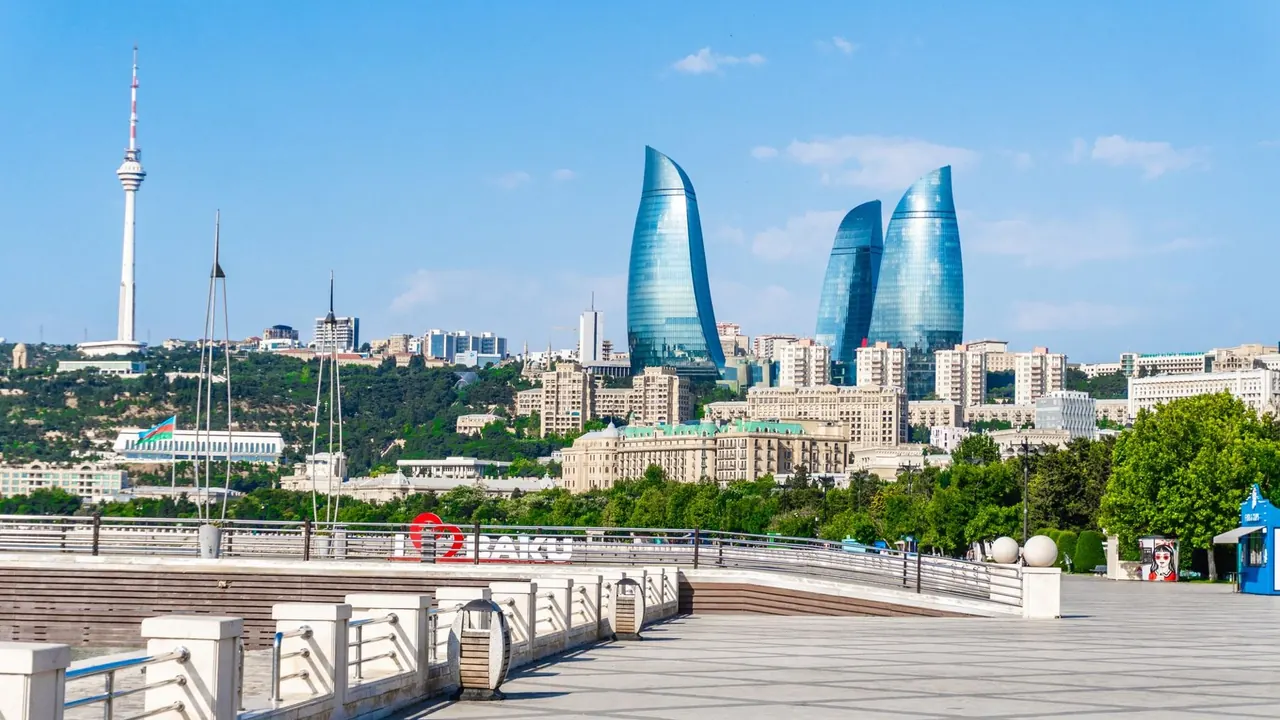
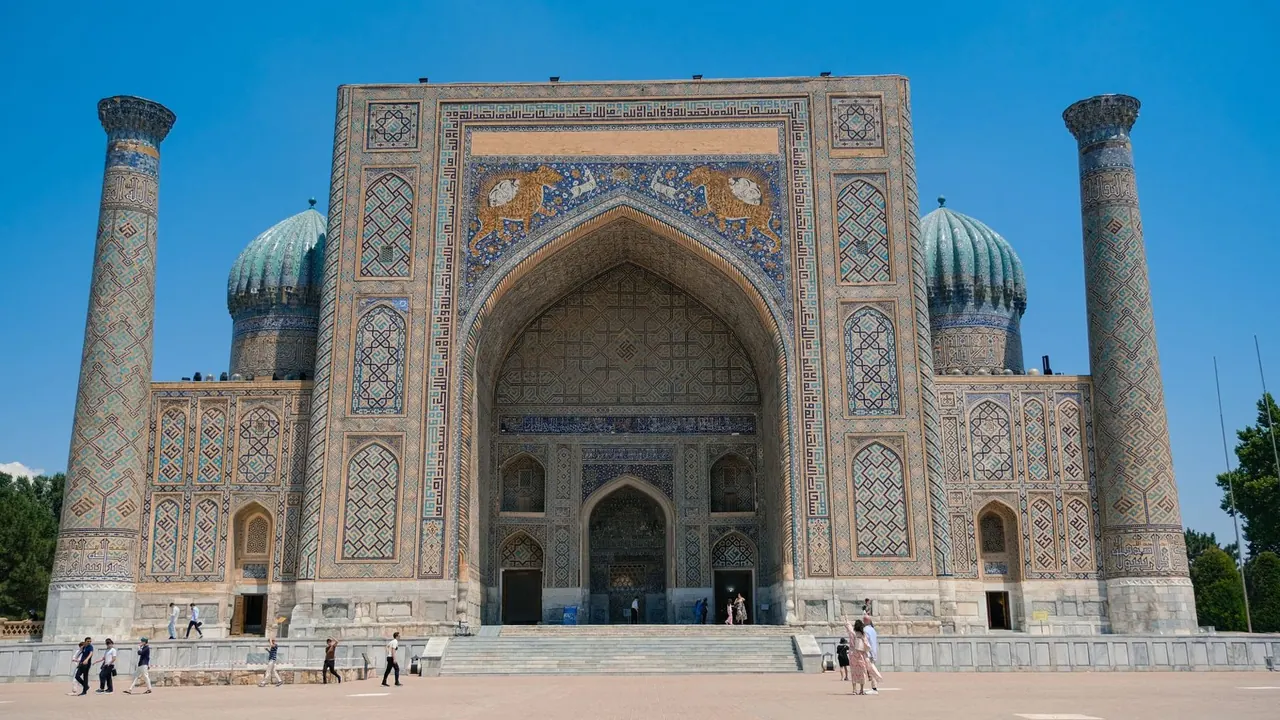
Photos: Baku by Zulfugar Karimov, Pexels License; Samarkand by Yaşar Başkurt, Pexels License.
Baku or Samarkand?
Our verdict in twelve categories, each scored against the same fixed benchmark cities, and the climate month by month, so you can choose for your trip.
Choose Baku for
- beaches
- nightlife
- live music and the arts
Baku suits travellers who want a city with a sea attached and some life after dark. In summer the Caspian beaches are within reach, evenings on the Boulevard lead on to wine bars and rooftops, and mugham and opera fill the nights. Its tables are generous, and its sights mix medieval walls with oil-boom mansions and bold modern landmarks. It is also the easier of the two with children.
Choose Samarkand for
- day trips
- culture and sights
- prices
If the buildings are the point of the trip, Samarkand is the one to pick. The Registan, Shah-i-Zinda and Gur-e-Amir outclass anything in Baku's Old City, Bukhara is a short train ride away, and money goes further almost everywhere. Expect quiet evenings and no sea. In summer you will do your sightseeing in the early morning and late afternoon.
Scoreboard
Twelve categories on one fixed scale from 0 to 100. The shaded stretch is the gap between the two.
Your match
Pick a travel style or drag the sliders, and both match scores follow your weighting.
Wins on beaches and nightlife with your weighting.
Wins on day trips and culture and sights with your weighting.
What matters to you?
Category by category
What the scores mean for a trip.
Beaches & swimming
Baku at least offers swimming. The sandy north shore of the Absheron peninsula, at Bilgah, Mardakan or Novkhani, is under an hour away by taxi, and the Caspian is warm in July and August. The beaches are plain and the water is often cloudy, so it makes a half-day out rather than a beach vacation.
Samarkand has nothing comparable, deep inside a doubly landlocked country. A hotel pool is the only realistic swim.
Food & drink
The two kitchens are related: both are built on plov, kebabs grilled over coals and long sessions over tea. Baku has the wider range, with saffron plov in many regional versions, sturgeon as well as lamb, qutab and dushbara, tables piled with herbs, the produce of Taza Bazaar, and Shamakhi reds with brandy afterwards.
Samarkand's cooking is narrower but has its own specialities: the layered plov served at lunchtime and the glazed Samarkand non stacked high at Siab Bazaar. Menus soon start to repeat, and wine is something to try rather than part of every meal.
Culture & sights
Samarkand has the stronger sights. The three tiled madrasas of the Registan, the hillside avenue of mausoleums at Shah-i-Zinda and the gilded interior of Gur-e-Amir are among the finest Islamic buildings anywhere, and Ulugh Beg's observatory and the Afrasiyab murals add more history.
Baku's Icherisheher, with the Maiden Tower and the Palace of the Shirvanshahs, is smaller and less spectacular. In return, Baku has what Samarkand lacks: streets of oil-boom sandstone mansions, the Carpet Museum and the white curves of the Heydar Aliyev Center. Baku needs two or three days, Samarkand three or four.
Nightlife
Baku has a real night out. Summer evenings on the Boulevard and around Fountain Square stay busy late, with pubs, wine bars, hotel rooftops and a few weekend clubs to follow. It is smart rather than adventurous.
In Samarkand the evening is a long dinner, often near a loud wedding band, then a walk past the illuminated Registan. The streets are quiet well before midnight.
Nature & outdoors
Samarkand is the better base for the outdoors. About an hour away, the Aman-Kutan valley and the hills above Urgut have juniper woods, walnut groves and trails through the villages. The Nuratau mountains suit longer homestay treks. Spring and autumn are the times to go.
Baku's surroundings are flat semi-desert, more strange than green, with mud volcanoes, the burning hillside of Yanar Dag and the Gobustan plateau. For real mountains you need an overnight trip to Quba or Shahdag.
Day trips
Samarkand has more good day trips. Bukhara makes a long day out by high-speed train, Shakhrisabz and the ruins of Timur's White Palace lie over a mountain pass, and the Sunday bazaar at Urgut and the paper-making village of Konigil are close by.
Baku's best day out is the Stone Age carvings at Gobustan, combined with the mud volcanoes. The Ateshgah fire temple, the Absheron watchtowers and Shamakhi's vineyards make shorter outings. Most of these need a driver, and Sheki and Quba need an overnight stay.
Good for families
Baku is the easier choice with children. The Boulevard has playgrounds, boat rides, fountains and room for scooters, the funicular to Highland Park is a treat, and a beach half-day is possible in summer. There is no zoo or theme park, though, and underpasses with stairs are hard work with a pushchair.
Samarkand is calm and welcoming, but a day of madrasas and mausoleums in the heat asks a lot of young children. It suits older children with an interest in history, ideally in spring or autumn.
Getting around
Both centres are walkable, app taxis fill the gaps, and neither city needs a car. Baku also has a metro with deep, ornate Soviet stations and one card for metro and buses, although its lines miss most of the sights. Heavy traffic means crossing busy roads through underpasses.
Samarkand's centre is more of a single line on foot, with a pedestrian street running from the Registan to Shah-i-Zinda. Its buses and marshrutkas are hard for visitors to work out, and summer heat cuts every walk short.
Shopping & style
Baku offers a little more range. Carpet dealers in the Old City sell pieces from across the Caucasus, alongside silk kelaghayi and Lahij copperware. Nizami Street, Neftchilar Avenue and the malls cover fashion. Older carpets need an export certificate.
Samarkand sells crafts only, but many are made in the city: suzani, ikat silk, ceramics and miniature paintings sold from madrasa cells, plus mulberry paper from Konigil. Quality is uneven, and there is no fashion shopping.
Affordability
Samarkand is the cheaper trip almost across the board. Plov, bazaar food, taxis, guesthouses and entry fees all cost little. Only the upmarket hotels near the Registan and imported drinks push the bill up.
Baku is cheap for transport and tea-house meals, but its business hotels, smart seafront restaurants and bars can come close to Western European prices. What you spend there depends much more on where you stay and eat.
Live music & performing arts
Baku has far more to see on stage. Mugham, the improvised classical music played on the tar and kamancha, is performed regularly at the International Mugham Centre. The State Opera and Ballet Theatre stages Azerbaijani works alongside European ones, and there is a jazz tradition with its own festival. Summer is a quiet season.
Samarkand's performances are mostly folk-dance shows for visitors and sound-and-light shows at the Registan, with the Sharq Taronalari festival in some years. You are more likely to hear maqom at a wedding than in a concert hall.
Wellness & relaxation
Neither city is a place to come for rest. In both, the old bathing tradition is mostly history, and hotel spas cover the rest. Samarkand keeps one working domed hammam near Bibi-Khanym, and its slow afternoons on a chaikhana topchan and quiet courtyards make it gentler than Baku with its traffic and wind.
Baku's calm comes from evenings on the seafront and tea with jam in the Old City. Its working bathhouses are few, and the oil baths of Naftalan are many hours away.
When should you go?
Pick your month. The climate figures are measured averages, not a forecast.
Baku in July
Samarkand in July
Daytime high, °C
Rainfall in the month, mm
Temperature and rainfall are climate normals, averaged over the years shown. Baku: 1991-2020 normals, Mashtaga (23.2 km from centre). Samarkand: 1991-2020 normals, Samarkand (10 km from centre).
Baku's swimming season runs from July to September, when the Caspian stays at 24°C or more and the days reach around 30°C at their peak. June is good for walking, but the sea is still warming up. September is a little less hot than high summer, which makes it the best month for combining a beach day with sightseeing. Summer is almost dry. Rain picks up in autumn, and from November the city turns cold and windy, with the wettest weeks of a fairly dry year.
Samarkand's seasons are more extreme. March and April are its wettest months, each with close to 70mm, so spring brings green hills but also plenty of rainy days. May is drier and warm, and better for walking. From June to August the days reach about 34°C under almost constant sunshine, too hot for long hours among the monuments. September and October are the best time to visit, dry and sunny, still warm in September and around 22°C by October. Both cities are cold in winter, and Samarkand gets more rain than Baku then.
Which traveller are you?
On a beach and sun trip, Baku is the only real option. The Caspian beaches north of the city are warm enough for swimming in July and August, and evenings on the Boulevard round off the day. Samarkand is landlocked and fiercely hot in summer.
For a culture and arts trip, Samarkand wins on sights, with the Registan, Shah-i-Zinda and Gur-e-Amir, and Bukhara a train ride away. Baku answers with mugham, opera and jazz, so travellers who care most about live music may prefer it.
On a food and nightlife trip, Baku is the better choice. The cooking is more varied, with sturgeon, qutab and Shamakhi wine, and evenings carry on to rooftops and wine bars. Samarkand goes quiet soon after dinner.
Before you go
| Measure | Baku | Samarkand |
|---|---|---|
| Official language | Azerbaijani, Azerbaijani Sign Language | Uzbek |
| Currency | Azerbaijan Manat (AZN) | Uzbekistan Sum (UZS) |
| Sockets | CF220 V, 50 Hz | CFI220 V, 50 Hz |
| Driving side | Right | Right |
| Time zone | UTC+4 | UTC+5 |
| Emergency number | 102 or 112 | 112 |
| Elevation | -28 m | 702 m |
| Main airport | Heydar Aliyev International Airport (GYD)22 km from centre79 non-stop destinations | Samarkand International Airport (SKD)5 km from centre29 non-stop destinations |
By the numbers
| Measure | Baku | Samarkand |
|---|---|---|
| City population | 2,300,500 | 546,303 |
| People per km² | 1,075 | 5,058 |
| Museums within 10 km | 50 | 11 |
| UNESCO World Heritage sites within 50 km | 2 | 1 |
| Swim season, months above 21 °C | 4 months | - |
Where else could you go?
Every comparison below shares a destination with this one, so you can follow Baku or Samarkand somewhere new.