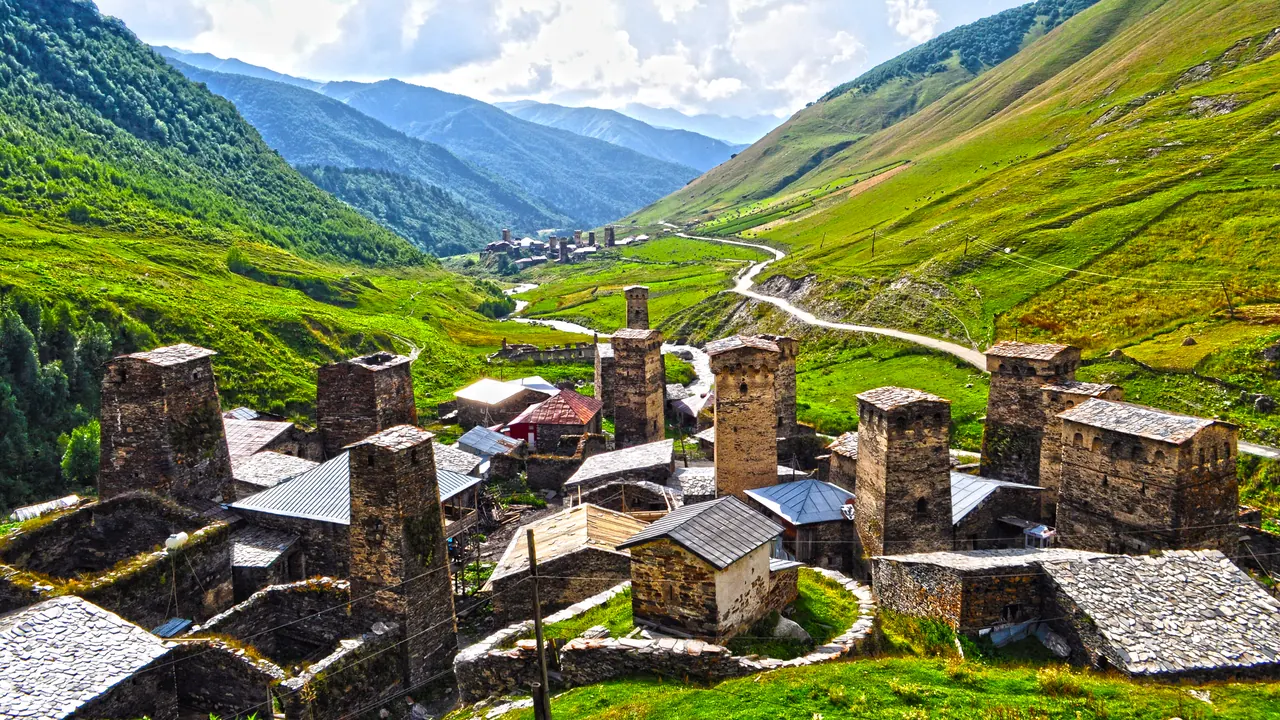
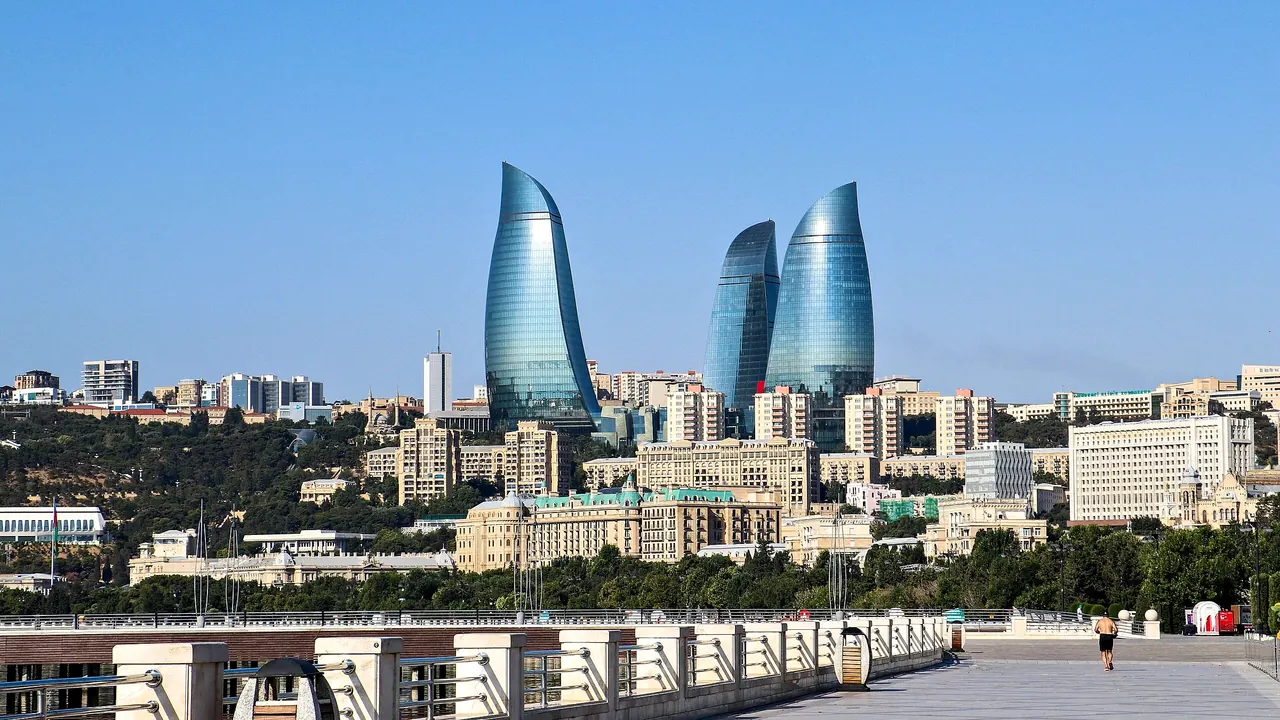
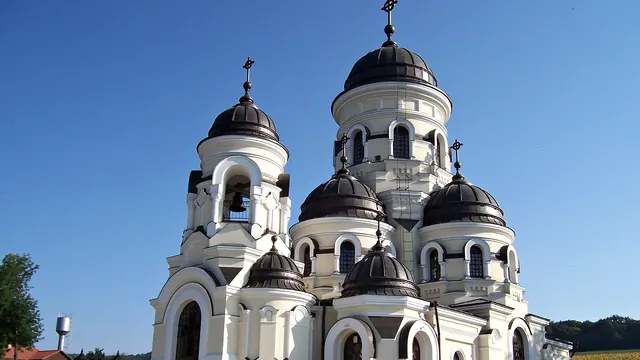
Photos: Georgia by Dito1993, CC BY-SA 4.0, cropped; Azerbaijan by Rufatazizzade, CC BY-SA 4.0, cropped.
Georgia or Azerbaijan?
Our verdict in twelve categories, each scored against the same fixed benchmark cities, and the climate month by month, so you can choose for your trip.
Choose Georgia for
- nature and the outdoors
- nightlife
- food and drink
Georgia is the stronger choice for most travellers who want a varied trip through the Caucasus. Its mountains are higher and wilder, its food and wine are a reason to come in themselves, and medieval churches and monasteries are spread across the country. Add Tbilisi's late nights and the sulphur baths, and it suits a two-week trip that moves from the capital to Kakheti, Kazbegi or Svaneti and ends on the coast. Expect slow roads and minibuses between regions.
Choose Azerbaijan for
- getting around
- shopping
Azerbaijan is for travellers who would rather keep things simple and centred on one capital. Baku is easy to get around, with an orderly walled Old City, oil-boom facades and striking modern buildings. It is also the better place to shop for carpets, silk and copperware. Sheki, Quba and the Gobustan rock art fill a week without much effort, and the dry summers suit a city trip with a swim on the side.
Scoreboard
Twelve categories on one fixed scale from 0 to 100. The shaded stretch is the gap between the two.
Your match
Pick a travel style or drag the sliders, and both match scores follow your weighting.
Wins on nature and the outdoors and nightlife with your weighting.
Wins on getting around and shopping with your weighting.
What matters to you?
Category by category
What the scores mean for a trip.
Beaches & swimming
Neither country is a beach destination, but Georgia gives you more to work with. Batumi has a long pebble beach right in front of its boulevard, Gonio and Sarpi are quieter, and Ureki's dark magnetic sand shelves gently for small children. The water is pleasant rather than clear, and showers are common even in summer.
Azerbaijan's Caspian shore has paler sand and shallow water. Around Bilgah and Mardakan, though, the coast is flat, oil installations are in view and water quality near Baku is uneven. Nabran in the far north is cleaner and backed by forest, but it is a long way to go for a swim.
Where in Georgia: Batumi, Gonio and Sarpi, Ureki, Kobuleti
Where in Azerbaijan: Absheron Peninsula, Nabran, Lankaran
Food & drink
Georgia's food is the bigger draw. Khinkali eaten by hand, walnut and pomegranate sauces and a different khachapuri in each region make up a cuisine with a strong character of its own. The supra feast turns dinner into an event. Wine matters just as much: Kakheti's family cellars around Telavi and Sighnaghi make amber wine in buried qvevri, and many people plan whole days around it.
Azerbaijan eats well in a different direction, towards Persia and Turkey. Think saffron plov with chestnuts and dried fruit, qutab off the griddle, piti in clay pots in Sheki and walnut-stuffed lavangi in Lankaran. Its ritual is tea in pear-shaped glasses rather than wine, and the local bottles are fine with dinner but no reason to travel.
Where in Georgia: Tbilisi, Kakheti, Samegrelo, Batumi
Where in Azerbaijan: Baku, Sheki, Lankaran, Quba
Culture & sights
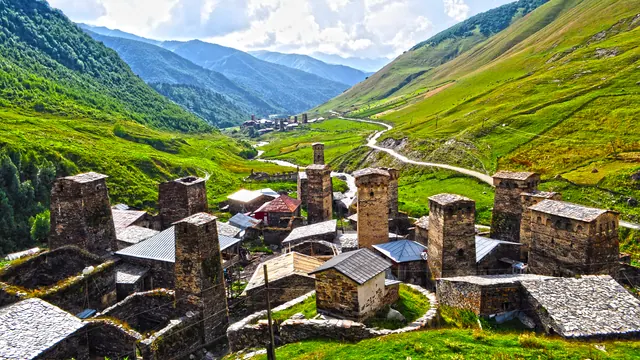
Georgia's heritage is richer and spread across the whole country. You can see Svetitskhoveli and Jvari at Mtskheta, the mosaics at Gelati, the cliff-cut Vardzia and the defensive towers of Ushguli, and each place rewards the journey with its setting as much as its age. Tbilisi's old town and the goldwork in the national museum make a strong start.
Azerbaijan's sights are concentrated in Baku. The walled Old City around the Maiden Tower and the Shirvanshahs' palace sits beside oil-baron mansions, the Flame Towers and the Heydar Aliyev Center, so the city spans many centuries. Add Sheki's painted palace and the Stone Age carvings at Gobustan, and a week covers the list.
Where in Georgia: Tbilisi, Mtskheta, Kutaisi and Gelati, Upper Svaneti
Where in Azerbaijan: Baku, Sheki, Gobustan, Shamakhi
Nightlife
Tbilisi gives Georgia the edge by some distance. Its techno clubs in old Soviet and industrial buildings run until morning at weekends, and natural wine bars and cellar bars fill Sololaki, Vera and the streets off Aghmashenebeli Avenue. Batumi adds beach clubs in summer.
Baku is tamer and smarter. Evenings mean pubs, wine bars and hookah lounges around Fountain Square and Nizami Street, plus a few rooftop bars on the seafront. Outside the capital, the night ends with tea.
Where in Georgia: Tbilisi, Batumi
Where in Azerbaijan: Baku
Nature & outdoors
Both countries share the Greater Caucasus, but Georgia gets the grander side of it. At Kazbegi, Gergeti Trinity Church sits beneath a glaciated peak over 5,000m high. Upper Svaneti and Tusheti are remote enough for multi-day treks and horse riding, and Borjomi's forested ridges are there lower down.
Azerbaijan's mountains around Quba and Qusar are fine for summer walks, with the stone village of Khinalug and the waterfalls at Laza, though longer routes often need a guide. Its most distinctive sights are lower down: the bubbling mud volcanoes near Gobustan, the burning hillside of Yanar Dag and, in the far south, the humid Hirkan forests of the Talysh Mountains.
Where in Georgia: Upper Svaneti, Kazbegi, Tusheti, Borjomi-Kharagauli National Park
Where in Azerbaijan: Greater Caucasus (Quba and Qusar), Sheki and Ilisu, Gobustan mud volcanoes, Talysh Mountains
Day trips
From Tbilisi, the day trips are varied and full. Mtskheta is half an hour away, Kakheti fills a day with cellars, Sighnaghi and monasteries, and David Gareja's cave monasteries lie out in semi-desert. Kutaisi and Borjomi work as second bases in the west.
Baku's outings form a neat loop: the Ateshgah fire temple, Gobustan's rock art and Shamakhi's mosque. Quba and Lahij are longer days. Most are single sights rather than towns to linger in, so the outings feel thinner than Georgia's.
Where in Georgia: Tbilisi, Kakheti, Kutaisi, Borjomi
Where in Azerbaijan: Baku (Absheron, Gobustan, Shamakhi), Sheki (Kish, Ilisu), Lahij, Quba
Good for families
Families will find the two level overall, and the difference is in the kind of base. In Georgia the easiest is Batumi in summer, with its beach, boulevard and botanical garden, and Ureki's gently shelving sand is nearby for small children. Elsewhere, uneven pavements and impatient traffic make it harder going.
Azerbaijan centres on Baku, which is safe, orderly and easy with a pushchair. The seafront boulevard has playgrounds and rides, and a funicular climbs to the hilltop park. Beyond the capital, neither country has much built for children, and reaching the mountains means long, winding drives.
Where in Georgia: Batumi, Tbilisi, Ureki, Kazbegi
Where in Azerbaijan: Baku, Gabala, Shahdag
Getting around
Azerbaijan is the easier of the two. Baku has a simple metro, a walkable Old City and seafront and good main roads out of town. Sheki is a long but straightforward bus ride away, and a hired driver covers the mountain villages.
In Georgia, the fast train from Tbilisi to Batumi is the only comfortable long journey. Most other routes rely on marshrutka minibuses that leave when full, with little information for visitors. Mestia is many hours from anywhere, Tusheti's road is open only in summer and traffic is impatient, which is why so many visitors hire a driver.
Where in Georgia: Tbilisi, Batumi, Kutaisi
Where in Azerbaijan: Baku, Sheki, Ganja
Shopping & style
Azerbaijan has more to buy. Carpets from the dealers in Baku's Old City are the main purchase, alongside Sheki's silk kelaghayi scarves and halva and Lahij's hammered copper. Baku also has malls and international fashion along the seafront, and Taza Bazaar is good for saffron and dried fruit.
Georgia's shopping is mostly souvenirs from Tbilisi: Soviet curios and paintings at the Dry Bridge flea market, cloisonné enamel and felt from old-town workshops, and strings of churchkhela. Its best buy is wine, ideally straight from a Kakheti cellar.
Where in Georgia: Tbilisi, Kakheti
Where in Azerbaijan: Baku, Sheki, Lahij
Affordability
Both are cheap, but Georgia goes further. Family guesthouses in Kakheti and Upper Svaneti include generous home cooking and often the family's own wine, and in Tbilisi even a car with a driver for the day is ordinary spending. Only central boutique hotels and Batumi in high summer push costs up.
Azerbaijan is good value away from the capital, especially in guesthouses in Sheki and Quba. Baku is more uneven: local kebab houses and the metro cost little, but the international hotels and smart seafront dining are expensive, and imported drinks soon add up.
Where in Georgia: Kakheti, Upper Svaneti, Kutaisi, Tbilisi
Where in Azerbaijan: Sheki, Quba, Baku
Live music & performing arts
The two are close, and each has its own great tradition. Georgia's is polyphonic singing, which you might hear at a church service, from a folk ensemble or simply around a supra table. Tbilisi adds an opera house on Rustaveli Avenue and a well-loved marionette theatre, which gives it a slight edge.
Azerbaijan's is mugham, the improvised music of voice, tar and kamancha, heard at the International Mugham Centre on Baku's seafront. The city also has a philharmonic hall and a jazz tradition of its own, though its programme is harder to pin down in advance.
Where in Georgia: Tbilisi, Batumi
Where in Azerbaijan: Baku, Gabala
Wellness & relaxation
Georgia is the more restful choice. Tbilisi's brick-domed sulphur baths at Abanotubani, with a private room and a scrub, are an old-fashioned pleasure. Borjomi's leafy spa park and warm pools and Kakheti's wine estates make slow stays outside the capital.
Azerbaijan's best-known cure, the crude-oil baths at Naftalan, is clinical rather than relaxing. Quieter retreats mean the springs at Masalli Istisu or hotel spas around Gabala and Qusar. In Baku, the large hotels have spas, and the city's hammam tradition is modest.
Where in Georgia: Tbilisi, Borjomi, Tskaltubo, Kakheti
Where in Azerbaijan: Naftalan, Gabala, Baku, Masalli
When should you go?
Pick your month, and for a country the place in it. The climate figures are measured averages, not a forecast.
Where in Georgia
Tbilisi (Georgia) in July
Baku (Azerbaijan) in July
Daytime high, °C
Rainfall in the month, mm
Temperature and rainfall are climate normals, averaged over the years shown. Tbilisi (Georgia): 1991-2020 (sunshine 1961-1990) normals, Tbilisi (13.8 km from centre). Baku (Azerbaijan): 1991-2020 (rainfall 1981-2010) normals, Mashtaga (23.2 km from centre).
In Georgia, Tbilisi is at its best for walking in May, June, September and October. July and August reach 32°C, which is heavy going on the hilly old town, and late spring brings the most rain. On the coast, Batumi's sea is warm enough to swim from June to September and peaks at 26°C in August. This shore is wet all year, though, and from September it turns very wet, with 328mm that month alone, so keep beach days for high summer. The high valleys open for walking from late June to September.
Baku is much drier. Summer brings almost no rain, and the Caspian is warm for swimming in July and August before cooling quickly after September. Midsummer highs of about 30°C are a little milder than Tbilisi's, but spring and early autumn are still the comfortable seasons for the city and for the mountains around Quba and Sheki. Both capitals have cool winters, with January highs of about 7°C.
Which traveller are you?
On an outdoors trip, Georgia is the clear pick. Kazbegi's glaciers, the multi-day trek from Mestia to Ushguli and the remote shepherd country of Tusheti give far more serious walking than Azerbaijan's valleys around Quba, where routes are patchier.
On a shopping trip, Azerbaijan wins for handmade goods. Each of its weaving schools has its own rug patterns, so choosing a carpet in Baku becomes part of the trip, and a drive north adds silk scarves in Sheki and copperware in Lahij.
More comparisons
Each shares a side with Georgia or Azerbaijan.
Where else could you go?
Set Georgia or Azerbaijan against any other country.