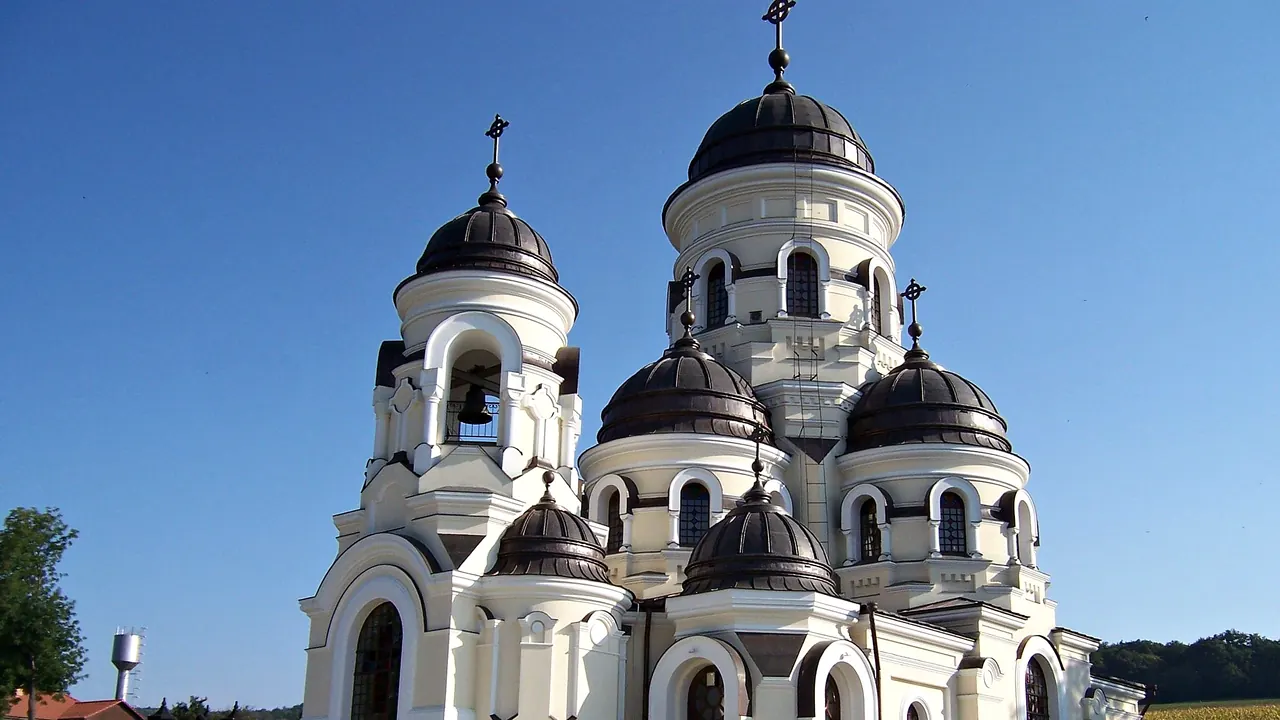
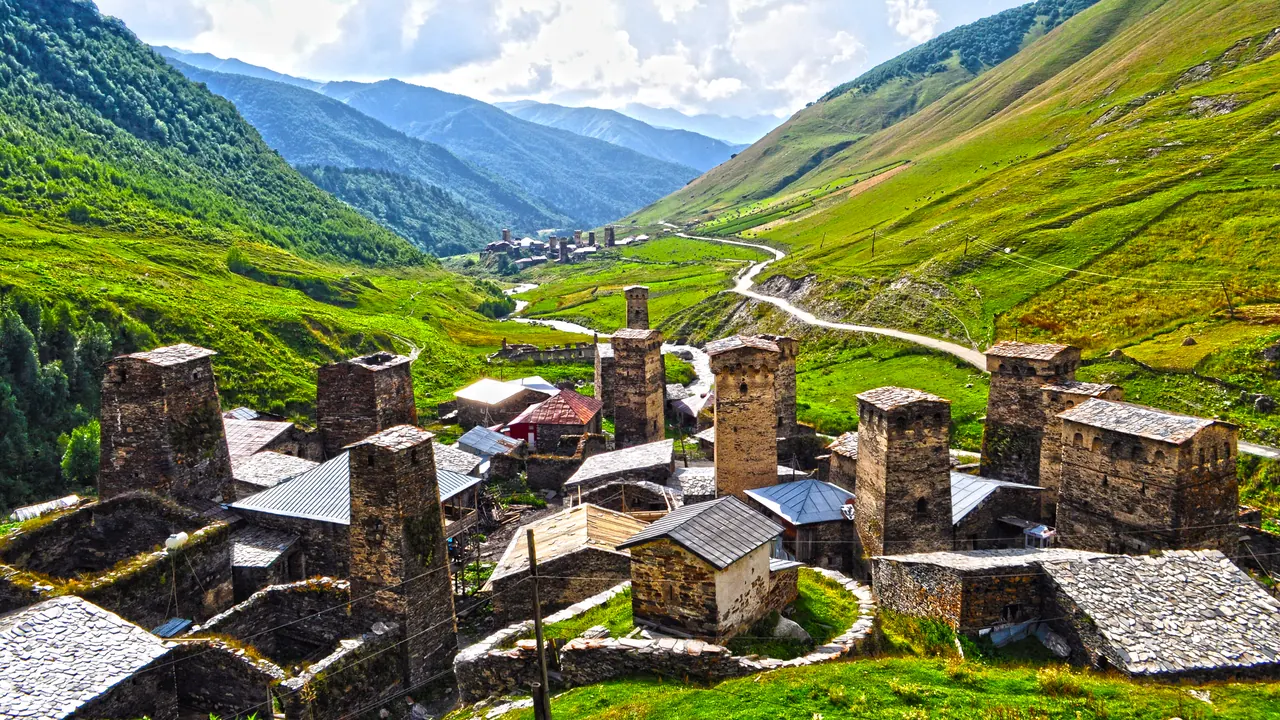
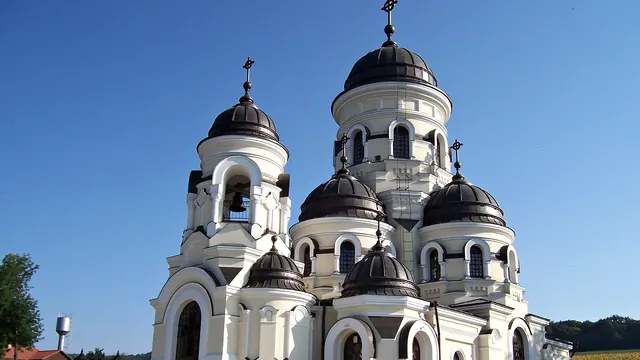
Photos: Moldova by Oleg Alexandrov, Public domain; Georgia by Dito1993, CC BY-SA 4.0, cropped.
Moldova or Georgia?
Our verdict in twelve categories, each scored against the same fixed benchmark cities, and the climate month by month, so you can choose for your trip.
Choose Moldova for
Moldova does not lead in any category we score.
Moldova suits a slow, wine-centred trip from a single base. From Chisinau you can reach the cellar cities of Cricova and Milestii Mici, the cliff monastery at Orheiul Vechi and the southern estates around Purcari as day trips and still sleep in the same bed every night. It suits adults who want long tasting lunches, quiet countryside and a short list of sights they can cover without rushing.
Choose Georgia for
- nature and the outdoors
- beaches
- wellness
Georgia is the stronger choice for almost every other kind of trip. The Caucasus valleys of Kazbegi and Svaneti give it real mountain walking, Tbilisi has the sulphur baths, a far livelier night out and one of the most distinctive cuisines a traveller can find, and Batumi adds a summer coast. It asks for more travel between regions, but it gives a lot more back.
Scoreboard
Twelve categories on one fixed scale from 0 to 100. The shaded stretch is the gap between the two.
Your match
Pick a travel style or drag the sliders, and both match scores follow your weighting.
Has no clear advantage with the weighting you have chosen.
Wins on nature and the outdoors and beaches with your weighting.
What matters to you?
Category by category
What the scores mean for a trip.
Beaches & swimming
Moldova is landlocked, so a swim there means the Dniester at Vadul lui Voda, a city lake or a hotel pool, and none of these is worth planning a trip around.
Georgia has a real, if modest, summer coast. Batumi's long pebble beach, the calmer shores of Gonio and Sarpi, and Ureki's gently shelving dark sand for small children make a few days by the sea easy to add to a trip. Expect pebbles, crowds in high summer and water that is pleasant rather than clear.
Where in Georgia: Batumi, Gonio and Sarpi, Ureki, Kobuleti
Food & drink
Both countries are serious about wine, but Georgia's table is richer and more varied. Its walnut and pomegranate sauces, khinkali and a different khachapuri in each region, with the supra feast at the centre, give it a cuisine worth travelling for. Kakheti's amber qvevri wines add a winemaking tradition that goes back thousands of years.
Moldova's appeal is narrower but real: the vast limestone cellars of Cricova and Milestii Mici, estate reds such as Feteasca Neagra around Purcari, and hearty mamaliga and placinte at a winery lunch. Beyond Chisinau, though, the choice of where to eat gets thin quickly.
Where in Moldova: Chisinau, Codru wine region, Stefan Voda and Purcari, Cricova
Culture & sights
Georgia has much more to see. Tbilisi's old town under Narikala, the goldwork in the national museum, Mtskheta's cathedrals, Gelati's mosaics, Vardzia's cave city and the tower villages of Svaneti make up a medieval heritage spread across the whole country.
Moldova's sights are fewer and quieter. Orheiul Vechi's cave monastery above the Raut is the highlight, followed by Soroca's round fortress and forest monasteries such as Capriana and Curchi, and Chisinau's museums take only a couple of days.
Where in Moldova: Orheiul Vechi, Soroca, Chisinau, Saharna and Tipova
Where in Georgia: Tbilisi, Mtskheta, Kutaisi and Gelati, Upper Svaneti
Nightlife
Chisinau is Moldova's one place for a night out, and it is a pleasant, inexpensive one. Wine bars, cocktail terraces and a few clubs fill up on summer weekends when the students are in town, but midweek the centre is quiet and most evenings end over dinner.
Georgia has a real club scene. Tbilisi's techno nights in converted industrial and Soviet-era buildings have a name far beyond the Caucasus and run until morning at weekends. Natural wine bars and late courtyard bars around Sololaki, Vera and Aghmashenebeli Avenue fill the hours before. In summer, Batumi's beach clubs and seafront bars mean a few days on the coast need not mean early nights.
Where in Moldova: Chisinau
Nature & outdoors
The two are very far apart here. Georgia has the Greater Caucasus along its whole northern border: Kazbegi's glaciers under a peak over 5,000m, the high trek through Upper Svaneti, remote Tusheti, and ski slopes at Gudauri and Bakuriani in winter.
Moldova's countryside is soft and rolling, with no mountains. Its best scenery is in the limestone river bends at Orheiul Vechi, the Dniester gorges at Saharna and Tipova and the old oak forest of Codrii, which suit easy walks and cycling rather than real hiking.
Where in Moldova: Orheiul Vechi, Saharna and Tipova, Codrii, Lower Prut
Where in Georgia: Upper Svaneti, Kazbegi, Tusheti, Borjomi-Kharagauli National Park
Day trips
Moldova's outings are short and mostly about wine. The underground cellars of Cricova and Milestii Mici are under half an hour from Chisinau, Orheiul Vechi about an hour, and the Purcari estates a two-hour drive that ends in a tasting lunch. Soroca's fortress and the Saharna cliff monasteries are possible, but they make long days for modest rewards.
Georgia's day trips cover far more ground and far more kinds of place. From Tbilisi you can reach Mtskheta in half an hour, spend a day among Kakheti's cellars and the walls of Sighnaghi, cross semi-desert to the caves of David Gareja or drive north past the fortress church at Ananuri. The west calls for second bases, Kutaisi for Gelati and Borjomi for Vardzia, so the extra variety costs you more nights in different beds.
Where in Moldova: Orheiul Vechi, Cricova and Milestii Mici, Stefan Voda and Purcari, Soroca
Where in Georgia: Tbilisi, Kakheti, Kutaisi, Borjomi
Good for families
Neither country is built around children, but Georgia gives families more to work with. Batumi in summer, with its beach, boulevard and botanical garden, makes an easy base, and Ureki's shallow water suits toddlers. In Tbilisi the Mtatsminda funicular and the Narikala cable car are proper treats.
Moldova is really a vacation for adults. Children will find Valea Morilor park and the zoo in Chisinau and space at a rural guesthouse, but little else among the cellars and monasteries.
Where in Moldova: Chisinau
Getting around
Getting around is about equally hard in both, and in both most visitors end up with a driver or a tour. The difference is scale. Moldova is small, so nothing is more than a few hours from Chisinau, though trains are scarce and sights sit far from bus stops.
Georgia is bigger and has a metro in Tbilisi and a fast, comfortable train to Batumi. The mountain regions, though, mean long, slow roads, weather-dependent flights to Mestia and a summer-only track into Tusheti.
Where in Moldova: Chisinau
Shopping & style
Wine is the best thing to take home from both. Georgia gives you more besides: the Dry Bridge flea market with its Soviet curios and carpets, cloisonné enamel and felt from old-town workshops, strings of churchkhela, and a small scene of local designers in Vera and Sololaki.
Moldova's shopping is the cellar shops at Cricova and Milestii Mici, which sell older vintages and divin brandy, plus Chisinau's central market and a few stalls of embroidery and pottery.
Where in Moldova: Cricova, Milestii Mici, Chisinau
Where in Georgia: Tbilisi, Kakheti
Affordability
Both are among the cheapest trips on the edge of Europe, and your money goes about as far in either. In Moldova the one real extra cost is a driver to reach the scattered sights.
Georgia's best value is in family guesthouses in Kakheti and Svaneti, where generous home-cooked meals come with the room. Boutique hotels in central Tbilisi and Batumi in July and August cost noticeably more.
Where in Moldova: Chisinau, Codru wine region
Where in Georgia: Kakheti, Upper Svaneti, Kutaisi, Tbilisi
Live music & performing arts
Both countries keep their formal stage in the capital, but Georgia's is the bigger and more varied of the two. Chisinau has a modest season of opera, ballet, organ recitals and philharmonic concerts, easy to book and little known abroad. Tbilisi has its own opera house on Rustaveli Avenue, as well as a conservatoire, a drama theatre and a much-loved marionette theatre, and its jazz festivals also reach Batumi, although most plays are in Georgian.
The folk traditions differ in kind. Moldova's strength is dance: national troupes in bright costume, and brass bands at the village harvest festivals. Georgia's is the human voice. Its polyphonic singing is on UNESCO's heritage list, and you are as likely to hear it in church or around a supra table as on a stage, so a visit there comes with music Moldova cannot match.
Where in Moldova: Chisinau
Wellness & relaxation
Georgia has a real bathing culture and Moldova does not. Tbilisi's Abanotubani sulphur baths, with a scrub in a private room, are a classic part of a visit. Borjomi's leafy spa park and Tskaltubo's faded radon sanatoria near Kutaisi extend this beyond the capital.
In Moldova, the Soviet-era sanatoria at Cahul mostly treat locals. The more rewarding way to rest is a few unhurried days at a wine-country guesthouse in Codru.
Where in Moldova: Cahul, Codru wine region
Where in Georgia: Tbilisi, Borjomi, Tskaltubo, Kakheti
When should you go?
Pick your month, and for a country the place in it. The climate figures are measured averages, not a forecast.
Where in Georgia
Chișinău (Moldova) in July
Tbilisi (Georgia) in July
Daytime high, °C
Rainfall in the month, mm
Temperature and rainfall are climate normals, averaged over the years shown. Chișinău (Moldova): 1991-2020 normals, Kisinev (11.2 km from centre). Tbilisi (Georgia): 1991-2020 (sunshine 1961-1990) normals, Tbilisi (13.8 km from centre).
Moldova's climate swings hard between seasons. Chisinau's winters are bitterly cold, with January highs around 1°C, so the country is best from May to September, when days are warm and long and July is the sunniest month. High summer reaches about 29°C, warm without being punishing, and late spring and early autumn are the best seasons for walking the river gorges and visiting wineries at harvest.
Georgia needs more planning because its regions peak at different times. Tbilisi climbs to about 32°C in July and August, which makes sightseeing on its hilly streets tiring, and May is its wettest month, so June and September to October are the most comfortable. Batumi's sea warms to about 26°C in August and is swimmable from June to September, but rain on that coast becomes very heavy from September, when it reaches 328mm. The high mountain valleys open for hiking only from late June to September, so midsummer is the one season when the coast and the mountains are both at their best.
Which traveller are you?
For an outdoors trip, Georgia is the clear pick. Kazbegi's glacier hikes under Mount Kazbek, the multi-day trek from Mestia to Ushguli and the horse country of Tusheti are a different scale from Moldova's gentle gorge walks and cycling through vineyards.
On a beach and sun trip, only Georgia can offer anything. Batumi, Gonio and the dark sand at Ureki give a proper summer seaside on the Black Sea, while Moldova has no coast at all and its swimming is limited to river spots and lakes.
On a relaxing and wellness trip, Georgia offers far more. Tbilisi's domed sulphur baths, the spa town of Borjomi and quiet estate stays in Kakheti give you real places to unwind, while Moldova offers little beyond a peaceful guesthouse in its wine country.
More comparisons
Each shares a side with Moldova or Georgia.
Where else could you go?
Set Moldova or Georgia against any other country.