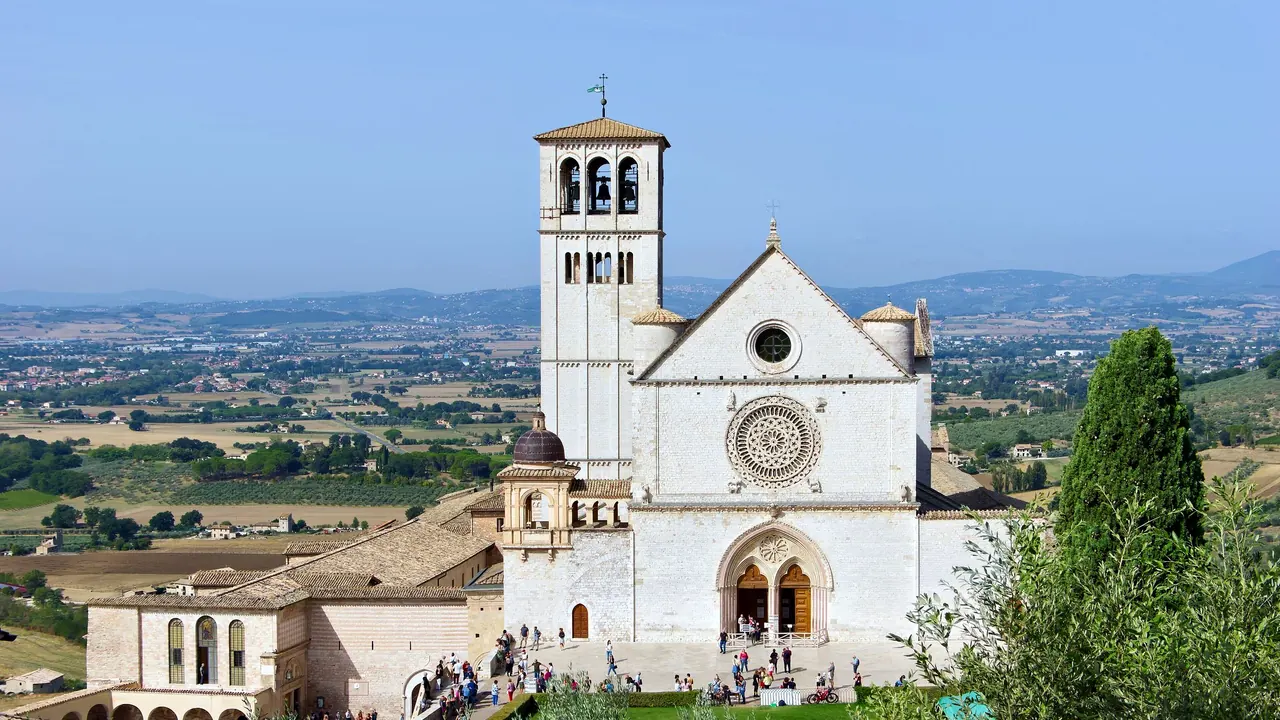
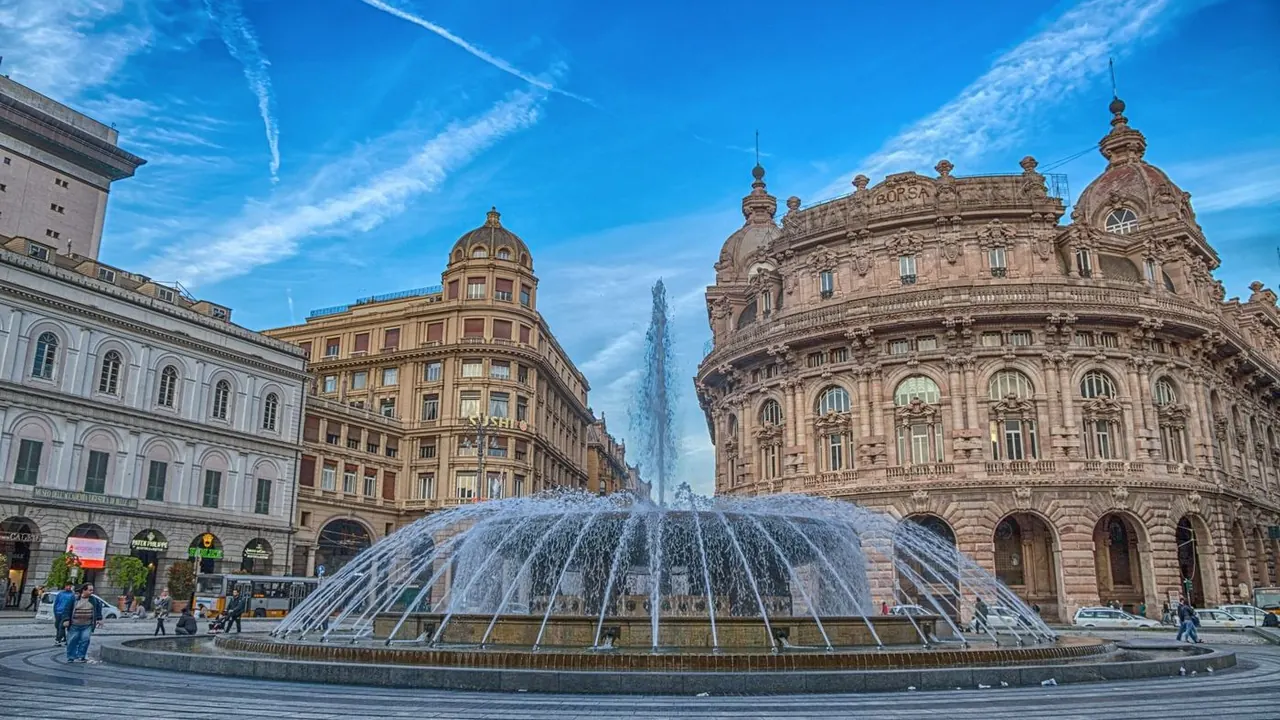
Photos: Assisi by Berthold Werner, CC BY-SA 4.0, cropped; Genoa by Faber1893, CC BY-SA 4.0, cropped.
Assisi or Genoa?
Our verdict in twelve categories, each scored against the same fixed benchmark cities, and the climate month by month, so you can choose for your trip.
Choose Assisi for
- wellness
- day trips
- prices
Assisi suits a slow, quiet trip into the heart of Umbria. Come for the Basilica of San Francesco and its frescoes, the stone lanes that empty after the tour groups leave, walks up Monte Subasio, and a base for Spello, Perugia, Spoleto and the other hill towns. It is the better pick for pilgrims, retreat-seekers and couples who want evenings of wine and silence rather than entertainment.
Choose Genoa for
- beaches
- nightlife
- families
Genoa is the better choice for almost everything else. It is a working port city with the sea at its feet, swimming coves and Riviera villages a short train ride away, and some of the best everyday eating in Italy, from focaccia to pesto. The aquarium makes it easy with children, the old town has bars for the evening, and there is more to see and do on a stay of several days.
Scoreboard
Twelve categories on one fixed scale from 0 to 100. The shaded stretch is the gap between the two.
Your match
Pick a travel style or drag the sliders, and both match scores follow your weighting.
Wins on wellness and day trips with your weighting.
Wins on beaches and nightlife with your weighting.
What matters to you?
Category by category
What the scores mean for a trip.
Beaches & swimming
Assisi sits inland, about two hours from either coast, so swimming means a hotel pool or the shallow, slightly murky lido beaches of Lake Trasimeno. That is fine for cooling off, but there is no reason to come for it.
Genoa has the sea within the city itself, at the pebble cove of Boccadasse, the rock platforms below Nervi and the bathing establishments along Corso Italia. Camogli, Sestri Levante and the sandier stretch at Varazze are all close by train. Expect pebbles, rented loungers and crowded summer weekends, but a clear-water swim is an easy afternoon here.
Food & drink
Both cities cook regional food, but Genoa gives you far more of it, and it is easier to find. Assisi has the Umbrian classics: strangozzi with black truffle, Castelluccio lentils, torta al testo, Subasio olive oil and Sagrantino from Montefalco. The catch is that many restaurants near the basilica serve set menus for tour groups, so the good meals take some seeking out in side lanes and country agriturismi.
Genoa puts good food in front of you all day. Breakfast is focaccia, the old-town friggitorie sell farinata and panissa for a snack, lunch is pesto with trofie, and the harbour serves fresh seafood with Vermentino. The Mercato Orientale shows off the region's produce, which Assisi, with no market hall, cannot match.
Culture & sights
Assisi is built around one masterpiece. The stacked basilica of San Francesco, with Cimabue in the dim Lower Church and the Giotto cycle above, is a sight of European rank. Santa Chiara, the Temple of Minerva and the Porziuncola complete a compact town you can see properly in two days.
Genoa has more breadth and rewards a longer stay. It offers the vast medieval maze of the caruggi, the Rolli palaces on Via Garibaldi with Van Dyck and Rubens in their painted halls, San Lorenzo cathedral, the Lanterna lighthouse and the marble sculpture of Staglieno. No single sight equals Assisi's basilica, but there is far more to explore.
Nightlife
In Assisi, the evening is dinner, a glass of Sagrantino and a walk through floodlit lanes that are empty by eleven. Anyone wanting a bar crowd has to go to Perugia.
Genoa is no party city, and its club scene is small. Still, students and locals fill the bars around Piazza delle Erbe for aperitivo, the Porto Antico and Foce have waterfront terraces, and summer nights move out to the beach clubs along Corso Italia. A late drink in a medieval square is easy here and close to impossible in Assisi.
Nature & outdoors
Assisi's outdoors is gentle and inland. A path climbs Monte Subasio through holm oaks to the Eremo delle Carceri and the open summit meadows, and the valley below is good for cycling between Spello and Montefalco. The Sibillini and the Valnerina are wilder, but you need a car to reach them.
Genoa combines mountains and sea, and you can do more of it without a car. A funicular takes you up to the forts trail above the port, and the cliff paths of the Portofino promontory and the Cinque Terre terraces are a train ride away. Boats also go out to look for whales and dolphins in the Pelagos Sanctuary.
Day trips
Both are excellent bases, and the difference is in the scenery. From Assisi you tour hill towns: Spello ten minutes away, Perugia, Spoleto, Gubbio, Todi and Orvieto's cathedral, with Montepulciano over the Tuscan border. Trains cover the valley line, but a car makes the smaller towns much easier.
From Genoa you work along the coast by rail, to Camogli, Portofino, Sestri Levante and the Cinque Terre in one direction and Finale Ligure Borgo and Noli in the other. Milan and Turin are close enough for a museum day. You can manage all of it without a car.
Good for families
Genoa is much easier with children. The Porto Antico packs together one of Europe's largest aquariums, a children's science centre, a tropical biosphere and the Galata museum's submarine, and riding the funiculars is a treat in itself. The steep old town is hard work with a pushchair.
Assisi is safe and children are made welcome, but it has frescoes that need hush, stepped streets and hot afternoons. The Rocca Maggiore and a walk on Subasio are the only real draws for older children, and families usually stay at a valley agriturismo with a pool.
Getting around
Assisi's centre takes about twenty minutes to cross on foot, but it is all slopes and stairs. The railway station is 4km below in Santa Maria degli Angeli, so you need a bus or taxi up. Buses beyond the valley line are sparse, which pushes most visitors towards hiring a car.
Genoa is just as steep, but it does more to help. Funiculars, a rack railway and public lifts climb the hills, and a short metro line runs through the centre. Most usefully, the coastal railway reaches Nervi and the Riviera towns, so a car is a burden rather than a need.
Shopping & style
Shopping in Assisi revolves around the pilgrims: rosaries and Tau crosses, with some genuine finds among them, such as Assisi-embroidered linens, Deruta ceramics, truffle products and Sagrantino.
Genoa has more choice without being a shopping destination. Via XX Settembre's arcades and Via Roma cover the familiar Italian labels. The old town is the more rewarding part, with historic shops selling candied fruit and pesto and workshops making silver filigree and coral.
Affordability
Costs are similar in both, so the savings come in different places. In Assisi the basilicas are free, and convent guesthouses and valley agriturismi keep beds cheap, though rooms inside the walls cost more around Easter and big feasts.
In Genoa, street food like focaccia and farinata makes eating very cheap, and the funiculars and lifts are inexpensive. The money goes on Riviera resort towns and loungers at the bathing establishments in summer.
Live music & performing arts
Genoa has a proper cultural calendar. The Teatro Carlo Felice on Piazza De Ferrari stages opera, ballet and symphony concerts, the Teatro Nazionale runs a drama season in Italian, and Paganini concerts and small singer-songwriter clubs fill other evenings.
In Assisi, music is mostly sacred: organ and choral concerts in the basilicas around the feasts, plus the costumed singing and processions of Calendimaggio in spring. For opera or jazz you go to Perugia.
Wellness & relaxation
Neither city has a bathing culture, so the rest you get in each is a different kind. Assisi's is stillness. Once the day-trippers leave, the lanes are empty in the early morning, convent guesthouses take people on retreat, and the walk up to the Eremo delle Carceri is a silent one. For actual treatments there are only a handful of spas, mostly in country hotels and agriturismi down in the valley.
Genoa's centre is the opposite, with port traffic and crowded caruggi, so you have to go looking for calm. The quietest corner is Nervi, with its seafront promenade and villa gardens, and the Riviera villages are good for long, slow lunches. For thermal waters, the nearest spa town is Acqui Terme in the Piedmont hills, a little over an hour away.
When should you go?
Pick your month. The climate figures are measured averages, not a forecast.
Assisi in July
Genoa in July
Daytime high, °C
Rainfall in the month, mm
Where the figures come from
Assisi's temperatures are measured 51 km from the centre, at Frontone.
Assisi has no rain gauge within 25 km of the centre, so its rainfall comes from a gridded climate dataset read at the city rather than from a gauge further away.
Genoa has no rain gauge within 25 km of the centre, so its rainfall comes from a gridded climate dataset read at the city rather than from a gauge further away.
Genoa's sunshine is measured 80 km from the centre, at Capo Mele.
Temperature and rainfall are climate normals, averaged over the years shown. Assisi: 1991-2020 normals, Frontone (50.5 km from centre). Genoa: 1991-2020 normals, Genova / Sestri (6.7 km from centre).
Assisi is a hill town in central Italy, so it has real seasons. Summer afternoons reach about 30°C in July, which makes the steep lanes tiring by midday. Winter highs drop to around 7°C, and the town is bare and chilly. The best months are May and June, and September into early October, when walking is comfortable and the rain is still moderate. Rainfall rises steadily through late autumn.
Genoa has a milder, sea-tempered climate, with winter days still near 12°C. Summer is warm rather than baking, with long sunny days from June to August, and by August the sea reaches about 25°C, so June to September is swimming season. Its weak spot is autumn: October brings around 212mm of rain, often in heavy bursts. For a trip covering both cities, late spring or early September is the best time.
Which traveller are you?
For a beach and sun trip, Genoa is the only real choice. It has swimming coves at Boccadasse and Nervi, bathing platforms along Corso Italia, and Riviera bays a short train ride away. Assisi's nearest water is a shallow lake almost an hour's drive off.
On a food and nightlife trip, Genoa wins on both counts. There is farinata and focaccia in the caruggi, pesto at its source and seafood along the harbour, then aperitivo in the squares around Piazza delle Erbe. Assisi offers a fine dinner and then silence.
On a family trip with children, Genoa gives far more to do. The aquarium, the walk-through submarine and the funiculars fill whole days. In Assisi children face silent churches and steep steps, and families usually end up at a valley agriturismo with a pool.
Before you go
| Measure | Assisi | Genoa |
|---|---|---|
| Official language | Italian | Italian |
| Currency | Euro (EUR) | Euro (EUR) |
| Sockets | CFL230 V, 50 Hz | CFL230 V, 50 Hz |
| Driving side | Right | Right |
| Time zone | UTC+1, UTC+2 in summer | UTC+1, UTC+2 in summer |
| Emergency number | 112 | 112 |
| Elevation | 424 m | 20 m |
| Main airport | Perugia San Francesco d'Assisi – Umbria International Airport (PEG)9 km from centre17 non-stop destinations | Genoa Cristoforo Colombo Airport (GOA)7 km from centre25 non-stop destinations |
| Public holidays this year | 13 days | 13 days |
By the numbers
| Measure | Assisi | Genoa |
|---|---|---|
| City population | 27,605 | 558,745 |
| People per km² | 147 | 2,325 |
| Museums within 10 km | 14 | 51 |
| UNESCO World Heritage sites within 50 km | 2 | 1 |
| Swim season, months above 21 °C | - | 4 months |
Where else could you go?
Every comparison below shares a destination with this one, so you can follow Assisi or Genoa somewhere new.