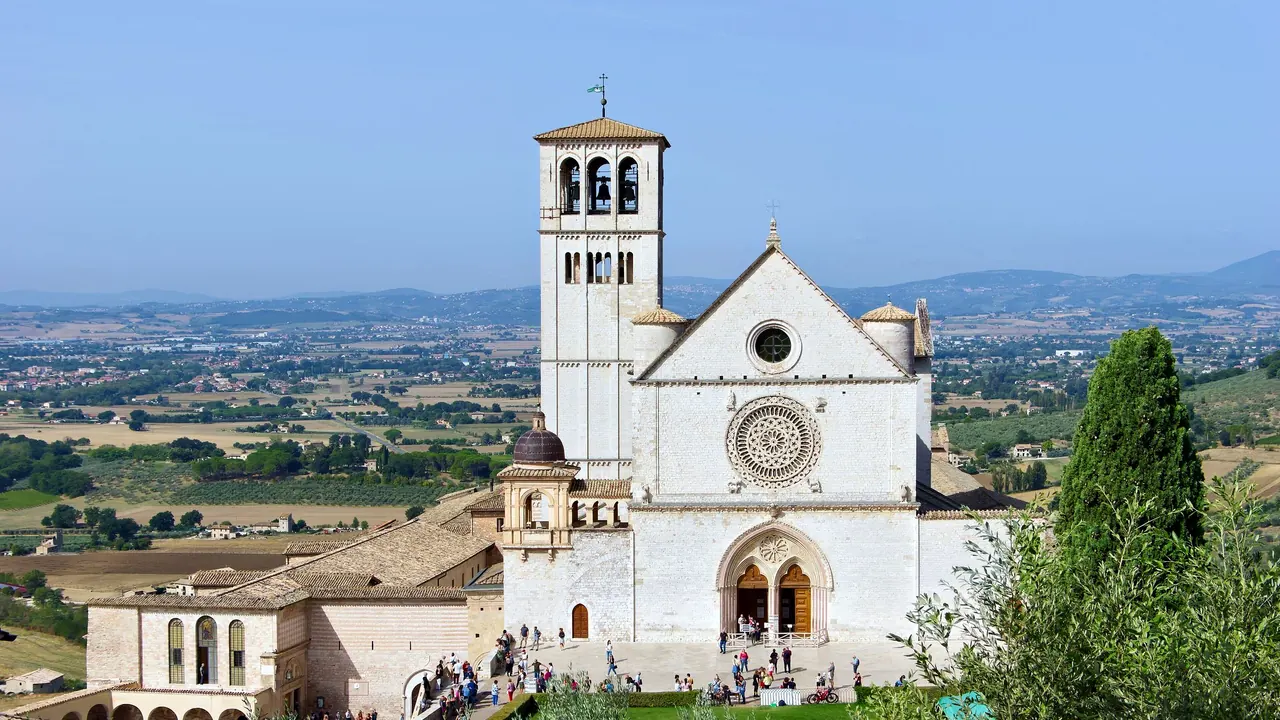
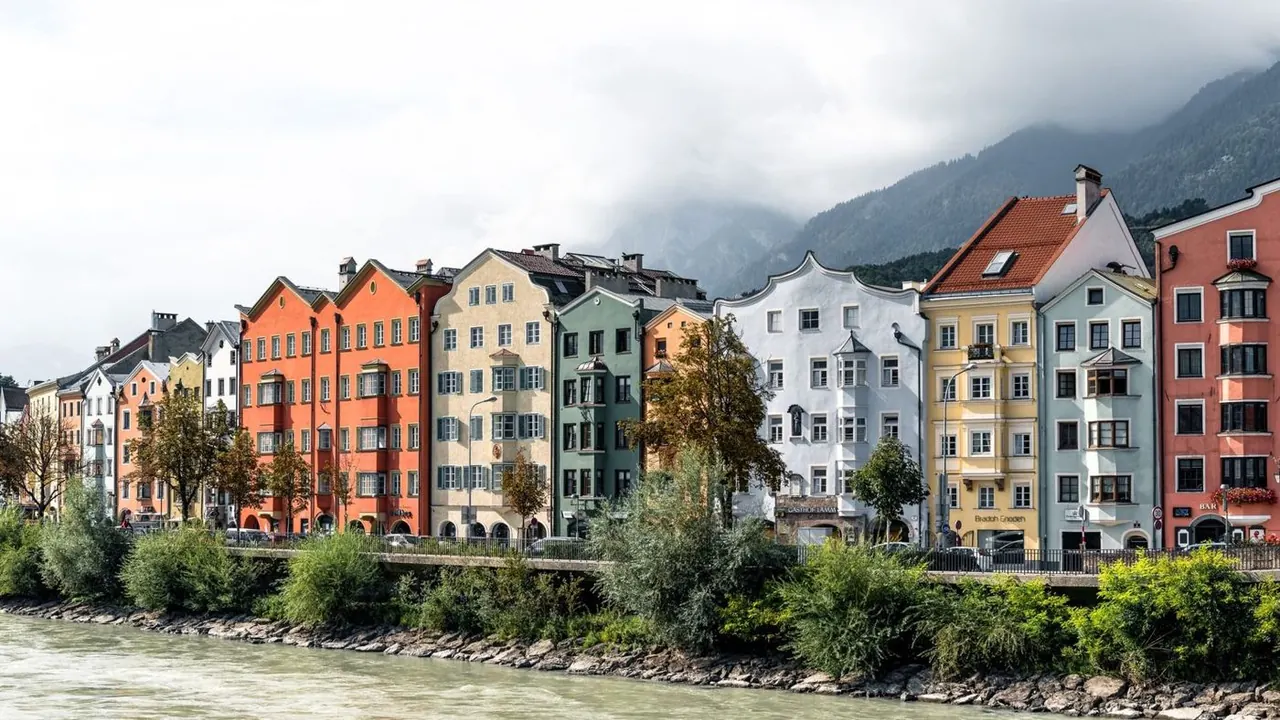
Photos: Assisi by Berthold Werner, CC BY-SA 4.0, cropped; Innsbruck by Wolfgang Weiser, Pexels License.
Assisi or Innsbruck?
Our verdict in twelve categories, each scored against the same fixed benchmark cities, and the climate month by month, so you can choose for your trip.
Choose Assisi for
- prices
- day trips
- culture and sights
Assisi suits a slower, more contemplative trip built around art and faith: the frescoed Basilica of San Francesco, quiet stone lanes once the coaches leave, and a ring of Umbrian hill towns within easy reach. It is the better base for touring Spello, Perugia, Spoleto and Orvieto. It is also kinder on the budget, especially if you sleep in a convent guesthouse or an agriturismo.
Choose Innsbruck for
- nature and the outdoors
- families
- nightlife
Choose Innsbruck if the mountains are the point. Cable cars lift you from the old town to the Nordkette ridge in minutes, the Karwendel and Stubai valleys open up for hiking and skiing, and children have the Alpenzoo and summer trails. It is easier to get around without a car and livelier after dark, though it costs more.
Scoreboard
Twelve categories on one fixed scale from 0 to 100. The shaded stretch is the gap between the two.
Your match
Pick a travel style or drag the sliders, and both match scores follow your weighting.
Wins on prices and day trips with your weighting.
Wins on nature and the outdoors and families with your weighting.
What matters to you?
Category by category
What the scores mean for a trip.
Beaches & swimming
Neither city is a beach destination, and both send you to a lake. From Assisi it is about 45 minutes by car to Lake Trasimeno, whose lido beaches are warm but shallow and a little murky, so most visitors settle for a pool at their agriturismo.
Innsbruck makes it slightly easier. The Lanser See and Natterer See sit on the plateaus just above the city and reach around 22°C in high summer, and the clear but cool Achensee lies further out. Still, it is an afternoon's swim, not a reason to come.
Food & drink
Both serve country food with a narrow range, but it comes from very different countryside. Assisi gives you Umbria on a plate: strangozzi with black truffle, Castelluccio lentils, torta al testo, Monte Subasio olive oil and Sagrantino from Montefalco, best found in side-lane trattorias or valley agriturismi.
Innsbruck is heartier and more Alpine, with Gröstl, Kaspressknödel and Kaiserschmarrn, often eaten at a mountain hut after a walk, and Viennese-style cafés for strudel. Assisi is stronger on wine and produce, while Innsbruck has the coffee-house afternoons and a few cheaper student places.
Culture & sights
Assisi has the bigger prize. The two-tiered Basilica of San Francesco, with Cimabue in the Lower Church and the Saint Francis cycle above, is a monument of European importance, and the UNESCO town around it adds the Temple of Minerva, Santa Chiara and the Porziuncola below the walls.
Innsbruck's Habsburg heritage is more varied but less overwhelming: the Hofkirche with Maximilian's bronze figures, the Golden Roof, the Hofburg and the cabinet of curiosities at Ambras Castle, plus modern touches such as the Bergisel ski jump. Each takes two days or so, but Assisi's frescoes are the ones people travel across Europe to see.
Nightlife
Innsbruck clearly wins here, though neither is a party city. Assisi falls silent after dinner. A glass of Sagrantino and a walk through floodlit, empty lanes make up the evening, and Perugia is the nearest place for bars.
In Innsbruck, the university fills the brick arches under the railway viaduct with bars and small clubs that stay open late at weekends, and the old town has pubs and wine bars. In winter, après-ski in the nearby resorts adds another option.
Nature & outdoors
Innsbruck is in another league. The funicular and Nordkette cable cars take you from the old town to a ridge at about 2,300m in under half an hour, with the Karwendel behind it and glaciers, via ferratas, rafting and skiing all close by.
The outdoors around Assisi is gentler. You can walk up Monte Subasio past the Eremo delle Carceri to grassy summit meadows, cycle the flat valley between Spello and Montefalco, or drive further to the Valnerina and the Sibillini. It is lovely walking country, especially when the wildflowers are out, but these are not mountains on Innsbruck's scale.
Day trips
Assisi sits in the middle of a dense cluster of hill towns, and that is hard to beat. Spello is ten minutes away, Perugia half an hour, Spoleto, Gubbio and Todi all within an hour, and Orvieto and the Tuscan border towns make a full day out. You will want a car for the smaller places.
From Innsbruck the trips reach further, into three countries by rail. Hall in Tirol and Rattenberg are close by, Munich and Salzburg are each a little under two hours away, Bolzano and Merano lie over the Brenner, and Neuschwanstein is a drive away. The choice is wide, but the distances are longer and the towns less closely packed than in Umbria.
Good for families
Innsbruck is much easier with children. The ibex and wolves of the Alpenzoo are on the funicular line, summer brings adventure trails and playgrounds by the huts, the plateau lakes suit a family swim, and winter has ski schools. Only rainy days need some planning.
Assisi is safe and welcoming but made for silence and stairs: frescoed churches, stepped lanes that are hard with a pushchair, and hot afternoons. Older children may enjoy the Rocca Maggiore and a walk on Monte Subasio, but most families stay at an agriturismo with a pool.
Getting around
Assisi is a twenty-minute walk from end to end, but all of it is uphill or on stairs, and the station lies about 4km below in Santa Maria degli Angeli. Trains serve the valley towns, and for the rest of Umbria most people hire a car.
Innsbruck's centre is flat and walkable. Trams and buses reach Igls and the Stubai valley, and the funicular starts at the edge of the old town, so you can manage a whole trip without a car.
Shopping & style
Neither city is a shopping destination, and what you bring home from each is very different. Assisi's shops mostly serve pilgrims, so devotional pieces and Franciscan keepsakes take up most of the windows. The buys worth having are Umbrian: linen embroidered in the local Assisi style, painted pottery from Deruta, a bottle of Monte Subasio olive oil, truffle products or Sagrantino. There are no clothes shops or markets to browse.
Innsbruck gives a shopper more to do. Maria-Theresien-Strasse has the chain stores and a couple of shopping centres, and the arcaded lanes of the old town have jewellery, crystal and Tyrolean crafts. It is also the place to buy a proper loden jacket or dirndl. Walkers and skiers can buy their gear in its specialist mountain shops, and Assisi has nothing like them, though neither city has luxury fashion.
Affordability
Assisi is the cheaper stay. The basilicas are free to enter, convent guesthouses offer plain rooms at low cost, and the valley agriturismi are good value, provided you eat away from the streets around the basilicas.
Innsbruck has Alpine resort prices, highest in ski season and around the Christmas markets, and cable car tickets mount up on an active trip. Spring and autumn are cheaper, and the city cards that bundle lifts and transport help.
Live music & performing arts
Innsbruck has a proper season. The Tiroler Landestheater puts on opera, operetta and dance, the Tyrolean Symphony Orchestra performs regularly, and the summer Festival of Early Music uses settings such as the Spanish Hall at Ambras Castle.
Assisi's music is sacred and occasional: organ and choral concerts in its churches around feast days, and the medieval songs and processions of Calendimaggio in spring. For opera or jazz, people go to Perugia.
Wellness & relaxation
Neither city has baths of its own, and each offers a different kind of calm. Assisi's is spiritual: convent retreats, silent walks to the Eremo delle Carceri and still mornings before the tour groups arrive, with only a few spas in country hotels.
Innsbruck's is physical. Hotels in Igls and the plateau villages have saunas with mountain views, the big thermal complexes in the Ötztal and Zillertal are about an hour away, and an evening in a mountain hut helps you slow down.
When should you go?
Pick your month. The climate figures are measured averages, not a forecast.
Assisi in July
Innsbruck in July
Daytime high, °C
Rainfall in the month, mm
Where the figures come from
Assisi's temperatures are measured 51 km from the centre, at Frontone.
Assisi has no rain gauge within 25 km of the centre, so its rainfall comes from a gridded climate dataset read at the city rather than from a gauge further away.
Temperature and rainfall are climate normals, averaged over the years shown. Assisi: 1991-2020 normals, Frontone (50.5 km from centre). Innsbruck: 1991-2020 normals, Innsbruck-Flughafen (3.3 km from centre).
Assisi is at its most comfortable in May and June, warm enough for long days on foot and still fairly dry. July is the driest month of all, but highs reach about 30°C, which makes afternoon climbs to the Rocca hard work while suiting a swim at Lake Trasimeno. September stays warm, though the rain is already building, and October and November are the wettest months, peaking at about 94mm. Winters are cool and damp rather than harsh.
Innsbruck runs a few degrees cooler, with summer highs around 26°C, which is comfortable for hiking. Its rain pattern is the reverse of Assisi's: the heaviest rain falls in summer, peaking near 144mm in August, even though July and August also bring the most sunshine of the year. The plateau lakes are only really swimmable in those two months. Winter days are cold in the valley, which is the season for the ski areas around the city, while spring and early autumn are drier and mild for walking.
Which traveller are you?
For an outdoors trip, Innsbruck wins easily. Cable cars from the old town reach high ridges in minutes, with hiking, via ferratas, mountain biking and skiing close by. Assisi offers Monte Subasio and valley cycling, which are gentler and smaller in scale.
On a family trip with children, Innsbruck is the easier choice: the Alpenzoo, hut playgrounds, lake swims and ski schools, all reached by tram or funicular. Assisi's steep, stepped lanes and silent churches give children little, so families there usually stay in the valley.
On a tight budget, Assisi makes your money go further. Its basilicas are free, convent guesthouses and agriturismi keep beds cheap, and trattorias off the main streets eat well. Innsbruck adds an Alpine premium, and cable car tickets quickly mount up.
Before you go
| Measure | Assisi | Innsbruck |
|---|---|---|
| Official language | Italian | German, Austrian Sign Language |
| Currency | Euro (EUR) | Euro (EUR) |
| Sockets | CFL230 V, 50 Hz | CF230 V, 50 Hz |
| Driving side | Right | Right |
| Time zone | UTC+1, UTC+2 in summer | UTC+1, UTC+2 in summer |
| Emergency number | 112 | 112 |
| Elevation | 424 m | 574 m |
| Main airport | Perugia San Francesco d'Assisi – Umbria International Airport (PEG)9 km from centre17 non-stop destinations | Innsbruck Airport (INN)4 km from centre40 non-stop destinations |
| Public holidays this year | 13 days | 16 days |
By the numbers
| Measure | Assisi | Innsbruck |
|---|---|---|
| City population | 27,605 | 132,499 |
| People per km² | 147 | 1,263 |
| Museums within 10 km | 14 | 28 |
| UNESCO World Heritage sites within 50 km | 2 | 1 |
Where else could you go?
Every comparison below shares a destination with this one, so you can follow Assisi or Innsbruck somewhere new.
- San Marinovs Assisi
- Munichvs Innsbruck
- Cortina d'Ampezzovs Innsbruck
- Sienavs Assisi
- Romevs Assisi
- Florencevs Assisi