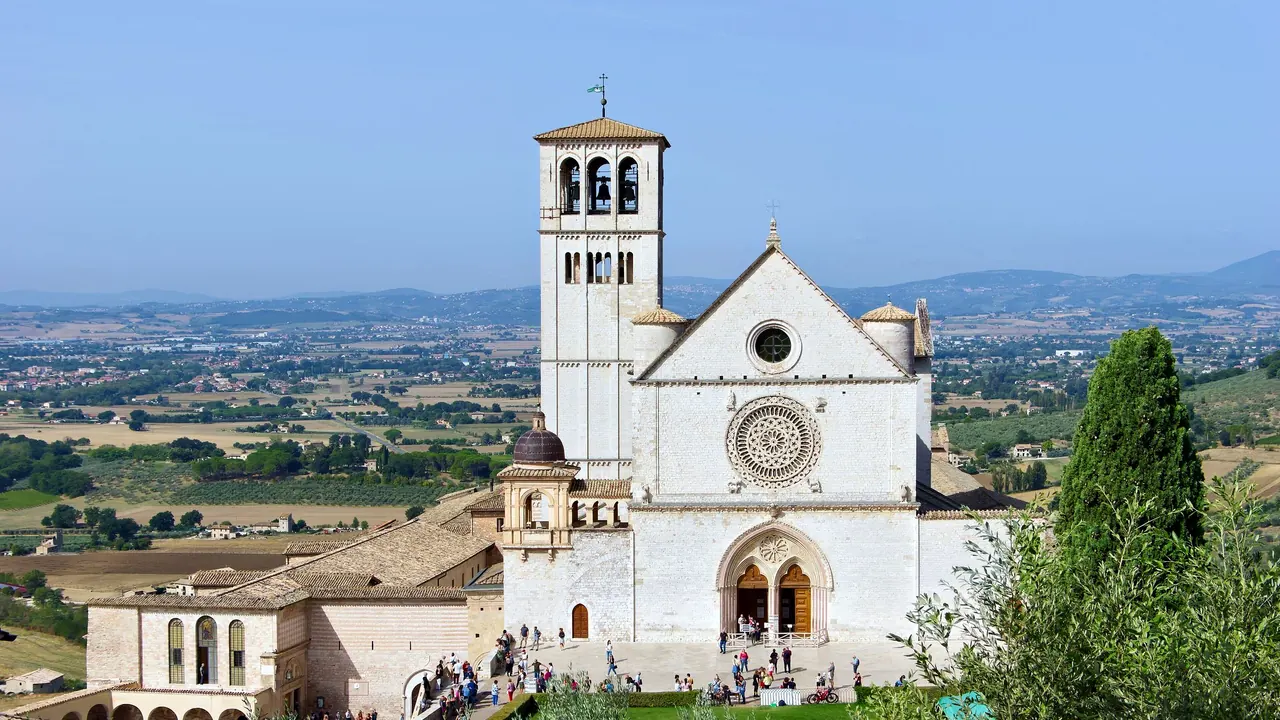
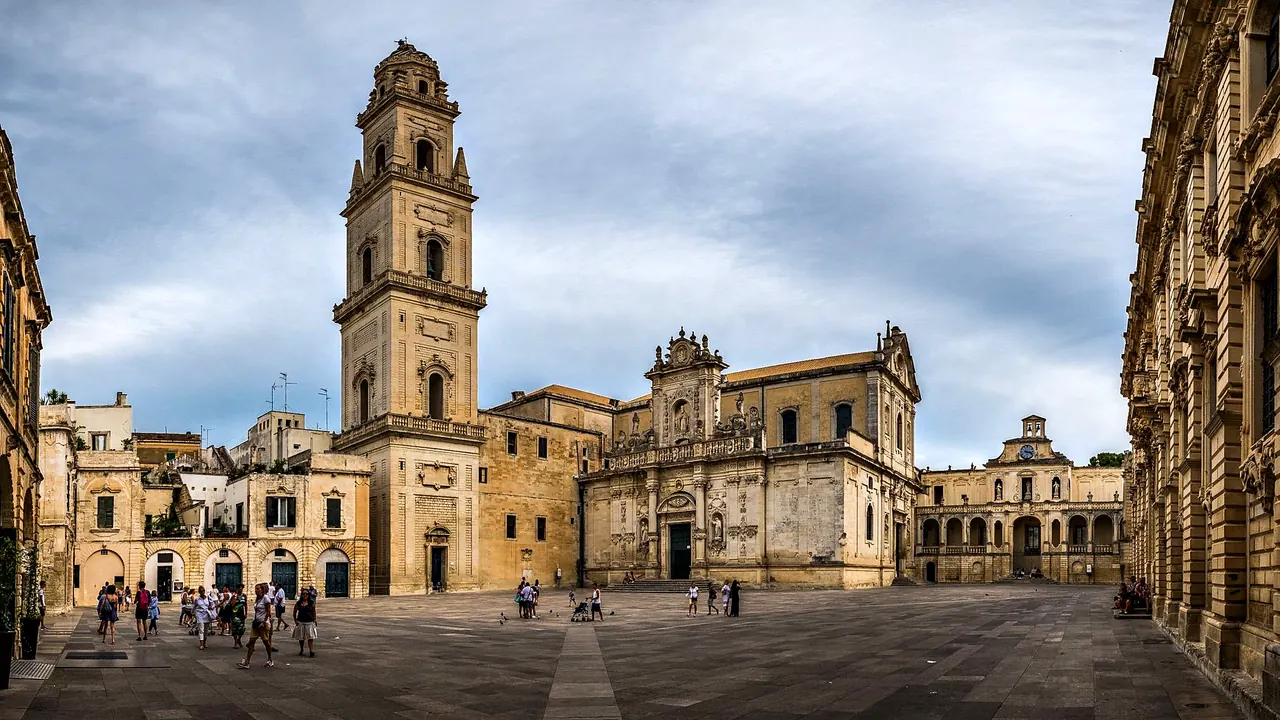
Photos: Assisi by Berthold Werner, CC BY-SA 4.0, cropped; Lecce by Giuseppe Milo, CC BY 3.0, cropped.
Assisi or Lecce?
Our verdict in twelve categories, each scored against the same fixed benchmark cities, and the climate month by month, so you can choose for your trip.
Choose Assisi for
- day trips
- getting around
- nature and the outdoors
Assisi is for travellers who want to slow down among frescoes, hill paths and medieval towns. The Basilica of San Francesco alone justifies the journey, and the town makes an unusually good base: Spello, Perugia, Spoleto, Gubbio and Orvieto all lie within easy reach, several of them by train. Walkers get Monte Subasio right behind the walls. Evenings are quiet and there is no sea, so it suits couples, pilgrims and art lovers more than anyone after beaches or late nights.
Choose Lecce for
- beaches
- nightlife
- food and drink
Lecce is the better choice when the trip should mix sightseeing with the sea. Its Baroque old town is as rewarding to wander as anything in Assisi, and the sandy Ionian beaches and Adriatic coves of the Salento are half an hour or so away. Cheap and distinctive food, sociable evenings on the piazzas, summer pizzica festivals and flat, traffic-free streets that are easy with children make it the livelier and more family-friendly of the two.
Scoreboard
Twelve categories on one fixed scale from 0 to 100. The shaded stretch is the gap between the two.
Your match
Pick a travel style or drag the sliders, and both match scores follow your weighting.
Wins on day trips and getting around with your weighting.
Wins on beaches and nightlife with your weighting.
What matters to you?
Category by category
What the scores mean for a trip.
Beaches & swimming
This is the widest gap between the two. Assisi sits in the middle of Italy, far from either coast, and its only real swimming is the shallow, slightly cloudy water of Lake Trasimeno, about 45 minutes away, or a pool at a country hotel.
Lecce is the base for some of Italy's best southern beaches. Pale coves and sea stacks at Torre dell'Orso lie about half an hour south, and long, clear, shallow sands at Porto Cesareo and Punta Prosciutto are on the Ionian side. You will need a car or the summer buses, but a beach morning fits easily into a day.
Food & drink
Both cities cook their own region and little else, but Lecce gives more to the curious eater. Assisi's strengths are its ingredients: black truffle on strangozzi, Castelluccio lentils, Subasio olive oil and Sagrantino from Montefalco. Near the basilicas, though, set menus for tour groups are common, and the best meals are often found in side-lane trattorias or down in the valley.
Lecce has a food rhythm that runs through the whole day, from a warm pasticciotto and caffè in ghiaccio at breakfast to a mid-morning rustico and ciceri e tria at dinner. Simple osterie in the old town serve it well and cheaply, with Negroamaro and Primitivo on the table.
Culture & sights
These two are equally rewarding but very different. Assisi is about one supreme interior: the stacked basilica of Saint Francis, with Cimabue and Simone Martini below and the Giotto fresco cycle above. Around it are Santa Chiara, the Temple of Minerva and the Porziuncola, all bound up with the story of a single saint.
Lecce's art is on the outside. Its honey-coloured limestone facades, carved with fruit, beasts and cherubs, culminate at Santa Croce and the Piazza del Duomo, with a Roman amphitheatre half uncovered below the main square. Its museums are modest, and the pleasure is in walking the streets rather than standing before a single masterpiece.
Nightlife
Assisi barely has a night out. After dinner, there is a glass of Sagrantino and a walk through floodlit, empty lanes, and anyone wanting more goes to Perugia.
Lecce is far more sociable. The passeggiata leads into aperitivi on the piazzas and then to wine and cocktail bars in the old-town lanes, and students keep weekends going late. For dancing, you drive to the summer beach clubs near Gallipoli.
Nature & outdoors
Assisi is better for walkers. Monte Subasio starts at the town walls, and the path climbs through holm oaks to the Eremo delle Carceri and on to open meadows at about 1,290m. Wilder country waits in the Valnerina, Monte Cucco and the Sibillini.
Lecce's surroundings are a flat plain of olive groves, so its outdoors is the coast. There are cliffs and sea caves from Roca Vecchia to Santa Maria di Leuca, birdwatching at Le Cesine and the Alimini lakes, and good snorkelling and diving.
Day trips
Assisi has the denser and easier range of excursions. Spello is ten minutes away, and Perugia and Spoleto are reachable by regional train. Gubbio, Todi, Orvieto, Deruta and the Montefalco wine villages are all within a comfortable drive, and the Tuscan hill towns of Cortona and Montepulciano are not far beyond.
Lecce has fine destinations too, including Otranto's mosaic floor, Gallipoli's island old town and the frescoes of Galatina. Places further afield, such as Ostuni and the trulli of Alberobello, involve longer drives, and nearly everything is easier with a car.
Good for families
Lecce is the easier place to bring children. Its old town is flat and largely free of cars, families fill the piazzas in the evening, and the shallow sand around Porto Cesareo suits toddlers.
Assisi is safe and welcoming, but its sights call for silence and its lanes are steep and stepped, which is hard going with a pushchair. Older children enjoy the Rocca Maggiore and the hill walk. Families usually stay at a valley agriturismo with a pool and visit the town in short bursts.
Getting around
Assisi works better once you leave the centre. Its old town is compact but steep, and the station is 4km below, reached by bus or taxi. From there, though, regional trains run along the valley to Perugia, Spello, Foligno and Spoleto, so a good share of Umbria can be seen without driving.
Lecce's centre is gentler on the legs, being flat and partly pedestrianised, with the station at its edge. Beyond the city, however, the Salento railways are slow and infrequent and the beach buses run only in summer, so most visitors end up hiring a car.
Shopping & style
Neither city is a shopping destination, but Lecce offers a little more. Its cartapesta saints and nativity figures are made in old-town workshops, alongside carved limestone, Grottaglie ceramics and a few fashion shops on the main streets.
In Assisi, devotional souvenirs crowd the streets. Look past them for Assisi-embroidered linens, Deruta pottery, truffle products and Sagrantino.
Affordability
Both are fair value for Italy, but the expensive moments come at different times. In Assisi, the basilicas are free, and convent guesthouses and valley agriturismi keep costs down. Rooms inside the walls are dearer around Easter and the big feasts.
Lecce is cheap to eat in, from street pastries to trattorias, and B&Bs in old palazzi are reasonable for most of the year. In August, though, the Salento fills up, and a hire car adds to the cost of beach days.
Live music & performing arts
Lecce has more going on, and more that is its own. The Politeama Greco and the Teatro Paisiello stage opera, concerts and theatre. All summer, village festivals ring with pizzica tambourine music, building up to the Notte della Taranta in Melpignano in August.
Assisi's music is mostly sacred: organ and choral concerts in the basilicas, plus the costumed Calendimaggio in spring. For jazz or opera, you have to go to Perugia.
Wellness & relaxation
The two are close here, but the kind of rest differs. Assisi offers silence: convent retreats, early mornings before the groups arrive and quiet walks to the hermitage. Its spas are few and found in country hotels.
Lecce offers real waters. The sulphur pools of Santa Cesarea Terme sit in sea-cliff grottoes under an hour away, several masserie have spas, and the long afternoon rest slows the whole city down.
When should you go?
Pick your month. The climate figures are measured averages, not a forecast.
Assisi in July
Lecce in July
Daytime high, °C
Rainfall in the month, mm
Where the figures come from
Assisi's temperatures are measured 51 km from the centre, at Frontone.
Assisi has no rain gauge within 25 km of the centre, so its rainfall comes from a gridded climate dataset read at the city rather than from a gauge further away.
Lecce's temperatures are measured 38 km from the centre, at Brindisi.
Lecce has no rain gauge within 25 km of the centre, so its rainfall comes from a gridded climate dataset read at the city rather than from a gauge further away.
Temperature and rainfall are climate normals, averaged over the years shown. Assisi: 1991-2020 normals, Frontone (50.5 km from centre). Lecce: 1991-2020 (sunshine 1981-2010) normals, Brindisi (38 km from centre).
Assisi has a proper inland climate. Winters are cold, with daytime highs around 7°C in January, and summer is hot, reaching about 30°C in July, when steep lanes are best tackled early or late. Late spring and September are the sweet spots for walking the town and Monte Subasio. From October the rain builds, peaking at about 94mm in November, so late autumn is often grey and damp.
Lecce is milder in winter and every bit as hot in high summer, but it is far drier from May to August, with only about 15mm of rain in July and long, sunny days. The sea is warm enough to swim from June into October and reaches about 26°C in August. That makes June and September the best months to combine sightseeing and beach days. Lecce's wet season comes in autumn, as Assisi's does, with October and November the rainiest months.
Which traveller are you?
On a beach and sun trip, Lecce is the obvious choice. The fine sand at Porto Cesareo and the coves of Torre dell'Orso are within an hour's drive, and the dry, sunny summers are made for it. From Assisi, the best you can do is a shallow lake or a hotel pool.
For a food and nightlife trip, Lecce wins again. Its pastries, iced almond coffee and chickpea dishes cost little in the osterie, and evenings move from piazza aperitivi to wine bars, with beach clubs in summer. Assisi is quiet by eleven.
On an outdoors trip, Assisi suits walkers better. Monte Subasio rises behind the town, with paths through oak woods to the Eremo delle Carceri and open summit meadows, and the Sibillini are within reach. Lecce's outdoors is mostly the sea: snorkelling, sea caves and coastal paths.
Before you go
| Measure | Assisi | Lecce |
|---|---|---|
| Official language | Italian | Italian |
| Currency | Euro (EUR) | Euro (EUR) |
| Sockets | CFL230 V, 50 Hz | CFL230 V, 50 Hz |
| Driving side | Right | Right |
| Time zone | UTC+1, UTC+2 in summer | UTC+1, UTC+2 in summer |
| Emergency number | 112 | 112 |
| Elevation | 424 m | 49 m |
| Main airport | Perugia San Francesco d'Assisi – Umbria International Airport (PEG)9 km from centre17 non-stop destinations | Brindisi Airport (BDS)39 km from centre49 non-stop destinations |
| Public holidays this year | 13 days | 13 days |
By the numbers
| Measure | Assisi | Lecce |
|---|---|---|
| City population | 27,605 | 94,783 |
| People per km² | 147 | 393 |
| Museums within 10 km | 14 | 11 |
| UNESCO World Heritage sites within 50 km | 2 | 0 |
| Swim season, months above 21 °C | - | 4 months |
Where else could you go?
Every comparison below shares a destination with this one, so you can follow Assisi or Lecce somewhere new.