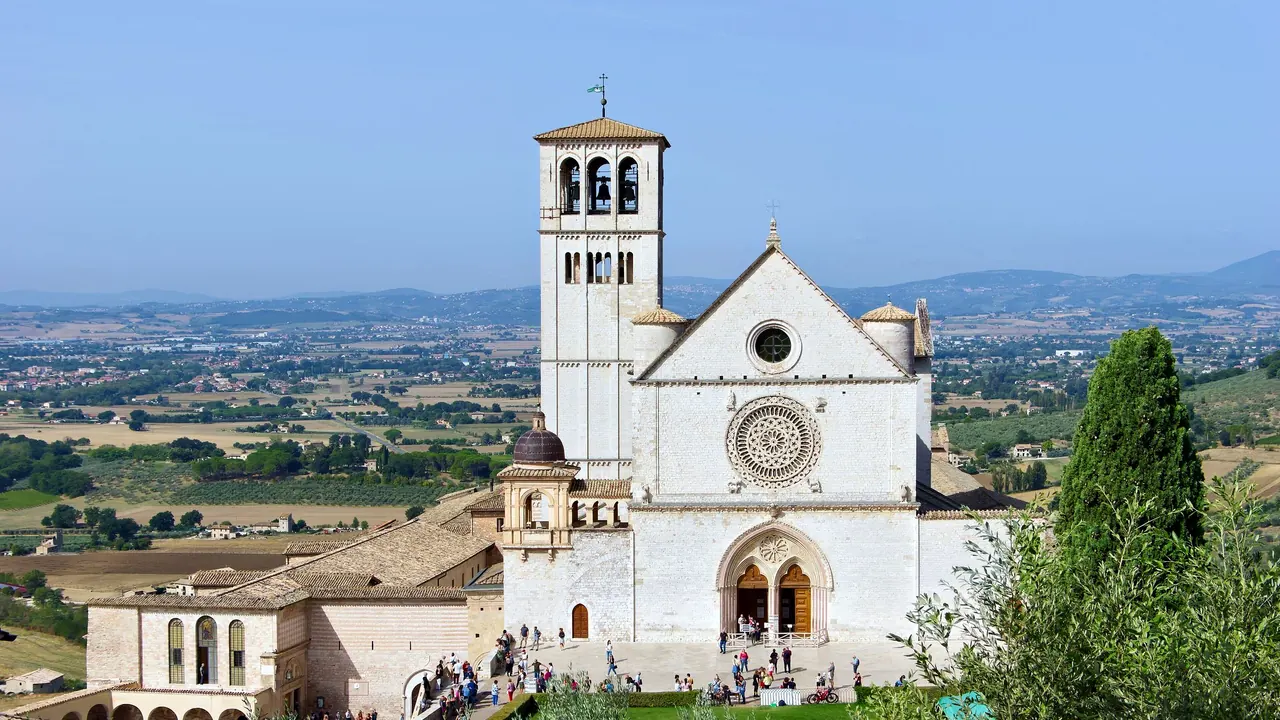
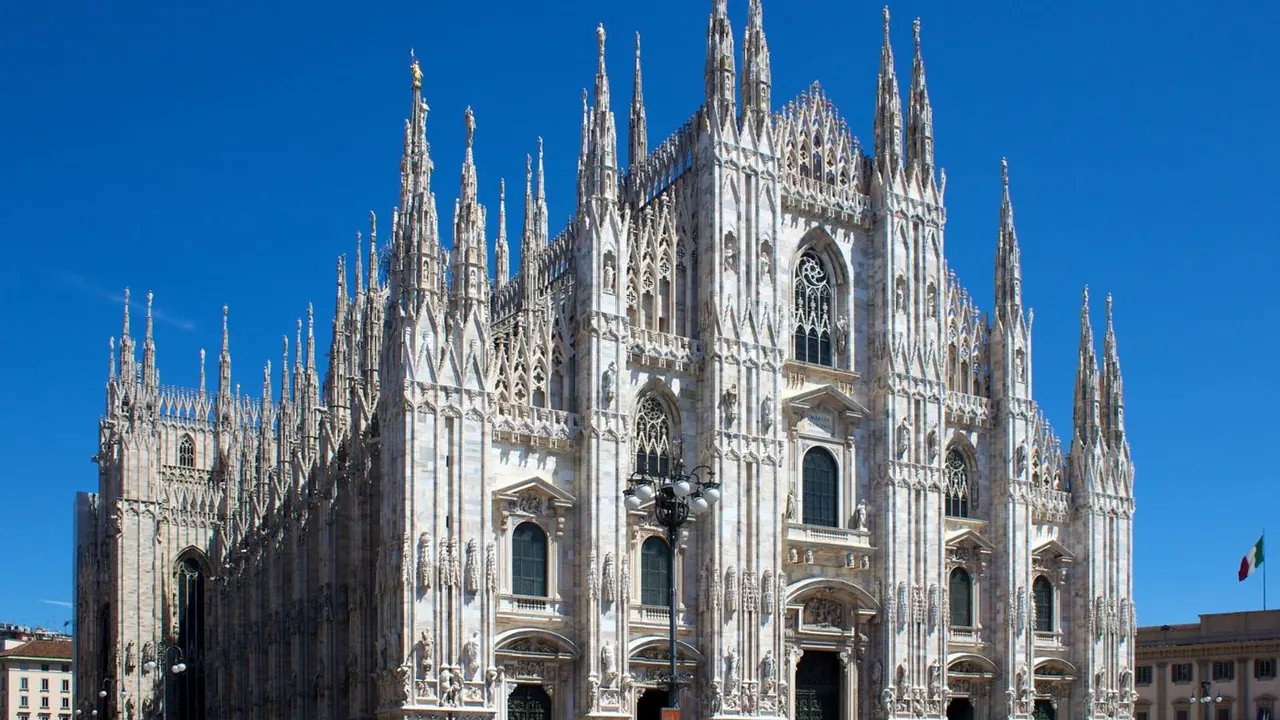
Photos: Assisi by Berthold Werner, CC BY-SA 4.0, cropped; Milan by Jiuguang Wang, CC BY-SA 3.0, cropped.
Assisi or Milan?
Our verdict in twelve categories, each scored against the same fixed benchmark cities, and the climate month by month, so you can choose for your trip.
Choose Assisi for
- prices
Assisi suits a slow, quiet trip built around one extraordinary basilica, stone lanes that empty in the evening, and the hill towns of Umbria all around it. It works best for pilgrims, walkers on Monte Subasio and anyone who wants to eat simply, sleep in a convent guesthouse or agriturismo and spend less. Expect to do without nightlife, shops and an evening programme.
Choose Milan for
- shopping
- nightlife
- live music and the arts
Milan is the choice for a fuller, more urban vacation. It has fashion houses and design showrooms, a night at La Scala, aperitivo along the Navigli and a far wider range of food. Fast trains take you to Verona, Bergamo or Lake Como without a car. It costs noticeably more, and its beauty comes in clusters within a modern business city rather than a single preserved old town.
Scoreboard
Twelve categories on one fixed scale from 0 to 100. The shaded stretch is the gap between the two.
Your match
Pick a travel style or drag the sliders, and both match scores follow your weighting.
Wins on prices with your weighting.
Wins on shopping and nightlife with your weighting.
What matters to you?
Category by category
What the scores mean for a trip.
Beaches & swimming
Neither city is a beach destination, but Milan makes swimming easier. From Assisi the nearest water is Lake Trasimeno, about 45 minutes away by car, where small lidos at Passignano and Castiglione del Lago have shallow, slightly cloudy water. Most visitors settle for a hotel or agriturismo pool instead.
Milan has the Idroscalo basin and open-air pools in town. Lake Como and Lake Maggiore are about an hour away by train, with pebbly lidos and swimming platforms below wooded slopes, so a summer swim can be a train ride rather than a drive.
Food & drink
In Assisi you eat Umbrian country food made with excellent ingredients: strangozzi with black truffle, Castelluccio lentils, wild boar, torta al testo, Monte Subasio olive oil and Sagrantino from Montefalco. The choice is narrow, though, and tour-group menus crowd the streets near the basilica. The better meals are found in side-lane trattorias.
Milan offers much more. It has its own rich, butter-based dishes such as risotto alla milanese and ossobuco, cooking from every Italian region, a serious fine-dining scene and the daily ritual of aperitivo in Brera, Isola and along the canals. You can eat very differently every night for a week.
Culture & sights
Assisi is built around a single masterpiece. The stacked Upper and Lower Churches of San Francesco hold frescoes by Giotto, Cimabue and Simone Martini, and the pink-stone town around them, with the Temple of Minerva and Santa Chiara, survives as one whole. Two calm days are enough to see it all.
Milan has more to see at the highest level and needs more planning. The Last Supper must be booked well ahead, and the Brera gallery, Michelangelo's Rondanini Pietà at the Castello Sforzesco and the Duomo's rooftop among the spires each deserve time. The trade-off is that these sights sit in clusters within a largely modern city, not in an unbroken old town.
Nightlife
Assisi barely has a night. After dinner there is a glass of Sagrantino and a walk through floodlit, empty lanes, and anyone who wants more goes to Perugia.
Milan's evenings start with aperitivo and carry on along the Navigli towpaths, in quieter Brera, in relaxed Isola and in Porta Venezia, the centre of the gay scene. Later there are dressy clubs around Corso Como and warehouse nights further out. The mood is smart rather than wild, and it thins out in August.
Nature & outdoors
The two are close here, but the outdoors works differently in each. In Assisi you can walk straight from town up Monte Subasio, through oak woods to the Eremo delle Carceri and on to open summit meadows. Below lies a gentle valley of olives and vineyards that is easy to cycle.
Milan itself sits on a flat, hazy plain, so you take a train to reach anything. That train brings bigger country within reach: the lakes with ferries and windsurfing, the Grigne ridges for via ferrata, and winter skiing in the Valtellina for those willing to spend a full day.
Day trips
Both make excellent bases. The difference is the size of the places you visit and how you get there. From Assisi the trips are to small Umbrian hill towns close together: Spello about ten minutes away, Gubbio and Todi about an hour, and Orvieto's cathedral for a full day. A car helps for most of them.
From Milan, high-speed trains reach whole cities. Verona's arena and Turin's Egyptian Museum are about an hour away, with Bologna a little further. Bergamo's upper town, Bellagio on Lake Como and the Borromean Islands are all easy by rail or boat, without a car.
Good for families
Milan is the easier city with children. The science and technology museum has a submarine and hands-on labs, Parco Sempione has playgrounds, the centre is flat for pushchairs, and the Leolandia and Gardaland theme parks are both within reach.
Assisi is safe and welcoming, but the stepped lanes are hard work with a pushchair, and fresco-filled churches that need silence test young children's patience. Older children usually enjoy the Rocca Maggiore and a climb on Monte Subasio. Most families do better staying at a valley agriturismo with a pool.
Getting around
Milan is the simpler city to move around. Its flat centre puts the Duomo, Brera and the Castello within walking distance, five easy metro lines and the old orange trams cover the rest, and trains run directly to the lakes. The main drawback is the long transfer from Malpensa.
Assisi is small enough to cross on foot in twenty minutes, but the walk is a climb from the basilica up to Piazza del Comune. The station sits 4km below in Santa Maria degli Angeli and needs a bus or taxi. Beyond the valley rail line, most visitors hire a car.
Shopping & style
Milan is one of the world's fashion capitals. The Quadrilatero around Via Montenapoleone holds the great Italian houses, the Galleria Vittorio Emanuele II has some of the city's oldest shops, Corso Buenos Aires covers everyday shopping, and design showrooms and Navigli antique markets add more. Many visitors come for the shopping alone.
Assisi's streets mostly sell pilgrim souvenirs. The things worth taking home are embroidered Umbrian linens, Deruta ceramics, truffle products, olive oil and Sagrantino.
Affordability
Assisi is clearly the cheaper stay. The basilicas cost nothing to enter, convent guesthouses and agriturismi are good value, and eating a few lanes away from the basilica keeps meals fair. Rooms inside the walls cost more around Easter and the big feast days.
Milan is Italy's most expensive city, and rooms become very hard to find at a reasonable price during the trade fairs and fashion weeks. Office-worker lunch menus, aperitivo as a light supper and a hotel near an outlying metro stop all help to keep costs down.
Live music & performing arts
Milan has La Scala, whose opera and ballet season opens each December on the feast of Sant'Ambrogio, and gallery seats make it reachable for a determined visitor. It also has the Piccolo Teatro, a symphony orchestra at the Auditorium, jazz rooms and large summer concerts at San Siro.
Assisi offers organ recitals and choral music in its churches, plus the Calendimaggio festival each spring with medieval costume and song. For opera or jazz you go to Perugia.
Wellness & relaxation
Neither city is a spa destination, and they offer rest of different kinds. Assisi's calm comes from the place itself: still mornings after the tour groups leave, retreats in convent guesthouses and silent walks to the Eremo delle Carceri, with only a few country-hotel spas.
Milan is busy and work-focused, but it has treatments that Assisi lacks. There is a thermal spa complex with outdoor pools and saunas, the 1930s Bagni Misteriosi pools in summer and good hotel spas. For real quiet, Milanese head for the lakes.
When should you go?
Pick your month. The climate figures are measured averages, not a forecast.
Assisi in July
Milan in July
Daytime high, °C
Rainfall in the month, mm
Where the figures come from
Assisi's temperatures are measured 51 km from the centre, at Frontone.
Assisi has no rain gauge within 25 km of the centre, so its rainfall comes from a gridded climate dataset read at the city rather than from a gauge further away.
Milan's sunshine is measured 41 km from the centre, at Novara / Cameri.
Temperature and rainfall are climate normals, averaged over the years shown. Assisi: 1991-2020 normals, Frontone (50.5 km from centre). Milan: 1991-2020 (rainfall 1971-2000) normals, Milano / Linate (8 km from centre).
Assisi and Milan follow almost the same temperature curve. Highs of about 30°C in July and August make Assisi's steep lanes and Milan's flat streets hard going by early afternoon, and both stay in single figures in December and January. Milan warms a little sooner, so May already feels like early summer there while Assisi is still mild. For walking the streets, late April to early June and September suit both cities. Autumn is the best season for walking on Monte Subasio. September is the safest choice, because October is still mild but already one of Assisi's wettest months, and November is wetter still.
The bigger difference is rain. Assisi is fairly dry in summer, with only 34mm in July, and July and August are the months for a swim at Lake Trasimeno. Milan is wetter from January to October, with heavy spells of about 119mm in both May and October, although in November and December Assisi gets more rain. Milan's summers are also bright, with about 269 hours of sunshine in July, which makes high summer the time to swim in Lake Como or Lake Maggiore.
Which traveller are you?
On a trip on a tight budget, Assisi stretches your money further. The basilicas are free, convent guesthouses offer simple clean rooms, and the agriturismi in the valley are good value, whereas Milan is Italy's most expensive city and its hotel rooms set a high bar.
For a shopping trip, Milan wins easily. The Quadrilatero della Moda holds the flagships of the great Italian houses, Brera and Porta Ticinese add boutiques and vintage, and design showrooms fill the city. Assisi offers embroidered linens, Deruta ceramics and olive oil among the rosaries.
On a food and nightlife trip, choose Milan. You can move from saffron risotto and fine dining to aperitivo on the Navigli, then to bars in Porta Venezia or clubs around Corso Como. Assisi gives you excellent rustic cooking, but its lanes fall silent by eleven.
Before you go
| Measure | Assisi | Milan |
|---|---|---|
| Official language | Italian | Italian |
| Currency | Euro (EUR) | Euro (EUR) |
| Sockets | CFL230 V, 50 Hz | CFL230 V, 50 Hz |
| Driving side | Right | Right |
| Time zone | UTC+1, UTC+2 in summer | UTC+1, UTC+2 in summer |
| Emergency number | 112 | 112 |
| Elevation | 424 m | 138 m |
| Main airport | Perugia San Francesco d'Assisi – Umbria International Airport (PEG)9 km from centre17 non-stop destinations | Milan Malpensa International Airport (MXP)40 km from centre208 non-stop destinations |
| Public holidays this year | 13 days | 13 days |
By the numbers
| Measure | Assisi | Milan |
|---|---|---|
| City population | 27,605 | 1,354,196 |
| People per km² | 147 | 7,453 |
| Museums within 10 km | 14 | 88 |
| UNESCO World Heritage sites within 50 km | 2 | 4 |
Where else could you go?
Every comparison below shares a destination with this one, so you can follow Assisi or Milan somewhere new.