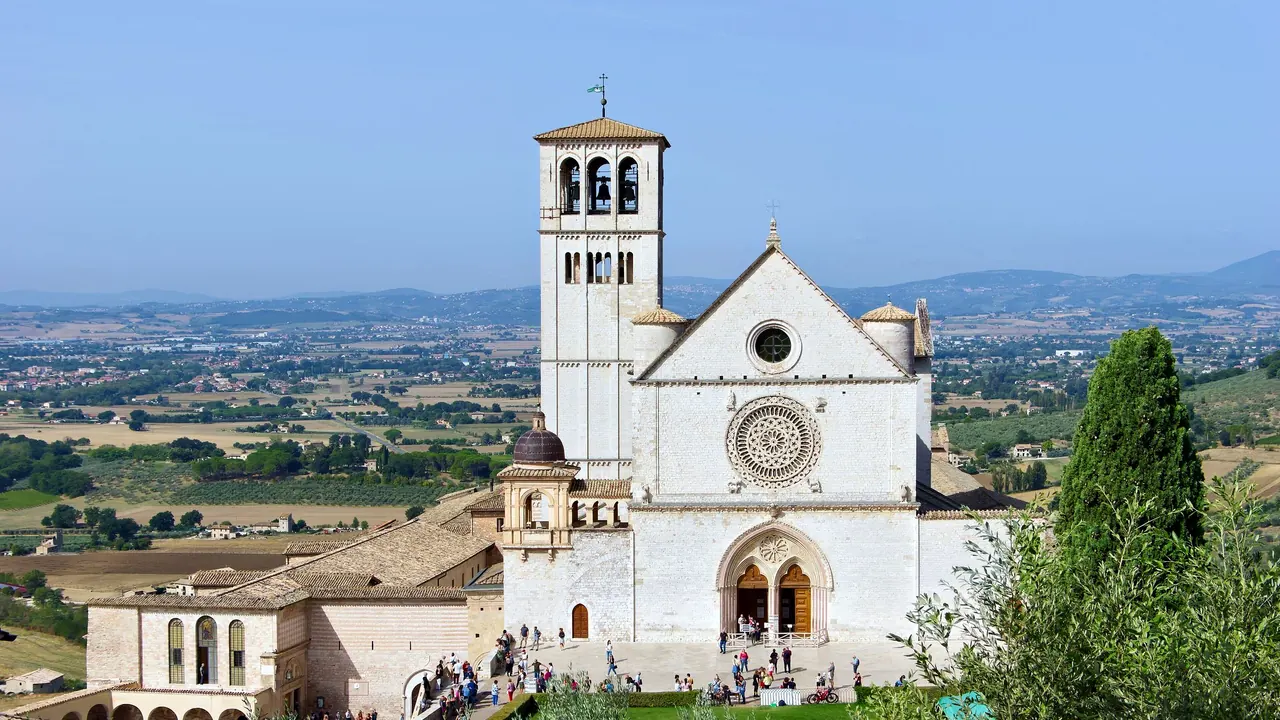
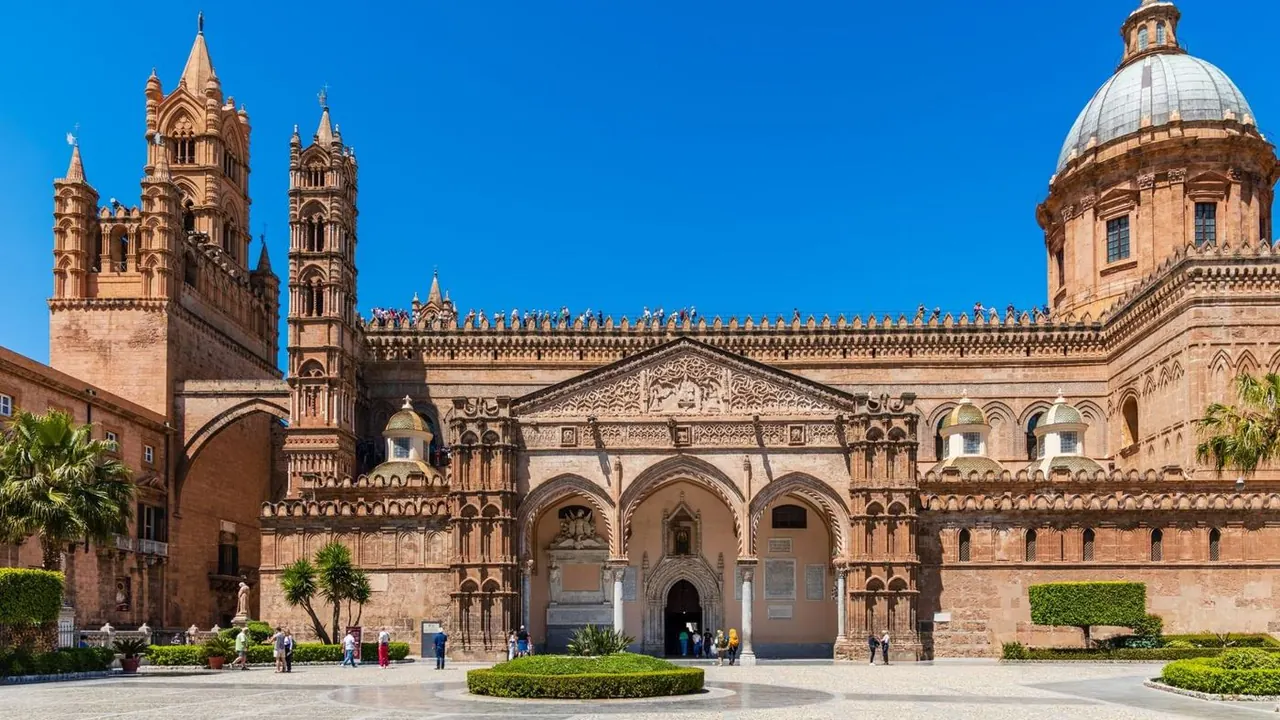
Photos: Assisi by Berthold Werner, CC BY-SA 4.0, cropped; Palermo by Antonino Giangrasso, Pexels License.
Assisi or Palermo?
Our verdict in twelve categories, each scored against the same fixed benchmark cities, and the climate month by month, so you can choose for your trip.
Choose Assisi for
- wellness
- getting around
- day trips
Choose Assisi for a slow, quiet stay built around one extraordinary basilica and the hill towns of Umbria. It suits pilgrims, people on retreat and travellers who like an early night after a long country dinner. Spello, Perugia, Spoleto and Gubbio are all close by, and the evenings are still in a way few places in Italy are.
Choose Palermo for
- beaches
- nightlife
- food and drink
Palermo is the better pick for almost everyone else, and especially for anyone who wants the sea, street food and evenings out. It has Arab-Norman mosaics and serious museums, an opera house and puppet theatres, and a sandy bay half an hour away. In return you get noise, traffic and a crumbling old centre, along with a lot more to do.
Scoreboard
Twelve categories on one fixed scale from 0 to 100. The shaded stretch is the gap between the two.
Your match
Pick a travel style or drag the sliders, and both match scores follow your weighting.
Wins on wellness and getting around with your weighting.
Wins on beaches and nightlife with your weighting.
What matters to you?
Category by category
What the scores mean for a trip.
Beaches & swimming
Assisi sits in the hills of central Italy, so a swim there means a hotel or agriturismo pool. The alternative is Lake Trasimeno, a drive away, with small lido beaches and shallow, slightly cloudy water in high summer.
Palermo has real sea within easy reach. Mondello's pale sand and turquoise water are half an hour away by bus, there are flat rocks and ladders into deep water towards Capo Gallo, and Cefalù's long town beach is an hour along the coast. You won't step from your hotel onto the sand, but you could swim every day from early summer into autumn.
Food & drink
Assisi feeds you well in a narrow, rural way. Expect strangozzi with black truffle, Castelluccio lentils, wild boar, Monte Subasio olive oil and Sagrantino from Montefalco. The catch is the set menus near the basilica, so the best meals are in side-lane trattorias or down in the valley.
Palermo is a far bigger eating city, and much of its eating happens standing up. Market fryers in Ballarò and the Capo make panelle and arancine, sfincione is sold from three-wheeled vans, and the cooking carries traces of the Arab past in pasta con le sarde and caponata. Cannoli and brioche with granita make the sweet side just as strong. Neither city has much fine dining.
Culture & sights
Both are UNESCO-listed, but they work differently. Assisi is built around a single overwhelming monument: the two stacked churches of San Francesco, with frescoes by Cimabue, Simone Martini and the Giotto cycle. Add Santa Chiara and the Temple of Minerva, and two calm days cover the town.
Palermo has more depth and more variety. There is the gold-mosaic Palatine Chapel and the rest of the Arab-Norman route, Serpotta's stucco oratories and baroque squares, and the Salinas and Abatellis museums with Selinunte's metopes and Antonello's Annunciata. That is enough for several days, though many of its streets are visibly decaying.
Nightlife
Assisi has no nightlife beyond a glass of wine after dinner and a walk through lanes that are deserted by eleven. Anyone who wants a bar crawl has to go to Perugia.
Palermo goes out on the street. The Vucciria turns into an open-air drinking spot with grills and small music bars, and the Kalsa and the lanes off Via Maqueda stay busy well past midnight on warm nights. Clubs are scarce, though, and in summer the dancing moves out to the coast around Mondello.
Nature & outdoors
Assisi's outdoors starts at the town gate. A path climbs Monte Subasio through holm-oak woods to the Eremo delle Carceri and the open summit meadows, and the flat valley below is good for cycling between Spello and Montefalco. The country is gentle, and autumn is the best time for it.
Palermo has more range because it has both sea and mountains. You can walk up Monte Pellegrino from the city or snorkel off the rocks at Capo Gallo. Further out are the Zingaro coastal trail past coves and dwarf palms, and the beech woods and high peaks of the Madonie. Most of these need a car, and midday summer heat makes walking hard in both places.
Day trips
Both make excellent bases, but the trips are different. From Assisi you get a dense cluster of medieval Umbria: Spello within minutes, Perugia and Spoleto by valley train, Gubbio and Todi about an hour off, and Orvieto worth a full day. That means many short, easy outings in one consistent landscape.
Palermo's excursions are fewer but more varied. Monreale's mosaics and Cefalù's Norman cathedral are close, while the lone Doric temple at Segesta, hilltop Erice and the Valley of the Temples at Agrigento take you back to Greek Sicily. Ustica is a hydrofoil ride offshore. In both cases a car makes the smaller places far easier.
Good for families
Palermo works somewhat better with children, mainly because of Mondello's shallow, sandy bay. Puppet shows of knights and Saracens, endless gelato and restaurants that welcome children late into the evening help too. Narrow lanes without pavements and the summer heat are the downside.
Assisi is safe and gentle, but its sights are frescoed churches that need silence, and its stepped streets are hard work with a pushchair. Older children enjoy the Rocca Maggiore and the Subasio walk. Most families base themselves at a valley agriturismo with a pool and visit the town in short trips.
Getting around
The centres are equally easy to cover on foot, but they are hard in different ways. Assisi's is tiny and walkable end to end, though it climbs steeply in stairs and slopes. The station is down on the valley floor, a bus or taxi ride below, and valley trains run along to Perugia and Spoleto.
Palermo's centre is flat, with the main sights strung along Via Maqueda and Corso Vittorio Emanuele. The obstacles here are scooters, parked cars and missing pavements, along with slow buses and stressful driving once you leave the centre.
Shopping & style
Palermo gives you more to browse. There are fashion shops along Via Libertà, moor's-head ceramics, handmade marionettes, coral jewellery and a flea market near the cathedral, and the markets sell capers, pistachio pesto and almond paste to take home.
Assisi's streets are mostly rosaries and Franciscan souvenirs. Among them you'll find embroidered Umbrian linen, Deruta ceramics, Subasio oil and Sagrantino. Neither city is a reason to travel for shopping.
Affordability
Overall costs are similar, but you save on different things. Assisi is cheap to sleep in, with simple convent guesthouses and good-value agriturismi, and its basilicas are free. Rooms inside the walls cost more around Easter and big feast days.
Palermo is cheap to eat in. A run of market stalls makes a full meal, and trattoria wine and pastries cost far less than in the north. It gets dearer in July and August, when Mondello is in demand, and a hire car for the ancient sites adds up.
Live music & performing arts
Palermo has a real performing arts calendar. The Teatro Massimo runs full seasons of opera, ballet and concerts, the Politeama is home to the Sicilian symphony orchestra, and the family-run Opera dei Pupi theatres keep a tradition alive that you won't find elsewhere.
Assisi's music is mostly sacred: organ recitals and choirs in the basilicas around feast days. In spring the costumed songs and processions of Calendimaggio take over the town. For opera or jazz, people go to Perugia.
Wellness & relaxation
Neither city has a bathing culture, but Assisi is far more restful. Once the tour groups leave it is as still as anywhere in Italy, and people come for convent retreats and silent walks to the hermitage. The calm comes from the place itself, not from any spa.
Palermo's rest has to be found in pockets: the long afternoon break, an evening stroll along the Foro Italico, the palms of the Orto Botanico. For actual treatments you need a hotel spa or the thermal waters at Termini Imerese.
When should you go?
Pick your month. The climate figures are measured averages, not a forecast.
Assisi in July
Palermo in July
Daytime high, °C
Rainfall in the month, mm
Where the figures come from
Assisi's temperatures are measured 51 km from the centre, at Frontone.
Assisi has no rain gauge within 25 km of the centre, so its rainfall comes from a gridded climate dataset read at the city rather than from a gauge further away.
Palermo's sunshine is measured 67 km from the centre, at Ustica.
Temperature and rainfall are climate normals, averaged over the years shown. Assisi: 1991-2020 normals, Frontone (50.5 km from centre). Palermo: 1991-2020 normals, Palermo / Punta Raisi (24.1 km from centre).
Assisi has proper seasons. Winter days reach only about 7°C in January, so its steep stone lanes feel raw, and by July afternoons climb to about 30°C, which makes the slopes hard work. May, September and early October are the best months, warm enough to walk all day. Rain builds through the autumn, and November is the wettest month.
Palermo stays mild all winter, at around 15°C in January, but that is also its wet season, peaking at 138mm in December. May to August is the dry, very sunny stretch, and July is almost rainless. September is when the rains return, though the days are still warm. The sea is warm enough to swim from June to October and reaches 27°C in August. If you want sightseeing and swimming together, June is the safest choice, and September works if you don't mind the odd wet day. In Assisi, avoid high summer and deep winter.
Which traveller are you?
For a beach and sun trip, Palermo is the obvious choice. Mondello's shallow, clear bay is a bus ride away, Capo Gallo has rocks for deep-water swimming, and Cefalù's beach is one train away. Assisi is hours from either coast.
On a food and nightlife trip, Palermo wins clearly. You can graze through Ballarò and the Capo on panelle, arancine and sfincione, then drink outdoors at the Vucciria until past midnight. Assisi offers good Umbrian dinners, but the town is silent by eleven.
On a relaxing and wellness trip, Assisi is the better match. Neither city has proper spas, but Assisi gives you convent guesthouses, silent walks up to the Eremo delle Carceri and empty floodlit lanes at night. Palermo's scooters and market shouting rarely let up.
Before you go
| Measure | Assisi | Palermo |
|---|---|---|
| Official language | Italian | Italian |
| Currency | Euro (EUR) | Euro (EUR) |
| Sockets | CFL230 V, 50 Hz | CFL230 V, 50 Hz |
| Driving side | Right | Right |
| Time zone | UTC+1, UTC+2 in summer | UTC+1, UTC+2 in summer |
| Emergency number | 112 | 112 |
| Elevation | 424 m | 14 m |
| Main airport | Perugia San Francesco d'Assisi – Umbria International Airport (PEG)9 km from centre17 non-stop destinations | Falcone–Borsellino Airport (PMO)25 km from centre106 non-stop destinations |
| Public holidays this year | 13 days | 13 days |
By the numbers
| Measure | Assisi | Palermo |
|---|---|---|
| City population | 27,605 | 630,167 |
| People per km² | 147 | 3,924 |
| Museums within 10 km | 14 | 42 |
| UNESCO World Heritage sites within 50 km | 2 | 1 |
| Swim season, months above 21 °C | - | 5 months |
Where else could you go?
Every comparison below shares a destination with this one, so you can follow Assisi or Palermo somewhere new.