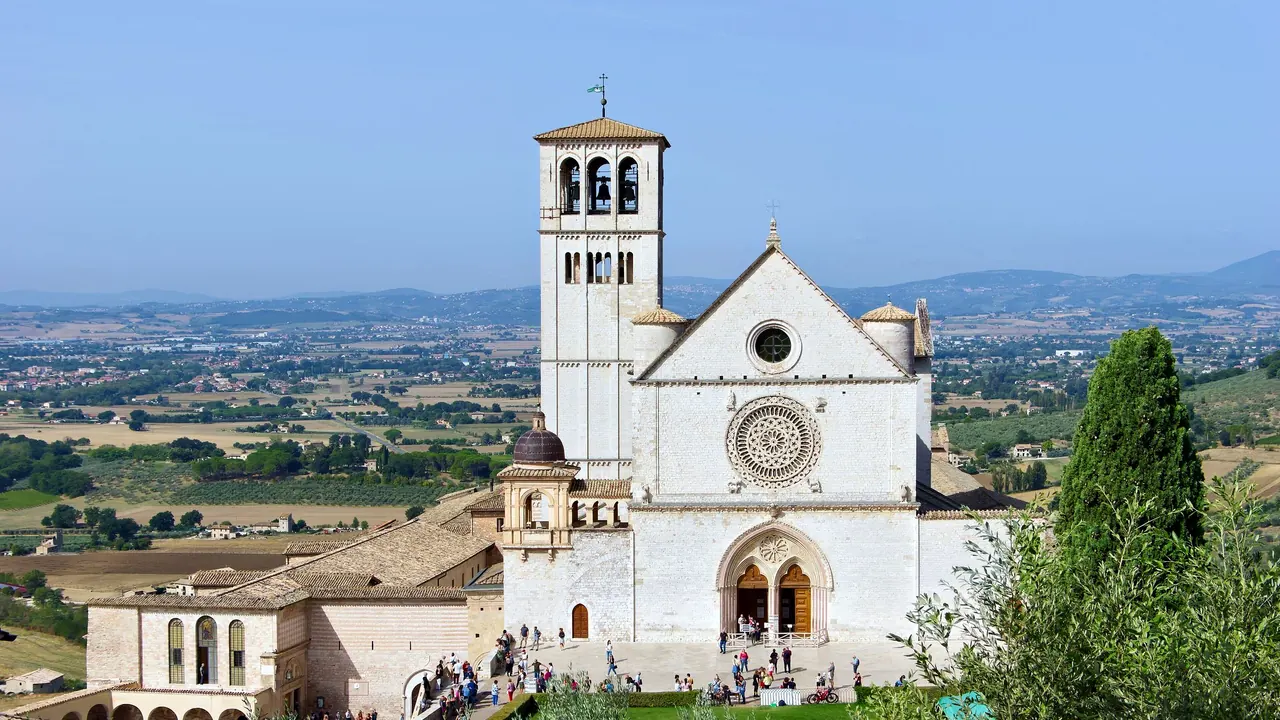
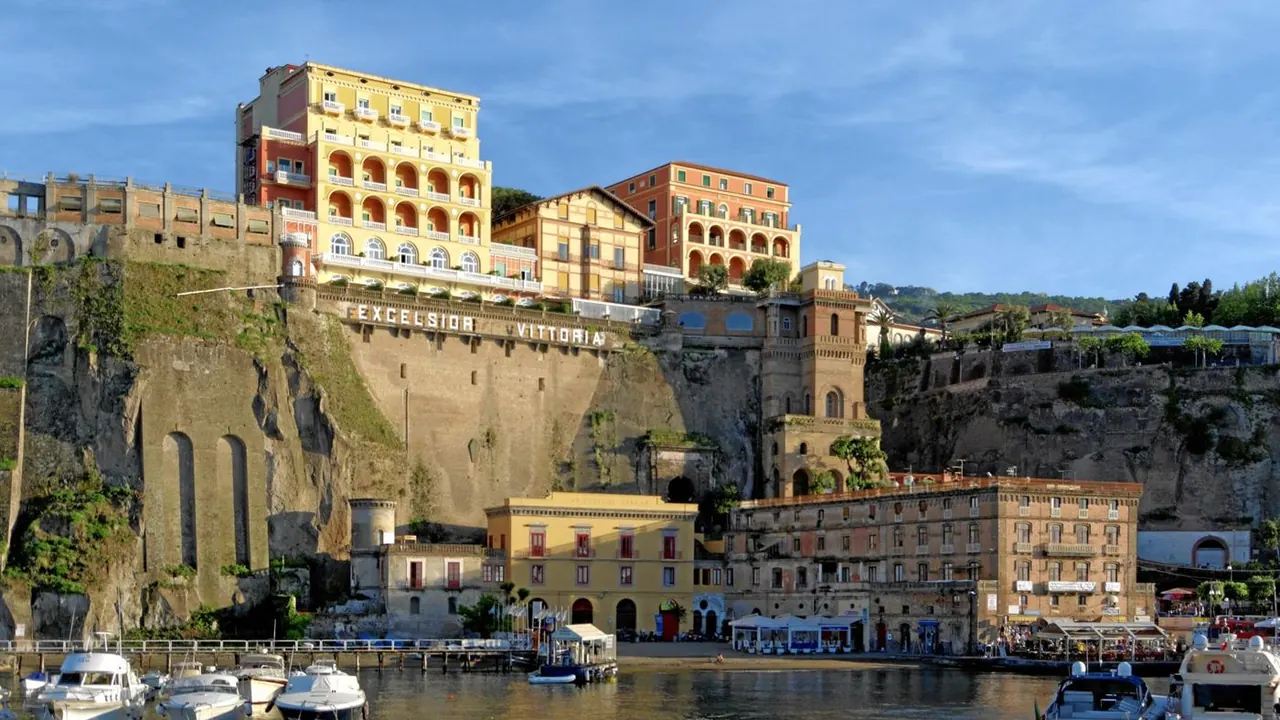
Photos: Assisi by Berthold Werner, CC BY-SA 4.0, cropped; Sorrento by Berthold Werner, CC BY-SA 3.0, cropped.
Assisi or Sorrento?
Our verdict in twelve categories, each scored against the same fixed benchmark cities, and the climate month by month, so you can choose for your trip.
Choose Assisi for
- culture and sights
- prices
- live music and the arts
Assisi suits a slower, quieter trip built around art, faith and the hill towns of Umbria. The frescoed Basilica of San Francesco is the reason to come, the evenings are still once the day-trippers leave, and convent guesthouses and valley agriturismi keep the cost down. With a car, Spello, Perugia, Gubbio and Orvieto are all within easy reach.
Choose Sorrento for
- beaches
- nightlife
- food and drink
If the sea is part of the plan, Sorrento is the better choice. You can swim off the lido piers, cross to Capri, ride the train to Pompeii and walk the cliff paths of the peninsula, all without a car. It costs more and its own sights are slighter, but the bay, the milder climate and the number of famous places close by make it the more varied base.
Scoreboard
Twelve categories on one fixed scale from 0 to 100. The shaded stretch is the gap between the two.
Your match
Pick a travel style or drag the sliders, and both match scores follow your weighting.
Wins on culture and sights and prices with your weighting.
Wins on beaches and nightlife with your weighting.
What matters to you?
Category by category
What the scores mean for a trip.
Beaches & swimming
Assisi has no beach at all. The nearest swimming is the shallow, slightly murky water of Lake Trasimeno, about 45 minutes away by car, so most visitors settle for a hotel pool.
Sorrento has no sand either, but it is a proper swimming town. The lidos at Marina Piccola and Marina Grande stand on piers over clear, deep water, the rocky inlet of the Bagni della Regina Giovanna is a short walk away, and pebble coves are a bus or boat ride off.
Food & drink
Both cook from their own land, but the land is different. Assisi means Umbrian farm food: strangozzi with black truffle, Castelluccio lentils, wild boar, Monte Subasio olive oil and Sagrantino from Montefalco. It is excellent but narrow, with no market hall and little fine dining.
Sorrento offers more. Gnocchi alla sorrentina, fish cooked all'acqua pazza, lemons in everything, dairy from the hills and Neapolitan pizza give it more variety, and the hill villages of the peninsula hold some of southern Italy's most celebrated restaurants. In both towns, the best meals are away from the main squares.
Culture & sights
This is Assisi's strongest suit by a long way. The double Basilica of San Francesco, with the Giotto cycle above and Cimabue and Lorenzetti below, is one of Europe's great monuments, and Santa Chiara, the Temple of Minerva and the Rocca Maggiore fill out two full days.
Sorrento's own sights are pleasant rather than essential: the cloister of San Francesco, the Museo Correale's Neapolitan paintings and porcelain, and the odd ruined mill in the Vallone dei Mulini. Its real heritage is in the places you travel to from it.
Nightlife
Neither town is for late nights, but Assisi is almost silent after dark, with a glass of Sagrantino and an empty floodlit lane by eleven. For bars, you go to Perugia.
Sorrento has more going on. After the passeggiata on Corso Italia there are cocktail terraces over the bay, piano bars playing Neapolitan song, a few pubs and, in summer, a club or two open past midnight.
Nature & outdoors
Assisi offers gentle hill walking. The path up Monte Subasio passes the Eremo delle Carceri and climbs to open summit meadows, and the olive groves and vineyards of the valley below are good for cycling. The Sibillini and Valnerina are further afield by car.
Sorrento's landscape is more dramatic. Cliff paths lead to Punta Campanella and the protected bay of Ieranto, the Path of the Gods and the crater of Vesuvius are close, and the sea adds kayaking and boat trips around Capri's grottoes.
Day trips
Both are superb bases, and the difference is in the kind of trip. From Assisi you have the Umbrian hill towns: Spello, Perugia, Spoleto, Gubbio, Todi and Orvieto, with Montepulciano over the Tuscan border. The valley railway covers some of them, but you need a car for the rest.
Sorrento has the edge because of the sheer fame of what lies around it. Pompeii and Herculaneum are a short train ride away, ferries cross to Capri, summer boats reach Positano and Amalfi, and Naples is about an hour off. You can do all of it by train or boat.
Good for families
Neither town is made for children, but Sorrento works better. Its flat, largely pedestrian centre is easy with a pushchair, and boat rides to Capri, the ruins of Pompeii and gelato keep children busy. The swimming is into deep water, though, so it does not suit small children.
Assisi's stepped lanes are hard going with a pushchair, and its frescoed churches ask for silence. Older children enjoy the Rocca Maggiore, but families usually stay in the valley and come up for short visits.
Getting around
Both are compact and walkable, with similar limits once you leave town. Assisi's centre climbs steeply between the basilica and the cathedral, the station is 4km below on the valley floor, and outside the rail line you will want a car.
Sorrento's centre is flat, with lifts down to the marinas, and a car is more trouble than help. You rely instead on the crowded Circumvesuviana, slow coast buses and ferries.
Shopping & style
Sorrento is clearly the better of the two for shopping, though neither has fashion or design to speak of. In Assisi the streets around the basilicas are lined with rosaries, Tau crosses and Franciscan souvenirs. The worthwhile local goods take some finding: linen with Assisi embroidery, Deruta ceramics, truffle products and Sagrantino.
Sorrento's lanes around Corso Italia and Via San Cesareo sell real local crafts. There are intarsia boxes and trays from the town's long tradition of wood inlay, leather sandals made to measure while you wait, and coral and cameos, alongside the limoncello and lemon soaps. For bigger shopping, Naples and the boutiques of Capri are close by.
Affordability
Assisi is noticeably easier on the wallet. The basilicas cost nothing to enter, convent guesthouses offer clean, simple rooms and agriturismi in the valley are good value. Only the restaurants beside the basilicas charge for their location.
Sorrento sits on one of Italy's most sought-after coasts, and sea-view rooms, lido sunbeds and boat trips all cost resort money in summer. Cheap trains and back-lane pizzerias help, and spring and late autumn bring hotel rates down.
Live music & performing arts
Both are thin on stage culture, and both send serious audiences to a bigger city: Perugia's summer jazz festival from Assisi, Naples' Teatro di San Carlo from Sorrento. In Assisi, music is sacred and seasonal, with organ and choral concerts in the basilica and the costumed song of Calendimaggio in spring.
Sorrento leans towards popular and secular music: tarantella and Neapolitan song shows for visitors, hotel pianists singing 'Torna a Surriento' and summer chamber music in the cloister of San Francesco.
Wellness & relaxation
Sorrento is slightly better for pampering. Its cliff-top hotels have spas and pools over the bay, and the thermal gardens of Ischia are a ferry ride away. Its centre is noisy in high summer, though.
Assisi's restfulness is of another kind: retreats in convent guesthouses, silent early walks to the hermitage on Monte Subasio and empty lanes at dusk, with only a few spas in country hotels.
When should you go?
Pick your month. The climate figures are measured averages, not a forecast.
Assisi in July
Sorrento in July
Daytime high, °C
Rainfall in the month, mm
Where the figures come from
Assisi's temperatures are measured 51 km from the centre, at Frontone.
Assisi has no rain gauge within 25 km of the centre, so its rainfall comes from a gridded climate dataset read at the city rather than from a gauge further away.
Sorrento has no rain gauge within 25 km of the centre, so its rainfall comes from a gridded climate dataset read at the city rather than from a gauge further away.
Sorrento's sunshine is measured 54 km from the centre, at Grazzanise.
Temperature and rainfall are climate normals, averaged over the years shown. Assisi: 1991-2020 normals, Frontone (50.5 km from centre). Sorrento: 2005-2025 (sunshine 1991-2020, rainfall 1991-2020) normals, Capri (17 km from centre).
Assisi is at its best in spring and autumn. Winters on the hill are cold, with January highs around 7°C. By July the afternoons reach about 30°C, which makes the steep lanes and the climb up Monte Subasio hard work. May, June, September and early October are the best months for walking the streets and the hills. Rain picks up through autumn and is heaviest in November.
Sorrento is milder all year. January is near 13°C, so a winter visit is fine for walking even if it is not beach weather. Its summers are much drier than Assisi's, with very little rain from June to August and long, sunny days. The sea is warm enough for swimming from June to October and is warmest in August, at about 26°C. Autumn turns wet, though, and November brings around 151mm of rain, so late spring and September are the best times to go.
Which traveller are you?
On a beach and sun trip, Sorrento is the only real option. It has clear, deep water off the lido piers, a sea that stays warm into October and boats to the coves of Capri. Assisi is two hours from either coast.
For a culture and arts trip, Assisi wins clearly. The Basilica of San Francesco holds frescoes by Giotto, Cimabue and Simone Martini, and the whole town is a UNESCO site. Sorrento's own museums and churches take a day or two at most.
On a tight budget, you give up less in Assisi. You can walk everywhere, eat in the trattorias on the side lanes and take the valley train to Spello. To save money in Sorrento, you come outside summer, swim from the rocks instead of a lido and do without a sea view.
Before you go
| Measure | Assisi | Sorrento |
|---|---|---|
| Official language | Italian | Italian |
| Currency | Euro (EUR) | Euro (EUR) |
| Sockets | CFL230 V, 50 Hz | CFL230 V, 50 Hz |
| Driving side | Right | Right |
| Time zone | UTC+1, UTC+2 in summer | UTC+1, UTC+2 in summer |
| Emergency number | 112 | 112 |
| Elevation | 424 m | 50 m |
| Main airport | Perugia San Francesco d'Assisi – Umbria International Airport (PEG)9 km from centre17 non-stop destinations | Naples International Airport (NAP)30 km from centre131 non-stop destinations |
| Public holidays this year | 13 days | 13 days |
By the numbers
| Measure | Assisi | Sorrento |
|---|---|---|
| City population | 27,605 | 15,407 |
| People per km² | 147 | 1,541 |
| Museums within 10 km | 14 | 6 |
| UNESCO World Heritage sites within 50 km | 2 | 5 |
| Swim season, months above 21 °C | - | 5 months |
Where else could you go?
Every comparison below shares a destination with this one, so you can follow Assisi or Sorrento somewhere new.
- Positanovs Sorrento
- Amalfivs Sorrento
- Naplesvs Sorrento
- Salernovs Sorrento
- San Marinovs Assisi
- Sienavs Assisi