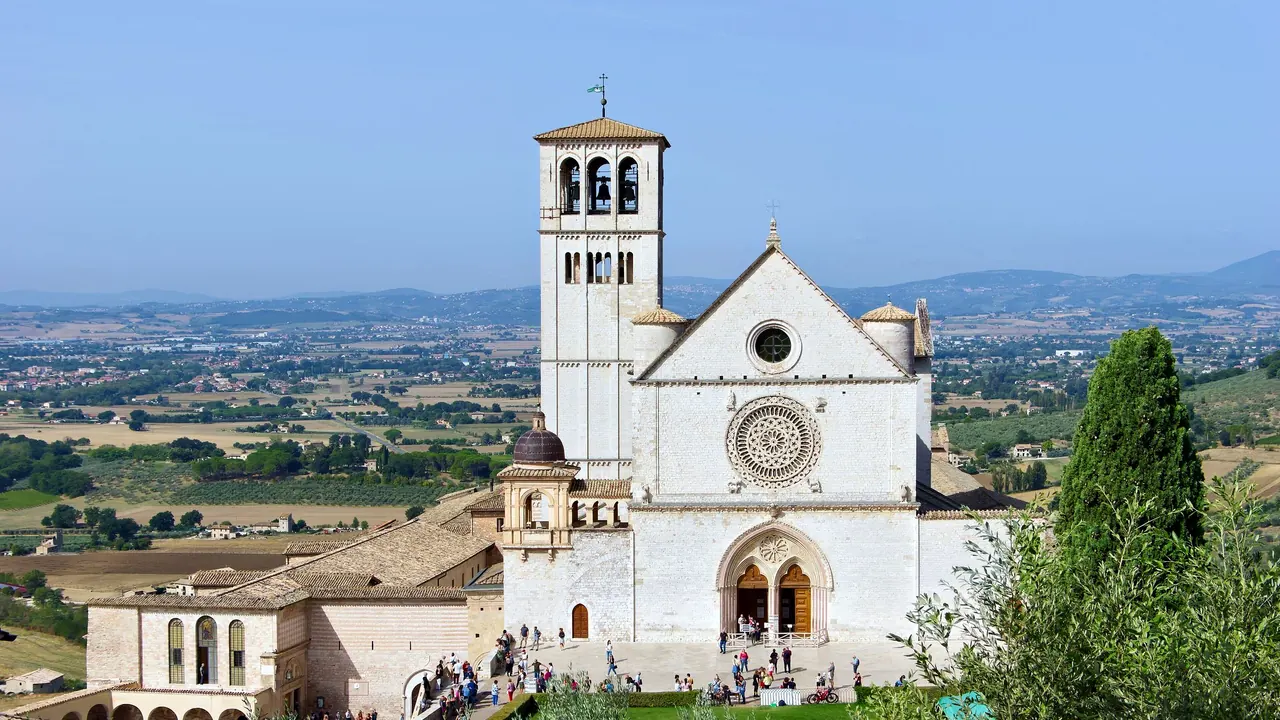
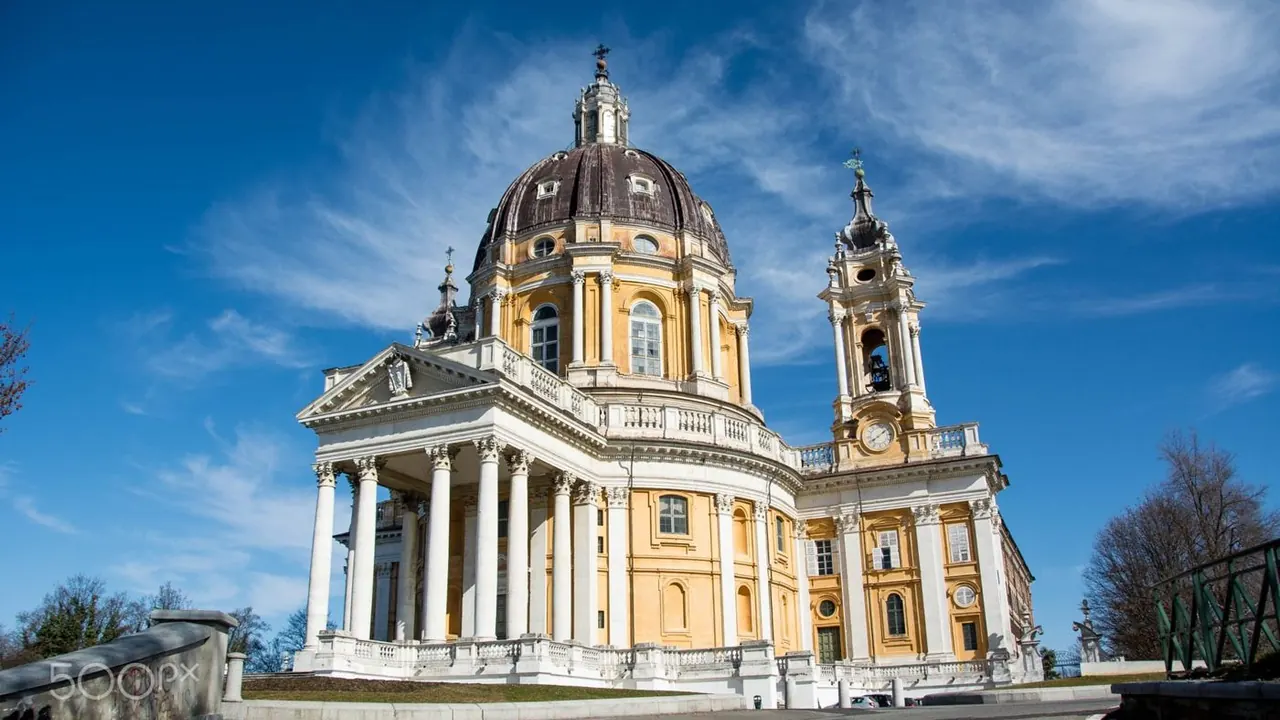
Photos: Assisi by Berthold Werner, CC BY-SA 4.0, cropped; Turin by Konstantin Dacosta, CC BY 3.0, cropped.
Assisi or Turin?
Our verdict in twelve categories, each scored against the same fixed benchmark cities, and the climate month by month, so you can choose for your trip.
Choose Assisi for
- day trips
Assisi suits a slow, contemplative trip. It is a small stone town built around the Basilica of San Francesco, so you come for Giotto's frescoes and the Franciscan sites, then quiet evenings once the day visitors have gone. It also makes a calm base for touring Umbria's hill towns. Choose it if you want stillness more than variety, and you don't mind a narrow range of restaurants and no nightlife at all.
Choose Turin for
- nightlife
- live music and the arts
- food and drink
Turin is the better pick for a fuller city stay. The Museo Egizio and the Savoy palaces give it the stronger culture, and the food is among the best in Italy, from aperitivo to Barolo. It also has an opera house, a proper bar scene and the Alps on the horizon. Its flat, arcaded centre makes it easier with children too, and it suits travellers who want plenty to do from morning until late.
Scoreboard
Twelve categories on one fixed scale from 0 to 100. The shaded stretch is the gap between the two.
Your match
Pick a travel style or drag the sliders, and both match scores follow your weighting.
Wins on day trips with your weighting.
Wins on nightlife and live music and the arts with your weighting.
What matters to you?
Category by category
What the scores mean for a trip.
Beaches & swimming
Neither city is a place for a beach. Both are inland, and the sea is around two hours away from each. The only differences are what lies closest. From Assisi it is the shallow, warm lido beaches of Lake Trasimeno. From Turin it is small lakes such as Avigliana, or a long day on the Ligurian Riviera. Turin's lakes and coast are a little easier to reach, but if swimming matters, either way you will want a hotel with a pool.
Food & drink
This is one of the widest gaps between the two. Assisi serves honest Umbrian country food: strangozzi with black truffle, Castelluccio lentils, Monte Subasio olive oil and Sagrantino. But the choice is narrow, and the tables near the basilica cater to tour groups.
Turin is a real food city. It has agnolotti del plin, vitello tonnato, autumn white truffles from the Langhe, Barolo, and the city's own vermouth and gianduja. Add the arcade cafés serving bicerin and the vast Porta Palazzo market, and there is enough to eat well for a week without repeating yourself.
Culture & sights
Turin has the broader offering. The Museo Egizio, the Royal Palace, the ring of Savoy residences, the Cinema Museum inside the Mole and serious contemporary art add up to several full days of sightseeing.
Assisi's strength is depth rather than range. The two stacked churches of San Francesco, with frescoes by Giotto, Cimabue and Simone Martini, are among the great monuments of Europe. With Santa Chiara and the Temple of Minerva, the whole town can be seen calmly in two days.
Nightlife
Assisi has essentially no nightlife. An evening there means a glass of Sagrantino and a walk through empty floodlit lanes, and anyone wanting more drives half an hour to Perugia.
Turin has a proper, easy-going night scene. It starts with the long aperitivo, then moves on to wine and cocktail bars in the Quadrilatero Romano, student crowds in San Salvario and the riverside Murazzi in summer. There are clubs in old industrial spaces, though the mood is more sociable than wild.
Nature & outdoors
Assisi has a mountain on its doorstep. You can walk from town up Monte Subasio past the Eremo delle Carceri to open summit meadows, and cycle the flat valley to Spello and Montefalco. It is gentle country, at its best in spring flowers and autumn.
Turin has the Alps. The Gran Paradiso, with its ibex and high trails, and the ski slopes around Sestriere are within an hour or two, which brings skiing, climbing and hut-to-hut hiking. You can't walk straight out into this landscape as you can in Assisi, but it is far grander.
Day trips
Both are excellent bases, and the difference is in the kind of day out. From Assisi you tour Umbrian hill towns, many of them close together: Spello, Perugia, Spoleto, Gubbio, Todi and Orvieto, with ceramics at Deruta and Sagrantino at Montefalco.
Turin's days out are wine country and big cities. There are the Langhe villages of Barolo and Alba, the Monferrato hills, Milan by fast train and Genoa further off, plus the Sacra di San Michele perched above the Susa valley. In both cases, a car makes the smaller places much easier to reach.
Good for families
Turin works noticeably better with children. The flat centre and covered arcades are easy with a pushchair, the glass lift up the Mole and the mummies at the Museo Egizio tend to win over older children, and Valentino park gives them room to run. Zoom Torino makes a full day out.
Assisi is safe and welcoming, but it offers children little beyond the Rocca Maggiore and a walk on Monte Subasio. Families usually stay at a valley agriturismo with a pool and visit the town in short bursts.
Getting around
Turin is easier to get around. Its centre is a level grid of arcades you can walk from Porta Nuova to the Po, with a metro line, trams and fast trains to the rest of Italy.
Assisi is tiny but steep, with stairs and slopes between the basilica and the cathedral. Its station is about 4km below on the valley floor, and beyond the regional rail line through Perugia and Spoleto, most visitors need a car.
Shopping & style
Turin gives shoppers much more to do. Via Roma has the big labels under its arcades, Via Garibaldi has the high-street shops, and there are antique dealers along Via Maria Vittoria and the Balon flea market. The best buys are chocolate, truffles and wine.
Assisi's streets are mostly rosaries and Franciscan souvenirs. Among them are worthwhile local goods: embroidered Assisi linens, Deruta ceramics and good olive oil.
Affordability
Costs are similar in both, comfortable rather than cheap, but the savings come in different places. In Assisi the basilicas are free to enter, and convent guesthouses and valley agriturismi keep beds cheap. Eating away from the streets nearest the basilica helps too.
In Turin, a generous aperitivo can stand in for dinner, and the market, the bakeries and inexpensive transport help. Museum tickets, fine dining and the white truffle season are where the bill rises.
Live music & performing arts
In Assisi, music follows the church calendar. Organ recitals and choral concerts are held in the Basilica of San Francesco and other churches around the religious feasts, and in spring Calendimaggio fills the lanes with medieval costume, song and processions. For opera or the summer jazz festival, people go to Perugia.
Turin offers far more, on almost any night of the year. The Teatro Regio stages a full season of opera and ballet, the RAI National Symphony Orchestra plays in its own auditorium, and Renzo Piano's Lingotto hall and the jazz clubs in the centre add more. Plays at the baroque Teatro Carignano are almost all in Italian, so visitors who don't speak it will get more from the music.
Wellness & relaxation
Neither city has a bathing culture, and spas in both are mainly in hotels. The calm takes a different form in each. Assisi offers spiritual quiet: convent retreats, silent walks to the Eremo delle Carceri and empty lanes at dawn.
Turin's calm is urban. It means long coffees in historic cafés, strolls under the arcades and along the Po, and real thermal baths at Acqui Terme or in the Aosta valley, each close to two hours away.
When should you go?
Pick your month. The climate figures are measured averages, not a forecast.
Assisi in July
Turin in July
Daytime high, °C
Rainfall in the month, mm
Where the figures come from
Assisi's temperatures are measured 51 km from the centre, at Frontone.
Assisi has no rain gauge within 25 km of the centre, so its rainfall comes from a gridded climate dataset read at the city rather than from a gauge further away.
Turin has no rain gauge within 25 km of the centre, so its rainfall comes from a gridded climate dataset read at the city rather than from a gauge further away.
Temperature and rainfall are climate normals, averaged over the years shown. Assisi: 1991-2020 normals, Frontone (50.5 km from centre). Turin: 1991-2020 normals, Torino / Caselle (15.4 km from centre).
The two follow much the same temperature curve. Both are cold in winter, mild in spring and autumn, and hot in high summer, with July highs around 30°C. Midsummer afternoons are tiring on Assisi's steep lanes and sticky on Turin's plain. In both places, late spring and September to early October are the most comfortable months for walking.
The rain falls at different times. In Assisi it builds through autumn to a wet November of about 94mm, while spring stays fairly dry, which makes April to early June an especially good window there. Turin is the reverse. Its wettest stretch is late spring, with May at around 115mm, and its winters are drier. That makes September and October the safer bet in Turin, and they also bring truffle season. Neither city has the sea, so the only summer swimming is in lakes in July and August.
Which traveller are you?
On a food and nightlife trip, Turin is far ahead. Piedmontese cooking, Barolo and the vermouth aperitivo lead into evenings in San Salvario and the Quadrilatero. Assisi offers good rustic Umbrian meals, but the town goes silent soon after dinner.
On a family trip with children, Turin is the easier choice. Its flat grid and arcades suit pushchairs, and the Cinema Museum lift, the car museum and the Egyptian mummies keep children busy. Assisi's stepped lanes and frescoed churches that need silence offer young ones little.
For pilgrims and visitors on a spiritual retreat, Assisi has no equal. It has Saint Francis's basilica, the Porziuncola, the hermitage on Monte Subasio and simple convent guesthouses. Turin has the Shroud in its cathedral, but nothing like a whole town devoted to its saint.
Before you go
| Measure | Assisi | Turin |
|---|---|---|
| Official language | Italian | Italian |
| Currency | Euro (EUR) | Euro (EUR) |
| Sockets | CFL230 V, 50 Hz | CFL230 V, 50 Hz |
| Driving side | Right | Right |
| Time zone | UTC+1, UTC+2 in summer | UTC+1, UTC+2 in summer |
| Emergency number | 112 | 112 |
| Elevation | 424 m | 239 m |
| Main airport | Perugia San Francesco d'Assisi – Umbria International Airport (PEG)9 km from centre17 non-stop destinations | Turin Airport (TRN)14 km from centre65 non-stop destinations |
| Public holidays this year | 13 days | 13 days |
By the numbers
| Measure | Assisi | Turin |
|---|---|---|
| City population | 27,605 | 841,600 |
| People per km² | 147 | 6,474 |
| Museums within 10 km | 14 | 72 |
| UNESCO World Heritage sites within 50 km | 2 | 4 |
Where else could you go?
Every comparison below shares a destination with this one, so you can follow Assisi or Turin somewhere new.