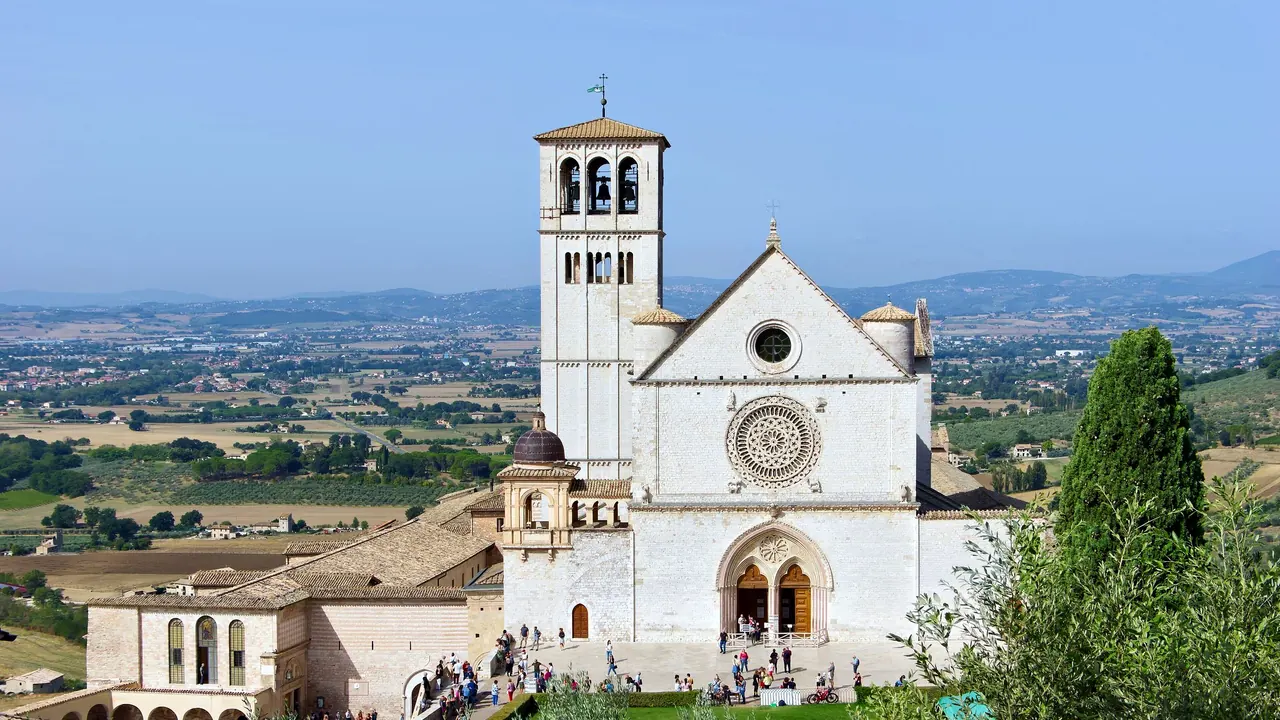
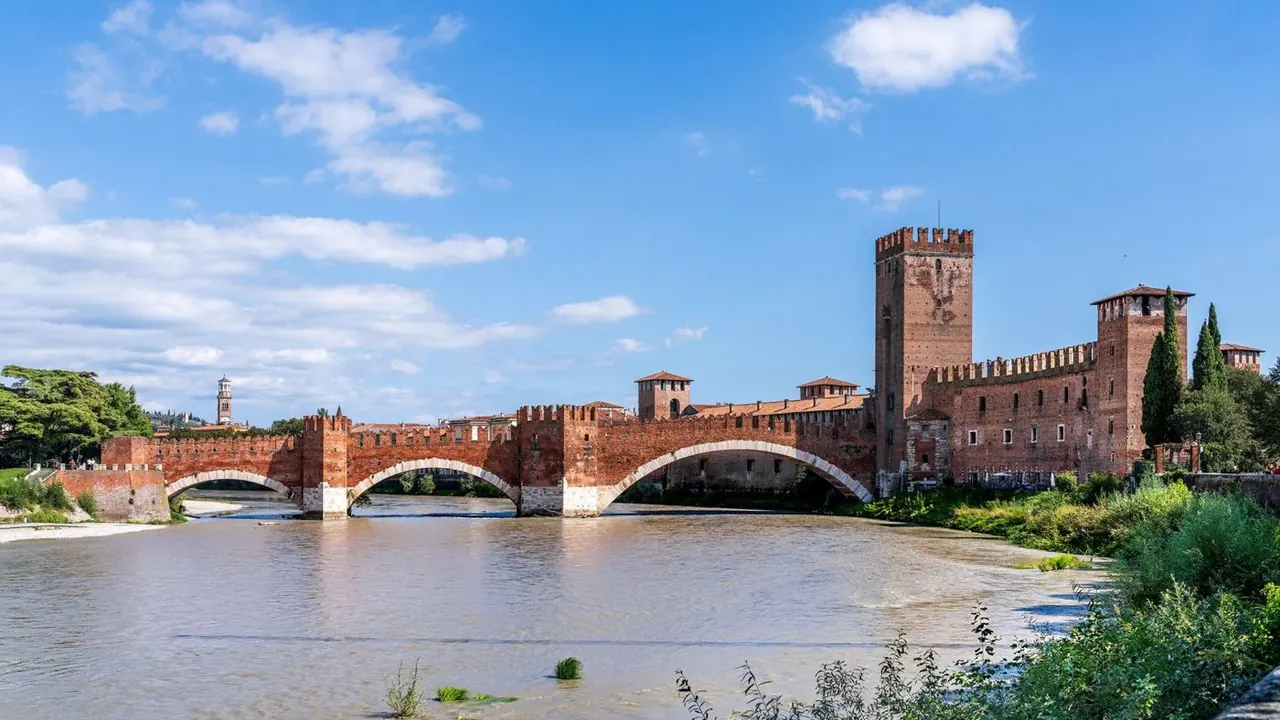
Photos: Assisi by Berthold Werner, CC BY-SA 4.0, cropped; Verona by NorbertNagel, CC BY-SA 4.0, cropped.
Assisi or Verona?
Our verdict in twelve categories, each scored against the same fixed benchmark cities, and the climate month by month, so you can choose for your trip.
Choose Assisi for
- prices
Assisi suits travellers who want quiet and meaning more than variety. The Basilica of San Francesco and the stone lanes around it reward slow looking, Monte Subasio starts at the town gate, and the Umbrian hill towns are close by. Evenings are still and rooms in convent guesthouses or valley agriturismi cost less, so it works best for pilgrims, walkers and couples who are happy with early nights.
Choose Verona for
- live music and the arts
- families
- beaches
Verona is the better all-round choice, especially for a first trip to northern Italy or a mixed group. Its flat Roman and medieval centre is easy to walk, the food and wine are better, summer evenings bring opera in the Arena, and trains reach Venice, Padua and Lake Garda. Families and anyone who wants some life after dark will find far more here.
Scoreboard
Twelve categories on one fixed scale from 0 to 100. The shaded stretch is the gap between the two.
Your match
Pick a travel style or drag the sliders, and both match scores follow your weighting.
Wins on prices with your weighting.
Wins on live music and the arts and families with your weighting.
What matters to you?
Category by category
What the scores mean for a trip.
Beaches & swimming
Neither town is on the coast, but Verona has much better access to the water. Lake Garda's southern shore at Peschiera, Lazise and Sirmione is about half an hour away, with clear water, lidos, lawns and Sirmione's limestone shelves, so a summer swim makes an easy afternoon out.
From Assisi, the nearest swimming is at Lake Trasimeno, about 45 minutes by car, where the water is warm but shallow and slightly cloudy. Most visitors settle for a hotel pool.
Food & drink
Verona eats better and more widely. Amarone risotto, bigoli with duck and bollito with pearà are served in wood-panelled osterie, and Valpolicella, Soave and Bardolino are made close by, with a glass and a snack at a counter as the evening ritual.
Assisi's cooking is plainer Umbrian country food: strangozzi with black truffle, Castelluccio lentils, torta al testo, and excellent Subasio olive oil with Sagrantino to drink. The choice is narrower, and you need to leave the set menus near the basilica to find the good trattorias.
Culture & sights
Verona has more range. Its Roman Arena, Roman theatre, Scaliger tombs, Romanesque San Zeno and the Scarpa-designed museum in Castelvecchio cover two thousand years of history, and two or three days are not too many.
Assisi has one great masterpiece rather than a whole city of sights. The two churches of San Francesco, with frescoes by Cimabue, Simone Martini and the Giotto cycle, rank among Europe's finest interiors, and Santa Chiara, the Temple of Minerva and the Porziuncola fill out a calm two days.
Nightlife
Verona has an evening scene, though a modest one: spritz in Piazza delle Erbe, cheaper wine bars in Veronetta that stay busier in term time, and the opera crowd spilling out of the Arena near midnight in summer.
Assisi goes almost silent after the day visitors leave, apart from a quiet glass of Sagrantino and lanes that are empty by eleven. Anyone who wants more has to go to Perugia.
Nature & outdoors
Both have good country nearby, but of different kinds. In Assisi you can walk straight out of town up Monte Subasio, past the Eremo delle Carceri to summit meadows at about 1,290m. Verona's outdoors means wine hills, the Adige cycle route north, and further out Monte Baldo, the Lessinia plateau and the strong winds on northern Garda, which suit sailors and windsurfers.
Day trips
Both are excellent bases, and Verona has the edge because its fast trains take you further. Venice, Vicenza, Padua and Mantua are each about an hour or less away, and the Garda towns and Valpolicella cellars are close by.
From Assisi, the trips are mainly to Umbrian hill towns: Spello, Perugia, Spoleto, Gubbio, Todi and Orvieto. They are lovely and similar in character, and outside the valley rail line you will need a car.
Good for families
Verona works much better with children. Gardaland, the water parks around southern Garda and the safari section at Parco Natura Viva are all within reach, the Arena itself appeals to children, and the flat centre suits pushchairs.
Assisi is safe and welcoming, but it has steep stepped streets and churches that need silence. Families usually stay at an agriturismo with a pool and visit the town in short trips, with the Rocca Maggiore as the main draw for older children.
Getting around
Both centres are small enough to walk, but Verona's is flat. Inside the river loop you can stroll from the Arena to Castelvecchio, Verona's station is a twenty-minute walk or short bus ride away, and the rail lines towards Venice, Milan and the lake are good.
Assisi's lanes climb steeply from the basilica up to the cathedral, and its station is 4km below in Santa Maria degli Angeli. Beyond the valley line buses are sparse, so most people exploring Umbria hire a car.
Shopping & style
Verona at least has a proper shopping street. Marble-paved Via Mazzini has Italian fashion labels, and there are boutiques and jewellers along Corso Porta Borsari, along with Amarone and pandoro to take home. It is smart rather than serious, and Milan is not far.
In Assisi, shops mostly sell rosaries and Tau crosses. The things worth buying are embroidered Assisi linen, Deruta ceramics, truffle products and olive oil.
Affordability
Assisi is the cheaper of the two. Its basilicas are free, convent guesthouses charge little for a clean room, and valley agriturismi are good value, although hotels inside the walls cost more around Easter and on feast days.
In Verona, eating out is reasonable at Veronetta osterie and wine counters, but hotels in the centre are expensive. Rooms become scarce and dear on summer opera nights and during trade fairs.
Live music & performing arts
For live performance there is no contest. Opera in the Roman Arena, with grand Verdi and Puccini productions on the ancient tiers through most of the summer, is a reason to visit in itself. The Roman theatre adds Shakespeare, dance and jazz, and Teatro Filarmonico runs a season in the cooler months.
Assisi offers organ and choral music in its churches and the costumed Calendimaggio festival in spring. For opera or the summer jazz festival you have to go to Perugia.
Wellness & relaxation
Verona has actual spas within reach. Sirmione's sulphur-water thermal centre faces the lake, a spring-fed thermal park lies near Lazise, and the springs at Caldiero have been used since Roman times.
Assisi offers a different kind of rest: retreats in convent guesthouses, silent walks to the Carceri hermitage and early mornings with no one about. It has few treatments, but very few places are as quiet.
When should you go?
Pick your month. The climate figures are measured averages, not a forecast.
Assisi in July
Verona in July
Daytime high, °C
Rainfall in the month, mm
Where the figures come from
Assisi's temperatures are measured 51 km from the centre, at Frontone.
Assisi has no rain gauge within 25 km of the centre, so its rainfall comes from a gridded climate dataset read at the city rather than from a gauge further away.
Temperature and rainfall are climate normals, averaged over the years shown. Assisi: 1991-2020 normals, Frontone (50.5 km from centre). Verona: 1991-2020 normals, Verona / Villafranca (11.6 km from centre).
Assisi is at its best in May, June and September, when the days are warm enough for long walks on Monte Subasio but not too hot. In July and August both towns reach about 30°C, and in Assisi's steep lanes the afternoon heat is harder going. High summer is also Assisi's driest season, with only 34mm of rain in July, which is good timing for a swim at Lake Trasimeno. After that the rain builds through autumn to a wet November of 94mm, and daytime highs stay in single figures from December right through February.
Verona warms up a little earlier, so May is already comfortable for walking around the centre, and Lake Garda is warm enough for swimming from June to September. Its rain is spread more evenly from April to November and peaks in September. Summer is still very sunny, with around 310 hours of sunshine in July. Its winter is about as cold as Assisi's in December and January, but February is a little milder, and the first warm days come sooner.
Which traveller are you?
On a family trip with children, Verona makes each day easier to plan. A morning among the Roman stones can turn into an afternoon of rides or lake swimming, and there are few places where children have to keep quiet. Assisi asks them for silence in its churches and stamina on its steep streets.
For a food and nightlife trip, Verona keeps the evening going. A spritz at a counter leads to a long dinner in an osteria and then a late glass in a Veronetta wine bar. In Assisi the evening ends after dinner, with a quiet walk home.
On a tight budget, Assisi lets you spend little without feeling you are missing out. Its main sight costs nothing to see, simple beds are easy to find, and its quiet evenings give you little to spend money on. In Verona the bill grows mainly with where you sleep, so staying outside the centre is where you save.
Before you go
| Measure | Assisi | Verona |
|---|---|---|
| Official language | Italian | Italian |
| Currency | Euro (EUR) | Euro (EUR) |
| Sockets | CFL230 V, 50 Hz | CFL230 V, 50 Hz |
| Driving side | Right | Right |
| Time zone | UTC+1, UTC+2 in summer | UTC+1, UTC+2 in summer |
| Emergency number | 112 | 112 |
| Elevation | 424 m | 59 m |
| Main airport | Perugia San Francesco d'Assisi – Umbria International Airport (PEG)9 km from centre17 non-stop destinations | Verona Villafranca Valerio Catullo Airport (VRN)10 km from centre96 non-stop destinations |
| Public holidays this year | 13 days | 13 days |
By the numbers
| Measure | Assisi | Verona |
|---|---|---|
| City population | 27,605 | 255,588 |
| People per km² | 147 | 1,285 |
| Museums within 10 km | 14 | 18 |
| UNESCO World Heritage sites within 50 km | 2 | 5 |
Where else could you go?
Every comparison below shares a destination with this one, so you can follow Assisi or Verona somewhere new.