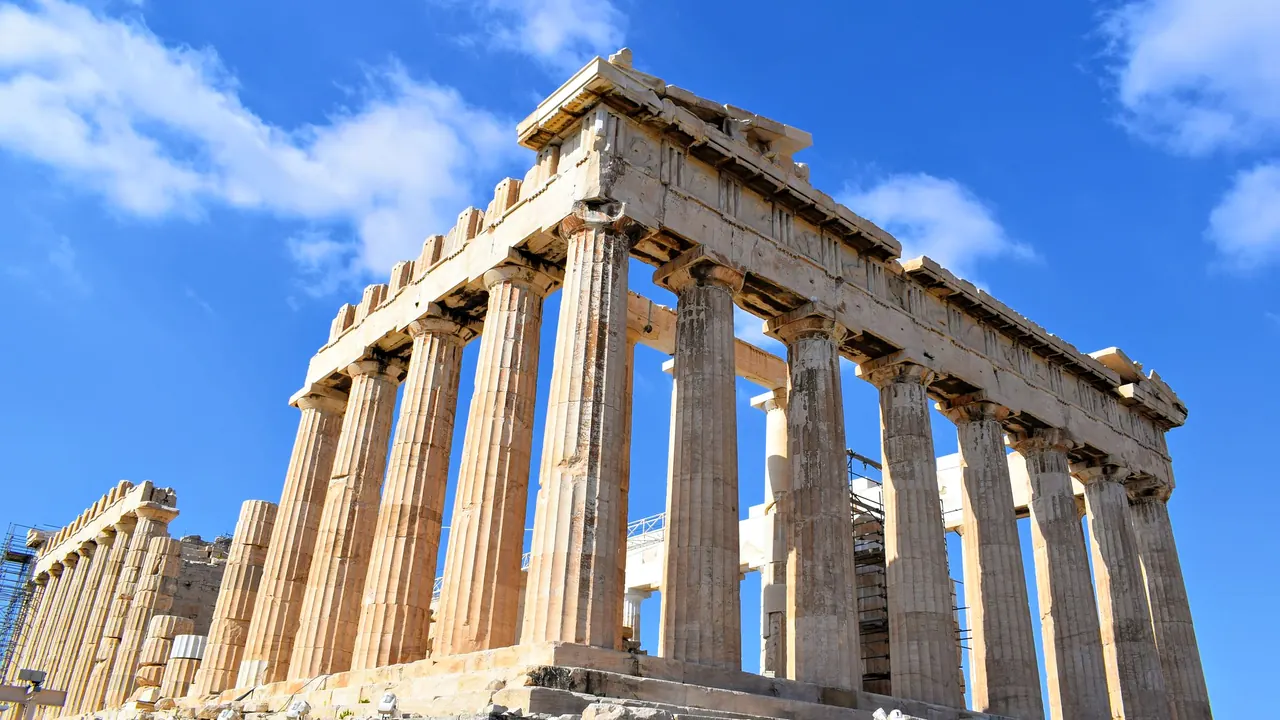
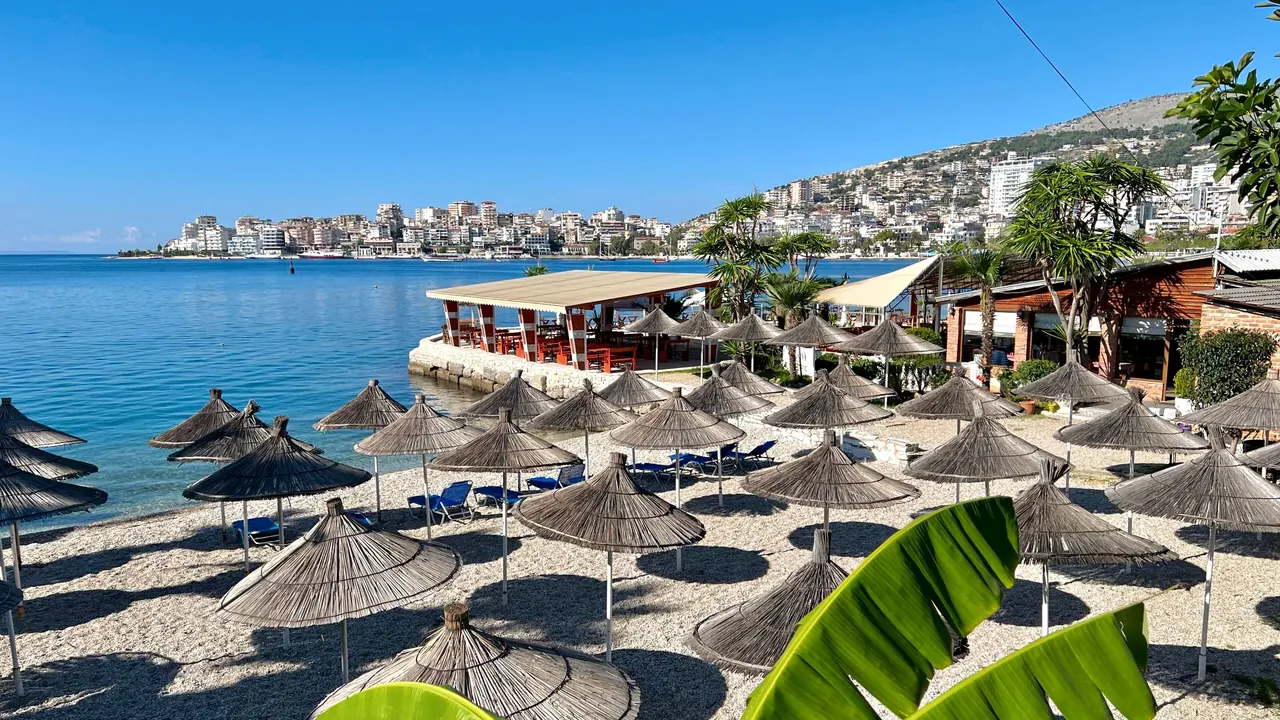
Photos: Athens by Ranjeet Kumar Singh, Pexels License; Saranda by Sharon Hahn Darlin, CC BY 2.0, cropped.
Athens or Saranda?
Our verdict in twelve categories, each scored against the same fixed benchmark cities, and the climate month by month, so you can choose for your trip.
Choose Athens for
- culture and sights
- live music and the arts
- nightlife
Athens is the choice for a trip built around history, food and late nights. The Acropolis and its museums, taverna meals that run past midnight, the summer festival beneath the Parthenon and day trips to Delphi or Mycenae fill a week easily. The Riviera coast is a bonus on top of all that, not the reason to go.
Choose Saranda for
- prices
- beaches
Saranda suits travellers who put the sea first and are happy to keep everything else simple. The coves at Ksamil and the bays up the Riviera are better swimming than anything near Athens, a stay costs less, and Butrint and Gjirokaster provide the history. In return, expect plain food, a thin evening scene outside high summer and little to do on a rainy day.
Scoreboard
Twelve categories on one fixed scale from 0 to 100. The shaded stretch is the gap between the two.
Your match
Pick a travel style or drag the sliders, and both match scores follow your weighting.
Wins on culture and sights and live music and the arts with your weighting.
Wins on prices and beaches with your weighting.
What matters to you?
Category by category
What the scores mean for a trip.
Beaches & swimming
Saranda is better for swimming. The pebble beaches in town are only good for a quick dip. Twenty minutes south, though, Ksamil has pale coves and small offshore islets in very clear water, and the quieter bays at Lukova and Borsh lie up the coast.
Athens has real sea too. The Riviera runs from Faliro to Vouliagmeni and can be reached by tram and bus, and Aegina and Agistri are a short ferry ride away. It makes a good afternoon off from sightseeing, with organised lidos and rocky free stretches. But the beaches near the centre are crowded and plain, so they are rarely the reason to choose Athens.
Food & drink
Athens is by far the better place to eat. The tavernas and mezedopoleia of Psyrri, Koukaki and Pangrati serve shared meze with ouzo and tsipouro, Greek wines from assyrtiko to xinomavro are on every table, the Varvakios market shows off the produce, and there is serious fine dining at the top end.
Saranda's cooking is honest but narrow: Butrint lagoon mussels, grilled fish, byrek and southern Albanian home dishes, best in the family taverns behind the seafront. There is no fine dining and not much of a wine or coffee culture, so a week of meals soon starts to repeat itself.
Culture & sights
There is hardly a contest. In Athens the Acropolis, the Ancient Agora, the Temple of Olympian Zeus and the Kerameikos are all linked by a pedestrian promenade. On top of that come the Acropolis Museum and the National Archaeological Museum, which hold some of the world's finest ancient art.
Saranda itself is a modern town. It has the ruin of an ancient synagogue with mosaic floors, a few stretches of old wall and the views from Lekuresi Castle. Its serious history lies out of town at Butrint and Gjirokaster, so it means a day out rather than a stroll.
Nightlife
Athens goes out late all year round. There are rooftop bars facing the lit Acropolis around Monastiraki and Psyrri, clubs and a long-standing gay scene in Gazi, student bars in Exarchia and smarter drinking in Kolonaki. Bouzouki nightclubs run until dawn, and in summer the clubbing moves out to the coast.
Saranda's nights depend on the season. In July and August the promenade fills with loud cocktail bars, and a few beach clubs at Ksamil keep going later for a young Albanian and Kosovar crowd. Outside those weeks, a night out ends with a drink by the water.
Nature & outdoors
Both cities sit against bare limestone mountains, and in both the summer heat pushes hiking into spring and autumn. What differs is the kind of outdoors. Athens has city hills such as Lycabettus and Filopappou, pine trails on Hymettus, fir forest in Parnitha national park an hour to the north, and sailing or windsurfing on the Saronic Gulf.
Saranda's outdoors is wilder and centred on water. The lagoon and reed beds of Butrint are good for birdwatching, the Blue Eye spring rises in a shaded wood, and you can kayak to sea caves along the Riviera, though most trails are unmarked.
Day trips
Athens has the stronger list of day trips. Sounion at sunset, the Argolid with Mycenae, Epidaurus and Nafplio, and Delphi on the slopes of Parnassos are among the best-known sites in Greece. From Piraeus, Hydra, Poros and Aegina make easy island days.
Saranda's list is shorter but very good. Butrint is half an hour away, Gjirokaster has its stone tower houses, and the ferry takes you to Corfu's Venetian old town in under an hour, so you can visit a second country in a day.
Good for families
Athens gives families more to fill the days. There is the zoo, the planetarium, Hellenic Cosmos and the park at the Stavros Niarchos centre, plus calm Riviera beaches and ancient sites that bring the myths to life for older children. In July and August, though, the heat, steps and broken pavements wear everyone out.
Saranda is simpler. The sheltered coves at Ksamil are lovely for young swimmers and the evening promenade is a family outing in itself. Beyond the sea there is nothing built for children, and steep streets and August crowds point families towards a pool hotel in June or September.
Getting around
Athens is easier to get around. The main sights sit close together in a walkable centre, and the metro links the airport, Piraeus and the centre. A tram runs to the coast and taxis are easy to find, though pavements are poor and traffic is heavy.
In Saranda the seafront promenade is pleasant on foot. Buses to Ksamil and Butrint run without printed timetables, and reaching the Blue Eye, Gjirokaster or the Riviera really calls for a hire car, taxi or tour, on narrow roads that jam in summer.
Shopping & style
Next to Saranda, Athens is a real shopping city. There is chain fashion on Ermou, designer labels and Greek designers in Kolonaki, and the weekend flea market at Monastiraki. To take home, there are leather sandals, jewellery based on ancient designs, and herbs and honey from the streets around Athinas.
Saranda offers beachwear and souvenirs on the promenade and little else. The things worth bringing home are olive oil, honey and raki, and for crafts the old bazaar in Gjirokaster is the better bet.
Affordability
Saranda is the cheaper stay. Grilled fish, byrek, local buses and rooms in family-run hotels cost little for most of the year. Only the sunbeds at Ksamil and the seafront hotels get noticeably more expensive in July and August.
Athens costs a little less than most Western European capitals, and souvlaki, the metro and neighbourhood tavernas are good value. But central hotels in summer and entry fees to the ancient sites add up. Staying in Koukaki or Pangrati helps, but Athens is never as cheap as Saranda.
Live music & performing arts
Athens has a real stage. The Athens Epidaurus Festival brings opera, drama and concerts to the Odeon of Herodes Atticus beneath the Acropolis, and tragedy to the ancient theatre at Epidaurus. The Greek National Opera and the Megaron keep up a classical programme through the year, and rebetiko is played late in small tavernas.
Saranda has almost nothing to attend: the odd summer concert on the seafront, an occasional performance at Butrint and live Albanian music in some restaurants. For traditional polyphonic singing, look inland around Gjirokaster.
Wellness & relaxation
Neither city is a place for a wellness break, but Athens has one notable place to bathe. Lake Vouliagmeni on the Riviera is fed by warm mineral springs and stays mild all year. Add the hammam-style bathhouses and hotel spas, and Athens offers more calm than its loud centre suggests.
Saranda has no bathing tradition, only hotel spas and massages at beach resorts. How restful it is depends on the month. May, June and late September bring quiet terraces and slow lunches, while midsummer means music and crowds late into the night.
When should you go?
Pick your month. The climate figures are measured averages, not a forecast.
Athens in July
Saranda in July
Daytime high, °C
Rainfall in the month, mm
Where the figures come from
Saranda's temperatures are measured 30 km from the centre, at Kerkyra Airport.
Saranda has no rain gauge within 25 km of the centre, so its rainfall comes from a gridded climate dataset read at the destination rather than from a gauge further away.
Temperature and rainfall are climate normals, averaged over the years shown. Athens: 1991-2020 normals, Athens / Athenai / Pláka (2.2 km from centre). Saranda: 1991-2020 normals, Kerkyra Airport (29.8 km from centre).
Both cities are dry and sunny from June to August, and in both the sea is warm enough to swim from June into October. In August it reaches about 26°C off Athens and 25°C off Saranda. Athens runs hotter, up to 35°C in August, which makes midday on the Acropolis hard going, but its dry weather lasts through September. Saranda stays a few degrees cooler in high summer, which suits long days on the beach.
The rain is where they differ most. Athens stays fairly dry into October and has mild winters that are only moderately wet, so April, May and October are ideal for walking the city, and even winter is workable. Saranda turns wet much earlier. September brings over 100mm, and by November and December more than 220mm falls each month, several times what Athens gets. That makes June Saranda's best month, with late May and early September close behind if you don't mind the odd shower.
Which traveller are you?
On a beach and sun trip, Saranda is the better base. Ksamil's clear coves and islets and the quieter Riviera bays beat the crowded beaches near central Athens, and the sea stays warm from June into October with no city to work around.
For a culture and arts trip, Athens is in another class. The Acropolis, its museum and the National Archaeological Museum fill several days, Delphi and Mycenae are within reach, and summer brings ancient drama and opera to the Odeon beneath the Parthenon.
On a trip with a tight budget, Saranda makes the money go further. Simple meals, local buses and family-run hotels cost little, and coming in late spring or September gives you the same warm sea for far less than central Athens in summer.
Before you go
| Measure | Athens | Saranda |
|---|---|---|
| Official language | Greek | Albanian |
| Currency | Euro (EUR) | Lek (ALL) |
| Sockets | CF230 V, 50 Hz | CF220 V, 50 Hz |
| Driving side | Right | Right |
| Time zone | UTC+2, UTC+3 in summer | UTC+1, UTC+2 in summer |
| Emergency number | 112 | 112 |
| Elevation | 74 m | 0 m |
| Main airport | Athens Eleftherios Venizelos International Airport (ATH)20 km from centre176 non-stop destinations | Corfu Ioannis Kapodistrias International Airport (CFU)32 km from centre88 non-stop destinations |
| Public holidays this year | 15 days | 14 days |
By the numbers
| Measure | Athens | Saranda |
|---|---|---|
| Population | 643,452 | 22,613 |
| People per km² | 16,499 | 383 |
| Museums within 10 km | 88 | 0 |
| UNESCO World Heritage sites within 50 km | 2 | 3 |
| Swim season, months above 21 °C | 5 months | 5 months |
Where else could you go?
Every comparison below shares a destination with this one, so you can follow Athens or Saranda somewhere new.