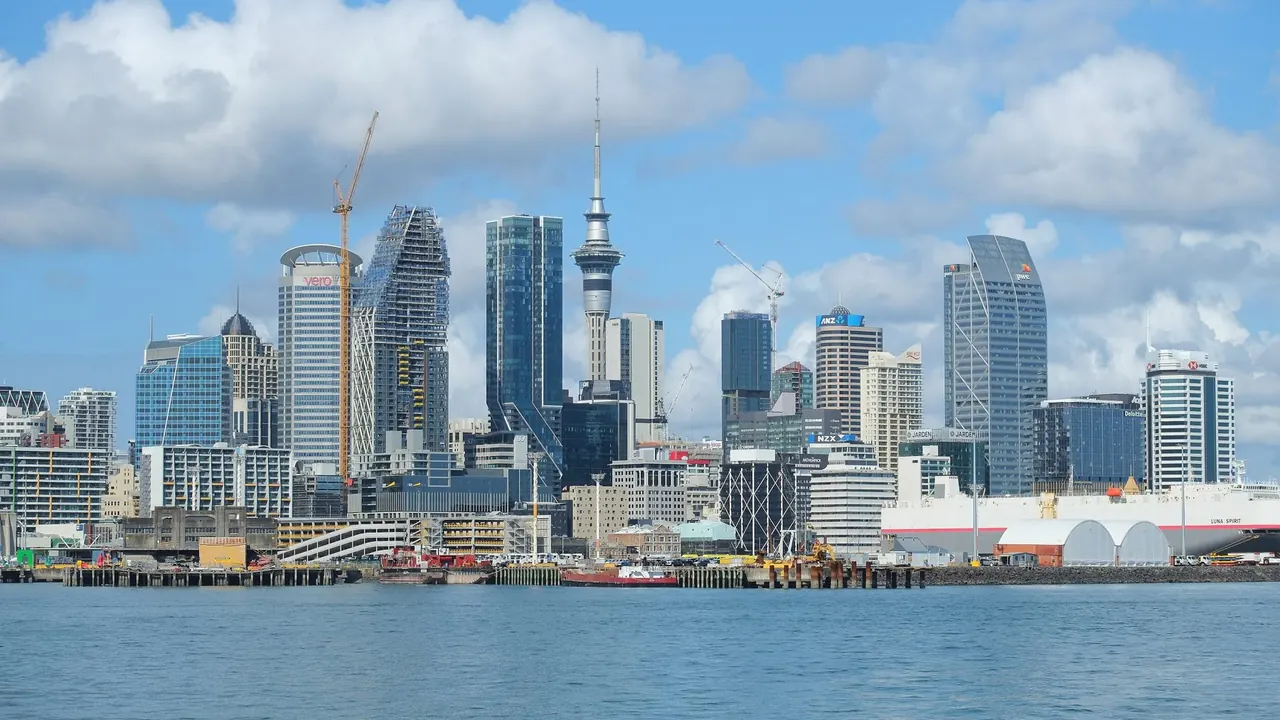
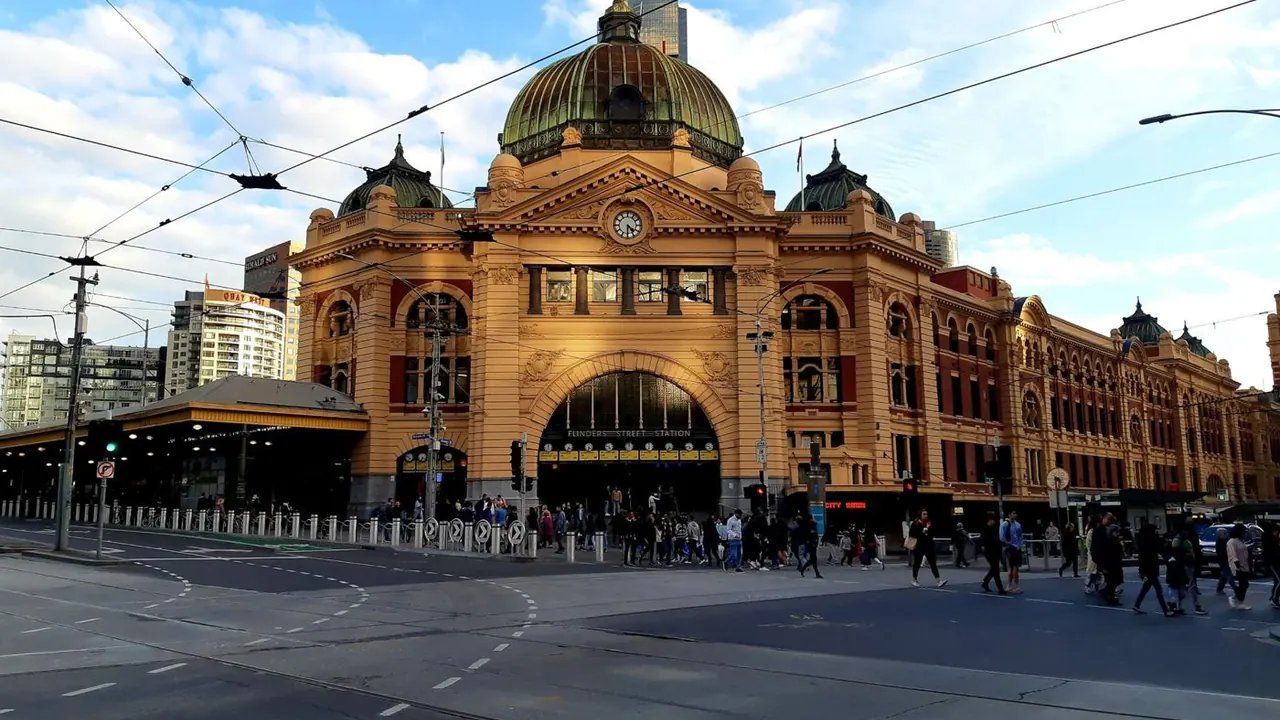
Photos: Auckland by Pseudopanax at English Wikipedia, Public domain; Melbourne by Medelam, CC BY-SA 4.0, cropped.
Auckland or Melbourne?
Our verdict in twelve categories, each scored against the same fixed benchmark cities, and the climate month by month, so you can choose for your trip.
Choose Auckland for
- beaches
- nature and the outdoors
- prices
Auckland suits travellers who want water and landscape more than a busy city. Calm bays line the eastern shore, and there are volcanic cones to climb within the suburbs. Ferries run out to Rangitoto and Waiheke, and the Waitākere rainforest and the surf beaches of the west coast lie beyond. Come for days outdoors and long, easy evenings. The museums and nightlife are modest and fill only a couple of days.
Choose Melbourne for
- getting around
- nightlife
- live music and the arts
Melbourne is the better choice if the city itself is the point of the trip. It has laneway coffee and small bars, many cuisines in Carlton, Richmond and Footscray, and grand gold-rush buildings. Most nights there is something on, from the Arts Centre to the pub band rooms of Fitzroy. Flat streets and trams make it easy to get around. Its beaches and wild country are good but further away, so you will need more planning to reach them than in Auckland.
Scoreboard
Twelve categories on one fixed scale from 0 to 100. The shaded stretch is the gap between the two.
Your match
Pick a travel style or drag the sliders, and both match scores follow your weighting.
Wins on beaches and nature and the outdoors with your weighting.
Wins on getting around and nightlife with your weighting.
What matters to you?
Category by category
What the scores mean for a trip.
Beaches & swimming
Auckland has the better beaches, and more kinds of them. Along Tamaki Drive and on the North Shore, sheltered bays face the Hauraki Gulf and suit children and paddleboards. On the other side of the city, black-sand Piha and Muriwai take heavy Tasman surf, and Waiheke adds quiet white sand a ferry ride away.
Melbourne's city beaches at St Kilda, Elwood and Brighton are a tram or train ride from the centre, but Port Phillip Bay gives them only calm, rather plain water. The weather can turn cool in hours. The better sand is on the Mornington Peninsula, an hour or more away by car.
Food & drink
People travel to Melbourne to eat, and the city gives them plenty of choice. Espresso bars fill the CBD laneways, and brunch cafés line the streets of Fitzroy and Collingwood. Lygon Street is the Italian strip, Richmond and Footscray have Vietnamese noodle houses, and the produce halls of Queen Victoria Market add more.
Auckland's best eating is spread through the suburbs. You will find regional Chinese and Korean cooking along Dominion Road and Pacific Island food at the markets. Seafood is its strength, with green-lipped mussels and snapper, and a glass of Waiheke wine goes well with it. It is a good table, but a smaller scene.
Culture & sights
Melbourne has more to see. The gold-rush wealth of the 1850s left a Victorian city that you can still walk through: the Royal Exhibition Building, the domed reading room of the State Library, and arcades and bluestone lanes. The National Gallery of Victoria is a serious art collection.
Auckland's one standout is the War Memorial Museum on the Domain. Its Māori and Pacific treasures, including a carved meeting house and a war canoe, are something Melbourne cannot match. Beyond that there is little historic streetscape, and the sights take about two days.
Nightlife
Melbourne is far the better night out. Small cocktail and wine bars sit up stairwells and on rooftops across the CBD, and Fitzroy and Collingwood have pubs and late bars. If you want to dance, Chapel Street has clubs that run into the early hours at weekends. The city is busy most nights of the week.
In Auckland, going out means choosing a strip. Ponsonby Road has the wine bars, and Karangahape Road has the late, alternative crowd. The strips are far enough apart that you will often take a taxi between them, and on weeknights much of the city is quiet by midnight.
Nature & outdoors
Auckland is built on its landscape. Grassy volcanic cones rise between the suburbs with views over both harbours. Rangitoto and the rare birds of Tiritiri Matangi are short ferry rides away, and the Hauraki Gulf has sailing, kayaking and dolphins. To the west, the Waitākere Ranges have rainforest and waterfalls within easy reach.
Melbourne is flat, and in the city nature means the Botanic Gardens and the Yarra trail. The wilder places are a drive away: the mountain ash forest of the Dandenongs, the penguin parade on Phillip Island and the surf cliffs at the start of the Great Ocean Road.
Day trips
Melbourne has the wider choice of day trips, and more of them can be done by train. Ballarat and Bendigo show off their gold-rush grandeur, Daylesford is a spa town, and the Yarra Valley and Mornington Peninsula both have wineries.
Auckland's best day out is Waiheke by ferry, which is as good as anything near Melbourne, and the wineries and coast around Matakana come close behind. Hobbiton is a long day by road. Rotorua and Waitomo are too far for a day trip and need a night away.
Good for families
Both cities are easy with children, but the days look different. Auckland's days are spent at the calm beaches, running up volcanic cones and taking short ferry rides. MOTAT has trams and planes, and Rainbow's End is a small theme park, though you will drive a lot between them.
Melbourne has more animal outings. Healesville has platypus and koalas, and Werribee has a safari bus. You can add the Puffing Billy steam train and the penguin parade on Phillip Island. Flat streets and trams make prams easy.
Getting around
Melbourne is much easier to get around. The central grid is flat, trams in the CBD are free, and the tram lines reach St Kilda, Fitzroy, Carlton and South Yarra. Regional trains go as far as Ballarat and Bendigo.
Auckland's centre is compact but hilly, and its harbour ferries are a pleasure to use. Beyond them, buses and a limited train network serve a city built for cars. To reach the west-coast beaches, the Waitākere Ranges or the northern wineries, most visitors hire a car.
Shopping & style
Melbourne is much better for shopping. Off Collins Street, the Block and Royal arcades have mosaic floors, and the upper end of the street holds luxury labels. Gertrude and Smith streets have local designers and vintage shops, and Chapel Street adds fashion.
Auckland is smaller and more about local design. Ponsonby Road and Newmarket have New Zealand labels. The things worth taking home are merino knitwear, pounamu carvings and Pacific art, and the Ōtara market has a strong Pacific character.
Affordability
Both are expensive, and hotels, eating out and wine cost about the same in either. The savings come in different places. In Auckland the beaches, volcanic cones and coastal walks are free, and Asian food courts offer cheaper meals, though ferries and car hire add up.
In Melbourne the free tram zone and many free museums cut daily costs. The cheap eats in Chinatown, Footscray and Richmond are reliably good.
Live music & performing arts
Melbourne has a much fuller stage calendar. The Arts Centre is home to the Melbourne Symphony Orchestra and the Australian Ballet, historic theatres stage the big musicals, and pub band rooms in Fitzroy and St Kilda have local bands most nights. In autumn the Comedy Festival fills the city for weeks.
Auckland's calendar is lighter. The Philharmonia plays in the Town Hall, which has fine acoustics, and touring shows come to the ornate Civic. What it has that Melbourne does not is Pacific music and dance at the Pasifika Festival, and kapa haka performances.
Wellness & relaxation
Auckland has no bathing tradition, and unlike Melbourne it has no spa country close by. The nearest hot springs are the thermal pools at Parakai, about an hour north-west, which make an easy half day. Waiheke's slower pace and a few retreats help you unwind, but for serious geothermal bathing you need a night away in Rotorua.
Melbourne has mineral springs within a day's reach. At Daylesford and Hepburn Springs people have bathed since the nineteenth century, and a historic bathhouse sits at the centre of the town. The hot pools in the hills of the Mornington Peninsula are another easy day out. Closer in, the sea baths at St Kilda and Brighton have pools and saunas by the bay, so a slow afternoon needs no travel at all.
When should you go?
Pick your month. The climate figures are measured averages, not a forecast.
Auckland in July
Melbourne in July
Daytime high, °C
Rainfall in the month, mm
Where the figures come from
Auckland's station stands 189 m below the city centre, so the centre is likely a little cooler than the figures say.
Temperature and rainfall are climate normals, averaged over the years shown. Auckland: 1961-1990 normals, Auckland Aerodrome Aws (17 km from centre). Melbourne: 1991-2020 normals, Latrobe University / Kingsbury (13.1 km from centre).
In both cities the beach season is January to March, when the sea warms to about 21°C. Melbourne's summer is the hotter and sunnier of the two, with highs near 27°C and the longest sunny days of the year. Auckland stays a few degrees milder. Both are pleasant for walking the streets in spring and autumn, and neither gets too hot to be out.
The big difference is in winter. Auckland's rain builds from autumn and peaks around 135mm in July, so the mild winter is also a wet one. Melbourne stays fairly dry all year, with its rain spread evenly across the months, but its winter days are short of sun and the bay gets much colder than Auckland's harbour. For a winter city trip Melbourne is the more reliable, while Auckland is at its best from December to April.
Which traveller are you?
For an outdoors trip, Auckland is the clear choice. You can climb volcanic cones in the city, reach Rangitoto's lava fields and the birds of Tiritiri Matangi by ferry, and walk the kauri forest of the Waitākere Ranges. Melbourne's best walks need a long drive.
On a food and nightlife trip, choose Melbourne. Breakfast is a local ritual in Fitzroy, there are Greek, Italian and Vietnamese streets to eat along, and small bars hide in the laneways. The city is still busy late on weeknights, when much of Auckland has gone quiet.
For a culture and arts trip, Melbourne has more to offer. There is the National Gallery of Victoria and the Victorian streets of the gold-rush years. At night the Arts Centre, the Australian Ballet and live music in the pubs fill the evenings. Auckland's Māori collections are superb, but they take a day.
Before you go
| Measure | Auckland | Melbourne |
|---|---|---|
| Official language | English, New Zealand Sign Language, Māori | English |
| Currency | New Zealand Dollar (NZD) | Australian Dollar (AUD) |
| Sockets | I230 V, 50 Hz | I230 V, 50 Hz |
| Driving side | Left | Left |
| Time zone | UTC+12, UTC+13 in summer | UTC+10, UTC+11 in summer |
| Emergency number | 111 | 000 |
| Elevation | 196 m | 31 m |
| Main airport | Auckland International Airport (AKL)18 km from centre63 non-stop destinations | Melbourne Airport (MEL)19 km from centre69 non-stop destinations |
| Public holidays this year | 12 days | 13 days |
By the numbers
| Measure | Auckland | Melbourne |
|---|---|---|
| City population | 1,470,100 | 5,350,705 |
| People per km² | 2,630 | 535 |
| Museums within 10 km | 15 | 43 |
| UNESCO World Heritage sites within 50 km | 0 | 1 |
| Swim season, months above 21 °C | 1 month | None |
Where else could you go?
Every comparison below shares a destination with this one, so you can follow Auckland or Melbourne somewhere new.