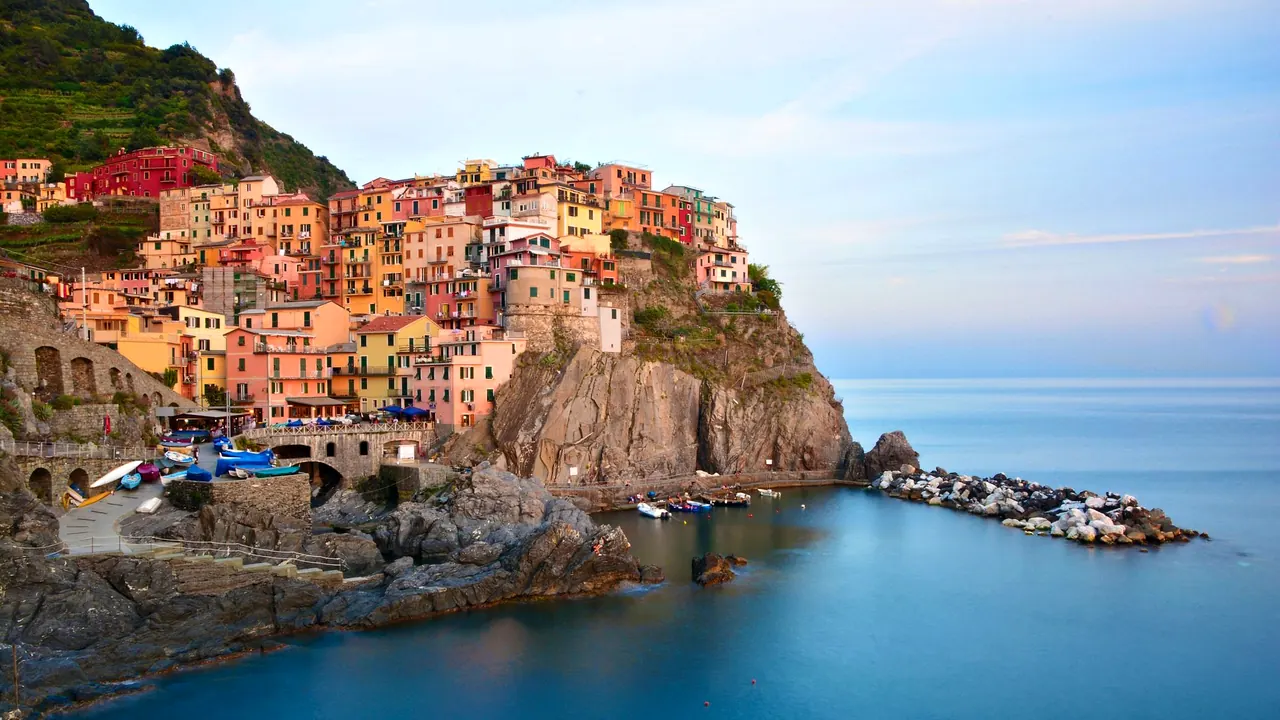
Photos: Cinque Terre by Narcisa Aciko, Pexels License.
Austrian Alps or Cinque Terre?
Our verdict in twelve categories, each scored against the same fixed benchmark cities, and the climate month by month, so you can choose for your trip.
Choose Austrian Alps for
- live music and the arts
- wellness
- families
The Austrian Alps suit a longer trip with plenty in it: skiing or hut-to-hut hiking, baroque Salzburg and Habsburg Innsbruck, a summer opera festival, thermal baths and sauna evenings, and resorts built around children. It is a region to move around in, valley to valley and lake to lake, and it works in winter and summer alike.
Choose Cinque Terre for
- beaches
Choose Cinque Terre for a few days of walking cliff paths between five villages on the sea, swimming off the rocks and eating pesto and anchovies at sunset. It is small, car-free and narrow in what it offers. Couples and active adults who want the Mediterranean and a landscape shaped by people will love it. Families with small children, night owls and anyone after spas or concerts will find little for them.
Scoreboard
Twelve categories on one fixed scale from 0 to 100. The shaded stretch is the gap between the two.
Your match
Pick a travel style or drag the sliders, and both match scores follow your weighting.
Wins on live music and the arts and wellness with your weighting.
Wins on beaches with your weighting.
What matters to you?
Category by category
What the scores mean for a trip.
Beaches & swimming
Cinque Terre has the sea, and that puts it ahead. The water is clear and warm through the summer, and you can swim from the harbour at Vernazza or the rock shelves below Manarola between walks. For proper beach days, though, Monterosso's Fegina stretch is the only real option, and it fills with close rows of umbrellas.
The Austrian Alps swap salt water for lakes, and the Carinthian ones, the Wörthersee and Millstätter See among them, warm up surprisingly well. Expect lawns, piers and diving boards at lidos in Velden or Pörtschach rather than sand. It is a good bathing vacation in its own right, just not a seaside one.
Food & drink
The two eat about equally well, in very different ways. In the Alps it is hearty mountain food, Kaiserschmarrn, Käsespätzle and Speck on a hut terrace after a long day outside, plus Salzburg's cakes and serious fine dining in the Arlberg and Kitzbühel.
Cinque Terre is lighter and saltier: trofie with pesto, focaccia, Monterosso anchovies and fried fish in a paper cone, with the terraced white wine or a glass of Sciacchetrà. For a grand dinner you have to leave the coast. Both have repetitive menus in the busiest spots.
Culture & sights
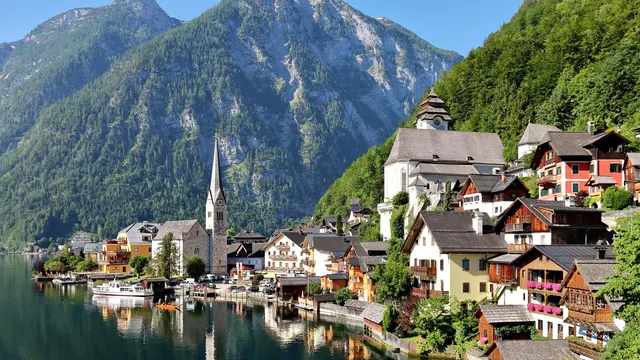
The Alps offer much more to see. Salzburg's baroque old town under its fortress, Innsbruck's Hofburg and Hofkirche, Hallstatt's salt-mining heritage and the Admont abbey library give real substance, though you have to travel between towns to see them.
In Cinque Terre the sight is the whole place: colour-washed villages and centuries of dry-stone terraces, protected together by UNESCO. Beyond striped Gothic churches, a watchtower and a small castle there is little to visit indoors, and a day or two covers it.
Nightlife
The Alps win easily, at least in winter. Après-ski in Ischgl, St Anton or Saalbach starts in the slope huts in late afternoon and carries on in village bars and clubs late into the night. In summer the resorts go quiet, leaving Innsbruck's student bars and Salzburg's post-concert glass of wine.
Cinque Terre's evening is a sunset drink on a harbour wall and an early night. A few bars in Monterosso and Riomaggiore stay open a little later in summer, but for anything more you take the train to La Spezia.
Nature & outdoors
Both are made for walkers, but the Alps play on a far bigger scale. Glaciers and the Grossglockner in the Hohe Tauern, high valleys such as the Ötztal and Zillertal, staffed huts, via ferratas and some of Europe's widest skiing give weeks of terrain in either season.
Cinque Terre packs its outdoors into a narrow strip: the Sentiero Azzurro between the villages, the higher Sentiero Rosso through chestnut woods, and a marine reserve for kayaking and diving. What it has that the Alps lack is the sea below every step. Summer heat and occasional path closures after storms are the drawbacks.
Day trips
Day trips from the Austrian Alps cross borders, while those from Cinque Terre follow one stretch of coast. From Salzburg, the Salzkammergut gives you Hallstatt, St Wolfgang and Bad Ischl, and Berchtesgaden's Königssee and Munich lie just over the German frontier. From Innsbruck there are the old towns of Hall and Rattenberg, and over the passes you can reach Bavaria's royal castles or South Tyrol's Bolzano and Merano. One trip can easily take in three countries.
Cinque Terre's outings all start from its one coastal railway, or from the boats in season. Portovenere and Lerici on the gulf, medieval Sarzana and the Carrara marble quarries are close. Portofino and Genoa's painted palaces lie to the north, and Pisa and walled Lucca are in Tuscany. That is plenty for a few days, but it stays within Liguria and the edge of Tuscany.
Good for families
This is one of the widest gaps between the two. Austrian resorts such as Serfaus-Fiss-Ladis and the Zillertal plan around children, with nursery slopes, childcare and hotels with playrooms and pools. In summer there are adventure trails, toboggan runs and Salzburg's Hellbrunn trick fountains, in safe villages where distances are short.
Cinque Terre is all steps and steep alleys, with no room for a pushchair and nothing built for children. Older children who enjoy walking, boats and rock swimming can have a good few days. With younger ones, flat Monterosso and its gently shelving beach is the only easy base.
Getting around
You can manage without a car in either, and the Austrian Alps come out ahead because their trains and buses reach so much further. Rail lines run through the Inn valley, from Salzburg to the Gastein valley and over the Arlberg, Postbus routes climb from the stations into side valleys, and resort guest cards often cover local buses and sometimes lifts. The weak point is travel between valleys, with winding roads, side-valley buses only a few times a day and heavy traffic on Saturday changeover days in winter, so a car still helps on a trip that combines lakes, towns and passes.
Cinque Terre is compact rather than far-reaching. A local train runs through tunnels to all five villages, a few minutes apart, and in season ferries link every harbour except Corniglia's. Trails join the villages on foot as well. A car is a burden on the narrow hill roads, and the effort lies in crammed summer carriages and the steps between station and village.
Shopping & style
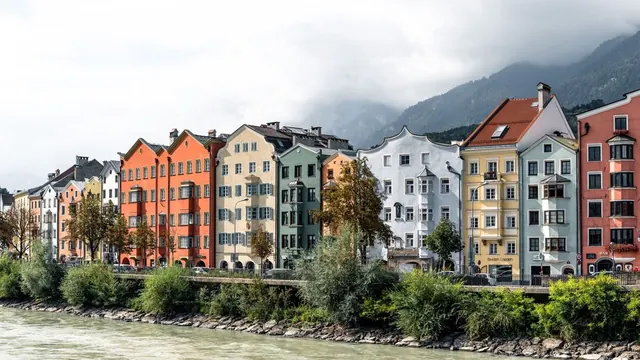
The Alps give you far more to buy. Salzburg's Getreidegasse and Innsbruck's old town have dirndl, loden and felt-hat makers, Tyrolean valleys sell carved wooden figures and cribs, and the Christmas markets add seasonal crafts. Kitzbühel and Lech have a few luxury boutiques too.
In Cinque Terre the souvenirs are mostly edible: pesto, jarred anchovies, lemon liqueur and bottles of Sciacchetrà, plus some ceramics and linen. There is no fashion shopping at all.
Affordability
Neither is cheap, and the Alps are only a little easier on the wallet. Big-name ski resorts and Salzburg during its festival are expensive, but farm stays in quieter valleys, smaller ski areas and summer on the Carinthian lakes cost noticeably less. Half-board keeps meal costs predictable.
In Cinque Terre the cost is in the bed. Rooms in the villages are few, small and in demand, and the park paths charge for access. Food and the train are reasonable, which is why budget travellers stay in La Spezia or Levanto and take the train in.
Live music & performing arts
The Alps are one of Europe's great summer music destinations. The Salzburg Festival, with Jedermann performed in front of the cathedral, Bregenz's opera on its floating lake stage, the Schubertiade in Vorarlberg villages and the festivals at Erl all draw serious audiences. Salzburg keeps a calendar outside summer too, with Mozart Week and the Easter festival.
Cinque Terre has almost nothing on stage: a summer concert in a church now and then, and bands at saints' day processions. For theatre or an orchestra you go to La Spezia or Genoa.
Wellness & relaxation
Austria treats wellness as part of the vacation, and the gap is wide. You can soak in Bad Gastein's radon springs and its healing gallery inside the mountain, use the outdoor thermal pools of the Aqua Dome under the Ötztal peaks, or follow the Habsburgs to Bad Ischl, and most valley hotels have full sauna areas.
In Cinque Terre, relaxation comes only from the pace: car-free lanes, a terrace over the sea and quiet once the day visitors leave. Apart from a massage at some guesthouses there is nothing more, and on a crowded summer afternoon even that calm disappears.
When should you go?
Pick your month. The climate figures are measured averages, not a forecast.
Austrian Alps in July
Cinque Terre in July
Daytime high, °C
Rainfall in the month, mm
Where the figures come from
Cinque Terre's temperatures are measured 78 km from the centre, at Pisa / S. Giusto.
Cinque Terre has no rain gauge within 25 km of the centre, so its rainfall comes from a gridded climate dataset read at the destination rather than from a gauge further away.
Temperature and rainfall are climate normals, averaged over the years shown. Austrian Alps: 1991-2020 normals, Innsbruck-Flughafen (4.1 km from centre). Cinque Terre: 1991-2020 normals, Pisa / S. Giusto (77.8 km from centre).
The Alps have two seasons. Skiing runs from about December to April, when valley days are cold. Summer is mild for hiking and lake swimming, with highs around 26°C in July, but it is also the wettest time, with August bringing about 144mm of rain, often as afternoon storms. Late spring and early autumn are drier and quieter, and suit walking and spa days well.
Cinque Terre is warmer all year and its pattern runs the other way. July and August are the driest and sunniest months, with highs near 30°C, too hot for the coastal path at midday, and the sea is warmest at around 25°C in August. Swimming lasts from June to September. May, June and September are best for combining hikes and the sea. From October the rain comes hard, peaking at about 178mm in November, and winter is mild but damp.
Which traveller are you?
On a family trip with children, the Austrian Alps are the clear choice: nursery slopes and ski schools, hotels with kids' clubs and pools, summer toboggan runs and shallow lake lidos. Cinque Terre's stairs, crowded trains and steep alleys make it hard going with little ones.
For a relaxing and wellness trip, go to the Austrian Alps. Bad Gastein's radon springs, the thermal pools at Längenfeld and sauna worlds in almost every valley hotel make rest part of the trip. Cinque Terre offers calm terraces and quiet evenings, but no spas.
On a beach and sun trip, Cinque Terre wins. It has clear Mediterranean water, reliable summer sunshine and Monterosso's sandy beach, with rock swimming in the other villages. The Alps can only offer freshwater lidos on Carinthian lakes, pleasant but no substitute for the sea.
Before you go
| Measure | Austrian Alps | Cinque Terre |
|---|---|---|
| Official language | German, Austrian Sign Language | Italian |
| Currency | Euro (EUR) | Euro (EUR) |
| Sockets | CF230 V, 50 Hz | CFL230 V, 50 Hz |
| Driving side | Right | Right |
| Time zone | UTC+1, UTC+2 in summer | UTC+1, UTC+2 in summer |
| Emergency number | 112 | 112 |
| Main airport | Innsbruck Airport (INN)40 non-stop destinations | Pisa International Airport (PSA)82 non-stop destinations |
| Public holidays this year | 16 days | 13 days |
By the numbers
| Measure | Austrian Alps | Cinque Terre |
|---|---|---|
| Swim season, months above 21 °C | - | 4 months |
Where else could you go?
Every comparison below shares a destination with this one, so you can follow Austrian Alps or Cinque Terre somewhere new.
- Portofinovs Cinque Terre
- Bavariavs Austrian Alps
- Dolomitesvs Austrian Alps
- Tuscanyvs Cinque Terre
- Lake Gardavs Cinque Terre
- Lake Comovs Cinque Terre