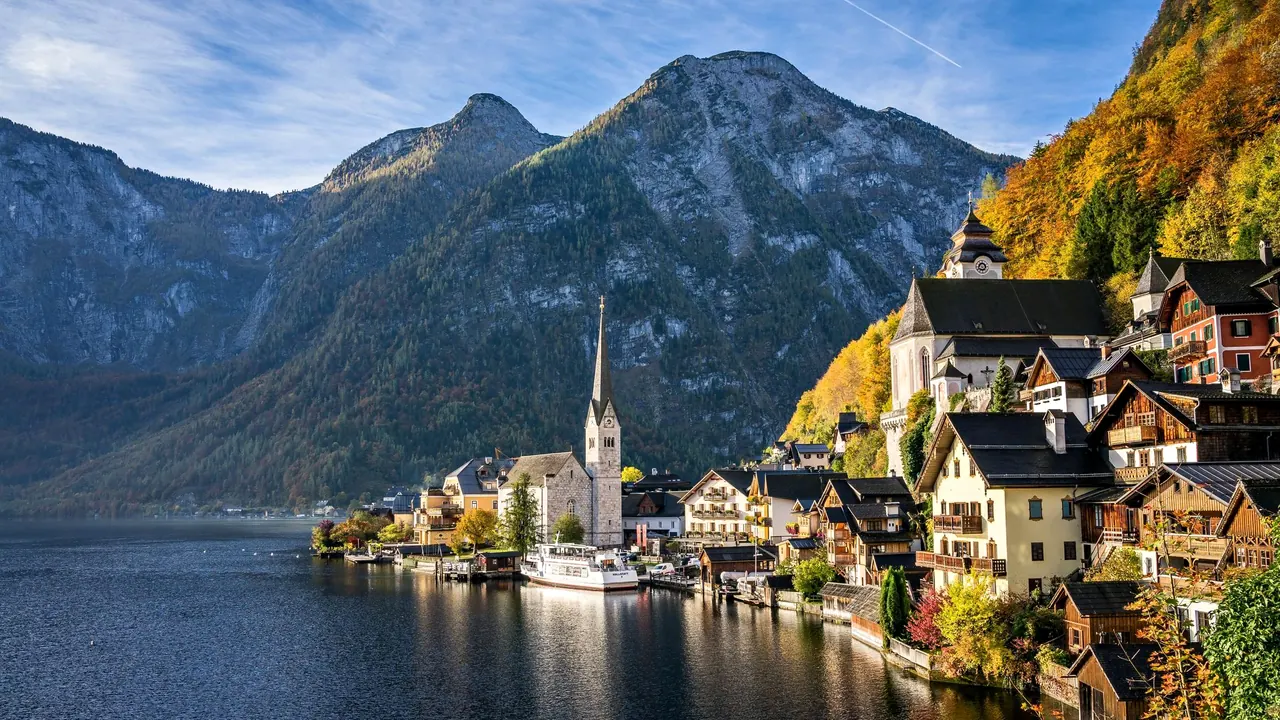
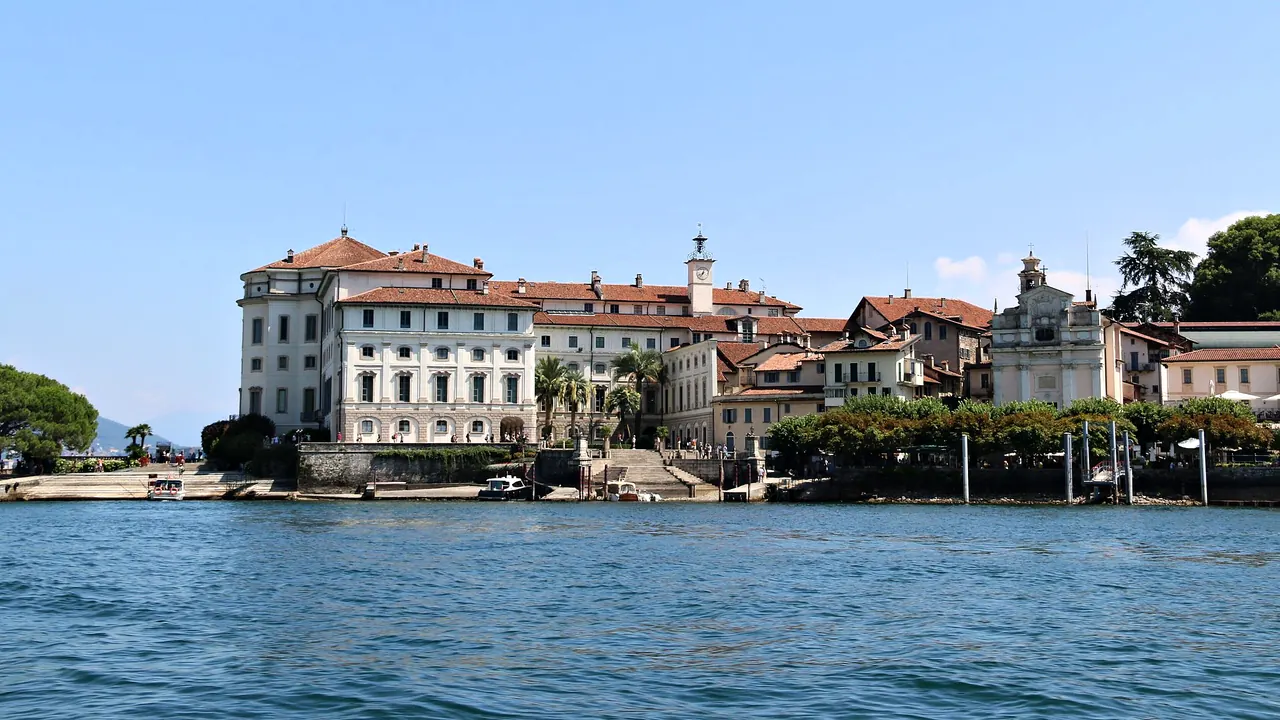
Photos: Austrian Alps by Leonhard Niederwimmer, Pexels License; Lake Maggiore by FrDr, CC BY-SA 4.0, cropped.
Austrian Alps or Lake Maggiore?
Our verdict in twelve categories, each scored against the same fixed benchmark cities, and the climate month by month, so you can choose for your trip.
Choose Austrian Alps for
- nightlife
- live music and the arts
- wellness
Choose the Austrian Alps when the mountains are the whole point of the trip. In winter that means some of Europe's biggest ski areas and the loudest après-ski in the Alps. In summer it means glaciers, staffed huts and lifts up to trails, with Salzburg's baroque old town and its festival for the evenings. Families, hikers and anyone who wants a proper spa, from Bad Gastein to the Ötztal thermal pools, will find it better organised than the Italian lake. The price is the bill, which runs high in the famous resorts.
Choose Lake Maggiore for
- prices
- day trips
Lake Maggiore suits a slower and more southern trip: island palaces and terraced gardens by ferry, perch and risotto on a waterfront terrace, chestnut woods above Stresa, and Milan an hour away by train for anything grander. Base yourself on the Italian shore and it is the cheaper of the two. Walkers who want a mild spring will also like it. Give up any thought of nightlife or a major arts season, though. This is a place for long dinners and early nights.
Scoreboard
Twelve categories on one fixed scale from 0 to 100. The shaded stretch is the gap between the two.
Your match
Pick a travel style or drag the sliders, and both match scores follow your weighting.
Wins on nightlife and live music and the arts with your weighting.
Wins on prices and day trips with your weighting.
What matters to you?
Category by category
What the scores mean for a trip.
Beaches & swimming
Neither has the sea, and both offer lake bathing that is roughly as good overall. The difference is in the water and the setting. Carinthia's Wörthersee and Millstätter See warm to the mid-twenties and more in high summer, with grassy lidos, piers and diving boards at Velden and Pörtschach. The Salzkammergut lakes are clearer but cooler.
Lake Maggiore stays fresher, at about 23°C at best, and a swim usually fits between a garden visit and a boat ride. Its clearest water is on the upper Piedmont shore around Cannobio, from pebble beaches facing the mountains. The southern end near Arona has the only sand on either list.
Food & drink
The food is about as good in both, and both have a narrow range. The style is what differs. Austria serves hearty mountain food such as Kaiserschmarrn, Gröstl and Käsespätzle, ideally on a hut terrace with pine schnapps, plus Salzburg's cakes and cafés.
Maggiore is lighter and Italian: perch in butter and sage, risotto, Ossola cheeses, and Ghemme or Ticino Merlot to drink. The Swiss shore adds grotti, stone-cellar taverns in the woods. For fine dining, the Arlberg and Kitzbühel stand against a few kitchens on the Verbania shore.
Culture & sights
The Austrian Alps have more heritage, mostly because of Salzburg. Its baroque old town below the Hohensalzburg fortress, the cathedral, the Residenz and Mozart's birthplace make a real historic city. Innsbruck adds the Hofburg and the Hofkirche, and Hallstatt sits within a World Heritage salt landscape.
Maggiore's heritage is aristocratic and garden-based. It includes the Borromean palaces on Isola Bella and Isola Madre, the frescoed Rocca di Angera and the cliffside hermitage of Santa Caterina del Sasso. Each makes a lovely half-day by boat, but the lake has no dense old city and no museum of major rank.
Nightlife
In winter, the Austrian Alps are in a different league. In Ischgl, St Anton, Saalbach and Mayrhofen, ski boots go on the tables at the slopeside huts in the late afternoon, and the party carries on into village bars and clubs late into the night. Out of season it becomes Innsbruck's student bars and a glass of wine after a concert in Salzburg.
Lake Maggiore never really goes out. An evening means a long dinner by the water and a drink on the promenade in Stresa or Ascona, and the lakefronts are quiet by midnight. For a club you would have to travel to Milan.
Nature & outdoors
Both are lovely outdoors, but the Austrian Alps operate on a grander scale. The Hohe Tauern around the Grossglockner has glaciers and the Krimml waterfalls, Tyrol's valleys climb to high summits, and from December to April there is some of Europe's most extensive skiing. In summer, lifts, staffed huts, via ferratas and bike trails make serious terrain easy to reach.
Maggiore offers a softer mix of lake and mountain. You can walk up Mottarone through beech woods for a view of Monte Rosa, explore the empty Val Grande wilderness, or swim at the green pools of the Verzasca valley near Locarno, and sail on the afternoon breezes of the upper lake. It has no skiing to speak of, and its best walking is in spring and autumn.
Day trips
The two are level on day trips, and both cross borders easily. The difference is what lies over the border. From Salzburg, the outings are Hallstatt, Bad Ischl and the Königssee, with Munich about an hour and a half by train. From Innsbruck, Bolzano and Bavaria's royal castles are reachable over the passes.
Maggiore leans more towards cities. Milan's cathedral and the Last Supper are about an hour away, and so are Bellinzona's castles and Lugano. For something quieter there is Lake Orta's island village and the scenic Centovalli railway to Domodossola.
Good for families
The Austrian Alps are much better set up for children. Nursery slopes, children's ski schools, childcare and hotels with kids' clubs are standard in places such as the Zillertal and Serfaus-Fiss-Ladis. Summer adds mountain play areas, toboggan runs, the Alpine Zoo and the Hellbrunn trick fountains.
Lake Maggiore is pleasant for families but low-key. It has safe promenades, shallow lidos, ferry rides that children enjoy, the animal park at Villa Pallavicino and a summer bobsleigh-style ride on Mottarone. Beyond that, palace interiors and formal gardens soon lose young visitors, so the flatter southern towns make the best family bases.
Getting around
The Austrian valleys are easier to explore without a car. Trains run through the Inn valley, to the Gastein valley and over the Arlberg, and Postbus lines climb into the side valleys. Guest cards often cover local buses. Moving between valleys is slower, and on Saturday changeover days the roads into Tyrol fill up.
On Maggiore, the ferries hold everything together, and Stresa, Arona and Locarno all have good rail links. Beyond those towns, the narrow coast roads around a lake about 65km long clog up in summer and parking is tight. The hill villages and the eastern shore really need a car.
Shopping & style
The Austrian Alps give a shopper more to do. Salzburg's Getreidegasse and Innsbruck's old town sell dirndls, loden coats and felt hats. There is crystal from Wattens and carved figures from Tyrolean workshops, and in December the Christmas markets add seasonal crafts. Kitzbühel and Lech have a few luxury boutiques.
At Lake Maggiore, the shopping is mainly the weekly street markets, above all Luino's Wednesday market along the lakefront, with cheeses, leather and chestnut products. Apart from those, there are mostly souvenir shops, and for fashion people go to Milan.
Affordability
Lake Maggiore is the cheaper option, though only on its Italian shore. Family-run hotels, agriturismi and campsites there are reasonably priced, and trattorias away from the promenade charge normal Italian prices. Locarno and Ascona charge Swiss prices, and a week of ferry fares adds up.
In the Austrian Alps, lift passes, ski hire and lessons push winter costs up quickly, and the Arlberg and Kitzbühel are among the most expensive addresses in the Alps. Farm stays in quieter valleys, smaller ski areas and summers in Carinthia help, as do half-board and guest cards.
Live music & performing arts
For music, the Austrian Alps are far ahead. In July and August, the Salzburg Festival brings leading orchestras, opera and Jedermann in front of the cathedral, while Bregenz stages opera on its floating stage. Add the Schubertiade in Vorarlberg, the festivals at Erl and Salzburg's year-round calendar, from Mozart Week to the Mozarteum's concerts.
Maggiore offers a smaller summer programme of a different kind. There are classical concerts at the Stresa Festival in churches and on the Borromean Islands, big open-air concerts in Locarno's Piazza Grande, and jazz along the lakefront at Ascona. For opera or theatre, the nearest stage is in Milan.
Wellness & relaxation
Taking the waters is a long tradition in the Austrian Alps. Bad Gastein's warm radon springs and healing gallery inside the mountain, the thermal baths at Bad Hofgastein and Bad Kleinkirchheim, and the Aqua Dome's outdoor pools in the Ötztal are the main attractions. On top of these, there are serious sauna worlds in hotels in almost every valley.
Lake Maggiore restores you through its pace rather than through spas: slow boats, quiet gardens and villages that fall silent after dinner. There are hotel spas with lake views, and the thermal springs at Bognanco and in the Ossola valleys make a pleasant half-day out, but the lake itself has no bathing tradition.
When should you go?
Pick your month. The climate figures are measured averages, not a forecast.
Austrian Alps in July
Lake Maggiore in July
Daytime high, °C
Rainfall in the month, mm
Where the figures come from
Lake Maggiore's temperatures are measured 36 km from the centre, at Lugano.
Lake Maggiore has no rain gauge within 25 km of the centre, so its rainfall comes from a gridded climate dataset read at the destination rather than from a gauge further away.
Temperature and rainfall are climate normals, averaged over the years shown. Austrian Alps: 1991-2020 normals, Innsbruck-Flughafen (4.1 km from centre). Lake Maggiore: 1991-2020 normals, Lugano (35.9 km from centre).
Both follow the same broad pattern of warm summers and cold winters, but the timing differs. Around the main Austrian resort areas, July days reach about 26°C, and the Carinthian lakes are warm enough for bathing from June to early September. Summer is also the wettest time of year, with about 144mm in August, often falling as afternoon storms in the mountains. Winter highs sit only a few degrees above freezing, which is what the ski season from December to April needs. May, September and October are the comfortable months for walking.
Lake Maggiore is a little milder all year. Midsummer highs reach about 27°C and winter days feel less raw than in the Alps. There is no real dry season: rain is spread from April to November and peaks at about 146mm in November. July is the driest and sunniest summer month at about 81mm, while June and August are as wet as spring. That makes July and August the months for swimming, even when the shore feels hazy and hot. April and late September are best for gardens and hikes because the days are mild rather than dry, so pack for showers.
Which traveller are you?
For a relaxing and wellness trip, the Austrian Alps are the stronger choice. Bad Gastein's radon springs, the Aqua Dome's outdoor pools beneath the Ötztal peaks and hotel sauna worlds in nearly every valley offer far more than Lake Maggiore's hotel spas and slow boats.
On a family trip with children, the Austrian Alps are better. Resorts such as Serfaus-Fiss-Ladis run ski schools and childcare as standard, and summer lifts lead to adventure trails and toboggan runs. Maggiore is gentle, but it has little built for children.
On a trip with a tight budget, Lake Maggiore costs less, as long as you stay on the Italian shore. Family-run hotels, agriturismi, campsites and ordinary trattorias away from the promenade are cheaper than lift passes and rooms in the famous Austrian resorts.
Before you go
| Measure | Austrian Alps | Lake Maggiore |
|---|---|---|
| Official language | German, Austrian Sign Language | Italian |
| Currency | Euro (EUR) | Euro (EUR) |
| Sockets | CF230 V, 50 Hz | CFL230 V, 50 Hz |
| Driving side | Right | Right |
| Time zone | UTC+1, UTC+2 in summer | UTC+1, UTC+2 in summer |
| Emergency number | 112 | 112 |
| Main airport | Innsbruck Airport (INN)40 non-stop destinations | Milan Malpensa International Airport (MXP)208 non-stop destinations |
| Public holidays this year | 16 days | 13 days |
Where else could you go?
Every comparison below shares a destination with this one, so you can follow Austrian Alps or Lake Maggiore somewhere new.
- Lake Comovs Lake Maggiore
- Bavariavs Austrian Alps
- Dolomitesvs Austrian Alps
- Swiss Alpsvs Lake Maggiore
- French Alpsvs Lake Maggiore
- Lake Gardavs Lake Maggiore