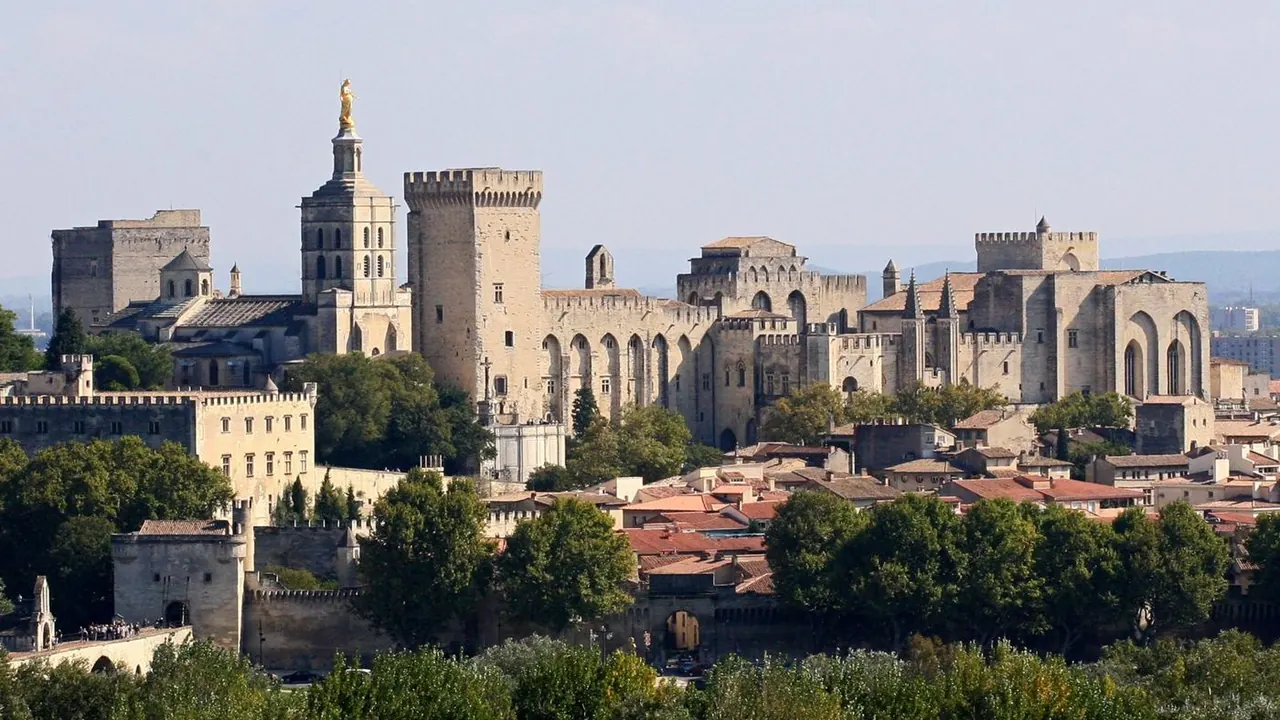
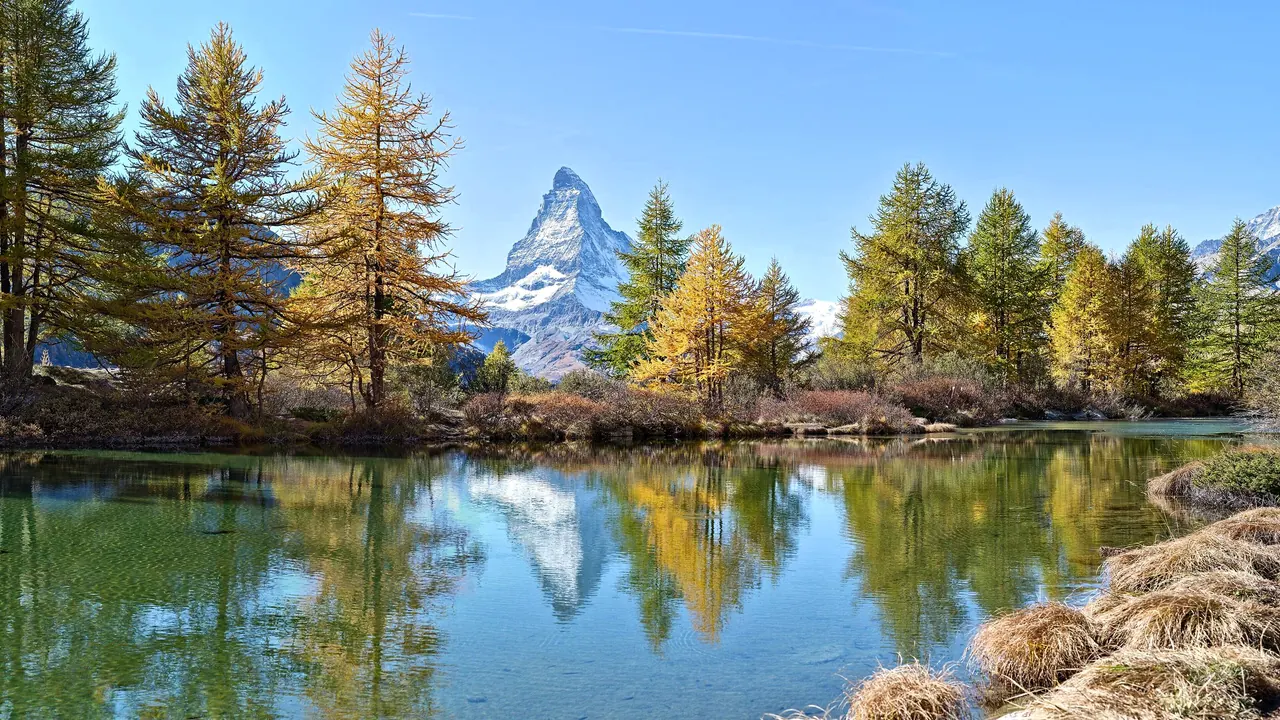
Photos: Avignon by BlueBreezeWiki, CC BY-SA 3.0, cropped; Zermatt by Roy Egloff, CC BY-SA 4.0, cropped.
Avignon or Zermatt?
Our verdict in twelve categories, each scored against the same fixed benchmark cities, and the climate month by month, so you can choose for your trip.
Choose Avignon for
- day trips
- culture and sights
- live music and the arts
Avignon suits a traveller who wants history, wine and a full map of excursions. The papal palace and the walled town take a couple of days, and then Roman Nîmes, Arles, Orange and the Pont du Gard are all close by. Add Provençal markets, Rhône wines and a world-class theatre festival in July, all at French provincial prices rather than Swiss ones, and it is the better base for a varied cultural trip through the south.
Choose Zermatt for
- nature and the outdoors
- getting around
- wellness
Zermatt is for people who travel to be in the mountains. The Matterhorn stands over a car-free village, lifts reach glacier terrain, and in winter there is skiing across into Italy, in summer long trails among marmots and ibex. The village sights fill a morning and it is very expensive, but nobody comes here for the museums. If your days are for skiing, hiking or climbing and your evenings for a spa and a fondue, choose Zermatt.
Scoreboard
Twelve categories on one fixed scale from 0 to 100. The shaded stretch is the gap between the two.
Your match
Pick a travel style or drag the sliders, and both match scores follow your weighting.
Wins on day trips and culture and sights with your weighting.
Wins on nature and the outdoors and getting around with your weighting.
What matters to you?
Category by category
What the scores mean for a trip.
Beaches & swimming
Neither is a beach destination, but Avignon at least has somewhere to swim. In summer the clear green pools of the Gardon below the Pont du Gard are a short drive away, and the Camargue sands and the beaches around Le Grau-du-Roi make a full day out.
Zermatt has no sea, no bathing lake and tarns fed by meltwater that stays painfully cold all summer. The only swim there is in a hotel pool.
Food & drink
Avignon eats better and more cheaply. Provençal dishes such as daube, tians and tapenade come from a fertile plain, Les Halles sells and cooks the produce, and Châteauneuf-du-Pape and the Côtes du Rhône are poured by the glass. The good tables are in the side streets, not on the main squares.
Zermatt's best meals are on the mountain, long lunches in the chalet hamlets around Findeln and Furi with the Matterhorn in view. In the village there is raclette, fondue, Valais wine and some ambitious fine dining. There is little cheap eating, though, and many kitchens close between seasons.
Culture & sights
Avignon spent most of the 14th century as the seat of the popes, and it shows. The Palais des Papes, the cathedral, the broken bridge and almost 4km of ramparts are worth two full days, and the Petit Palais, the Musée Calvet and the Collection Lambert add serious art.
Zermatt's heritage is the story of mountaineering. There is the underground Matterhorn Museum, the cemetery of climbers who died on the surrounding peaks, and old larch-wood granaries in the Hinterdorf. It is all interesting, and it is all done in a morning.
Nightlife
Neither is a party town, and each one only comes alive in its own season. For most of the year Avignon is about an aperitif on Place Pie and a quiet street by midnight. In July the festival keeps the squares full until the small hours.
Zermatt's evenings belong to winter. Après-ski starts in the slope-side bars on the runs into the village, and on busy weekends a few small clubs on the main street stay open late. In summer, hikers with early starts are in bed after dinner.
Nature & outdoors
Zermatt puts you in the high Alps without a drive. The Matterhorn rises over the village, and lifts climb to the Gornergrat and to glacier terrain above 3,800m. From there you can ski in summer, walk the Five Lakes trail or cross the Europaweg suspension bridge.
Avignon's countryside is fine in a gentler, scattered way: Mont Ventoux, the Luberon's ochre trails, the Alpilles and the flamingos of the Camargue. Each needs a car, and the summer heat and the mistral limit the best months to spring and autumn.
Day trips
This is where Avignon pulls furthest ahead. Nîmes, Arles, Orange and the Pont du Gard are close enough for half-day trips. Beyond them are Les Baux, the Luberon hill villages, the Châteauneuf vineyards, and Marseille or Aix by fast train.
From Zermatt every outing starts with a long train ride down the valley. Sion, with its castle hills, and Brig are pleasant, and Saas-Fee is close by bus. Most visitors stay in the mountains on their spare days.
Good for families
These two are close for families, and which suits you depends on how you like to spend your days. In Avignon children enjoy the tablet tour of the palace and dancing on the bridge from the song, but the best family days are out of town, canoeing at the Pont du Gard or seeing the Camargue horses, and they need a car. Cobbled lanes and July crowds make it harder work with small children.
Zermatt's car-free streets are calm and safe. In winter there are ski schools and nursery slopes, in summer marmots and easy lake walks. Rainy days are hard to fill, though, and the highest viewpoints can be too cold and thin-aired for toddlers.
Getting around
Zermatt is the easier place to be without a car, because a car is not allowed. You arrive by train from Täsch, and after that the village, the cog railway, the Sunnegga funicular and the gondolas are all a walk or a short electric-taxi ride away. Only the hillside hotels are hard work with luggage.
Inside its walls Avignon is just as walkable, and regional trains reach Arles, Nîmes and Orange easily. The vineyards, hill villages and Ventoux are a different matter, as buses are sparse and a hire car is the practical answer.
Shopping & style
Avignon is the better place to browse, though neither town is worth the trip for its shops alone. Away from the chain stores on Rue de la République, the lanes near Rue Joseph Vernet and Rue des Marchands sell Provençal fabrics, lavender and olive-wood. The most useful purchases are edible: olive oil, tapenade and calissons from Les Halles, or wine bought straight from the grower. For antiques, the real trade is out in the canal town of L'Isle-sur-la-Sorgue, an easy drive from town.
Zermatt has nothing like Avignon's weekend stalls of second-hand finds and flowers, and few independent shops of any kind. Its one main street mixes Swiss watch and jewellery boutiques aimed at wealthy skiers with cowbell souvenirs. Its real strength is the mountain outfitters, so if you need boots or ski gear, buy them here.
Affordability
Avignon is far easier on the wallet, though not a bargain. Set lunches, wine from local producers and a walkable old town keep spending modest, and only festival-season rooms and a hire car really push the bill up.
Zermatt is among the most expensive places in the Alps. Rooms, terrace lunches and the lift passes that every visit depends on all cost well above European norms. Self-catering or sleeping in Täsch helps, but only so far.
Live music & performing arts
Avignon's theatre festival is famous around the world. For three weeks every July the Festival d'Avignon stages major productions in the courtyard of the Palais des Papes, while the Off fills cellars, chapels and courtyards with shows from morning to night. The opera house on Place de l'Horloge, a dozen small theatres and a jazz club keep things going for the rest of the year.
Zermatt has no theatre or concert hall. Zermatt Unplugged brings several days of acoustic sets to tents and mountain stages in spring, and a chamber music festival fills the church in late summer. Outside those weeks, live music means a band in an après-ski bar.
Wellness & relaxation
Zermatt is the better place to unwind indoors. There are a great many good hotel spas, some open to day visitors, with saunas and pools that look out at the peaks. The car-free quiet adds to the calm, although peak weeks feel active rather than slow.
Avignon's relaxation is more about pace than treatments: long lunches under plane trees and the Rocher des Doms in the evening. For a real retreat, stay in a farmhouse among the vineyards rather than in town, especially in July or when the mistral blows.
When should you go?
Pick your month. The climate figures are measured averages, not a forecast.
Avignon in July
Zermatt in July
Daytime high, °C
Rainfall in the month, mm
Where the figures come from
Avignon has no rain gauge within 25 km of the centre, so its rainfall comes from a gridded climate dataset read at the city rather than from a gauge further away.
Avignon's sunshine is measured 34 km from the centre, at Nimes / Courbessac.
Zermatt has no weather station within reach, so its figures come from a gridded climate model rather than a measured record, and read a broad area rather than the city itself.
Temperature and rainfall are climate normals, averaged over the years shown. Avignon: 2005-2020 (sunshine 1981-2010, rainfall 1991-2020) normals, Avignon / Morières-lès-Avignon (8.6 km from centre). Zermatt: 1991-2020 normals, TerraClimate 4 km grid at the town, no weather station within 90 km.
These two places have opposite calendars. Avignon is at its best in May, June and September, warm enough for lunch outside and still comfortable for walking the ramparts. July and August are hot, around 32°C, with sun almost every day. That is the season for river swimming and Mediterranean days out, but it is hard work in the streets at midday. The rain comes in autumn, peaking at about 109mm in October. Winters are mild and grey-blue, quiet but fine for sightseeing.
Zermatt is never warm. Even in July and August the village only reaches about 14°C, which is ideal for hiking but always calls for a jacket higher up. From December to March daytime highs stay around or below freezing, about -2°C at their lowest, which is what keeps the pistes in good order. Rain and snow fall steadily all year, heaviest in November at around 130mm, and late autumn and spring are the in-between weeks when much of the village shuts. For heat, go to Avignon in summer. For snow, go to Zermatt in winter.
Which traveller are you?
On a culture and arts trip, Avignon is the clear choice. It has a UNESCO-listed papal palace, several good museums, Roman monuments within easy reach and the Festival d'Avignon every July. Zermatt's history amounts to one mountaineering museum and a climbers' cemetery.
For an outdoors trip, Zermatt is in another league. Lifts and a cog railway climb from the village to glacier terrain, there are hundreds of kilometres of marked trails, skiing reaches into Italy, and guides lead climbs on four-thousanders. Around Avignon the hills are lovely, but you need a car to reach them.
On a tight budget, Avignon is the only realistic option of the two. Set lunches, wine from the producers and a free walk around the old town keep costs down outside July. In Zermatt the rooms, meals and lift passes all cost far more.
Before you go
| Measure | Avignon | Zermatt |
|---|---|---|
| Official language | French | French, German, Italian, Romansh |
| Currency | Euro (EUR) | Swiss Franc (CHF) |
| Sockets | CE230 V, 50 Hz | CJ230 V, 50 Hz |
| Driving side | Right | Right |
| Time zone | UTC+1, UTC+2 in summer | UTC+1, UTC+2 in summer |
| Emergency number | 112 | 112 |
| Elevation | 10 m | 1,624 m |
| Main airport | Marseille Provence Airport (MRS)65 km from centre126 non-stop destinations | Geneva International Airport (GVA)128 km from centre150 non-stop destinations |
| Public holidays this year | 11 days | 9 days |
By the numbers
| Measure | Avignon | Zermatt |
|---|---|---|
| City population | 92,188 | 6,023 |
| People per km² | 1,420 | 25 |
| Museums within 10 km | 11 | 2 |
| UNESCO World Heritage sites within 50 km | 6 | 2 |
Where else could you go?
Every comparison below shares a destination with this one, so you can follow Avignon or Zermatt somewhere new.
- Chamonixvs Zermatt
- Aix-en-Provencevs Avignon
- Interlakenvs Zermatt
- Montpelliervs Avignon
- Marseillevs Avignon
- Luganovs Zermatt