Baden-Baden or Bruges?
Two destinations compared in twelve categories, each scored against the same fixed benchmark cities. Weight what matters to you and the verdict follows.
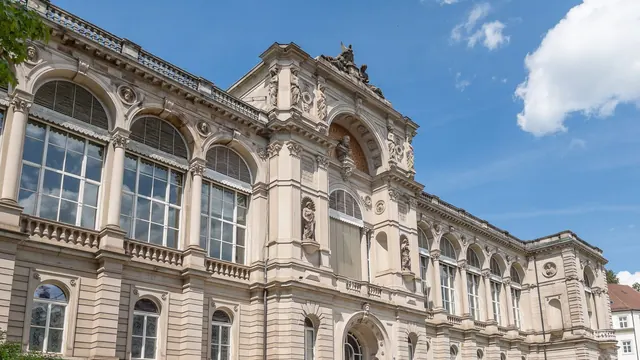
Photo: Kent Wang, CC BY-SA 2.0, cropped
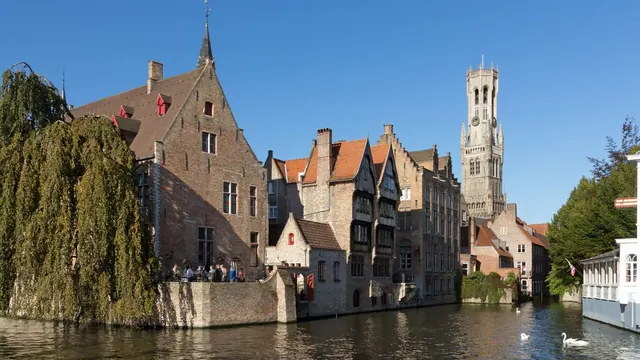
Photo: Michielverbeek, CC BY-SA 4.0, cropped
Your match
Too close to call, level with your weighting
Wins on wellness and nature and the outdoors with your weighting.
Wins on culture and sights and beaches with your weighting.
What matters to you?
Pick a travel style or drag the sliders. The match scores above update as you do.
The verdict
Baden-Baden is the choice for a slow, restorative stay. Your days centre on the Friedrichsbad and the Caracalla baths, the Black Forest starts at the edge of town, and evenings mean the Festspielhaus or a wine tavern in the Rebland villages. It suits couples and older travellers who want rest, fresh air and good music more than a long list of sights, and who are happy to pay for comfort.
For a trip built around looking at things, Bruges gives more. Its canal-ringed medieval centre and the Flemish Primitives in its museums offer more to see. It is flat and easy to cover on foot or by bike, and Ghent, Brussels and Antwerp are all short train rides away. Its beer cafés make the evenings a little livelier, and the North Sea beaches are close on a warm day.
Scoreboard
Our verdict on each category, scored 0 to 100 against fixed benchmark cities.
Category by category
What the scores mean for a trip to Baden-Baden or Bruges.
Beaches & swimming828
Neither is a beach destination, but only Bruges has the sea within easy reach. A short train ride to Blankenberge puts you on wide, sandy North Sea beaches, cool and often windy but fine for a paddle on a summer afternoon. Baden-Baden is far from any coast and its water is thermal, so on a hot day the choice is an outdoor pool or a flooded gravel pit on the Rhine plain.
Food & drink4556
Bruges eats and drinks better, mostly because of its beer. Brown cafés pour Trappist and abbey ales alongside mussels with frites, beef stewed in beer and waterzooi, and there is chocolate in shop window after shop window. To avoid the set menus aimed at day-trippers, eat a street or two away from the Markt.
Baden-Baden's strength is wine rather than beer. Riesling and Pinot Noir come from the Rebland slopes, and the Baden cooking has a French accent, from Flammkuchen to venison. The town is small, though, and much of its eating is hotel dining or cake in cafés. The most celebrated restaurants are a drive away in the forest.
Culture & sights5275
Bruges has much more to see. The whole canal-ringed centre is medieval and protected, with the Belfry, the Burg and the Begijnhof, and the art is first-rate: van Eyck in the Groeninge, Memling in St John's Hospital and Michelangelo's Madonna in the Church of Our Lady.
Baden-Baden belongs to a later era. It is the nineteenth-century spa resort of the Kurhaus, the Trinkhalle and the Lichtentaler Allee, with modern art at the Museum Frieder Burda and the house where Brahms spent his summers. It is elegant and worth a day or two, but there is less of it, and nothing with the old-master weight of Bruges.
Nightlife1527
Neither town stays up late, but Bruges has more going on after dark. Its brown cafés and cellar bars around the Eiermarkt and 't Zand stay busy into the night with students and beer lovers, and a couple of small clubs open at weekends. Baden-Baden's evenings are formal and short: smart dress for the Kurhaus casino, a hotel bar or wine bar, and quiet streets well before midnight.
Nature & outdoors7040
Baden-Baden is much better for the outdoors. The Black Forest starts where the streets end, with the Merkur funicular, the Battert cliffs for climbers and the Panoramaweg through woods and vines. Further up, the High Road leads to the Mummelsee and the Hornisgrinde, with some skiing in winter.
Bruges sits in flat polder country of canals, poplars and dykes. It is lovely by bike, especially along the towpath to Damme, and the Zwin salt marsh draws birdwatchers, but there are no hills or forests to walk in.
Day trips7885
Both make excellent bases, and Bruges has the edge mainly because its trips need no car. Ghent is under half an hour by train and Brussels about an hour, and Antwerp, the coast and the First World War sites around Ypres are all close.
Baden-Baden's list is also long and rewarding. It runs from Strasbourg and the Alsace wine villages to Heidelberg, Freiburg, Speyer and Maulbronn, but the Alsace and Black Forest outings work far better with a hire car.
Good for families5054
Both towns are safe, compact and calm, so the difference is where children spend their days. Bruges keeps them busy in town with canal boats, the Belfry climb, the chocolate and frites museums and Boudewijn Seapark, plus sandcastles on the coast. The cobbles are hard work with a pushchair, though.
Baden-Baden has the funicular and the forest trails, but the Friedrichsbad does not admit young children and the mood is grown-up. Its big family draw is Europa-Park, about an hour south, so it works more as a base than as a destination in itself.
Getting around6278
Bruges is easier to get around. It is flat and largely car-free, you can cross it on foot in about half an hour, bikes are easy to hire, and frequent trains leave from a station just outside the canal ring. Only the cobbles are a nuisance.
Baden-Baden's centre is walkable too, but some streets climb steeply and the station is a bus ride away in Oos. The High Road, the wine villages and Alsace all really need a car.
Shopping & style3845
Baden-Baden has less to buy than Bruges, but what it has is polished: jewellers, watchmakers and fashion boutiques on Sophienstraße and Lange Straße, aimed at a well-off spa crowd. There are no real markets, and local craft goes little further than cuckoo clocks and wine.
Bruges gives a shopper more to do, though mostly things to eat and drink. There are chocolate makers on almost every street, and beer shops sell bottles from across Belgium with the glasses to match. Bobbin lace is the old local craft, although much of what fills the windows near the Markt is imported. The Saturday market on 't Zand and the flea market along the Dijver are good for a browse.
Affordability3036
Both are expensive, but Bruges is a little easier on the budget. The old town costs nothing to wander, beer is fair value and trains for day trips are reasonably priced, and staying midweek or outside the canal ring helps further.
Baden-Baden was built for the wealthy and is still priced that way. Every visit to the baths is paid for separately, so a stay centred on the spas adds up quickly, although simple guesthouses, wine taverns and bakeries soften the cost.
Live music & performing arts5840
Baden-Baden is the stronger choice for music. The Festspielhaus, one of Germany's largest opera and concert houses, brings in leading orchestras and opera productions. The philharmonic in the Kurhaus and the small nineteenth-century theatre continue a tradition that goes back to Brahms and Clara Schumann.
Bruges has a fine Concertgebouw known for early music and contemporary dance, a respected summer early-music festival and carillon and church concerts. It has no opera company, though, so for a wider choice of evenings you take the train to Ghent or Brussels.
Wellness & relaxation9640
This is where the two differ most. In Baden-Baden the thermal waters are the whole point: the silent, domed Friedrichsbad with its set sequence of hot rooms and pools, the Caracalla complex with its saunas, and a town that winds down early.
Bruges has no bathing tradition and only hotel and day spas. Its calm depends on timing: the Begijnhof, the Minnewater and the Sint-Anna quarter early or late in the day, once the crowds have gone.
Which traveller are you?
For a relaxing and wellness trip, Baden-Baden is in a different league. The whole stay can turn on the thermal baths, with slow days and early nights in a town built for exactly that. In Bruges, calm means catching the canals before the crowds arrive, and the only spas are in hotels or day spas.
On a culture and arts trip, Bruges gives far more. The medieval town itself is the sight, world-class Flemish painting is a short walk from wherever you stay, and other great Flemish cities are within an hour by train. Baden-Baden's Belle Époque spa town fills a day or two.
On an outdoors trip, Baden-Baden wins clearly. You can walk straight out of town into fir forest, and climbing, mountain biking and full-day ridge hikes are all within easy reach. Around Bruges the land is flat, good for an afternoon's cycling but not much more.
When should you go?
Pick the month you can travel and see both cities side by side. The climate figures are measured averages, not a forecast.
| July | Baden-Baden | Bruges |
|---|---|---|
| Daytime high | 25 °C | 22 °C |
| Night-time low | 14 °C | 15 °C |
| Rainfall in the month | 117 mm | 74 mm |
| Sunshine | 8 hours a day | 8 hours a day |
| Sea temperature | No sea | 18 °C |
| Daylight | 16 hours a day | 16 hours a day |
Baden-Baden has the warmer summer, with highs of around 25°C in July and August against about 22°C in Bruges, and slightly more sunshine in those two months. June to September is its best stretch for forest trails and the vineyard paths. It is warm without being too hot for walking. Rain is the catch, with close to 100mm or more in almost every month, so you need a waterproof all year. From November to February it is cold and grey, with little sun.
Bruges is drier for much of the year. April is its driest month at about 35mm, and late spring brings long, sunny days and cool air, the best time for walking the canals and cycling out into the polder. The rain builds through summer and autumn. Winters are cold in both towns, though Bruges sees more winter sun. The North Sea is warm enough for a quick dip only in July and August, when it reaches about 19°C.
The whole year
Each row is shaded against that destination’s own year, so the deepest cell is its best month for that figure and the palest its weakest. Shades are not comparable between the two rows.
Where the figures come from
Bruges's temperatures are measured 37 km from the centre, at Vlissingen.
Temperature and rainfall are climate normals, averaged over the years shown. Baden-Baden: 1991-2020 normals, Baden-Baden-Geroldsau (3.9 km from centre). Bruges: 1991-2020 normals, Vlissingen (37.4 km from centre).
Getting there
| Flying from | Baden-Baden | Bruges |
|---|---|---|
| SingaporeSIN, XSP | 12 h 45 m no fares FRA · 143 km | 13 h 5 m no fares BRU · 94 km |
| Sao PauloGRU, VCP, CGH, RTE | 12 h 10 m no fares FRA · 143 km | 12 h 0 m no fares BRU · 94 km |
| MadridMAD | 2 h 5 m no fares BSL · 140 km | 2 h 15 m €98-170 BRU · 94 km |
| LondonLHR, LGW, STN, LTN +2 | 1 h 30 m no fares FKB · 12 km | 1 h 5 m €98-165 1 stop BRU · 94 km |
| PalmaPMI | 2 h 0 m no fares FKB · 12 km | 2 h 10 m no fares OST · 24 km |
| NiceNCE | 1 h 20 m €81-198 SXB · 51 km | 1 h 40 m no fares LIL · 72 km |
| RomeFCO, CIA | 1 h 40 m no fares SXB · 51 km | 2 h 5 m €87-136 1 stop BRU · 94 km |
| IstanbulIST, SAW | 2 h 50 m no fares SXB · 51 km | 3 h 10 m €161-193 BRU · 94 km |
| New YorkJFK, EWR, LGA | 7 h 55 m €537-713 FRA · 143 km | 7 h 35 m no fares BRU · 94 km |
| FezFEZ | 3 h 0 m no fares FKB · 12 km | 3 h 0 m no fares CRL · 120 km |
The busiest departure cities for these two, with a place kept for each other part of the world. Busiest means arriving passengers where an official count exists, and where none does, the number of non-stop services flown: official route statistics are published by the European reporting countries and by nobody else, so a table ranked on them alone would offer a reader in New York or Tokyo ten European cities. Flying times are estimated from the distance between airports, and every row is a city flown non-stop to both. Where the typical offer connects anyway, the stops are shown. Under each figure is the airport the flight lands at and how far that is from the centre, because the nearest airport is not always the one a route is flown to. Where both columns name the same airport it is one flight, and the difference between the two is the distance printed beside it. Typical return fares for 2026-08 to 2026-10, cached market data up to 7 days old. The figure is the middle half of the offers found, so a single price means they agreed and a range means they did not; for a typical route that middle half spans about a quarter of the median, and for the least settled routes rather more than the median itself.
Before you go
| Measure | Baden-Baden | Bruges |
|---|---|---|
| Official language | German | French, German, Dutch |
| Currency | Euro (EUR) | Euro (EUR) |
| Sockets | CF230 V, 50 Hz | CE230 V, 50 Hz |
| Driving side | Right | Right |
| Time zone | UTC+1, UTC+2 in summer | UTC+1, UTC+2 in summer |
| Emergency number | 112 | 112 |
| Elevation | 181 m | 2 m |
| Main airport | Karlsruhe Baden-Baden Airport (FKB)12 km from centre43 non-stop destinations | Brussels Airport (BRU)94 km from centre190 non-stop destinations |
| Public holidays this year | 12 days | 14 days |
By the numbers
| Measure | Baden-Baden | Bruges |
|---|---|---|
| City population | 56,952 | 118,509 |
| People per km² | 406 | 840 |
| Museums within 10 km | 11 | 38 |
| UNESCO World Heritage sites within 50 km | 2 | 3 |
| Swim season, months above 21 °C | - | None |
Where else could you go?
Every comparison below shares a destination with this one, so you can follow Baden-Baden or Bruges somewhere new.