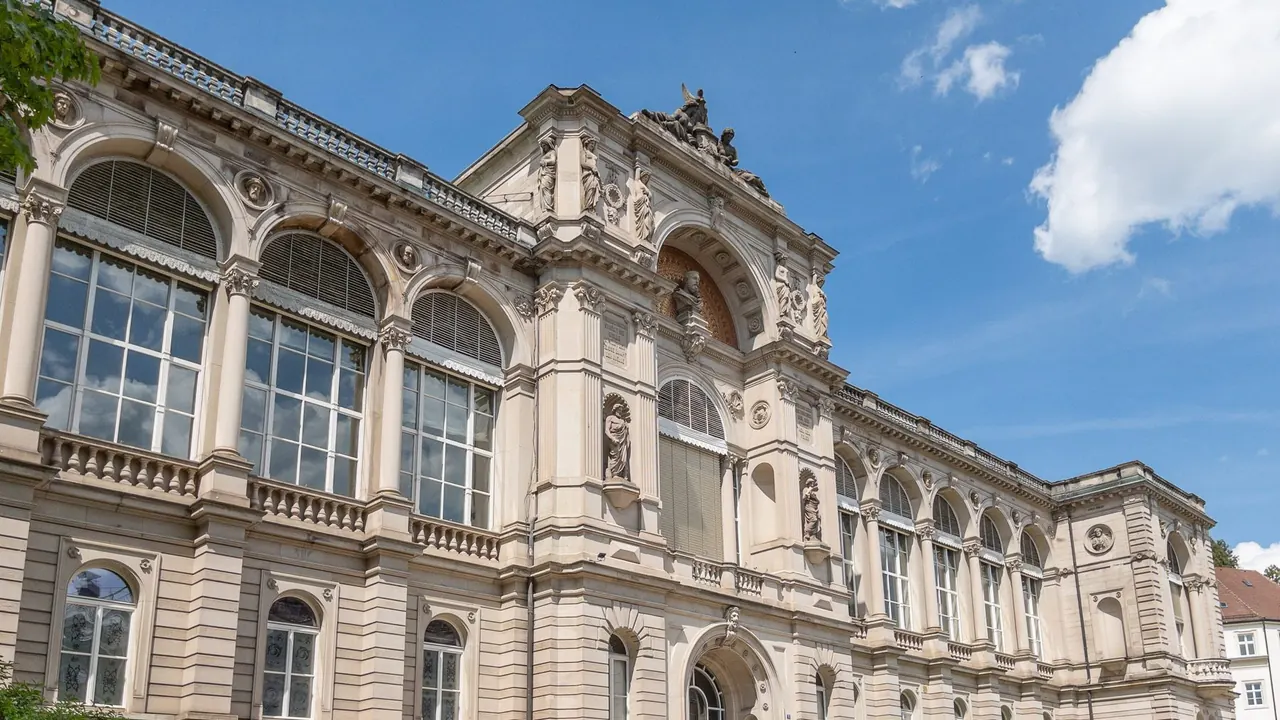
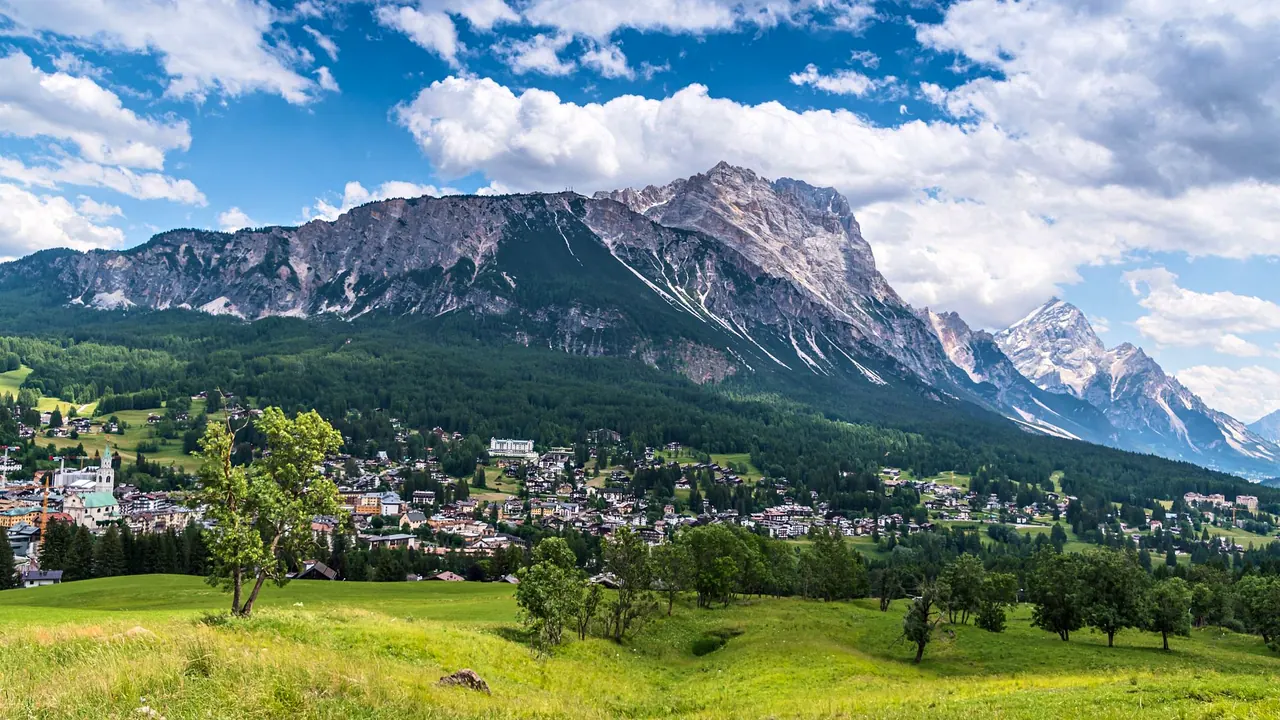
Photos: Baden-Baden by Kent Wang, CC BY-SA 2.0, cropped; Cortina d'Ampezzo by Andreas Neubauer, Pexels License.
Baden-Baden or Cortina d'Ampezzo?
Our verdict in twelve categories, each scored against the same fixed benchmark cities, and the climate month by month, so you can choose for your trip.
Choose Baden-Baden for
- wellness
- live music and the arts
- day trips
Baden-Baden is the choice for a slow, restorative stay with good things to see. You spend your days between the Friedrichsbad and Caracalla, walk the Lichtentaler Allee, go to a concert at the Festspielhaus in the evening, and take an easy train or drive to Strasbourg, Heidelberg or the Alsace wine villages. It suits travellers who want comfort and some culture, and who would rather wander forested hills than climb mountains.
Choose Cortina d'Ampezzo for
- nature and the outdoors
- nightlife
- shopping
Cortina d'Ampezzo is for people who come for the mountains. The Dolomites rise straight out of the valley, lifts carry you onto the peaks, and the trip is built around skiing in the Dolomiti Superski area in winter or hiking hut to hut and climbing via ferrata in summer. It costs more and is harder to reach, and the evenings and rainy days have less to fill them. For walkers, climbers and skiers the scenery makes up for that.
Scoreboard
Twelve categories on one fixed scale from 0 to 100. The shaded stretch is the gap between the two.
Your match
Pick a travel style or drag the sliders, and both match scores follow your weighting.
Wins on wellness and live music and the arts with your weighting.
Wins on nature and the outdoors and nightlife with your weighting.
What matters to you?
Category by category
What the scores mean for a trip.
Beaches & swimming
Neither town is a place for a beach. Baden-Baden is far inland on the Rhine side of the Black Forest, and Cortina is a high Alpine valley more than two hours from the Adriatic.
The swimming is different in kind, though. Around Baden-Baden, summer swimming means outdoor pools and the warmer gravel lakes of the Rhine plain. Cortina's small lakes, such as Ghedina, are beautiful to walk round but stay cold from snowmelt, so most people swim in a hotel pool.
Food & drink
The two eat equally well, and both serve a wealthy crowd. Baden-Baden draws on Baden's regional cooking and a French influence, but its real strength is wine: Riesling and Pinot Noir from the Rebland slopes, served in the village wine taverns. For a serious meal you drive into the northern Black Forest.
Cortina's cooking is Ampezzan mountain food with a Venetian touch, such as casunziei with poppy seeds and polenta with game. The most memorable meals are often lunches on rifugio terraces high among the peaks. In both towns the choice in the centre is narrow.
Culture & sights
Baden-Baden has much more to see. The whole spa town is the attraction: the Kurhaus, the Trinkhalle colonnade, the villas on the hillsides, Roman bath ruins under the old town, and good art at the Museum Frieder Burda and the Staatliche Kunsthalle. That is a full day or two of sightseeing.
Cortina's centre has its basilica bell tower, painted houses and the 1956 Olympic ice stadium. The Regole museums are enough for a wet afternoon. Its most striking history is the First World War front on Lagazuoi and the Cinque Torri, and reaching it takes a day in the mountains.
Nightlife
Late nights are rare in both towns, and the evenings before them are spent in different ways. In Baden-Baden the night out is dressing up for the gilded casino rooms of the Kurhaus, then a hotel bar or a wine bar. The town is quiet early all year, and anyone who wants clubs goes to Karlsruhe or Strasbourg.
Cortina's evenings follow the ski season. There is après-ski when the lifts close and a passeggiata along the Corso Italia, and in the peak winter weeks a few bars and clubs stay open late. In summer the town is as quiet as Baden-Baden.
Nature & outdoors
Cortina is on another level here. The Tofane, Cristallo and Cinque Torri surround the town, the Tre Cime and Lago di Misurina are under an hour away, and the same valley gives you world-class skiing in winter and hut-to-hut hiking, climbing and via ferrata in summer.
Baden-Baden's outdoors are gentler and still good. The Merkur funicular and the Battert cliffs lead into fir forest, the Panoramaweg runs through vineyards, and the Black Forest High Road climbs past the Mummelsee to the Hornisgrinde moorland. It is wooded hill country, best in autumn, with only modest skiing.
Day trips
Baden-Baden is far better placed for outings. Strasbourg's cathedral and Petite France, Heidelberg and Freiburg are each about an hour away. The Alsace wine route, the Rastatt and Karlsruhe palaces, and the UNESCO sites at Speyer and Maulbronn add plenty of variety.
From Cortina, most outings go further into the mountains. The towns of South Tyrol, such as San Candido and Brunico, are the closest worthwhile trips, and Bolzano's Iceman is about two hours by road. Venice is possible, but only as a long day on the coach.
Good for families
Both work for families only in certain ways, and the ways differ. Baden-Baden is safe and easy to walk, but it is built for adults, and the Friedrichsbad turns away young children. Families use it as a calm base for trips to Europa-Park and Karlsruhe's zoo.
Cortina suits families who ski or hike. It has ski schools, beginner slopes at Socrepes, skating at the ice stadium and easy walks to huts in summer. There is nothing built for children beyond that, so wet days can drag.
Getting around
Baden-Baden is easier. The baths, Kurhaus and museums are a short walk apart, buses connect the centre to the station in Oos, and trains run directly to Karlsruhe, Freiburg and beyond. A car helps mainly for Alsace and the High Road.
Cortina's flat little centre is easy on foot, and ski buses work well in winter. There has been no railway since 1964, though, so arriving means a coach from Venice or a long drive. Buses up to the passes are limited, so many visitors hire a car.
Shopping & style
Both towns are polished but narrow for shopping, each with a short upmarket strip for wealthy visitors. Baden-Baden's Sophienstraße and Lange Straße have jewellers, watchmakers and delicatessens, and cuckoo clocks and Rebland wine are the local things to take home.
Cortina's Corso Italia adds furriers and high-end mountain wear. It also has the Cooperativa di Cortina, a store dating from 1893 that sells everything from local food to outdoor gear, plus wood carving and filigree. Cortina has a little more character, and Strasbourg is the shopping trip from Baden-Baden.
Affordability
Both are expensive, but Baden-Baden is easier on the budget. Its guesthouses, wine taverns and bakeries are reasonably priced for Germany, and buses are cheap. What adds up is the grand hotels and paying for each visit to the baths.
Cortina is one of Italy's most expensive resorts. Hotels and restaurants in winter and August charge luxury prices, and then come lift passes and equipment hire. Rifugio meals and the shoulder months help, but budget travellers often stay in a cheaper valley nearby.
Live music & performing arts
Baden-Baden is far ahead. The Festspielhaus, one of Germany's largest opera and concert halls, brings leading orchestras and opera productions, the town's philharmonic plays in the Kurhaus, and the small nineteenth-century theatre adds drama. Brahms and Clara Schumann are part of the town's story.
Cortina has no theatre season and no regular venue. You get summer chamber music in churches and sometimes outdoors, plus a few concerts around New Year.
Wellness & relaxation
This is Baden-Baden's whole reason to exist. You can take the silent, unclothed circuit of hot rooms and pools at the domed Friedrichsbad, or spend a day in the indoor and outdoor pools and saunas at Caracalla, both fed by springs the Romans used. The whole town moves at the slow pace of a cure.
Cortina has no springs and no bathing tradition. Rest there comes from hotel spas with hay baths and saunas after a day on the slopes, and from quiet hut terraces in June and September. In the peak weeks it is far less calm.
When should you go?
Pick your month. The climate figures are measured averages, not a forecast.
Baden-Baden in July
Cortina d'Ampezzo in July
Daytime high, °C
Rainfall in the month, mm
Temperature and rainfall are climate normals, averaged over the years shown. Baden-Baden: 1991-2020 normals, Baden-Baden-Geroldsau (3.9 km from centre). Cortina d'Ampezzo: 1991-2020 normals, Dobbiaco (22.5 km from centre).
Baden-Baden has a mild, green climate with rain spread evenly through the year, roughly 100mm in most months, so there is no truly dry season. From June to August daytime highs reach around 25°C and the days are at their sunniest, which is the right time for the forest trails and evenings in the wine villages. Spring and early autumn are pleasant for walking the streets, and autumn brings colour to the Black Forest. Winter is grey, short of sunshine and around 6°C, a good season for the thermal baths and not much else.
Cortina follows the mountain calendar. Winter is cold, with highs near freezing in January, and it is the driest part of the year, which suits a ski trip. Summer stays fresh at about 22°C, comfortable for long hikes, but it is also the wettest season, peaking at around 130mm in July, so plan for wet afternoons. June is mild but still wet. September is the better month for walking, still mild and clearly drier than the high summer. Spring and November fall between seasons in both towns, and they are weakest in Cortina.
Which traveller are you?
On a relaxing and wellness trip, Baden-Baden is clearly the place. The town grew up around its Roman hot springs, and the silent Friedrichsbad ritual and the pools at Caracalla give you a proper bathing tradition. Cortina only has hotel spas.
For an outdoors trip, Cortina wins easily. Lifts run from town into the Dolomites, and the Tre Cime, the Alta Via 1 and old via ferrata routes are all close. Baden-Baden's Black Forest trails are pleasant, but they are wooded upland, not high mountains.
On a culture and arts trip, Baden-Baden offers far more. It has Belle Époque architecture, the Museum Frieder Burda and Kunsthalle, and international orchestras at the Festspielhaus. Cortina's small museums and summer concerts fill an afternoon or an evening, not a whole stay.
Before you go
| Measure | Baden-Baden | Cortina d'Ampezzo |
|---|---|---|
| Official language | German | Italian |
| Currency | Euro (EUR) | Euro (EUR) |
| Sockets | CF230 V, 50 Hz | CFL230 V, 50 Hz |
| Driving side | Right | Right |
| Time zone | UTC+1, UTC+2 in summer | UTC+1, UTC+2 in summer |
| Emergency number | 112 | 112 |
| Elevation | 181 m | 1,224 m |
| Main airport | Karlsruhe Baden-Baden Airport (FKB)12 km from centre43 non-stop destinations | Venice Marco Polo Airport (VCE)116 km from centre103 non-stop destinations |
| Public holidays this year | 12 days | 13 days |
By the numbers
| Measure | Baden-Baden | Cortina d'Ampezzo |
|---|---|---|
| City population | 56,952 | 5,546 |
| People per km² | 406 | 22 |
| Museums within 10 km | 11 | 3 |
| UNESCO World Heritage sites within 50 km | 3 | 1 |
Where else could you go?
Every comparison below shares a destination with this one, so you can follow Baden-Baden or Cortina d'Ampezzo somewhere new.
- Strasbourgvs Baden-Baden
- Stuttgartvs Baden-Baden
- Heidelbergvs Baden-Baden
- Innsbruckvs Cortina d'Ampezzo
- Colmarvs Baden-Baden
- Venicevs Cortina d'Ampezzo