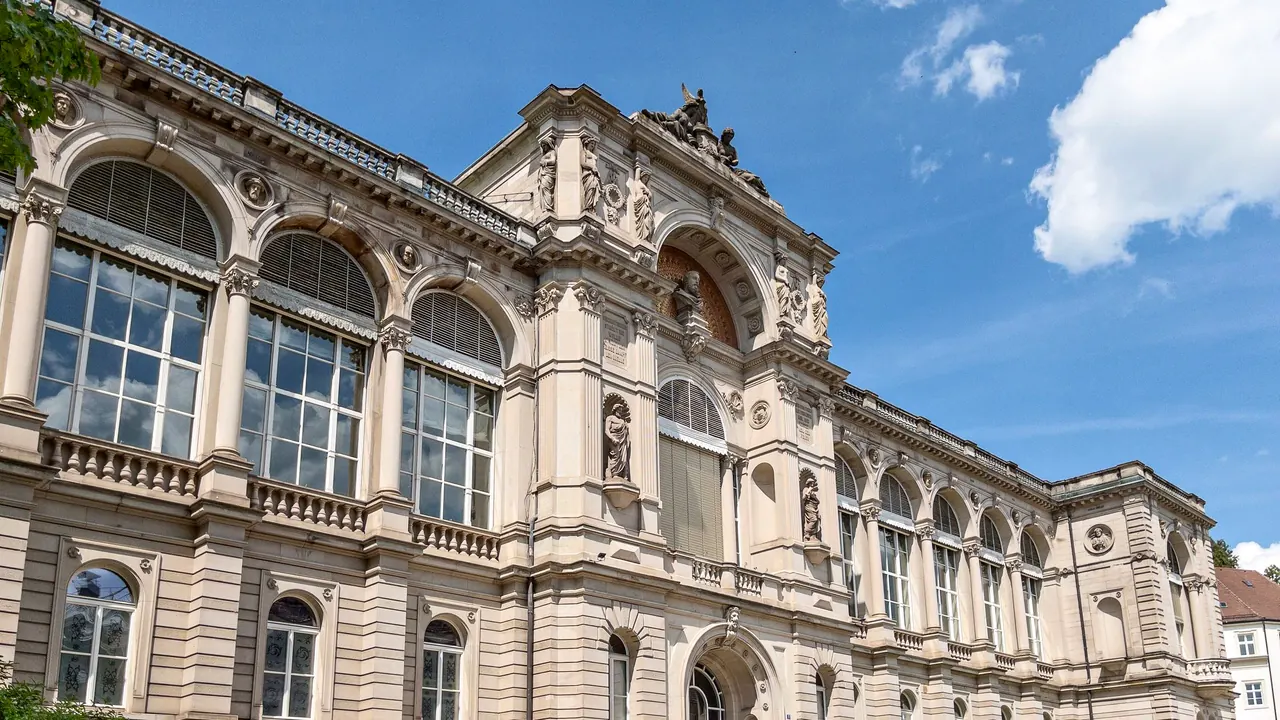
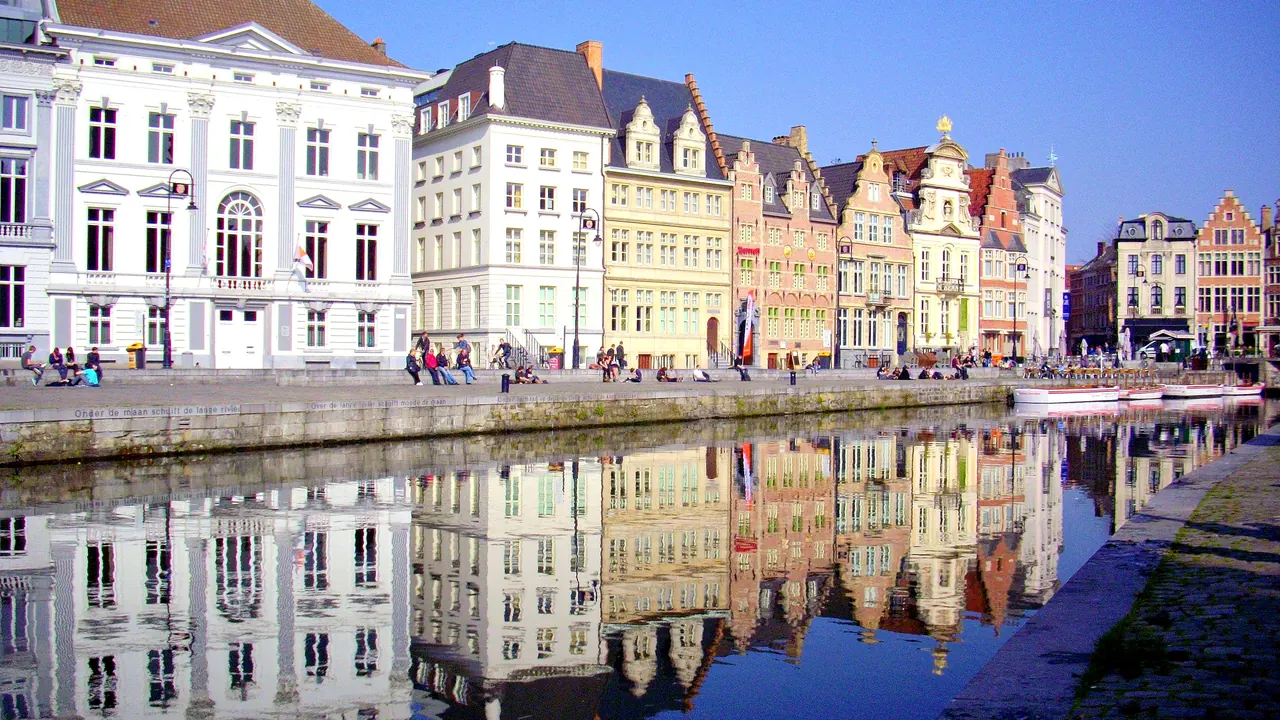
Photos: Baden-Baden by Kent Wang, CC BY-SA 2.0, cropped; Ghent by ykeiko, CC BY-SA 3.0, cropped.
Baden-Baden or Ghent?
Our verdict in twelve categories, each scored against the same fixed benchmark cities, and the climate month by month, so you can choose for your trip.
Choose Baden-Baden for
- wellness
- nature and the outdoors
Baden-Baden suits a slower, quieter trip built around rest. The thermal baths are the reason to come, and the town is set up around them. Add walks into the Black Forest, which starts at the edge of town, and an evening concert at the Festspielhaus, and you have the shape of a stay. It works best for couples and older travellers who want calm evenings and smart surroundings, and who don't mind paying for them.
Choose Ghent for
- nightlife
- culture and sights
- beaches
Ghent is the livelier and more varied choice. It has a working medieval centre, the van Eyck altarpiece, beer cafés that stay busy late, and a student crowd that keeps the evenings going. It also makes a cheaper and easier base for seeing more. Bruges, Brussels and Antwerp are each a short train ride away, and you won't need a car, so it suits a city break or a tour of Flanders far better than a rest cure.
Scoreboard
Twelve categories on one fixed scale from 0 to 100. The shaded stretch is the gap between the two.
Your match
Pick a travel style or drag the sliders, and both match scores follow your weighting.
Wins on wellness and nature and the outdoors with your weighting.
Wins on nightlife and culture and sights with your weighting.
What matters to you?
Category by category
What the scores mean for a trip.
Beaches & swimming
Neither city is a place for a beach vacation, but Ghent at least gives you real sand within reach. Ostend is about an hour away by train, and the coast tram links the dune-backed resorts. Closer to home, the Blaarmeersen lake has a sandy shore with lifeguards in summer.
Baden-Baden is much further from any sea. Outdoor swimming there means a gravel-pit lake on the Rhine plain or an open-air pool on a hot afternoon. The water that matters in this town is in its thermal baths.
Food & drink
Ghent is the better place to eat and drink. Beyond waterzooi, beef stewed in beer and paper cones of frites, it has deep beer menus in its historic cafés and an unusually good choice for vegetarians. The Patershol lanes hold enough good restaurants to fill a few evenings.
Baden-Baden's strength is wine rather than beer. Riesling and Pinot Noir grow on the slopes of the Rebland villages, and their taverns serve hearty Baden cooking with a French accent. In town, though, the choice is mostly hotel dining rooms and cake cafés. The famous restaurants are a drive away in the hills.
Culture & sights
Ghent has more to see and more depth. The Ghent Altarpiece alone justifies the trip, and the moated Gravensteen, the guildhalls along the Graslei and the line of towers seen from St Michael's Bridge sit in a centre that is still lived in rather than preserved for show.
Baden-Baden's appeal is narrower and more of a period piece. Its sights are the Belle Époque spa town itself: the Kurhaus, the Trinkhalle colonnade and the hillside villas, with good modern art at the Museum Frieder Burda. It fills a day or two, where Ghent rewards three.
Nightlife
Ghent is far livelier after dark. Its university brings a young crowd to the Overpoort bars, the cafés around Oudburg pour strong beer until late, and summer evenings move out onto the quays. During the Gentse Feesten in July, the whole centre becomes a street party.
Baden-Baden's evenings are smart and quiet. The night out is the casino in the Kurhaus, with a dress code, followed by a hotel bar, and the streets are calm well before midnight.
Nature & outdoors
Baden-Baden has real landscape on its doorstep. The Merkur funicular and the Battert cliffs lead straight onto forest trails. Further along, the ridge road climbs past the Mummelsee to the moorland of the Hornisgrinde, with mountain biking in summer and some modest skiing in winter.
Ghent's countryside is flat and gentle: riverside cycling along the Leie, birdwatching in the Bourgoyen-Ossemeersen wetlands, and polders stretching north. It is pleasant for a bike ride but has nothing to compare with the Black Forest.
Day trips
Both cities make good bases, but Ghent's day trips are closer together and easier by train. Bruges is under half an hour away, Brussels about the same and Antwerp under an hour. Ypres and the Westhoek battlefields, Mechelen and Lille are all easy to reach without a car.
Baden-Baden's outings cross a border and cover more varied ground. Strasbourg is about an hour away, with the Alsace wine villages and Colmar beyond it, and Heidelberg and Freiburg are both on the railway. For Alsace and the Black Forest towns, though, you will want a car.
Good for families
With children the two are broadly level, but for different reasons. Ghent keeps the family in the city: the Gravensteen's battlements and armour, canal boat trips, the toys at the House of Alijn and the lake beach at the Blaarmeersen. Cobbles make it hard going with a pushchair.
Baden-Baden is a calm, safe base where the big days happen elsewhere. Europa-Park is about an hour south, and the funicular and forest paths are close by. The Friedrichsbad turns young children away, and the town's mood is aimed at adults.
Getting around
Ghent is the easier city to get around. Its centre is flat and mostly closed to cars, bikes are the local way to travel, trams run out to the main station, and trains handle every day trip.
Baden-Baden's centre is small and walkable too, but some streets climb steeply. Its station is a bus ride away in Oos, and the wine villages, the ridge road and Alsace are far simpler to reach by car.
Shopping & style
Ghent has more range and more character for shopping: independent design along the Serpentstraat, vintage shops in the student quarter, and the flea market at Sint-Jacobs and the flower market on the Kouter. The best things to take home are edible, such as chocolate, cuberdons and the city's mustard.
Baden-Baden is the opposite: small but polished. On Sophienstraße and Lange Straße you will find jewellers, watchmakers and boutiques that Ghent lacks, but there are no markets and little else beyond cuckoo clocks and local wine.
Affordability
Neither city is cheap, but Ghent is the gentler on a budget. It has a good spread of small hotels and guesthouses, plenty of frites stands and set lunches, and several churches, St Bavo's among them, that are free to enter. Accommodation gets tight only during the July festival.
Baden-Baden was built for the wealthy, and its grand hotels still set the price level. The baths charge for every visit, so a spa-centred stay adds up. Staying in a simple guesthouse and eating at wine taverns keeps costs down.
Live music & performing arts
Both have more on stage than their size suggests, but of different kinds. Baden-Baden is about classical music on a grand scale. The Festspielhaus brings leading international orchestras and opera productions to a town that Brahms and Clara Schumann knew well, but there is little beyond that.
Ghent offers more variety. There is opera and ballet from the Flemish national company, early music at De Bijloke in its medieval hospital, and bold theatre at NTGent, though mostly in Dutch. A jazz festival and free stages during the Gentse Feesten add to the mix.
Wellness & relaxation
This is where Baden-Baden stands apart. Hot springs first used by the Romans supply the Friedrichsbad, with its silent sequence of steam rooms and pools, and the Caracalla complex with its outdoor pools and saunas. Most of the grand hotels add spas of their own.
Ghent offers quiet rather than treatment. You can rest in the walled gardens of the beguinages, walk along the Coupure canal or spend an afternoon on a terrace, but there is nothing to bathe in.
When should you go?
Pick your month. The climate figures are measured averages, not a forecast.
Baden-Baden in July
Ghent in July
Daytime high, °C
Rainfall in the month, mm
Where the figures come from
Ghent has no rain gauge within 25 km of the centre, so its rainfall comes from a gridded climate dataset read at the destination rather than from a gauge further away.
Ghent's sunshine is measured 45 km from the centre, at Vlissingen.
Temperature and rainfall are climate normals, averaged over the years shown. Baden-Baden: 1991-2020 normals, Baden-Baden-Geroldsau (3.9 km from centre). Ghent: 2009-2025 (sunshine 1991-2020, rainfall 1991-2020) normals, Melle / Kalverhaag (10.1 km from centre).
Baden-Baden has the warmer summer, with highs around 25°C in July and August against Ghent's 23°C. From June to August it also gets a little more sunshine, which makes early summer through September the best time for Black Forest trails and wine-village walks. The catch is rain. Baden-Baden is wet all year, with around 100mm or more in most months, and summer is as wet as winter. Its winters are cold, and it gets very little sun from November to January.
Ghent is milder and drier, especially in spring, when April brings only 45mm and good walking weather. May is actually sunnier there than in Baden-Baden. Ghent's rain builds through autumn into a damp December, but its winter days are a little brighter. The North Sea reaches only about 19°C at its warmest in August, so even in high summer the coast is for a bracing dip rather than a swimming vacation.
Which traveller are you?
On a relaxing and wellness trip, Baden-Baden is the clear choice. Its hot springs feed the domed Friedrichsbad and the Caracalla pools, and the whole town moves at an unhurried pace. Ghent has no bathing culture at all, only a few hotel spas.
For a food and nightlife trip, choose Ghent. You get Flemish stews, long beer lists in the old brown cafés around the Vrijdagmarkt and Patershol, and student bars that run late. Baden-Baden's evenings are dressed-up, wind down early and centre on the casino.
On an outdoors trip, Baden-Baden wins easily. Fir forest, climbing cliffs, funicular viewpoints and the Black Forest High Road begin almost at the hotel door. Around Ghent the countryside is flat and farmed, good for gentle cycling but never dramatic.
Before you go
| Measure | Baden-Baden | Ghent |
|---|---|---|
| Official language | German | French, German, Dutch |
| Currency | Euro (EUR) | Euro (EUR) |
| Sockets | CF230 V, 50 Hz | CE230 V, 50 Hz |
| Driving side | Right | Right |
| Time zone | UTC+1, UTC+2 in summer | UTC+1, UTC+2 in summer |
| Emergency number | 112 | 112 |
| Elevation | 181 m | 12 m |
| Main airport | Karlsruhe Baden-Baden Airport (FKB)12 km from centre44 non-stop destinations | Brussels Airport (BRU)56 km from centre191 non-stop destinations |
| Public holidays this year | 12 days | 14 days |
By the numbers
| Measure | Baden-Baden | Ghent |
|---|---|---|
| Population | 56,952 | 272,657 |
| People per km² | 406 | 1,728 |
| Museums within 10 km | 11 | 30 |
| UNESCO World Heritage sites within 50 km | 3 | 5 |
| Swim season, months above 21 °C | - | None |
Where else could you go?
Every comparison below shares a destination with this one, so you can follow Baden-Baden or Ghent somewhere new.
- Brugesvs Ghent
- Strasbourgvs Baden-Baden
- Brusselsvs Ghent
- Antwerpvs Ghent
- Lillevs Ghent
- Stuttgartvs Baden-Baden